


When visiting any country, it's important not to confuse tourism with emigration.
Popular Wisdom
Today I would like to address perhaps the most pressing issue – the balance of finances while studying, living, and working abroad. In the previous four parts (, , , ) I have tried to avoid this topic as much as possible, but in this article, we will draw a clear line under years of statistics on the balance of income and expenses.
Disclaimer: This is a delicate topic, and very few are willing to discuss it openly, but I will try. Everything outlined below is an attempt to reflect on the surrounding reality on one hand, and to provide some guidelines for those aspiring to go to Switzerland on the other.
The country's tax system
The tax system in Switzerland operates just like Swiss watches: precisely and punctually. It's quite difficult not to pay, although various schemes exist. There are many tax deductions and allowances (for instance, there is a deduction for public transport, meals at work, purchasing business-related items if they're required for work, etc.).
As I mentioned in , Switzerland has a three-tiered taxation system: federal (the same rate for everyone), cantonal (the same within the canton), and communal (the same within the municipality aka village/cities). In principle, taxes are lower than in neighboring countries, however, additional, practically mandatory payments eat into this difference, but more on that at the end of the article.
But all this is fine until you decide to start a family – here the taxes rise sharply, though not abruptly. This is explained by the fact that you are now a 'cell of society', your income is combined (hello, progressive scale), and a family will consume more, plus a child needs to be born, and then there are kindergartens, schools, and universities, many of which are state-funded, but for which you'll still have to pay more in some places and less in others. Locals often live in civil unions since the economy should be thrifty, or they reside in cantons with low taxes (for example, ), and they operate in the 'wealthy' cantons (for example, Zurich - about 30 minutes by train from Zug). A couple of years ago, there were attempts to improve the situation and at least not raise taxes for families compared to single individuals - it didn’t work out.
The twists and turns of referendumsOften, under the pretext of useful referendums, dubious decisions and proposals are pushed through. In principle, it's a sound idea — to lower taxes for the married, especially those with children; initially, this idea had strong support. However, the Christian party that initiated the referendum also decided to push through the definition of marriage as 'a union between a man and a woman' — unfortunately, this caused them to lose majority support. Tolerance.
However, when you have a child, or even two, taxes decrease somewhat, as you now have a new member of society to support. If only one spouse is working, you can expect various subsidies and allowances, particularly regarding health insurance.
If one wants to manipulate and — God forbid — evade taxes, there is only one chance in life to be caught for tax fraud and be forgiven. This means you can retroactively correct the situation and restore a tarnished reputation, of course, by paying all the outstanding taxes. Afterward — court, poverty, a lamp post, a 'lumpen tent' across from the Rumin Palace in Lausanne.

'Lumpen tent': selected spots for the local 'intelligentsia' — across from the museum and library…
For those planning to move and pay taxes independently (for example, by starting their own business), it is explained in more detail.
On the bright side — you do not have to fill out a tax return until your income exceeds ~120k per year, and the company follows the 'taxe à la source' practice, while the permit is B (temporary). Once you receive a C permit, or your salary exceeds ~120k, you will need to pay taxes independently (at least in the canton of Vaud, you need to file a return). As noted , in German-speaking cantons such as Zurich, Schwyz, Zug, or St. Gallen, this must be done. Or if you need to submit documents for deductions (see above + third pension pillar), you also need to fill out a return (can be done using a simplified scheme).
It's clear that it's difficult to do this on your own for the first time, so for 50-100 francs a helpful fiduciary (aka trustee, German Treuhänder, on the other side of ) will fill it out for you with precise movements (the main thing is to trust, but verify!). And next year, you can do it yourself by following the example.
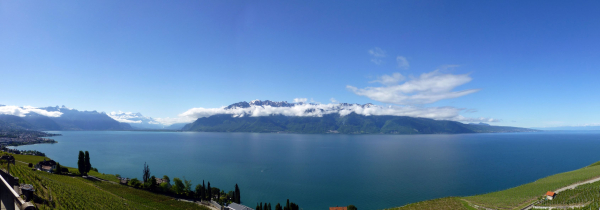
However, Switzerland is a confederation, and therefore taxes vary from canton to canton, from city to city, and from village to village. InI mentioned that you can save on taxes by moving to a village. There is a calculator online that clearly shows how much a person can save or lose by moving from Lausanne to, say, Ecublens (a suburb where EPFL is located). Panorama of Lake Geneva near Vevey to lighten the tax sadness
Air taxes
In Switzerland, there are natural taxes "on air."
Billag
or potential ability to watch television and listen to the radio. In other words, in our world – on air. Of course, the internet is also included, and since virtually everyone has a phone (read – smartphone) these days, it's very, very difficult to get rid of it. Previously, there was a separation into radio (~190 CHF per year) and TV (~260 CHF per year) for each
household (yes, a country chalet is another household), then after a recent referendum the amount was unified (~365 CHF per year, one franc each day), regardless of whether it's radio or TV, and all households were made to pay regardless of whether they have a receiver. To be fair, it's worth noting that students, pensioners, and – surprisingly – employees do not pay this tax. By the way, for non-payment, the fine can go up to 5000 francs, which is especially sobering. Although I know a couple of examples where a person deliberately did not pay this tax for several years and was not fined. Well, and the cherry on the cake: if you want to fish – pay for a license, there are strict time restrictions on fishing; if you want to hunt – pay for a license, store the weapon correctly, and also fall within the quota for hunting wild animals. A Swiss acquaintance once mentioned that the catch is then handed over to the state.
Ну, и изюминка вишенка на торте: хочешь порыбачить – плати за лицензию, есть строгие ограничения по времени рыбной ловли, хочешь поохотиться – плати за лицензию, храни оружие правильно, да ещё и попади в квоту на отстрел диких животных. Про охоту один знакомый швейцарец говорил, что добыча потом сдаётся государству.
If you want to have a pet, you have to pay a tax (up to 100-150 francs in the city and almost none in the countryside). If you don’t pay and don’t chip your animal, you get fined! It can get ludicrous: police patrolling the streets stop Portuguese people with their dogs and try to impose a fine on them.
And again, I will dialectically note that this amount includes bags that pet owners must use to clean up after their pets, specialized areas for walking large dogs with the corresponding infrastructure, as well as street cleaning and practically no stray pets in cities (and villages, too). Cleanliness and safety!
Overall, it's hard to come up with an activity that isn't taxed; however, taxes go to the purposes for which they are collected: social services for social needs, canine taxes for dogs, and waste taxes for waste... By the way, speaking of waste!
Waste sorting
Let's start with the fact that every household in Switzerland pays a waste collection fee (this is a basic fee, like a tax). However, this does not mean that you can throw away any waste wherever you like. To do this, you will need to buy special bags at an average cost of 1 franc for 17 liters. Until recently, they were not available only in the cantons of Geneva and Valais, but they joined in 2018. That’s why all Swiss people 'love' sorting waste: paper, plastic (including PET), glass, compost, oil, batteries, aluminum, iron, etc. The most important are the first four. Sorting helps significantly save on bags for general waste.
There is a waste police that can selectively check what you are throwing out with paper, compost, or regular waste. If there are violations (for example, if you threw plastic packaging in with the paper or a Li-battery in regular trash), then based on the evidence found in the trash, a person can be identified and fined. In some cases, you may also receive a bill for the hourly work of the waste detectives themselves, meaning you could end up paying a hefty sum. The scale is progressive, and after 3-4 fines, a person may be put on a blacklist, which can lead to serious consequences.
Similarly, if you want to throw garbage in a regular bag in a public place or put it in someone else's trash can.
Insurance is like taxes, but just insurance.
In Switzerland, there are many types of insurance: unemployment, maternity, medical (similar to our compulsory and voluntary health insurance), travel insurance for trips abroad (usually done with OMC), dental insurance, disability insurance, accident insurance, pension insurance, fire and natural disaster insurance (), renters' insurance (RCA), liability insurance (yes, this is different from RCA), life insurance, (mountain rescue, relevant during summer hikes and winter skiing), legal insurance (for easy and informal communication in courts) and this is far from the complete list. For those with cars, there’s an entire range: local mandatory liability insurance, comprehensive insurance, roadside assistance () and more.
An average citizen thinks of insurance as a charity where everything is free. I hasten to disappoint: insurance is a business, and a business must generate income, whether in Africa or Switzerland. In simple terms: the total of premiums minus the total of payouts minus salaries and overhead costs, which are naturally greater than 0 (including advertising and commission payments to agents for new clients) must be significantly positive. Note, it is not equal, not less, but strictly greater.

A bit more of Swiss nature: a view of Montreux from the opposite shore.
Here’s an example of straightforward fraud out of nowhere.
How CSS scammed students in 2014.So, it was 2014, and everything was calm. The Swiss authorities, during a routine check, discovered that one of the largest insurance companies, CSS, was illegally receiving 200-300k francs annually from the budget for student health coverage. The total damage over 10 years amounted to up to 3 million francs. What a fantastic business!
Around this time, PhD students were removed from student insurance coverage and forced to pay full price, just like working adults (a yearly income threshold was introduced).
What did CSS do?! Repented, compensated something, helped in some way? No, they simply sent a notification that from a certain date, the esteemed student would no longer be covered by their insurance, and to hell with everything else. The rest – it's your problem, gentlemen!
Details .
Health Insurance: when it's too early to die, but too late to treat.
And since we've started talking about health insurance, it's worth stopping here as the topic is extremely complex and very ambiguous.
Switzerland has a co-financing system for medical services, meaning that each month the insured pays a certain amount, then up to the deductible amount, the client pays out of pocket. The system is designed so that increasing the deductible proportionally decreases the monthly contribution, so if you don't plan to get sick and you don't have a family/children, then feel free to opt for the maximum deductible. If the treatment costs more than the deductible, the insurance will start covering it (in some cases, the client will be obliged to pay another 10%, but no more than 600-700 per year).
In total, the maximum an insured person pays out of pocket is 2500 + 700 + ~250-300×12 = 6200-6800 per year for an adult working person. I repeat: this is actually the minimum without subsidies.
Firstly, if you plan to be transported by ambulance or spend long periods in hospitals – I recommend getting separate insurance that covers these costs.
For example, one of my acquaintances fainted at work, and compassionate colleagues called an ambulance. The distance from the workplace to the hospital is a 15-minute walk (sic!), but the ambulance has to take detours, which takes about 10-15 minutes as well. In total, 15 minutes in the ambulance cost about ~750-800 francs (around 50k wooden) for the call. So, even if you're going to give birth – it's better to take a taxi, it will cost about 20 times less. Ambulances here are only for truly serious cases.
For reference: a day in the hospital costs from 1,000 francs (depending on the procedures and department), which is comparable to staying in Montreux or Lausanne Palace (5-star level hotels +).
Secondly, doctors are one of the highest-paid professions, even when they do nothing. One minute of their time costs x credits (each doctor has their own 7.3% rating based on their specialty and qualifications), each credit costs 4-5-6 francs. A standard appointment lasts 15 minutes, which is why they are all so friendly and ask about the weather, how you're feeling, and so on. And since healing is a business (well, through insurance, of course), and businesses must be profitable—well, you get it, right?—the cost of insurance rises by an average of 5-10% per year (there's almost no inflation in Switzerland, and you can get a mortgage for 1-2%). For instance, from 2018 to 2019, the difference was 306-285=21 francs or
at Assura for the simplest insurance. an example
About The death of the former head of Fiat

(to put it mildly, a wealthy man) in Zurich after a minor operation, I won't even mention.
ThirdlyApples on the snow: the very hike when we started counting how much our evacuation would cost, and for some, medical assistance as well. After all, 32 km instead of 16 was quite a setup,
fairly mediocre quality of basic medicine (it's not about reassembling limbs after an accident, but diagnosing and prescribing treatment for a cold). It seems to me that a cold here isn't even considered an illness—they say it will pass on its own, but in the meantime, take some paracetamol. You have to seek out competent doctors through acquaintances (wait times for competent ones are 2-3 months ahead), and bring medications from Russia. For example, the painkiller/anti-inflammatory Nimesil or Nemulex costs 5 times more, and the package often contains half the number of tablets, and I won't even mention something like Mezim to digest fondue or raclette.
Fourthly,, stories about long waits for medical assistance are more of a reality than something extraordinary. In any hospital/urgency service (similar to an emergency room), there is a prioritization system, meaning if you have a deep cut on your finger but aren’t gushing blood at a rate of a liter per hour, then you might wait an hour, two, three, or even four to five hours! As long as you’re alive and breathing, there's no threat to your life – just sit and wait. Similarly, waiting for an X-ray of a broken finger could take up to 3-4 hours, even though this procedure only takes 1-2 minutes (put on a lead vest, the nurse sets up the shot, a click, and the X-ray is already displayed digitally on the screen).
Fortunately, this does not apply to children. All “breaks” in children are usually treated out of turn, and the insurance itself costs significantly less than for adults.
A specific exampleA small child broke their nose and was hospitalized. The total treatment (including medications) cost 14,000 francs, which was almost completely covered by insurance, leaving the parents to pay only 400 francs out of pocket. Is this expensive or not? Share your thoughts in the comments!
A spoonful of honey. Despite the fact that this insurance is supposed to be profitable for its owners, there is good news – in Switzerland, it relatively well fulfills its function. For example, right before the New Year, an unfortunate incident occurred – I impaled my finger on a broken glass. We were just about to celebrate the New Year in France, so we had it stitched up in Annecy. We waited ~4 hours, 2 hours before reaching the ward and 2 hours on the “operating table.” The bill was sent to the insurance with a brief description of the situation (there's a special form at EPFL). Formally, the 29th is considered half a working day, which our professor grants us as a day off, meaning that accident insurance fully covers it.
A collage from friends. Caution, it’s intense – I warned you.
The pension system
I won't hesitate to say that the Swiss pension insurance system is one of the most well-thought-out and fair in the world. It’s a kind of universal insurance. It is based on , or columns.
The first pillar – a kind of social pension in the Russian Federation, which includes disability pensions, survivor's pensions, and so on. Contributions to this type of pension are paid by anyone earning more than 500 francs a month. It's also worth noting that a non-working spouse with minor children has the years of the first pillar taken into account, similar to a working spouse.
Second pillar – the work-related savings portion of the pension. It is paid half by the employee and half by the employer for salaries ranging from 20,000 to 85,000 francs a year. For salaries above 85,000 francs ( this is 85,320 francs 00 cents) the insurance contribution is not paid automatically, and the responsibility falls on the employee (for instance, they may contribute to the third pillar).
Third pillar – a purely voluntary undertaking to accumulate pension capital. Approximately 500 francs a month can be deducted from taxes by saving into a special account.
It looks something like this:

The three pillars of the Swiss pension system.
Good news for foreigners: when moving to another country that has not signed an agreement with the Confederation on the pension system, it is possible to withdraw the second and third pillars almost entirely, while the first can be accessed partially. This is a significant advantage for foreign workers compared to those in other countries.
However, this does not apply to moving to EU countries or to countries that have signed agreements with the Confederation regarding the pension system. Therefore, when leaving Switzerland, it makes sense to temporarily return to your home country.
Additionally, the second and third pillars can be used when starting a business, purchasing real estate, and as a contribution to a mortgage. It’s a very convenient mechanism.
As in the rest of the world, the retirement age in Switzerland is set at 62/65 years, even though retirement is possible between 60 and 65 years with corresponding reductions in payouts. However, there are currently discussions about allowing workers to choose when to retire between 60 and 70 years. For example, Gratzel is still working at EPFL, although he is 75 years old.
To summarize: what does the worker pay in taxes?
Below, I provide payroll statements that clearly show what is being deducted from the working employee, for example, in government institutions (EPFL):

Legend: AVS – Old-age and survivors insurance (first pillar), AC – unemployment insurance, CP – pension fund (second pillar), ANP/SUVA – accident insurance, AF – family allowances (tax from which family benefits will be paid). aka In total, the overall tax burden is around 20-25%. It fluctuates slightly from month to month (at least at EPFL). An acquaintance from Argentina (an Argentine with Jewish roots 😉) tried to figure out how this works, but it remains a mystery to everyone except those involved in EPFL's accounting system. Nevertheless, one can at least estimate the income tax rate and assess the progressive scale in the second part of the document. aka Plus, don't forget to add insurance of your choice, but mandatory payments will add at least another 500-600 francs. This means the total tax, including all mandatory insurances and payments, has already exceeded 30%, sometimes reaching 40%, as is the case for doctoral students. Life is certainly easier with a postdoc salary, although in percentage terms, postdocs pay more.
Income structure of PhD students and Post-docs at EPFL .
I specifically brought this up as a separate topic because the biggest expense in Switzerland is housing rental. Unfortunately, the housing market is severely undersupplied, and housing itself is not cheap, so the amounts spent on rent can sometimes be astronomical. However, the price per square meter grows disproportionately to the increase in the size of the housing.

For example, a studio of 30-35 m2 in downtown Lausanne can cost between 1100 and 1300 francs, but the average is around 1000 francs. I even saw a studio in a garage, albeit furnished, in
Morge-St.Jean
(not the most popular place, to say the least) for 1100 francs. In Zurich or Geneva, it's even worse, making it difficult for anyone to afford an apartment or studio in the center.
This was my first apartment room when I first moved to Switzerland. (не самое популярное место, скажем прямо) за 1100 франков. С Цюрихом или Женевой всё ещё хуже, поэтому там мало кто может позволить себе квартиру или студию в центре.

Это была моя первая квартира комната, когда я только переехал в Швейцарию

Так выглядит новая студия в Лозанне
A one-bedroom apartment (1.0 or 1.5 rooms refers to when the kitchen is formally separated from the living space, and the 0.5 is considered a so-called living room or hall) of similar size will cost about 1100-1200, a two-bedroom (2.0 or 2.5 rooms in 40-50 m2) – 1400-1600, and a three-bedroom or larger – on average 2000-2500.
Naturally, it all depends on the area, the amenities, proximity to transport, whether there is a washing machine (usually one machine for the entire stairwell, and in some older buildings there may not even be that!) and a dishwasher, and so on. In some outlying areas, apartments can cost 200-300 francs less, but not drastically cheaper.

This is what a two-bedroom apartment looks like in Montreux.
That is why shared housing is often common in Switzerland, as we might call it, when one or two people rent a 4-5 room apartment for an average of 3000 francs, and then 1-2 neighbors are added to this apartment, plus one room being a shared hall. In total, savings amount to 200-300 francs per month. And usually, larger apartments have their own washing machine.
Looking for your own housing is quite the lottery. Besides salary statements, the permit (residence permission) and a certificate of no debts, you also need to be selected by the landlord (usually a company), which has a whole queue of applicants, including Swiss locals. I know people who, like when applying for jobs, write motivational letters to landlords. In general, the option of shared housing through acquaintances turns out to be not so bad.
A brief overview of purchasing housing. It is entirely reasonable to not even dream of owning your own home in Switzerland until you reach the position of a full professor, as real estate can cost astronomical prices. And, correspondingly, a permanent C permit. corrects: “L – only the purchase of primary housing, in which you will actually live (you cannot register and then move out – this is checked). B – one unit of primary housing and one unit of a 'cottage' (a chalet in the mountains, etc.). C or citizenship – unlimited purchase. A mortgage on a B permit is granted without significant problems if there is a good permanent job.”
For example, a house on the shore in a wealthy village. will cost between 1.5 to 2-3 million francs. Prestige and appearances are worth more than money! However, an apartment in some village near Montreux with a view of the lake and 100 meters away can be found for 300,000 – 400,000 (a studio could even be found for up to 300,000). And again, we return to , where I mentioned that villages in Switzerland are in certain demand, as for the same 300-400-500k francs, one can buy a whole house with a yard.
As mentioned above, pension funds can be used for purchasing real estate, and a "pleasant" bonus to this is the mortgage payment, which can be 500, 1000, or 1500 francs a month, i.e., comparable to renting. It's profitable for banks to have a mortgage client – in every sense of the word – as property in Switzerland only appreciates.
Renovating an apartment in the Russian style (hiring a crew either from the internet or from a nearby construction site) is unlikely to work, as only specially trained individuals have access to electrical systems, ventilation, and heating. Most likely, these will be different people, and the hourly rate for each of them is 100-150 francs. In addition, it is necessary to obtain permits and approvals from managing and regulatory bodies, for example, for remodeling the bathroom or replacing radiators. In total, you could end up spending half the cost of the property just on repairs.
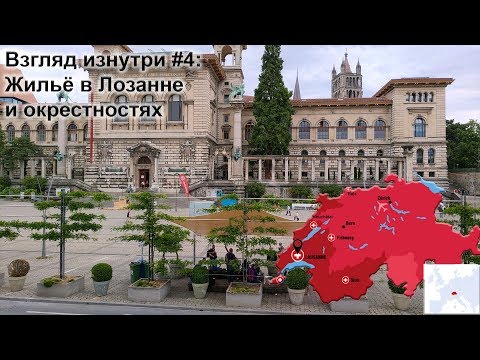
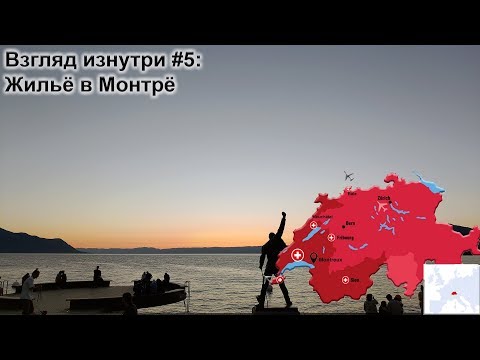
To provide a clearer and more vivid picture of the living environment, I prepared a short video explaining where one lives.
Part one about Lausanne:
Part two about Montreux:
And for the sake of fairness, it should be noted that students are often provided with dormitories on the university campus. The rent is moderate; one could pay 700-800 francs a month for a studio.
Oh, and lastly, don’t forget to add 50-100 francs a month for utilities to the rent amount, which includes electricity (about 50-70 per quarter) and heating with hot water (everything else). Though heating and hot water are essentially just electricity or sometimes gas used in boilers installed in every house.
Family and kindergartens
Once again, I will reiterate, family life in Switzerland is not cheap, especially when there are children involved. If both parents work, taxes are applied to the family's combined income, meaning that living in a two-bedroom is cheaper, allowing for slight savings on food and entertainment, but overall, it balances out.
Everything changes dramatically when children come into the family, as daycare in Switzerland is a very expensive luxury. Moreover, to get a spot in one of the more or less accessible public nurseries, you need to register almost in the first weeks of pregnancy. Considering that maternity leave here lasts for only half a year, : generally, a month (4 weeks) before and 2.5 months after childbirth, daycare becomes a necessity if both parents want to continue their careers.
To be fair, it's worth noting that almost all companies provide benefits, one-time payments, part-time work options (like 80% of 42 hours a week, for example), and various perks to support new parents. Even SNSF grants include so-called family and children allowances, meaning a small extra payment for family and child support, as well as a 120% program, where 42 hours for a working parent counts as 120% of working time. It’s very convenient to spend one additional day a week with your child.
Nevertheless, the cheapest daycare, as far as I know, will cost parents around 1500-1800 francs per month for one child. Moreover, children will most likely eat, sleep, and play in the same room, so to speak, changing the ambiance. And yes, daycare in Switzerland usually runs until 4 PM, meaning one of the parents will still have to work part-time.
Overall, the break-even point is around 2-2.5 children, meaning that if there are 3 or more children in the family, it’s easier for one parent to stay home rather than work and pay for daycare and/or a nanny. A nice bonus for parents: daycare expenses are tax-deductible, which significantly contributes to the budget. Additionally, the state pays 200-300 francs per month for each child (depending on the canton), starting from the age of 3 up to 18. This also applies to expatriates with children.
While Switzerland offers many benefits for families with children, such as subsidies, tax breaks, practically free educational institutions, and subsidies (for health insurance or even garbage bags from the municipality), the last speaks for itself.
Meticulous summarization
Having sorted out the income and expense balance, it's now time for a bit of statistics after almost 6 years in Switzerland.
During my doctoral studies, I wasn't focused on living as economically as possible to save up some financial cushion deep in Swiss banks. However, I believe my food expenses could have been cut by a third or a quarter.

Expense structure of a PhD student at EPFL

Expense structure of a post-doc at EPFL
At the beginning of 2017, after defending my dissertation, I had to switch to another app for tracking expenses, which slightly changed the categories; however, they are colored identically on the charts. For instance, the categories of housing, household expenses, and communications merged into one 'Bills.'
About mobile internet and trafficThe Bills category also includes mobile internet bills, which, at one point, started skyrocketing (a prepaid data plan). I usually use this internet for work during trips on the most scenic trains across Switzerland. At a certain point: traffic stats for my tablet were: 01 - 1x, 02 - 2.5x, 03 - 3x, 04 - 2x, 05 - 2x, where x=14.95 CHF for 1 Gb of data. I noticed this around March-April and somewhat curtailed my usage.
Returning to health and insurance, it is clear that if a PhD student spends about 4-5% of their income on health insurance, a post-doc spends already 6%, while their salary is higher.
Moreover, as income increases (PhD student to post-doc), the percentage ratio of the first two categories of expenses has remained almost the same — ~36% and 20%, respectively. Truly, no matter how much you earn, you'll still end up spending it all!
Public transportation is more likely an indication of taxi and airplane expenses, as for 4 years EPFL covered the subscription for all of Switzerland, which I mentioned in .
A few fun facts:
- I bought my main computer and a laptop back in 2013, but the costs of purchasing tech over two years of postdoc have grown significantly in percentage terms, which means they've increased in real terms as well. Most likely, it was the purchase of a 4K monitor and a graphics card that had such an impact; additionally, it used to be possible to build a decent computer for around 1000 francs, which was considered somewhat expensive, while today, top-tier hardware can cost 2000, 3000, or even 5000. And of course, Aliexpress plays its role: lots of small purchases — and voilà, the wallet is empty!
- spending on shopping has noticeably increased (aka clothes). In my opinion, this is related to the decline in the quality of goods, as those selling food (portions, volumes, etc.). It used to be possible to buy shoes and wear them for 2-3, and sometimes even 4 years, but now everything has become essentially disposable (the latest example is shoes from a well-known German brand that 'fell apart' in two (sic!) months).
- Gifts have shrunk to half their size, meaning that in real terms, expenses have remained practically at the same level — the number of friends/ events attended is almost constant.
That’s all folks! I hope that my articles will answer most of the questions about moving and living in Switzerland. I will highlight some aspects and moments on .
the occasion,
PS: since this is the last article of this series, I would like to share two facts about Switzerland that didn't make it into the previous articles:
- In Switzerland, you can easily find coins dating back to 1968 when the monetary reform occurred, and the old silver francs were replaced with regular nickel coins.
- Those who love apocalyptic investments and buy physical gold prefer special Swiss gold coins — they are associated with reliability.
P.P.S.: For proofreading the material, valuable remarks, and discussions, my immense gratitude and appreciation go to my friends and colleagues Anna, Albert (), Anton (), Stas, Roma, Yulia, Grisha.
A moment of advertising. In light of recent trends, I would like to mention that Lomonosov Moscow State University is opening a permanent campus this year (it has been teaching for 2 years!) in partnership with Beijing Polytechnic in Shenzhen. There is an opportunity to learn Chinese, as well as obtain two diplomas (IT specialties from the Faculty of Computational Mathematics and Cybernetics at MSU are available). More information about the university, its programs, and opportunities for students can be found .
Don't forget to subscribe to : It's not a problem for you – it's a pleasure for me!
And yes, please send any noticed errors in the text via private message.
Source: habr.com
