

The last few years have been marked not only by rapid development of internet technologies and the penetration of the internet into regions of the planet where even standard mobile communication is a challenge. Tools for internet censorship have been developed and adopted by officials, including website and service bans, monitoring of users' email and chat messages, DPI packet filtering, and much more.
All this has been reported by journalists from both well-known and lesser-known media regarding China, North Korea, Russia, Kazakhstan, Belarus, etc. Internet censorship has even penetrated Africa. Today, we will discuss the situation on the Black continent.
A bit about internet prices and availability in Africa
Not too long ago, the internet in Africa was a rarity, used freely only by residents of the richest countries on the continent — South Africa, Tunisia, Egypt. Starting in 2013, several underwater internet highways were connected to Africa, leading to somewhat improved internet access.
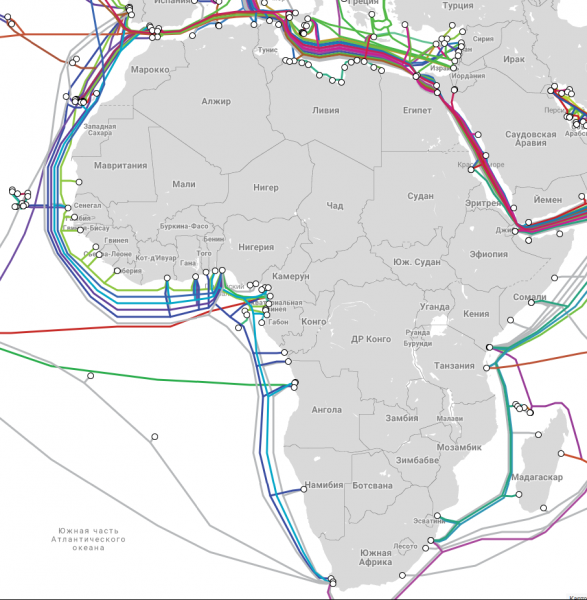
Africa and internet highways in 2019 ()
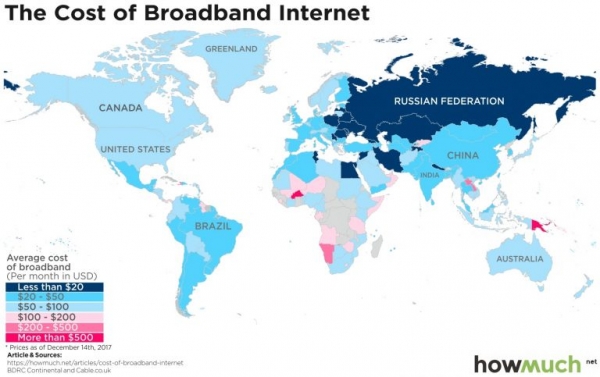
But changes are being implemented slowly, and prices are dropping even more slowly. In several African countries, both cable internet and mobile connections remain very expensive. In Namibia and Burkina Faso, for instance, an individual monthly unlimited connection recently cost as much as supporting an entire house, or even a small village in the CIS.
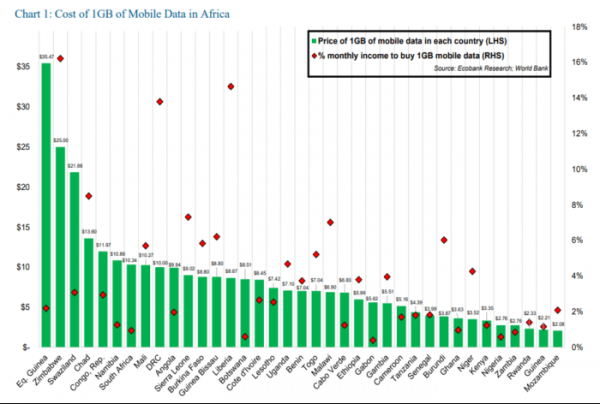
As of 2018, Africa remained the most expensive region in terms of mobile internet costs. For example, in Equatorial Guinea, Zimbabwe, and Eswatini — the three most expensive countries — .
Things are toughest for countries south of the Sahara. There are 31 countries here, and in 16 of them, the internet is the most expensive in the world.
However, the situation is gradually improving—more and more internet highways and telecommunications operators are appearing, which means prices are falling. But along with the increase in internet penetration, negative effects also emerge—such as internet censorship. When there are only a few internet users, most of whom are part of the local political and business elite, censorship is unnecessary. But when tens and hundreds of thousands of ordinary people connect to the network, the governments of certain countries begin to think about the need to filter information streams in their internet environments.
Internet censorship in different African countries

Censorship, internet censorship everywhere
In Africa, as in the rest of the world, laws are gradually being enacted that regulate internet use, including penalties for cybercrimes. Some African countries have specific cybersecurity laws, and similar bills are being proposed in other countries as well. So far, Somalia, Sierra Leone, Equatorial Guinea, Guinea, and Guinea-Bissau are lagging behind.
But in other countries, internet censorship is operating at full force.
Tanzania
This began in 2017 during a round table attended by representatives from China and Tanzania. The Deputy Minister of Communications and Information Technology of Tanzania for having regulators replace international internet platforms with local services. Tanzania referred to them as "local, safe, and popular." At that time, the deputy minister lamented that such practices did not exist in his country, but he was not discouraged for long.
By March 2018, the Tanzanian regulator (Tanzania Communications Regulatory Authority) required bloggers and operators of online television and radio channels to register. During registration, they were required to pay a fee of approximately $930, in exchange for a license to conduct related activities for three years.
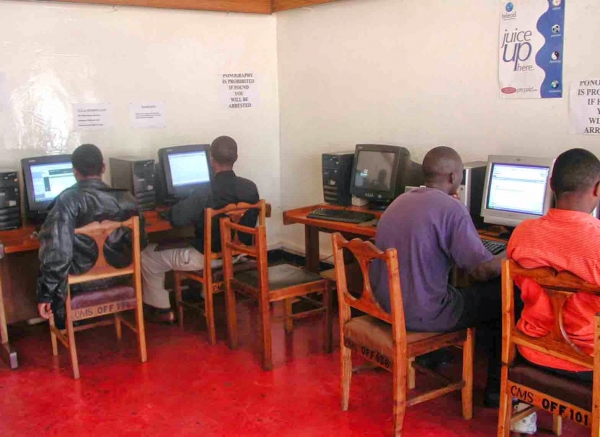
Subsequently, the regulator began demanding that website and forum owners remove "opposition" content. Specialized user authentication systems for forums were then implemented. Owners of internet cafes (such establishments are very popular in the country) were required to retain activity logs of their clients for about a year.
Violations of the rules are punishable by imprisonment of up to one year and fines of several thousand US dollars. After the new laws were enacted, popular online media outlets closed down, as their owners did not wish to fall afoul of the law enforcement agencies.
Uganda
For the residents of this country, changes in internet usage became noticeable in the summer of 2018. At that time, the government introduced a special tax on access to more than 60 services, including WhatsApp, Twitter, Facebook, and Skype. They had to pay around 50 cents a day, which is a significant amount for the overwhelming majority of the population. Moreover, payment was also required for mobile internet. The total amount of direct and indirect costs accounted for about half of a citizen's monthly income.
The number of internet users decreased, and less money was flowing into the local economy. The problem was compounded by the fact that locals used mobile services for transactions with one another. After the tax was imposed, some users completely stopped using the internet, while others began connecting through VPNs to remain anonymous and avoid paying the tax.
Ethiopia
For a long time, strict internet censorship was in place here. Various manifestations of dissent were fought against using the 2009 anti-terrorism law. However, the new Prime Minister, Abiy Ahmed, has somewhat eased the level of censorship.
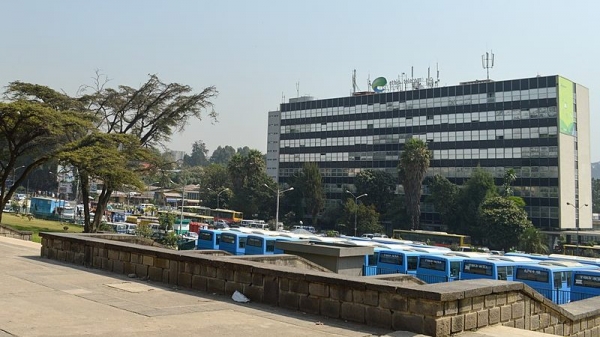
This building houses the internet provider Ethio Telecom – the only provider, which is also state-owned.
Nevertheless, it is common practice here to shut down the internet during civil unrest. For instance, this year, there was no internet for a week, after which a group of lawyers against the only internet provider in the country. Internet access was down in mid-June, and issues in the regions are still being observed. The authorities decided to restrict access to the network during the nationwide graduation exams.
Since 2015, residents of Ethiopia have faced several large-scale internet outages. In fact, if there's only one internet provider in the country, it's not difficult to implement this.
Kenya
The government of this country actively regulates the internet. Last year, a law was enacted that imposes a fine of $50,000 on distributors of 'false information' (a vague term that can be interpreted in various ways), along with a possible prison sentence of up to two years.
In Kenya, life is difficult for vloggers — registration as a vlogger is required, plus payment for each video uploaded to the internet and for each day of filming. This makes the cost of producing even an amateur video so high that few are willing to pursue it. Moreover, failing to pay can result in .
Certain internet resources are also banned here and placed on a blacklist.
Burundi
In this country, there is a very low level of internet access but a high level of internet censorship. The government does not hesitate to shut down access to the network for users across the country whenever it feels something is going wrong. For instance, in 2015, almost all major international social networks and messaging services were blocked. Additionally, internet resources and services are disrupted. Last year, , allowing law enforcement agencies to intercept electronic messages and seize information from individuals and companies upon the prosecutor's decision. Some companies are moving their resources to other domain zones, while media outlets are advising readers to use VPNs.
South Africa, Egypt, Morocco, Rwanda
In these countries, the internet is mostly in good shape. Cases of censorship are rare; this tool is mainly used against resources managed by terrorists and sites that do not speak respectfully of the authorities. However, there are no significant penalties for 'disrespect,' and no taxes for connecting to social networks or messengers. However, from time to time, in Morocco, .
In Rwanda, several years ago, a series of cybersecurity laws were enacted aimed at protecting users' personal data, as well as state secrets and banking information from cybercriminal attacks. The authorities do not particularly abuse these laws. However, now cybercriminals in the country are caught and punished.
As for other African countries, in some, the level of internet access is so low that discussing any censorship is pointless — in such states, for example, Burkina Faso, the network is provided by 'pocket' internet providers, to which only elite representatives connect.
In countries where the level of internet access is relatively high but censorship is also actively developing, experts report that local residents are actively using various bypass tools, such as VPN services. In this regard, Africa is no different from other regions.
Have you had experience using the internet in Africa?
Source: habr.com
