


In a conversation with fellow administrators about literature, we discovered that we enjoy books of various genres and styles. We then became curious to conduct a survey among Selectel system administrators on three topics: which classic books they like, their favorite book, and what they are currently reading. This resulted in a large literary collection where the sysadmins share their personal impressions of the books they have read.
The survey involved 20 Selectel administrators from different departments: OpenStack, VMware, client services administration, the networking department, and the technical support team.
What classics do the admins like?
The most popular answer was Bulgakov's 'The Master and Margarita,' described as 'an interesting story with philosophical undertones.'
Next is Fyodor Dostoevsky with as many as three of his works — 'Crime and Punishment,' 'The Possessed,' and 'The Brothers Karamazov.' Admins appreciate Dostoevsky's books for 'the excellent description of St. Petersburg and the characters that inhabit it, the Russian idea, and the deep characters.'
Here are 5 more interesting opinions from the admins about classics:
Chekhov's Stories
'The stories are quite short but witty and can be reread from time to time without getting boring. Depending on the mood, Chekhov is simply amazing!'
'One Flew Over the Cuckoo's Nest' and 'Martin Eden'
'They are poignant. Both are very close to me.'
'The Little Prince'
'What you need to know about love, friendship, and people.'
'War and Peace'
'I recently reread it. It reads completely differently compared to school years! I enjoy the historical accuracy and Tolstoy's language (yes, there's a lot of detail, but I like it).'
'Oblomov'
'The main character is the embodiment of tranquility, contentment, and serenity.'
Favorite Books of System Administrators
We asked the guys to name one favorite book and explain why they like it so much. Sharing impressions is great, so below you will find quotes from the admins and a brief description of the work. By the way, none of the mentioned books were repeated:
 Ulysses (James Joyce)
'Why is it a favorite? Because it’s incredible how they play with words, that takes effort.'
The book tells about a day in the life of Leopold Bloom, a Jew from Dublin. Each chapter of the novel imitates specific literary styles and genres from different eras, reflecting the stylistic traits of writers whom Joyce parodies or emulates.
 Simulacra and Simulation (Jean Baudrillard)
"For me, this book is a real 'mind-blower.' Don’t expect any advice or hints. Every sentence provides food for thought. Strictly recommended for reading."
The Wachowski Brothers (now sisters) were inspired by the book while creating the film 'The Matrix.' Before filming 'Simulacra and Simulation,' all actors in the main roles and key crew members were required to read it. The book can be seen at the beginning of the film — Neo hides mini-discs with hacking software inside it.
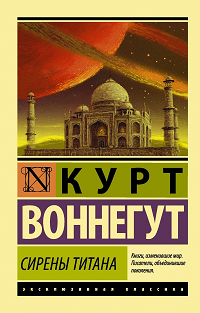 The Sirens of Titan (Kurt Vonnegut)
"A kind and wise book, I love rereading it."
Vonnegut reflects on the meaning of human existence and the fleeting nature of promised human values. At first, it seems that some characters in the novel use others for their own purposes, but gradually it becomes clear that they too were used just as ruthlessly and senselessly by someone else.
Another 17 favorite books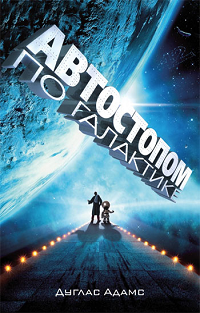 The Hitchhiker's Guide to the Galaxy (Douglas Adams)
"Very interesting."
The idea for the book came to Adams during a hitchhiking trip to Istanbul.
The home of the main character, Arthur Dent, is about to be demolished to make way for a new road. To stop the demolition, Arthur lies down in front of the bulldozer. Meanwhile, the planet Earth is set to be destroyed to build a hyperspace highway.
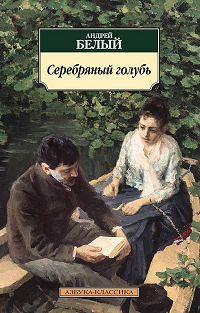 The Silver Dove (Andrei Bely)
"Bely expressed everything that could be expressed about the beginning of the 20th century in Russia."
"The Silver Dove" by Andrei Bely is a love story between a poet and a simple village woman, set against the backdrop of events that shook Russia during the first Russian revolution.
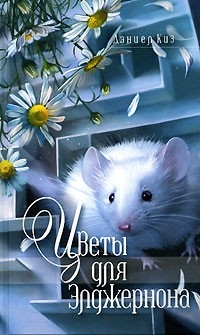 Flowers for Algernon (Daniel Keyes)
"It moved me deeply, literally to tears."
One of the most humane works of recent times. The ideas were drawn by Daniel Keyes from his own life. Keyes taught English at a school for children with intellectual disabilities when one of his students asked if he could transfer to a regular school if he studied hard and became smart. This event laid the foundation for the story.
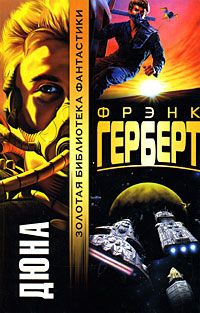 Dune (Frank Herbert)
"Cool setting and atmosphere. And the idea itself."
"Dune" is one of the most famous science fiction novels of the 20th century. The author adds elements of a philosophical novel to science fiction and creates a multilayered narrative that touches on themes of religion, politics, technology, and ecology.
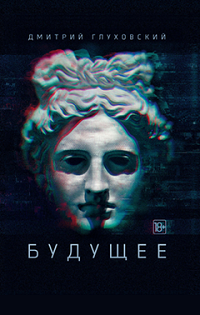 The Future (Dmitry Glukhovsky)
"Dystopia in the near future, quite a realistic depiction of the world in the context of absolute immortality. But there should be spoilers ahead, hehehe."
Immortality is included in the basic social package, and pills of serenity help eliminate negative thoughts. It seems that the action takes place in a utopian world, yet "The Future" is a true dystopia, where those daring to fight the regime face unimaginable cruelty.
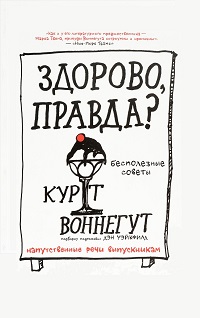 Cool, right? Useless advice. Commencement Speeches (Kurt Vonnegut)
"Commencement speeches are always a distillation of the author's experience, and this person's experience is immensely interesting. And he has a good sense of humor."
The book collects 9 speeches, with topics chosen randomly, but each of them is very important to Vonnegut and his listeners. He is so serious, witty, and profound that the pleasure you gain from his performances only intensifies with each reread.
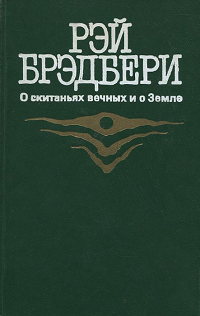 On Eternal Wanderings and the Earth (Ray Bradbury)
"It was written long ago, but it reflects problems that are relevant today. And it is touching."
The book begins like this:
"For seventy years, Henry William Field wrote stories that no one ever published, and one night at half past eleven he got up and burned ten million words. He took all his manuscripts to the basement of his gloomy old mansion, to the boiler room, and tossed them into the furnace..."
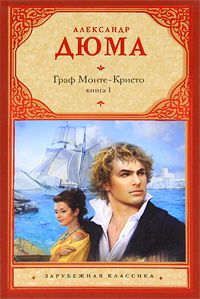 The Count of Monte Cristo (Alexandre Dumas)
"The book makes you think and leaves a very strong impression."
Dumas conceived "The Count of Monte Cristo" in the early 1840s. The name of the hero came to the writer during a journey across the Mediterranean when he saw the island of Montecristo and heard the legend of the buried treasures there. Dumas drew the plot from the archives of the Paris police: the real life of François Picaud turned into the thrilling story of Edmond Dantès, a sailor from the ship "Pharaon."
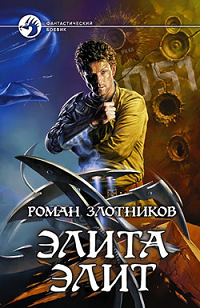 The Elite of Elites (Roman Zlotnikov)
"For me, it is highly motivating."
An imperial guard from a future where humanity has mastered the galaxy and created space colonial powers finds himself in the year 1941, on the border of the USSR, in already occupied fascist territory.
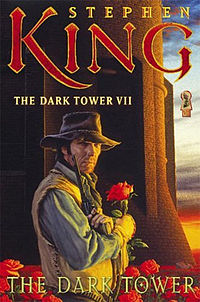 The Dark Tower Series (Stephen King)
"The book intertwines periods of the Wild West, the Middle Ages, the future, and the present."
A cycle of novels by Stephen King, written at the intersection of several literary genres. The series tells the long journey of the gunslinger Roland Deschain in search of the legendary Dark Tower and includes numerous themes, characters, and plot lines from other unrelated King books.
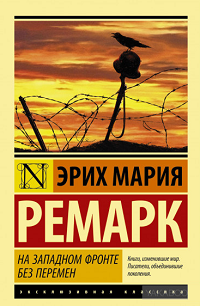 All Quiet on the Western Front (Erich Maria Remarque)
"I love books about war."
This novel is the first part of a trilogy that the author dedicated to World War I and the fate of soldiers who went through this war. This book is an attempt to narrate the story of a generation that was doomed by war, of those who became its victims, even if they escaped the shells.
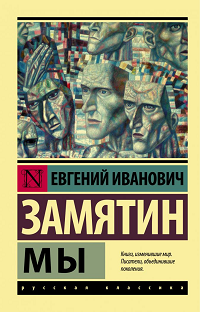 WE (Yevgeny Zamyatin)
"Dystopia, totalitarian society, people are blissfully ignorant. I especially like the idea of pink tickets."
Zamyatin portrayed a society ideologically based on Taylorism, scientism, and the denial of fantasy, governed by a 'Benefactor' elected without alternatives. People's names and surnames are replaced by letters and numbers. The state controls even intimate life.
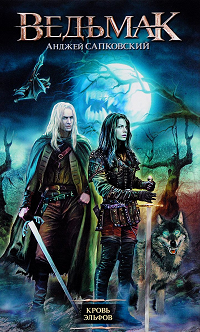 The Witcher: Blood of Elves (Andrzej Sapkowski)
"I have always loved medieval fantasy. But it is in the universe of 'The Witcher' that it is presented in the most medieval way — diseases, poverty, wars, political strife, brutality, and much more. And all of this is spiced with healthy (and not so healthy) humor and some of the most memorable characters."
The stories from the Witcher series by Andrzej Sapkowski take place in a fictional world reminiscent of Eastern Europe during the late Middle Ages, where various magical beings and monsters coexist alongside humans. Geralt of Rivia is one of the last "witchers," wandering hunters of monsters.
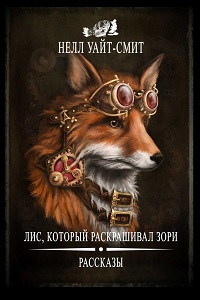 The Fox That Painted the Dawn (Nell White-Smith)
"I love steam engines and the Victorian era, and a mechanized werefox that turns into a fox and paints the dawn on its airship is simply wonderful!"
This is a collection of four stories that reflect different (yet always unique) aspects of life in the world of steam machines, mechanical werewolves, and the Chaos-Bordering Temple. A world around which the moon, made of living mechanics, glides.
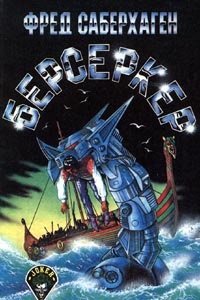 Berserker Series (Fred Saberhagen)
"Different stories connected by a single theme. And of course, space, killing machines, and human survival."
Huge automated ships with artificial intelligence and inhuman logic are the legacy of a cosmic war that ended millennia ago between long-extinct races. Their sole purpose is to kill all living things, and their logic is random and unpredictable. Humans called these killing machines Berserkers. Now, either humans will destroy the cosmic killers, or the berserkers will annihilate the human race.
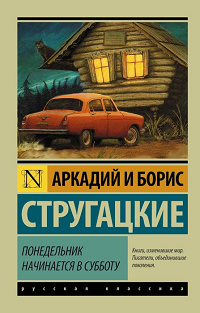 Monday Starts on Saturday (Arkady and Boris Strugatsky)
"I love the atmosphere of the NIIChAVO. People enjoy their work."
The book by Arkady and Boris Strugatsky tells about the everyday life at NIIChAVO (the Research Institute of Sorcery and Wizardry) — a place where the mundane operations of a respectable institution blend with a folkloric fairytale whirlwind.
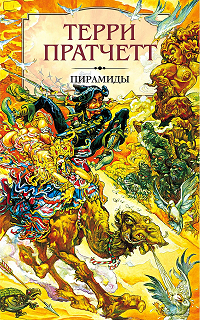 Discworld Series (Terry Pratchett)
"Magnificent humor and a fantastic world suspiciously similar to reality."
In the Discworld series of books, Pratchett began by parodying the conventions of the fantasy genre but gradually transitioned to a comprehensive critique of the modern world. A distinguishing feature of Pratchett's works is the subtly hidden philosophical ideas within the text.
What Administrators Are Reading Now
Though work takes up most of the day, colleagues try to find time to read. Mostly, they read on the subway or listen to audiobooks on their way to work.
This week, sponsors of the missed stops include Richard Morgan's 'Black Man', Peter Watts' Hard Sci-Fi (don't miss 'Blindsight'!), Chuck Palahniuk's 'Haunted', and Dmitry Glukhovsky's 'Metro 2034'.
Postmodernism enthusiasts recommend Pynchon's 'Gravity's Rainbow' and Danilevsky's 'House of Leaves'.
Particularly tired readers dive into '150 of My Corpses', while dreamers prefer essays on shipwrecks by Skryagin.
Admins also suggest reading Irvine Welsh, Andy Weir, Alastair Reynolds, Eliezer Yudkowsky, and Russian authors like Alexei Salnikov, Boris Akunin, early Oleg Divov, and Alexander Dugin.
And finally,
We love reading and want to share these emotions.
In honor of the holiday, we are giving away a book from LitRes and a 30% discount on the entire catalog of e-books and audiobooks — promo code Selectel.
"All good books are similar in one way — when you finish reading them, you feel that everything happened to you, and it will always be with you: the good or the bad, the joys, the sorrows and regrets, the people and places, and what the weather was like."
We wish you good books. Happy System Administrator's Day!
Source: habr.com
