

Today, the Swiss startup , which uses artificial intelligence and machine learning to automate code analysis, announced it has secured $4 million in funding from venture capital firms Earlybird, 3VC, and Btov Partners. The company plans to utilize these funds to implement support for new programming languages in its service, as well as to market the product in the global IT market.
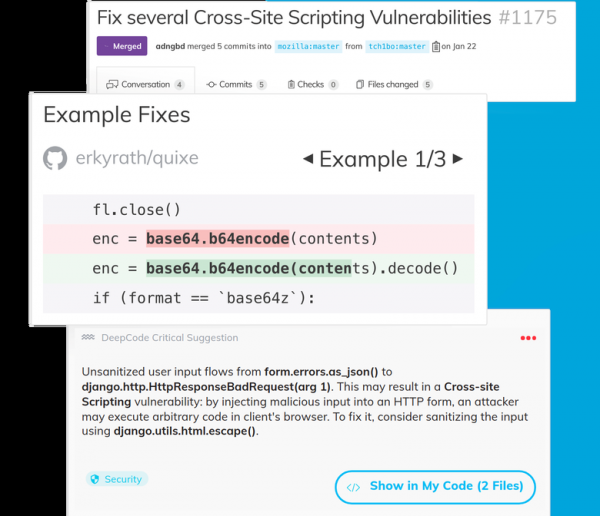
Code analysis is essential for identifying errors, potential vulnerabilities, violations of common formatting styles, and much more at the early stages of software development, before the code is used anywhere. This procedure is typically carried out alongside the development of new code and immediately after it is completed, preceding the actual testing phase. "Software testing looks at the code from the outside, but code analysis allows you to look at it from the inside," explains DeepCode co-founder and CEO Boris Paskalev in an interview with VentureBeat.
Most often, code review is performed by its authors in collaboration with colleagues and managers to identify obvious mistakes before moving on to the next stages of development. The larger the project, the more lines of code need to be reviewed, which takes a considerable amount of time for programmers. Tools designed to expedite this process have been around for quite some time, such as static code analyzers like Coverity and PVS-Studio, but they are typically limited in their capabilities as they focus on "annoying and repetitive stylistic issues, formatting, and small logical errors," Paskalev explains.
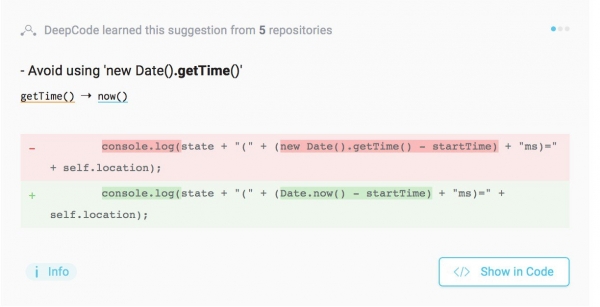
DeepCode, on the other hand, addresses a broader range of issues, such as detecting vulnerabilities like cross-site scripting and SQL injection, as its underlying algorithms do not just analyze code as a series of characters, but attempt to understand the intent and purpose of the written program. At its core is a machine learning system that utilizes billions of lines of code from publicly available open-source projects for its training. DeepCode analyzes previous versions of the code and subsequent changes to learn how real programmers have corrected errors in their work, and then suggests similar solutions for its users. Additionally, the system employs traditional predictive algorithms to identify potential issues in the code similar to those mentioned above by static analyzers.
One of the key questions when using DeepCode is: how reliable is automatic code review? An analysis accuracy of less than 100% means that developers will still have to manually review their code. In this case, how much time will actually be saved by using tools to automate this task? According to Paskalev, DeepCode can save developers about 50% of the time they currently spend finding errors on their own, which is a significant figure.
Developers can connect DeepCode to their GitHub or Bitbucket accounts, and the tool also supports local GitLab configurations. Additionally, the project has a dedicated API that allows developers to integrate DeepCode into their own development systems. Once connected to a repository, DeepCode will analyze every change in the code and highlight potential issues.
"On average, developers spend about 30% of their time searching for and fixing bugs, but DeepCode can save half of that time right now, and even more in the future," says Boris. "Since DeepCode learns directly from the global developer community, it is capable of detecting more issues than any single person or a whole group of reviewers ever could."
In addition to today's news about securing investments, DeepCode has also announced a new valuable policy for its product. Until now, DeepCode has been free only for open-source software development projects. It will now be free for any educational purposes and even for commercial companies with fewer than 30 developers. Clearly, this step is aimed at making DeepCode more popular among small teams. Additionally, DeepCode charges $20 per developer per month for cloud deployment and $50 per developer for local support.
Previously, the DeepCode team secured $1 million in funding. With an additional $4 million, the company stated that it plans to expand the programming languages it supports beyond Java, JavaScript, and Python, including adding support for C#, PHP, and C/C++. They also confirmed that they are working on their own integrated development environment.
Source: 3dnews.ru
