

Hello everyone! A year ago, I wrote . Judging by the feedback, the article contains many interesting ideas, but it is large and hard to read. I have long wanted to divide it into smaller pieces and write them more clearly.
But writing the same thing twice doesn't really work. Additionally, this year significant problems arose in organizing this course. Therefore, I decided to write several articles about each idea separately, discussing the pros and cons.
This is the first article — about how to organize students so that they actively study theory throughout the semester, rather than in the last days before the exam.
List of articles in the series:
Suppose a group of adults needs to understand a new and extensive area. For example, they are developing a new product. Let's assume these people are technically savvy and independent. What is the best way for them to proceed?
It makes sense to first compile a list of questions that need answers. Then assign each person to investigate a group of questions, research, and clearly write answers for everyone else. The others can read these answers, supplement them, and ask questions if something is unclear.
If everything goes well, there will ultimately be written and well-formulated answers. Everyone will be able to look them up and find information when needed. If the information is insufficient — that's a reason to consult an expert who has delved into this topic. And, of course, don’t forget to replenish the written base of answers=)

How is all this related to students and university education?
A group of students is similar to a group of adults who need to gain knowledge in a new area. The teacher is like someone who can set a direction for research — identifying a list of questions that students need to understand.
Typically, answers to a teacher's questions are found in what they have already explained. Students need to grapple with this and report back during exams. Assessing a student's understanding of vast amounts of material in a short exam is almost impossible, which is why grades reflect how well a student memorized or copied a random piece. The ability to take such exams also plays a significant role: quickly thinking on one's feet, confidently articulating plausible statements, and responding correctly to the teacher's comments.
The task of understanding the material becomes far from a priority. Much of what is learned goes unused and is forgotten within the next six months to a year, sometimes even the next day. In the best case, only notes remain as written artifacts. Sometimes these notes are good, but usually, they are a distillation of one teacher's opinions, compiled under time pressure.
The situation is further complicated by the fact that theoretical material is usually uninteresting to students. They postpone studying it until the session, depriving themselves of the chance to apply theory when solving practical problems. It falls to teachers to rescue practical classes: they prompt students to refer to theoretical fragments necessary for tackling the discussed problems. Solving a problem based on a fragment of theory handed down from above is a necessary skill, but unfortunately, it is not sufficient. Real-life problems are not accompanied by notes on which methods are best to use for their resolution.

So, the idea
The teacher posts a list of questions publicly, for example, in a group on VKontakte where all students are members. Students can:
- Choose a question that no one has answered yet, and respond to it in the comments.
- Select an answer already written by someone else and comment on it: add information, ask the author a question, or state what is incorrect and why.
Students' answers to questions are encouraged; those who provided good answers throughout the semester automatically receive exam grades. Duplicating other students' answers and other forms of cluttering are penalized.
Questions need to be creative and not have a definitive answer; otherwise, the winner will be the one who answers first. The others will lack the incentive to read and engage with the response if there is nothing to add. Possible question templates include:
- Provide examples of using a specific theorem / algorithm / method. Is such application effective?
- Compare algorithms / methods / technical implementations. State their advantages / issues compared to each other.
- How can the algorithm / method be supplemented to allow for solving another problem?
- How can the proof of the theorem be simplified if additional facts are known? How to prove the theorem if certain facts cannot be used? (the ones currently used)
- Propose ideas for improving the algorithm / method. How and in what situations do these improvements help?
- Analyze a specific article. Write down what you find useful; explain why.
- Formulate your questions regarding the lecture / topic. Why do you consider them important?
The scope for creativity is vast! Many creative questions stimulate learning on their own, unlike the tedious immersion in what the instructor narrates.

A system with such questions can encourage students to engage with the theory throughout the semester. For example, if questions are posted after each lecture with a strict deadline for responses, many students will engage with the lecture material immediately after it.
Sometimes the responses will also be interesting for the instructor.
I know from experience =)
The previous paragraph contains the key word 'may.' What is depicted there in rosy tones might not come to pass. Instead, there will be ordinary gray tones, and students will try to push through the course, while answers to the questions will become formalism—meaningless and time-consuming for the instructor.
What does the unfolding of events depend on?
A very important factor is how the responses to the questions are checked. It is crucial to reward good answers highly; otherwise, students will lose motivation. It is important to identify useless responses and quick fixes, and to make it clear to students immediately that this is unhelpful. Otherwise, there will be more and more quick fixes.
It's useful to involve students in this very complex task. They can be asked to highlight the most useful answers, the clearest answers, and those where people have put in the most effort. Asking them to point out the worst answers is pointless. In practice, everything else turns out not to be very helpful, but sometimes it helps to avoid mistakes during grading.
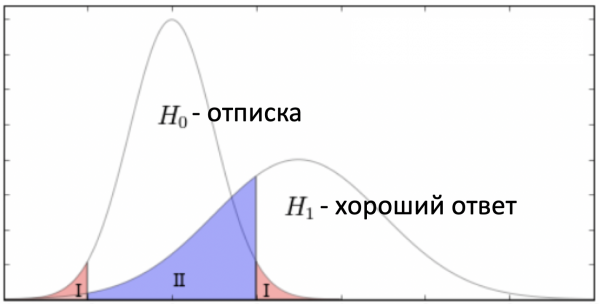
Of course, such checking requires a lot of time from the instructor. I realized this even when I started my experiments. I also understood that I wouldn't be able to distinguish good answers from mere submissions without errors — and I decided to side with the student in contentious situations. This strategy worked in two experiments, but in the third one, there was a breakdown: many wrote rubbish in their answers, which became a problem.
All the experiments lasted a semester. In the second and third experiments, there were about twice as many students — around 40. However, in the second, only a small handful of students submitted answers. In the third, almost everyone participated, thinking it would make passing the course easier. I couldn't differentiate the wheat from the chaff, which was quickly proliferating. To salvage the situation, I had to offer an easier passing option for those who wrote just anything.
Next time, I plan to initially encourage answers only from those who are genuinely interested — I will aim to assign points only for good answers. In contentious cases, I think I'll offer to provide additional information and refrain from assigning any points until that is done.

Some philosophical musings
How often should questions be posted? If questions appear too frequently, students will get tired of answering them. After all, answering such questions can take a lot of time. If questions are posted too rarely, it approaches a situation where 'students live joyfully from session to session, with only two sessions a year,' with all the resulting consequences. The more important and difficult the subject, the more frequently questions should be posted. What counts as frequently and rarely? Definitely not more often than lectures occur. Once a month is already rare; students will lose track of what happened at the beginning of the month.
What deadlines should be set for answers? The shorter the deadline, the more students answer questions while they still remember what was discussed in the lecture. The longer the deadline, the fewer students will say they didn't manage to answer the questions because they were distracted by important matters. I believe the optimum is between 3 days and a week, with a maximum of two.
Should questions be posted before or after the lecture? If both the questions and the deadline are set before the lecture, many students will come to the lecture more prepared. But not all, which is a problem as some interests will not be considered. If posted after the lecture, the questions can rely on what was discussed and cover more material. If the questions are posted before the lecture and the deadline after, students will answer questions instead of listening to the lecture. If one list of questions is posted before the lecture and another after, it may lead to overload. At least, if the subject isn’t the most important.
Are there any downsides to exempting students from taking the exam if they have answered questions well throughout the semester? I see only one: preparing for the exam encourages students to review all course material in a short time. This often leads to an understanding of the overall picture of the course, at least for a brief moment. By answering questions on individual lectures, such a picture may not form.
Should we force students who performed well during the semester to take the exam just to form an overall picture of the subject in their minds? Is this picture worth the stress? Will it demotivate students throughout the semester? Can this picture be formed in another way? I’m still pondering these questions, feel free to share any ideas!

Thank you for your attention!
P.S.: I don't consider anything I've written a dogma, and I welcome reasoned comments and objections :)
Source: habr.com
