

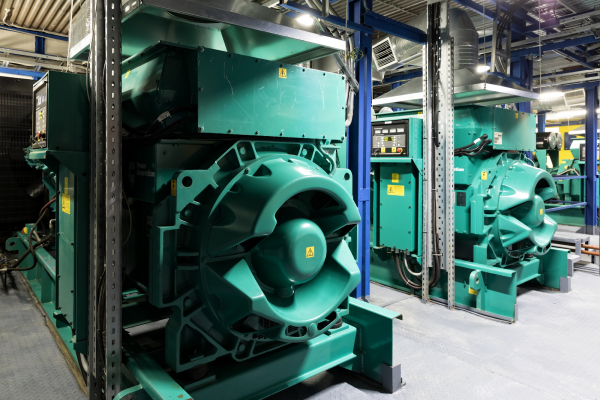
The quality of the power supply system is the most crucial indicator of the service level of a modern data center. It's clear: all equipment necessary for the operation of the data center relies on electricity. If it is lost, servers, networks, engineering systems, and storage systems will cease to function until power is fully restored.
We explain the role that diesel fuel and our quality control system play in the uninterrupted operation of the Linxdatacenter in St. Petersburg.
You may be surprised, but Uptime Institute specialists assign primary importance to the performance of diesel generators when certifying data centers for compliance with industry quality standards.
Why? The uninterrupted operation of a data center plays a central role in the digital economy. The reality is that a 15-millisecond power outage is enough to disrupt business processes with noticeable consequences for end users. Is that a lot or a little? One millisecond (ms) is a unit of time equal to one thousandth of a second. Five milliseconds is the time it takes a bee to make one wing beat. To blink, a person takes 300 to 400 ms. A minute of downtime cost companies an average of 7900 dollars back in 2013, according to Emerson. Against the backdrop of increased digitalization of business, losses could reach hundreds of thousands of dollars for every 60 seconds of downtime. The economy demands 100% connectivity from businesses.
And yet, why are diesel generators considered the primary power source by the UI? Because in the event of a power outage from the main supply networks, the data center can rely on them as the sole power source to maintain the operability of all systems until power is restored through the main channels.
For our data center in Saint Petersburg, issues related to power sources are particularly important: the data center is completely independent of the city grid and is powered by a gas engine power plant with a capacity of 12 MW. If the gas supply is interrupted for any reason, the data center switches to operation on diesel generators. First, the uninterruptible power supplies (UPS) are activated, which can sustain the data center for 40 minutes of uninterrupted operation; the diesel generators start within 2 minutes after the gas engine station stops working and can run on the existing fuel reserve for at least 72 hours. At the same time, a contract with the fuel supplier comes into effect, obligating them to deliver the agreed volumes to the data center within 4 hours.
Preparing for certification by the Uptime Institute to comply with Management & Operations standards has made us pay particular attention to the fuel supply process for diesel generators, quality control, interaction with suppliers, etc. This is logical: the quality of operation of the nuclear power plant in Sosnovy Bor does not depend on us at all, but we must fully take responsibility for our section of the power grid.
Diesel fuel for the data center: what to pay attention to
In order for the generators to operate for a long time, reliably, and economically, it is necessary not only to purchase reliable equipment but also to properly select diesel fuel (DF) for them.
From the obvious: any fuel has an expiration date of 3-5 years. It also varies significantly by various parameters: one type is suitable for winter use, while another is completely unsuitable for that purpose, and its use can lead to a large-scale failure.
All these aspects must be carefully monitored to prevent the situation where the diesel generator cannot start due to expired or seasonally inappropriate fuel.
One of the most important classification parameters is the type of fuel used. The performance and reliability of the equipment are already influenced by the quality of the chosen type from a specific supplier.
The correct choice of DF will ensure the following advantages:
- high efficiency;
- economical and low cost;
- high torque;
- high compression ratio.
Cetane number
In fact, diesel fuel has many characteristics that you can learn about in the specific batch's passport. However, for specialists, the main criteria for determining the quality of this type of fuel are the cetane number and temperature properties.
The cetane number in diesel fuel determines the ignition qualities, i.e., the fuel's ability to ignite. The higher this number, the faster the fuel burns in the chamber – and the more evenly (and safely!) the mixture of diesel and air burns. The standard range of its values is 40-55. High-quality diesel fuel with a high cetane number ensures the engine requires: minimal time for warming up and ignition, smooth operation and efficiency, and high power.
Cleaning Diesel Fuel
The presence of water and mechanical impurities in diesel fuel is even more dangerous than in gasoline. Such fuel can become unfit for use. In some cases, mechanical impurities can be detected as sediment at the bottom of the diesel fuel container.
Water also separates from the fuel and settles at the bottom, which allows for its presence to be established. In unsettled diesel fuel, water causes cloudiness.
Cleaning diesel fuel can help improve operational characteristics. For this, there are specialized units and filtering systems. The choice of equipment for this procedure depends on what specifically needs to be cleaned from the fuel – paraffin, mechanical impurities, sulfur, or water.
The quality of fuel purification is the responsibility of the supplier, which is why it is important to have a supplier control system, as we will discuss below, and to remember additional measures. Thus, for further cleaning of the fuel, we installed Separ fuel separators on the fuel line of each diesel generator unit. They prevent mechanical particles and water from entering the generator.
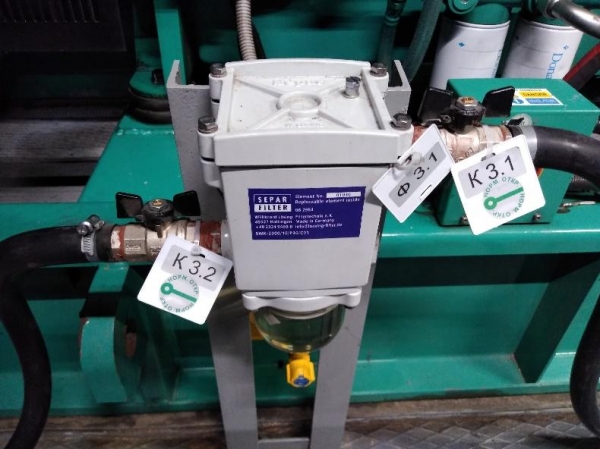
Fuel Separator.
Weather Conditions
In the pursuit of quality and affordable prices for fuel, companies often overlook the temperature at which the station will operate. Sometimes, selecting one fuel "for any weather" does not cause significant harm. But if the station is used outdoors, it's advisable to choose fuel according to the climatic realities.
Manufacturers categorize diesel fuel into summer, winter, and 'arctic' varieties—designed for extreme low temperatures. In Russia, the division of fuel by seasons is governed by GOST 305-82. This document stipulates that summer grades of fuel should be used at temperatures above 0 °C. Winter fuel is suitable for use at temperatures down to -30 °C. 'Arctic' fuel is suitable for conditions down to -50 °C.
To ensure the stable operation of diesel generators, we decided to purchase winter diesel fuel rated for -35℃. This allows us not to worry about seasonal weather changes.
How we check the fuel
For diesel generators to operate reliably, it is essential to ensure that the supplier delivers exactly the fuel you need.
We spent a long time considering this issue, looking at the option of sampling fuel and sending it for analysis to specialized laboratories. However, this approach requires time, and what should we do if the analysis returns unsatisfactory results? The batch has already been shipped—should we return it, reorder? And how do we handle it if such a reorder coincides with a period when the generators need to be started?
So we decided to measure the fuel quality on-site using octanometers, specifically the SHATOX SX-150. This device allows for express analysis of the supplied fuel, determining not only the cetane number but also the pour point and type of fuel.
The operating principle of the octanometer is based on comparing the octane/cetane numbers of certified samples of diesel fuel/gasoline with the fuel being tested. The special processor includes tables of certified fuel types, which the interpolation program compares with the parameters of the sampled specimen, making adjustments for the sample's temperature.
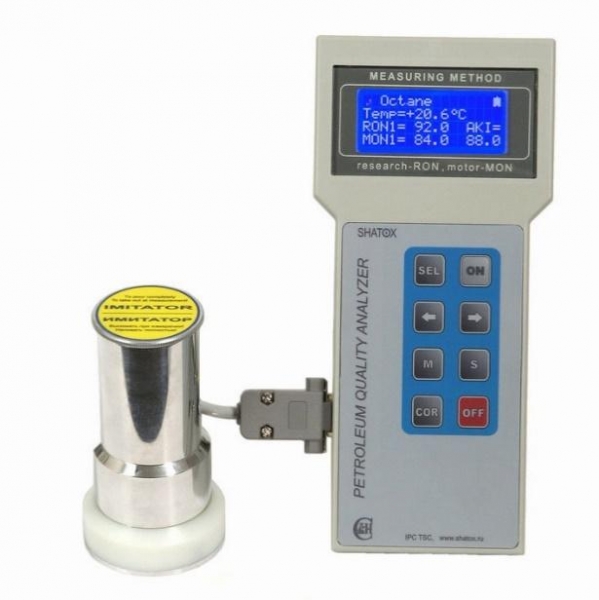
This device provides real-time fuel quality results. The rules for measuring fuel quality with the octanometer are outlined in the operational regulation.
Operating principle of the octanometer
- The sensor is installed on a horizontal surface and connected to the measuring unit.
- The device is activated when the sensor is empty. The measuring device displays zero readings for CETANE:
- Cet = 0.0;
- T fr = 0.0.
- After checking the operation of the device, fuel must be poured into the sensor until full. The measurement and update process takes no more than 5 seconds.
- After measuring, the data is entered into a table and compared with the standard readings. For convenience, automatic color highlighting is set in the cells. With acceptable readings, the color is green; with unsatisfactory parameters, it turns red, allowing for additional control over the supplied fuel parameters.
- We have selected the following normal fuel quality readings:
- Cet = 40-52;
- Tfr = from minus 25 to minus 40.
Fuel Resource Accounting Table
| Date | Fuel Acceptance | Quality Check | |
| January 18, 2019 | 5180 | Cetane | 47 |
| TFr | -32 | ||
| Type | W | ||
S – summer fuel, W – winter, A – arctic.
PROFIT! or how this worked
In fact, we started receiving the first results of the project immediately after the control system was put into operation. The first control showed that the supplier delivered fuel that did not meet the declared parameters. As a result, we sent the tanker back and requested a replacement batch. Without the control system, we could have faced the situation of the diesel generator not starting due to poor fuel quality.
In a very general, strategic sense, such a level of thoughtfulness in quality control provides complete confidence in the uninterrupted energy supply of the data center, as we can fully rely on ourselves to maintain a 100% uptime mode of operation.
And these are not just words: perhaps we are the only data center in Russia that, during a demonstration tour for a client upon the request "Can you disconnect from the main power supply to show the switch to backup?" responds affirmatively and immediately transfers all equipment to backup in real time. The most important thing is that this can be done by any employee with the appropriate level of access: processes are refined enough not to depend on a specific executor – we are that confident in this regard.
However, we are not alone: the process of quality control of diesel fuel during certification by the Uptime Institute caught the attention of the organization’s auditors, who noted it as an industry best practice.
Source: habr.com
