

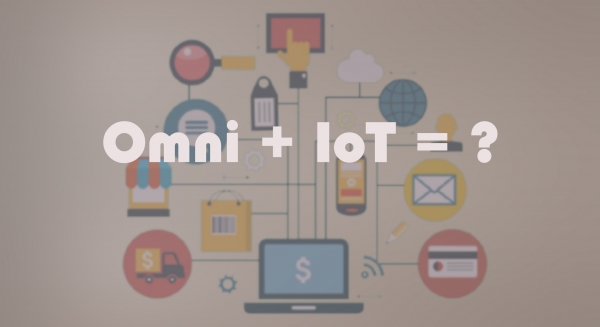
The world of e-commerce is divided into two halves: some are well-versed in omnichannel strategies, while others still question how this technology can benefit their businesses. The former consider how the Internet of Things (IoT) can create a new approach to omnichannel. We translated an article titled The IoT Brings New Meaning to the Omnichannel Customer Experience and share the main points.
One of the hypotheses from Ness Digital Engineering suggests that by 2020, user experience will be the decisive factor in product selection, overshadowing attributes such as price and the product itself. This leads to the conclusion that, in order to attract customers and enhance brand loyalty, companies should closely examine the customer journey and identify key brand messages across all communication channels. This is the way to create a seamless contact with customers.
Barriers to IoT Omnichannel Evolution
The author of the article refers to the combination of the Internet of Things and omnichannel as IoT omnichannel evolution. It's evident that IoT will facilitate the creation of an improved customer journey. However, there remains an open question regarding the management of the large amounts of data generated by implementing IoT into the business model. How can truly valuable insights be created based on data analysis? The author highlights the 3P for this purpose.
Proactive experience
Typically, the interaction between a company and a customer begins with the customer's initiative (purchase, service usage). When using IoT in a company, this situation can be reversed through continuous monitoring using IoT devices. For example, in manufacturing, this can predict the lifespan and scheduled maintenance needs of equipment. This helps avoid costly unplanned downtimes. Another example is that sensors can alert customers about malfunctions in certain parts of their vehicles or calculate when replacement is due.
Predictive experience
IoT can predict and anticipate user actions by exchanging real-time data with cloud services, where models of behaviors based on the actions of all users are built. Over time, IoT applications leveraging data from surveillance cameras, radar, and sensors in cars will make autonomous vehicles safer and reduce the risk of traffic accidents for drivers.
Personalized experience
Content personalization based on customer behavioral scenarios.
Personalization is enabled by continuous monitoring and analysis of consumer behavior. For example, if a shopper searched for a specific product online the day before, the store can suggest related items and accessories based on past search data using smart proximity marketing in the offline store. This marketing strategy utilizes data from Bluetooth sensors that analyze customer movement offline, as well as information obtained from IoT devices like smartwatches and other tech gadgets.
In conclusion, it is important to note that IoT is not a silver bullet for businesses. The possibility and speed of processing big data remain in question, and so far, only giants like Google, Amazon, and Apple can manage this technology. However, the author emphasizes that you do not need to be a giant to use IoT; being a smart company regarding strategy and customer journey mapping is sufficient.
Source: habr.com
