

Today we have an unusual article – a translation of a piece about illegal robocalls in the USA. Throughout history, there have always been those who use technology not for good, but to deceitfully profit from trusting citizens. Modern telecommunications are no exception; spam or outright scams can reach us via SMS, email, or phone calls. With phones, the situation has become even more entertaining, as today there are automatic calls (hereafter referred to as robocalls). Originally devised as a legitimate and transparent way to inform people and make additional sales, they have become popular among scammers; legitimate robocalls occur with the consent of the parties, and the customer phone numbers are obtained legally, while illegal calls at best cause unnecessary anxiety and at worst steal data and money. We devised , the "corporation of good" is developing Google Duplex, etc. – high-tech tools are bringing us closer to cyberpunk at the speed of light, because soon we may not be able to tell who is speaking to us, a robot or a human. This holds both great opportunities and immense troubles. Our company is firmly against any illegal activities and believes that technology should aid both businesses and customers on a compromise basis. Unfortunately, not everyone shares these values, so below you will learn about the record fine for illegal calling, statistics on calls in the USA, tools for combating such calls, and, of course, recommendations on how to behave. Because forewarned is forearmed.
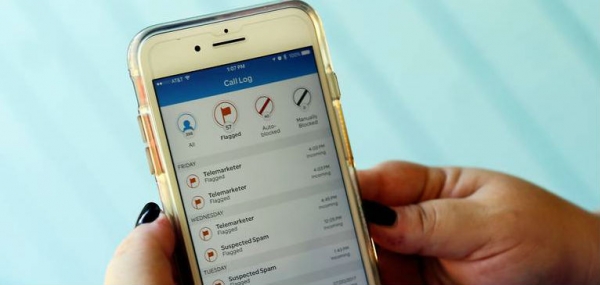
Soon, half of calls will be from robots. Tip: do not answer (?)
The tax office is about to arrest you for tax evasion. A collector demands immediate payment. A hotel chain offers you a free stay. Your electricity is about to be shut off for non-payment. Your bank is lowering the interest rate on your credit card or notifying you of a security breach. A doctor wants to sell you back pain medication at a reduced price.
In the Middle Ages, a plague descended upon humanity. Today, we are engulfed by an epidemic of robocalls.
Every day, all day, we are besieged by calls from scammers looking to steal our money and personal data. Even if you are not gullible and do not fall for schemes like:
- "credit card recovery";
- to take advantage of the last chance to avoid trial – you need to talk to a federal agent and get your case number;
- to receive a free medical alert system, which will be communicated to you by the Los Angeles number;
- etc.
in any case – the voice of the robot has already invaded your personal space.
Statistics
The number of unwanted robocalls received by Americans has risen to 4 billion per month, which is about 1543 calls per second. The percentage of fraudulent calls increased from 4% (in 2016) to 29% (in 2018); the company First Orion, which develops call blocking and management technology, predicts an increase to .
"Fraudsters are finding more and more ways to violate our privacy," says Charles Morgan, a data scientist and company manager, on there's a phrase: "We know this is a heroic mission – to teach people to answer calls again."
Robocalls are a large, profitable business. The use of technology for nefarious purposes is also lucrative: Americans every year, according to estimates from Truecaller. Those at risk include elderly people, students, small business owners, and immigrants.
One recent scam targeted Chinese communities in the U.S. and netted $3 million, according to the Federal Trade Commission. Mandarin-speaking scammers posed as employees of the Chinese embassy and requested personal information or credit card numbers, allegedly to resolve some legal issues.
After hurricanes Harvey, Irma, Maria, and Florence, fake charities sprang up, making calls soliciting donations for hurricane victims.
In South Florida, where scams proliferate like rabbits, the volume of such calls is among the highest in the country. Areas 305 and 954 together ranked for this indicator. Scammers say that if every minute 1 potential victim is born, for South Florida this number is higher, as this state is a true magnet for trusting quick-buck seekers. If you live here, you are likely to receive at least 2 robocalls a day.
Record
Do you know Abramovich?
The one who lives across from the prison?
Yeah, but now he lives across from his own house.
(joke)
Adrian Abramovich, a businessman from Miami, which describes his actions as "one of the largest illegal robocall campaigns we've ever investigated." Abramovich made over 100 million calls in the last three months of 2016, about 46,000 calls per hour. He used caller IDs of Marriott, Expedia, Hilton, and TripAdvisor to lure people into purchasing "exclusive" tours. Victims heard an automated message saying "press 1," and if they did, they were forwarded to operators at a Mexican call center that paid Abramovich for the traffic.
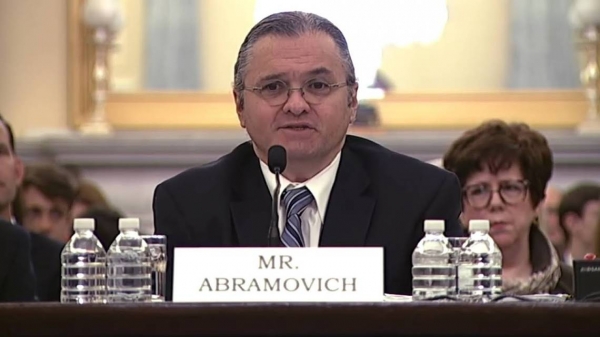 Adrian Abramovich is accused of intentionally creating one of the largest illegal robocall schemes.
This activity also disrupted the operations of a medical courier service. "It is believed that Abramovich may have delayed the delivery of vital medical assistance, which is a matter of life and death," says Ajit Pai, chairman of the Federal Communications Commission.
Government actions
The explosive growth of robocalls is fueled by technological advancements. The so-called "robotext" is also on the rise. If phones are using the Internet, then scammers can make thousands of untraceable calls for mere cents, extremely cheaply. "And if they can deceive even a small percentage of people, the fraudsters still come out ahead," reports the CEO of .
Consumer advocates are concerned that a new wave of unblockable calls is coming if the commission follows a court ruling that overturns regulations put in place by the previous U.S. administration. Legislators have proposed bills (HANGUP Act, the ROBOCOP Act) and other measures, however, the banking and credit industries oppose these initiatives. This is not surprising, as a large portion of automated calls are made by banks and collectors, as well as scammers posing as insurers and creditors.
In the U.S., there is a Do Not Call Registry that already includes 230 million American numbers; over the past year, the registry has grown by 4.5 million entries. The registry was created to ensure that only legitimate telemarketing remains in the market, but scammers ignore this list. They are always a step ahead of the government because they change names and numbers (physically or virtually moving abroad, for example). This way, they spoof real numbers—subscribers will think they are being called from their region, with a recognizable regional prefix, which increases the chances of answering. Threats are also used, such as: 'Local authorities will detain you because you are being charged under four articles.' At the same time, scammers can determine that your number is active (even if you did not answer) and then sell the number to their 'colleagues.'
Recommendations
Want to avoid scams? Don't answer suspicious calls. If you've already answered but hear a recorded message, hang up. Don't press anything or say anything. Don't provide personal and financial information, and don't agree to make money transfers. Be wary of offers that sound too good to be true, because scammers always have those.
If someone asks you, 'Can you hear me?', do not respond 'yes' because they might record your 'yes' and use it against you. Of course, it can be tempting to chat with a scammer and pretend to fall for their bait, only to suddenly expose them, ha! But it's better not to do that.
Beware of calls from Apple or Windows support asking you to download a program that will turn out to be malware.
Be cautious if you are informed about suspicious activity on your credit card—it's better to call the official number on the card yourself and verify everything again.
Don't fall for 'free' gifts when asked to press 1 for details. The details will be the fact that you've been scammed.
Fake calls from the tax office are easy to identify: the tax agency never calls citizens with threats of imprisonment for non-payment of taxes.
Any mention of Nigeria? Goodbye.
In conclusion
The industries of automated calls and telemarketing have spawned the industry of call blocking/tracking. There are many call-blocking applications—such as —that answer the call, connect to an operator, and play a recorded message (‘Gotcha!’); another example is , which intercepts calls. There are also , which can be updated or searched for suspicious numbers. Phone operators are also not standing still, trying to find new ways to identify legitimate numbers and mark fake ones.
‘We have already blocked over 4 billion calls on our network,’ shares Kelly Starling, a representative of AT&T in South Florida. ‘We’ve learned to identify the sources of calls, block them, and also provide our customers with ».
Americans (I suspect most people around the world do too—that's a translator's note) react to phones like Pavlov's dog—it's inevitable that this would be exploited. Perhaps the epidemic of robocalls gives you a good reason to just... turn off your phone.
Source: habr.com
