

In 2019, the Arkhangelskoye estate museum celebrated its 100th anniversary and underwent significant restoration work. A reliable Wi-Fi network was implemented in the park so that art lovers could ask Alice what they were seeing and what the artist intended, while couples on the benches could post selfies between kisses. Couples love this park and buy tickets, but the lack of selfies disappoints them more each year.
There is no mobile network coverage here because the entire area is a particularly valuable cultural heritage site of the Russian Federation, plus a Ministry of Defense sanatorium is nearby. There is a significant problem with placing towers: they cannot simply be installed according to the design code, and suitable sites inside the area do not exist. In such situations, mobile operators typically take a straightforward approach: they place towers outside to provide coverage to the museum territory. However, the museum's perimeter is guarded by the National Guard. As mentioned earlier, standard safety regulations prevent the installation of towers there.
To address the issue (the lack of mobile operators in the park), we proposed creating Wi-Fi coverage here and now.
Task
The Arkhangelskoye estate museum tasked us with designing the telecom infrastructure in the buildings and park areas, primarily focusing on structured cabling systems and Wi-Fi zones. Concurrently, we need to design a monitoring system and several other subsystems that are important for the park. Since public Wi-Fi is available, we also need to deploy authentication servers (by law, registration without an ID or phone number is not permitted), security measures (firewalls), and set up a server room for the core network.
The specificity of the site lies in its cultural heritage status. This means that if it’s a building, most attachments can only be made to the underground space, into some furniture, or elsewhere. Cables cannot be laid. All movements must be coordinated with the architectural committee, plus special approvals from the Ministry of Culture, and so on.
The first part of the project is Wi-Fi coverage:
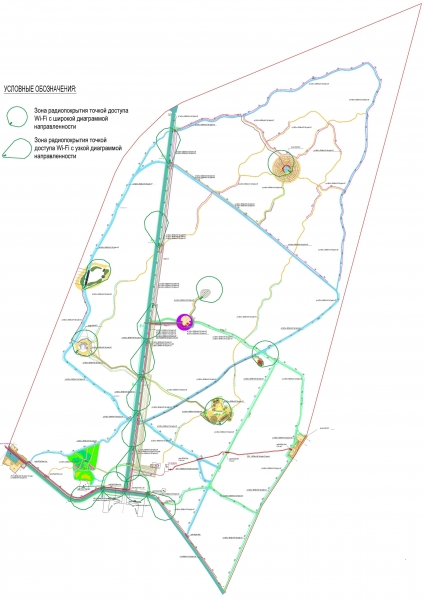
As you can see, the park is very large, so we first identified the main gathering spots and 'covered' them with access points. This primarily refers to the main alley
and buildings. The main alley is already ready; you can test it. Some buildings will be addressed in the next phase.
Access points come in two types: with narrow and wide beam patterns. Equipment models:
Cisco AP 1562D MO and Cisco AP 1562IIn public places, there is a strong emphasis on aesthetics, so external antennas on access points would be inappropriate. The Cisco AP1562D has a built-in antenna that directs the signal where it is needed — towards the alley, rather than into the trees. Additionally, this directional antenna is embedded in the housing, maintaining aesthetic appeal.
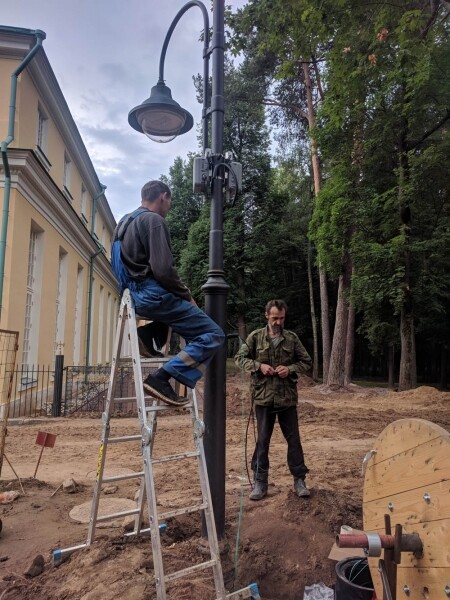
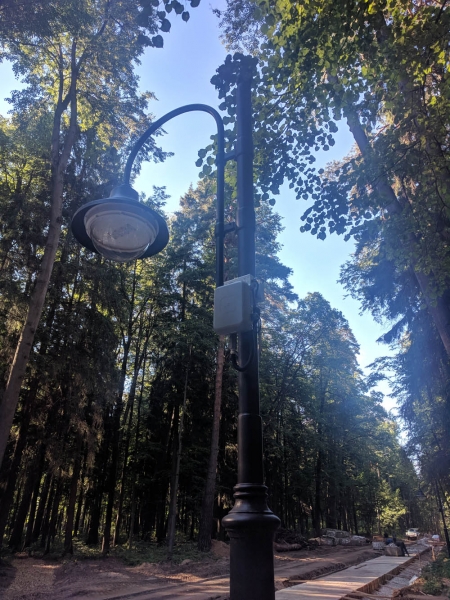
For the alley, there were no issues with mounting the access points: new streetlights had already been installed, and the architectural committee allowed the installation of boxes on them. It's not the most aesthetically pleasing, but there were no other options, as one requirement was a sufficient height to prevent the access point from being stolen:
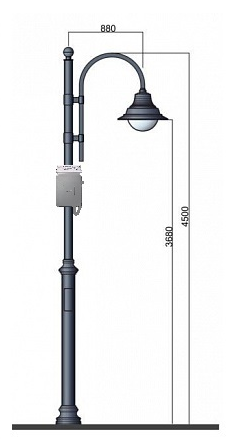
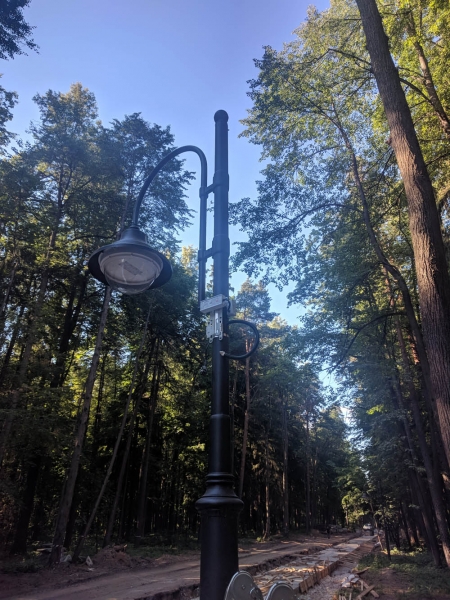
The access points cannot be powered from the streetlights: they are turned off during the day.
Connecting structured cabling was much more complicated. Excavation in the park area is allowed, but each tree is protected individually, so trenching needed to be carefully coordinated with centimeter precision. They zigzagged around the plants:
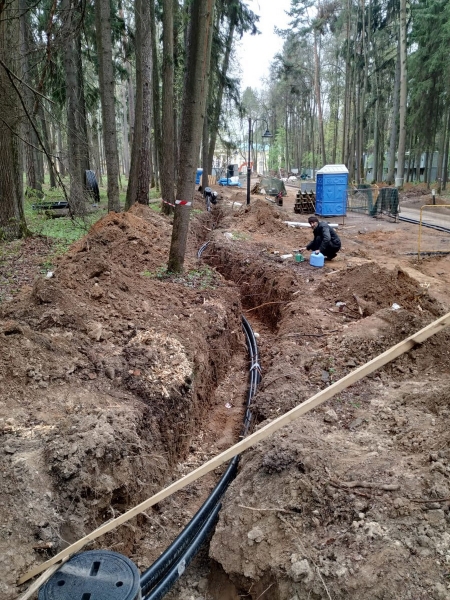
Power and optics. The distances for PoE are too long.
Due to their irregular shape, mechanical digging was not possible, only manual labor. It required a lot of precise work.
The structured cabling was, one could say, doubly protected. Special covers for communication with adapters and on top of that, mastic. The well is a plastic KKT-1. The second one was KKT-1. M — that stands for small. They are watertight hatches that can be opened and closed with a special key; there is such a key for the well cover:
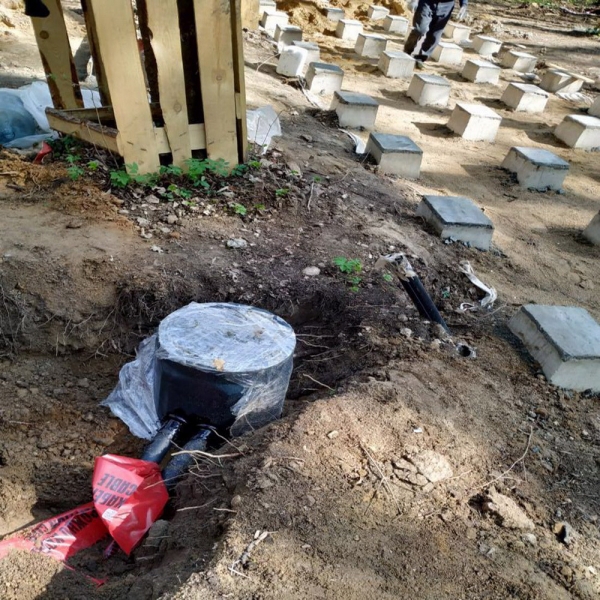
We simply installed 70 of them, while KKT-1 was positioned in front of the building. This was used as the entry point for communications into the building. Communications were brought in via adapters (supports for watertight entry). They were, respectively, of different diameters — 32 mm, 63 mm, and 110 mm. Outside, all of this was covered with bitumen-polymer waterproof mastic, specifically at the entry point.
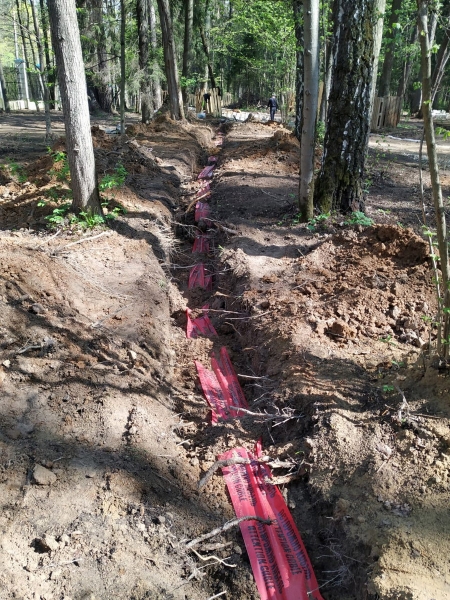
If a worker accidentally hits a tree during installation, they could end up in prison for five years.
There are no excavators in the park, but there are gardeners. According to communication installation standards, we applied warning signal tape on all pipes laid outside and covered them with soil. This way, if people conduct work in that area later, they would see it and understand that there are communications buried at a depth of half a spade's length and should avoid cutting through them. Two kilometers of this tape were used. It was approved by ecologists—it's neutral, specially reinforced, and decomposes in the soil over 30-40 years.
Access points for HD coverage—just like in stadiums. The 1560 series access points have a special reinforced hardware platform designed to withstand the heavy loads of large public events. The same 'Usadba Jazz' music festival is held in Arkhangelsk, with a potential attendance of 100,000 people. Therefore, such access points are located on the Imperial Avenue in the northern part, near the museum and the theater (which, by the way, is a monument of world significance, located across the highway from the main area—structured cabling will need to be routed through a horizontal directional drill under the road).
Inside the buildings and around them, the installation is very difficult. This is a compromise between beauty and rationalism: they have already installed light fixtures that are not visible from the outside. It was decided to allow for an additional box.
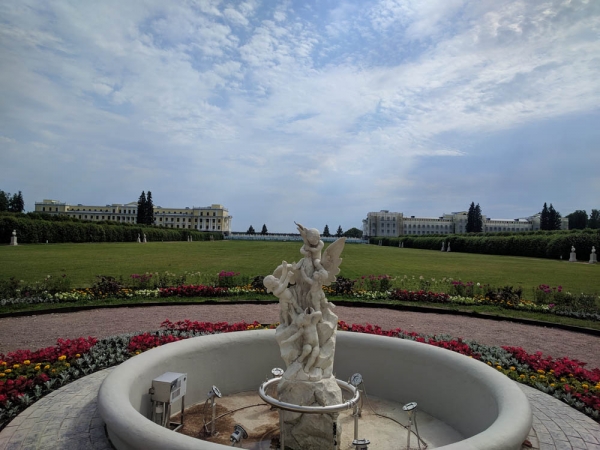
The access point operates down to -40 degrees Celsius.
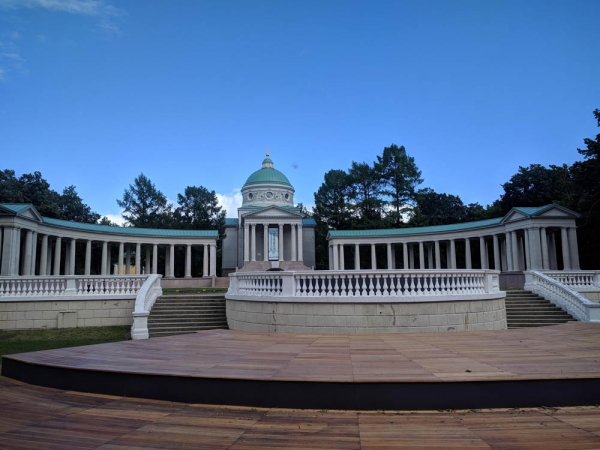
We also created an authentication portal. It asks for a phone number, then generates a call, and the last four digits of the incoming phone number must be entered in the authorization code field. Statistics are collected from the access points regarding the number of devices on the network and the reappearance of MAC addresses in the park.
The network is built on Cisco equipment so that the museum will need minimal maintenance for the infrastructure later on. The solution is designed so that during the operation of the network, the customer does not spend much on technical support. The infrastructure will function reliably for several years without downtime, requiring no equipment replacement.
A hybrid solution was achieved: industrial modules for harsh conditions in some places, and almost home-grade equipment in others. The switches are consumer-grade. The core is designed to provide enough ports for expansion. Redundant catalysts.
Links
- .
- .
- .
- My email is AChuvilin@croc.ru.
Source: habr.com
