

When you want to submit your research paper to a journal, you must select a target journal relevant to your field of study, and the journal should be indexed in one of the major indexing databases such as ISI, Scopus, SCI, SCI-E, or ESCI. However, identifying a target journal with a solid citation report isn't straightforward. In this article, the publishing house 'Scholar's View' provides answers to frequently asked questions about selecting a journal. This article also discusses the differences between SCI, SCIE, and SCImago journals.
How to check if a journal is indexed in the ISI indexing database?
To check whether a journal is indexed in the ISI Web of Science database, follow these steps.
1. Enter the URL in the address bar:
You will be redirected to the search page of the Master Journal List by Clarivate Analytics.
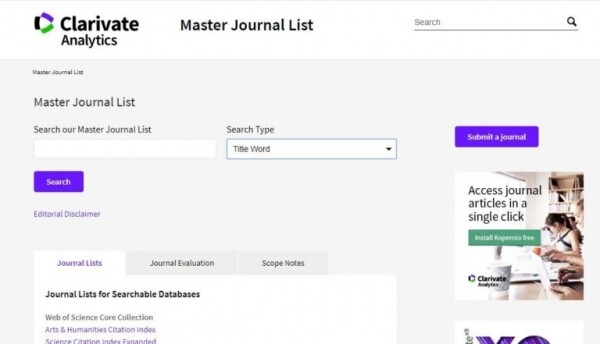
2. Enter the target journal's name in the search box.
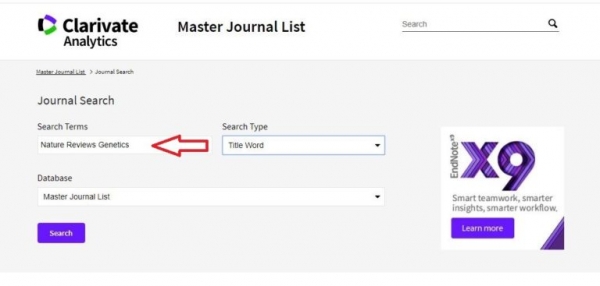
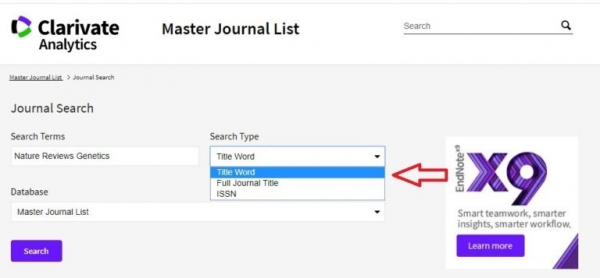
3. Then, in the next step, select the search type.
Regardless of whether you've specified in the title the words title, full journal name, or ISSN number.
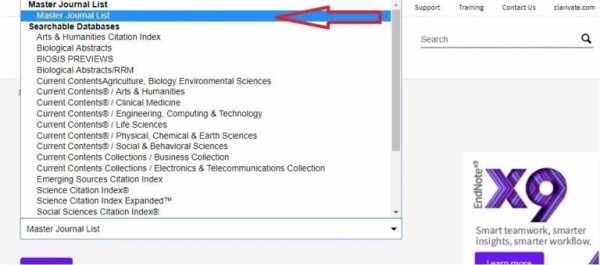
4. In the next step, choose the database you want to check for indexing.
You can specify a particular database or choose the master journal list to find the overall coverage of the target journal.
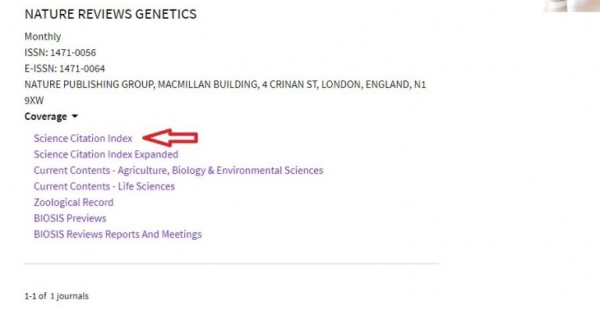
5. Finally, you will receive detailed information about the journal with all the highlights of the database.
Here you can see that this journal is indexed in the citation index.
How to determine if journals are indexed in Scopus?
Scopus is the premier database of reviewed and cited journals, containing over 70 million articles such as: research articles, conference proceedings, book chapters, lecture notes, and books. To ensure whether the target journal is indexed in the areas or not, you need to follow these steps.
1. Enter the URL in the address bar:
You will be directed to the source browsing on Scopus.com — the journal list search page.
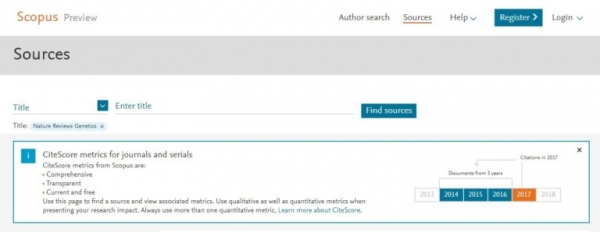
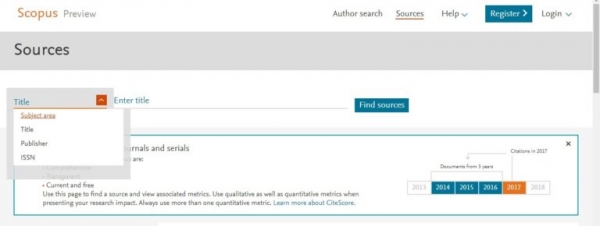
2. Select the title, publisher number, or ISSN number of the target journal to find if it is indexed in Scopus:
3. Specify the title of the target journal in the "Title" field. After entering the journal's name, click the "Find Sources" button.
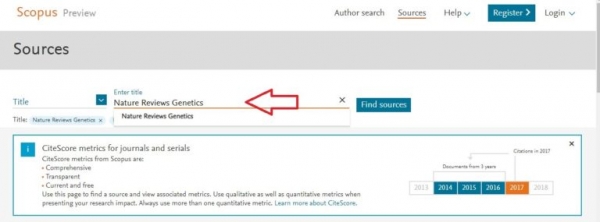
4. Finally, you will receive detailed information about the journal with all the highlights from the database.
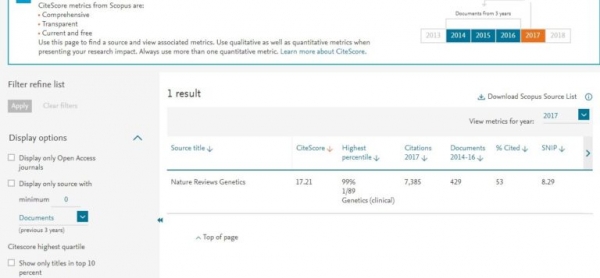
Here, it shows that the journal 'Nature Reviews Genetics' is indexed in the Scopus database. Additionally, you will obtain the Scopus impact factor and citation reports from journals over the past five years.
How to identify SCImago ranked journals?
SCImago Journal & Country Rank is a public website to determine the academic rankings of journals and countries. The SCImago rankings are used for analyzing quality journals for publication. This ranking system also operates on Scopus. To check if a journal is indexed by SCImago, follow these steps.
1. To check whether your target journal is indexed in SCImago, go to scimagojr.
You will be directed to the search page of SCImago Journal & Country Rank:
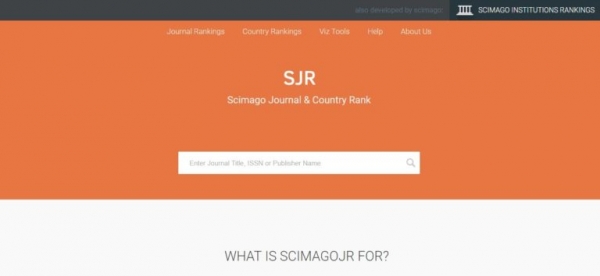
2. Enter the title of the target journal in the search field. Then click the search button.
You can enter a keyword, the full title of the journal, or the ISSN in the search box.
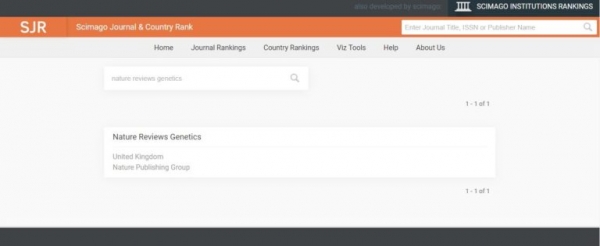
3. In the next step, select the journal title from the SCImago ranking results.
It will take you to the ranking page.
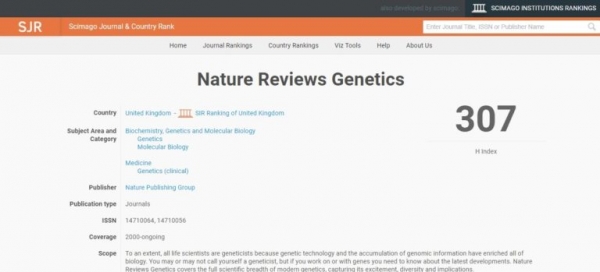
4. Finally, you will receive detailed information about the journal with all the details of the SCImago database ranking results.
Here, it shows that the journal 'Nature Reviews Genetics' has reached a position in the SCImago ranking.
What is the difference between SCI, SCIE, and SCImago journals?
Researchers often confuse scientific indexing from different databases. Let's clarify the difference between SCI, SCIE, and SCImago journals.
Science Citation Index (SCI)
SCI: The Science Citation Index (SCI) is a citation index originally prepared by the Institute for Scientific Information (ISI) and created by Eugene Garfield.
The SCI was officially launched in 1964. It is now owned by Thomson Reuters. SCImago Journal & Country Rank is a portal that includes journals and country scientific metrics derived from information contained in the Scopus database (Elsevier).
These metrics can be used to evaluate and analyze scientific fields. The larger version (expanded citation index) covers over 6,500 well-known and significant journals across 150 disciplines from 1900 to the present.
They are referred to as leading global scientific and technical journals due to their rigorous selection process.
Expanded Science Citation Index (SCIE)
SCIE: the Expanded Science Citation Index (SCIE) is a bibliographic database originally created by Eugene Garfield, established by the Institute for Scientific Information (ISI) and now owned by Thomson Reuters (TR). The company publishes the journal impact factor annually.
SCImago Journals
SCImago Journal: this platform is named after the SCImago Journal Rank (SJR) indicator, developed by SCImago from the widely known Google PageRank algorithm. This indicator reflects the visibility of journals contained in the Scopus database since 1996. This index is based on the SCOPUS database, where the indexed journals are much broader compared to ISI.
I hope this article helps you identify ISI, Scopus, or Scimago Indexed journals and understand the differences between them.
Source: habr.com
