

The method of studying various disciplines 'with flashcards', also known as the Leitner system, has been known for about 40 years. Although flashcards are most often used to expand vocabulary, learn formulas, definitions, or dates, the method itself is not just another way of 'cramming'; it is a tool that supports the learning process. It helps save the time required to memorize a large volume of information.
Photo: / Unsplash.com
A day after the lecture, the student will only need ten minutes for revision. After a week, just five minutes will be required. After a month, just a couple of minutes will suffice for his brain to 'reply': 'Yes, yes, I remember everything.' A study conducted at the University of Alberta, showed the positive impact of Flashcards-Plus methodology on students' grades.
But the Leitner system can be used not only in schools and universities. CD Baby founder Derek Sivers flashcard learning the most effective way to support the development of a developer's skills. With its help, he mastered HTML, CSS, and JavaScript.
Another example is Roger Craig, who in 2010 the game show Jeopardy! and earned $77,000 in winnings.
In online education, the system is used everywhere: there are almost no educational services without flashcards. The system is applied in almost all basic disciplines, and dozens of specialized applications have been developed for it—both desktop and mobile. The first of these, SuperMemo, was developed by Piotr Wozniak in 1985.
He primarily sought to improve the educational process for himself—related to learning the English language. The method yielded results, and the software turned out to be quite successful and is still being updated. Of course, there are other, more popular applications like and , which employ similar principles to those of SuperMemo.
Foundations of the method's emergence
One of the pioneers of experimental psychology, Hermann Ebbinghaus, studying the patterns of memory in the late 19th century, described the so-called forgetting curve. Later, scientists repeatedly his experiments, investigating the 'We found that it varies depending on the nature of the material being studied. For instance, lectures or poetry, being meaningful content, were remembered better. Additionally, individual characteristics and external conditions such as fatigue, sleep quality, and environment influenced memorization quality. Overall, the research confirmed the basic patterns of the phenomenon identified by Hermann Ebbinghaus.
Based on this, an seemingly obvious conclusion was drawn: to retain knowledge, repetition of the material is necessary. However, for maximum effectiveness, this should be done with specific time intervals. This spaced repetition technique was first tested on students by Herbert Spitzer from Iowa State University in 1939. Yet, the Ebbinghaus curve and the method of spaced repetition would have remained merely observations if not for Robert Bjork and Sebastian Leitner. Bjork studied the nuances of memorization for several decades. He produced dozens of works that significantly enhanced Ebbinghaus's ideas, while Leitner proposed a memorization method using flashcards in the 1970s.
How it works
In the classic Leitner system outlined in the book "How to Study Effectively," he recommends preparing several hundred paper flashcards. Suppose one side of the card has a word in a foreign language, and the other side has its meaning and usage examples. Additionally, five boxes are needed. Initially, all cards go into the first box. After reviewing, cards with unfamiliar words remain in this box, while known ones move to the second. The next day should start again with the first box: of course, some words will be recalled. This adds to the second box. On the second day, both boxes should be reviewed. Cards with known words from the first box are moved to the second, from the second to the third, and so on. "Unfamiliar" cards return to the first box. This way, all five boxes are gradually filled.
After that, the most important part begins. Cards from the first box are reviewed and sorted every day. From the second box — every two days, from the third — every four days, from the fourth — every nine days, and from the fifth — once every two weeks. What has been managed to be memorized is moved to the next box, and what has not is moved back to the previous box.
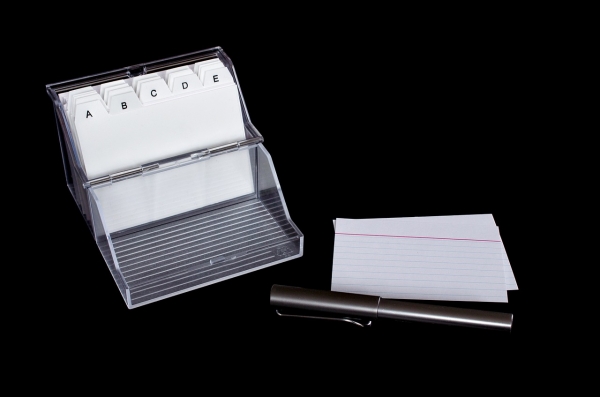
Photo: / Pixabay License
To remember all or almost all, at least a month will be needed. However, daily sessions will take no more than half an hour. Ideally, as Bjork notes, it's essential to revive the learned material exactly when we start forgetting it. However, in practice, this moment is nearly impossible to track. Thus, achieving a hundred percent result is not possible. However, with the Leitner method, after a month, one can recall much more than one-fifth of the information that, according to Ebbinghaus's observations, remains in memory.
An alternative approach is the use of specialized software. Such software has two differences from the 'paper' method. First, nearly all have mobile versions, meaning one can study on the way to work or school. Second, most applications allow setting convenient time intervals for reviewing the material learned.
What we have in the end
Spaced repetition somewhat resembles regular physical exercises, which are necessary for training muscles. Reprocessing the same information prompts the brain to memorize it more effectively and to store it in long-term memory.
The brain tells itself: 'Oh, I see this again. But since it's so frequent, I should memorize it.' On the other hand, the Leitner system should not be viewed as a 'silver bullet', but more as an effective tool to support the educational process. Like any other learning technique, it should be combined with other methods.
Our startups:
Our Hub topics on memory and brain function:
Source: habr.com
