

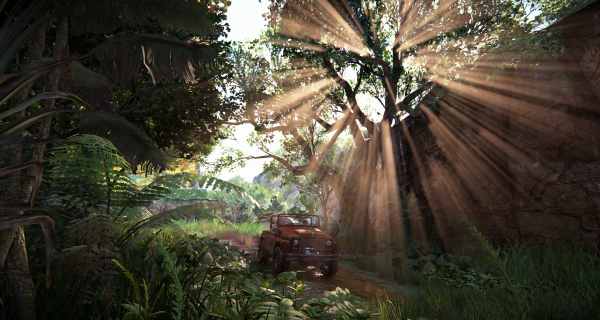
While waiting for the PS5 and Project Scarlett, which will support ray tracing, I contemplated lighting in games. I found material where the author explains what light is, how it influences design, alters gameplay, aesthetics, and experience—all with examples and screenshots. While playing, one doesn't immediately notice such details.
Introduction
Lighting is needed not only for the player to be able to see the scene (though that's very important). Light affects emotions. Many lighting techniques used in theater, cinema, and architecture enhance the emotional aspect. Why not borrow these principles for game designers? The connection between the visuals and emotional responses provides another powerful tool to work with characters, narrative, sound, gameplay mechanics, and so on. Furthermore, the interaction of light with surfaces allows for influencing brightness, color, contrast, shadows, and other effects. All of this forms the foundation that every designer should master.
The goal of this material is to define how lighting design affects the aesthetics of a game and the user experience. We will explore the nature of light and how it is utilized in other art fields to analyze its role in video games.
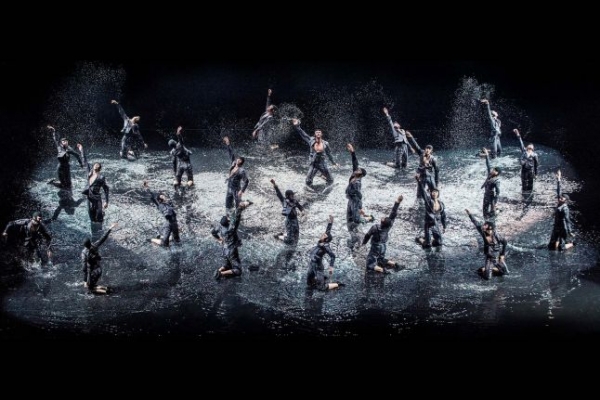
Swan Lake, Alexander Ekman
I — The Nature of Light
"Space, light, and order. These are things that people need as much as they need a piece of bread or a roof over their heads," — Le Corbusier.
Natural light has directed and accompanied us since birth. It is essential, establishing our natural rhythm. Light regulates our body's processes and impacts biological clocks. Let’s understand what light flow, intensity, color, and focal points are, and then we will comprehend the composition of light and its behavior.
1 — What the Human Eye Sees
Light is a part of the electromagnetic spectrum perceptible by the eye. This section of the wavelength ranges from 380 to 780 nm. During the day, we perceive colors thanks to cones, while at night our eyes use rods, and we only see shades of gray.
The main properties of visible light are direction, intensity, frequency, and polarization. Its speed in a vacuum is 300,000,000 m/s, which is one of the fundamental physical constants.
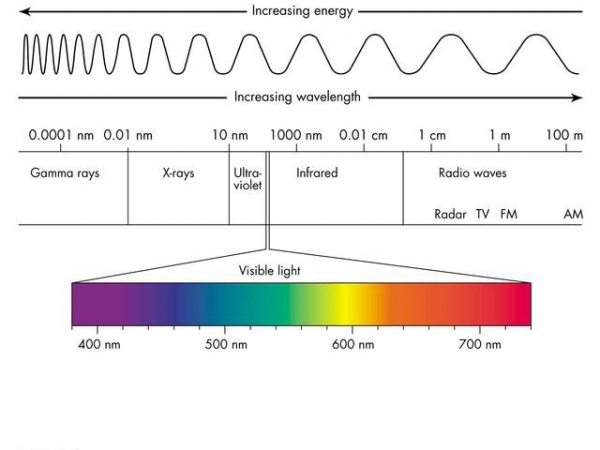
The Visible Electromagnetic Spectrum
2 — Direction of Propagation
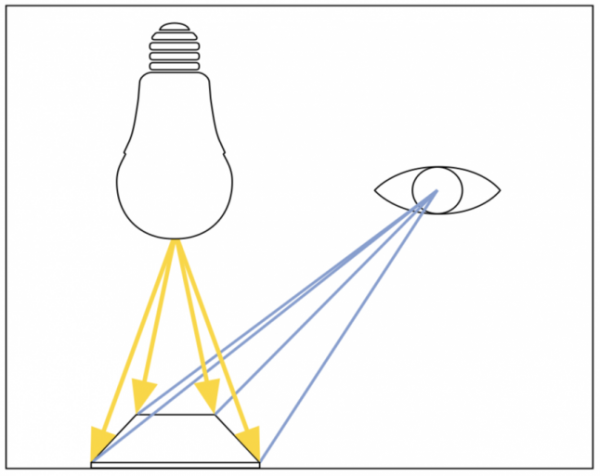
In a vacuum, there is no matter, and light propagates straight. However, it behaves differently when interacting with water, air, and other substances. Upon contact with a material, some light is absorbed and converted into heat energy. When hitting a transparent material, part of the light is also absorbed, but the rest passes through. From smooth objects, like mirrors, light is reflected. If the surface of the object is uneven, light is scattered.
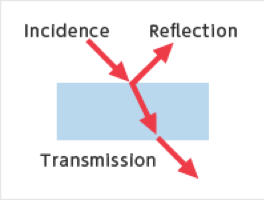
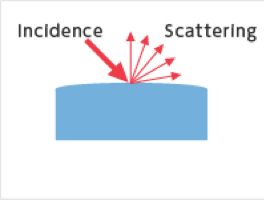
Direction of Light Propagation
3 — Basic Characteristics
Luminous Flux. The amount of light emitted by a light source.
Unit of measurement: lm (lumen).
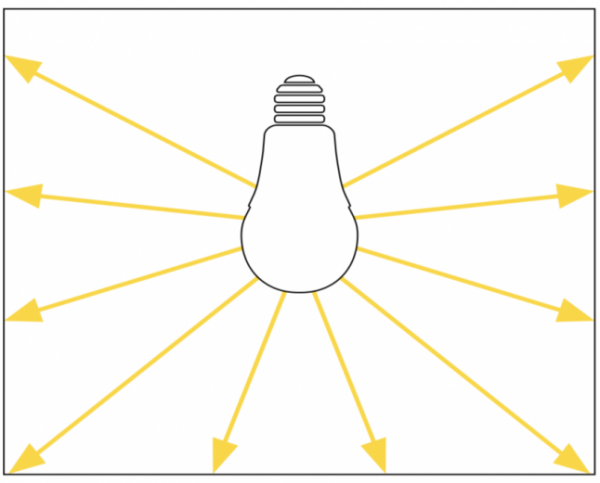
Luminous Intensity. The amount of light carried in a specific direction.
Unit of measurement: cd (candela).
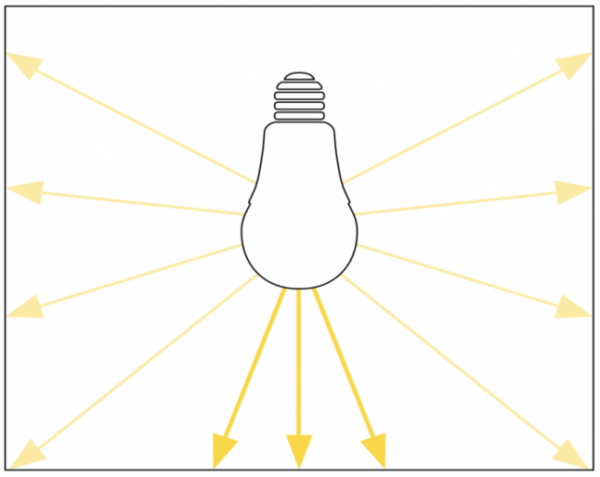
Illuminance. The amount of luminous flux falling on a surface.
Illuminance = luminous flux (lm) / area (m²).
Unit of measurement: lx (lux).
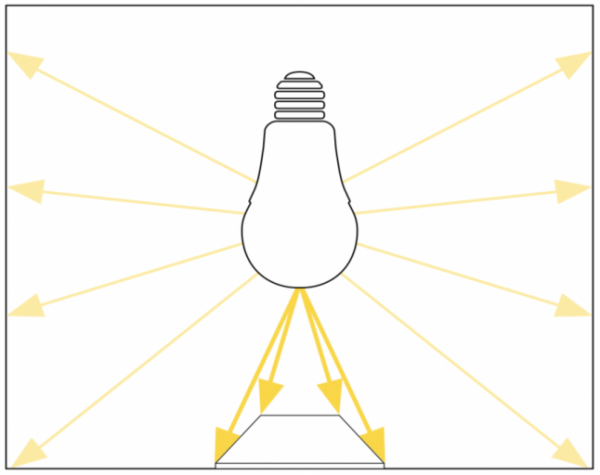
Brightness. This is the only basic characteristic of light perceived by the human eye. On one hand, it considers the brightness of the light source, and on the other, the surface, meaning it significantly depends on the degree of reflection (from color and surface).
Unit of measurement: cd/m².
4 — Color Temperature
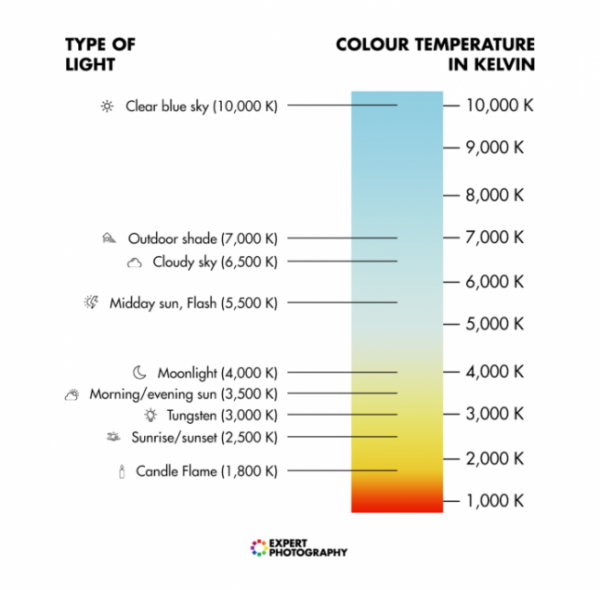
Color temperature is measured in Kelvins and reflects the color of a specific light source. British physicist William Kelvin heated a piece of coal. It glowed, shimmering in various colors corresponding to different temperatures. Initially, the coal glowed dark red, but as it was heated, the color changed to bright yellow. At maximum temperature, the emitted light became blue-white.
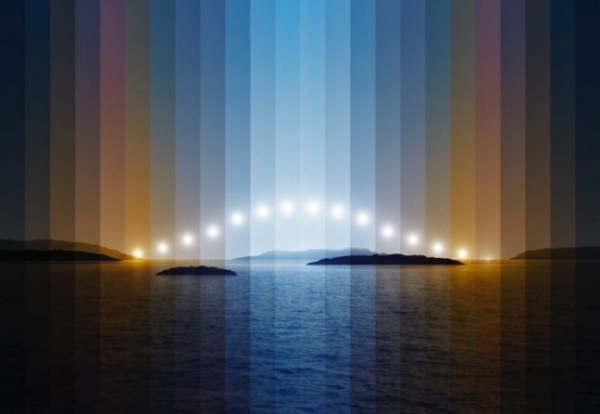
Natural Light, 24 hours, Simon Lahey
II — Techniques of Light Design
In this section, we will explore the lighting patterns that can be used to influence the expressiveness of content/visuals. For this, we will determine the similarities and differences in lighting techniques used by artists and lighting designers.
1 — Light and Shadow, and Tenebrism
Chiaroscuro is one of the concepts in art theory related to the distribution of lights and shadows. It is used to depict tonal transitions in order to convey volume and mood. Georges de La Tour is renowned for his works featuring night chiaroscuro and scenes illuminated by candlelight. None of his predecessor artists explored such transitions with such mastery. Light and shadow play a crucial role in his works and are integral to the composition in various and often alternative variations. Studying de La Tour's paintings helps to understand the use of light and its properties.
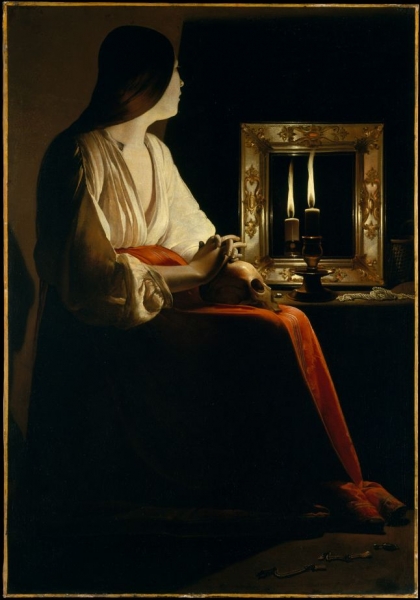
Georges de La Tour "The Repentant Mary Magdalene," 1638-1643.
a — High contrast
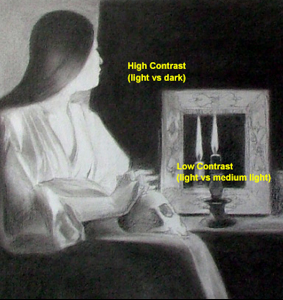
In this painting, the bright face and clothing stand out against a dark background. Due to the high contrast of tones, the viewer’s attention is focused on this part of the image. In reality, such contrast would not exist. The distance between the face and the candle is greater than between the candle and the hands. However, compared to the face, we see that the tone and contrast on the hands are subdued. Georges de La Tour uses varying contrast to attract the observer's attention.
b — Outline and rhythm of light
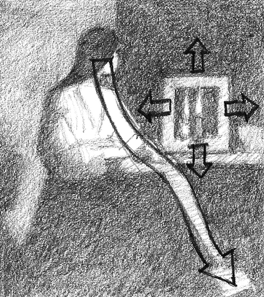
Due to the high tonal difference, outlines emerge in some areas along the edges of the figure. Even in the dark parts of the painting, the artist liked to use different tones to emphasize the boundaries of the object. Light is not concentrated in one area; it glides downwards: from the face to the feet.
c — Light source
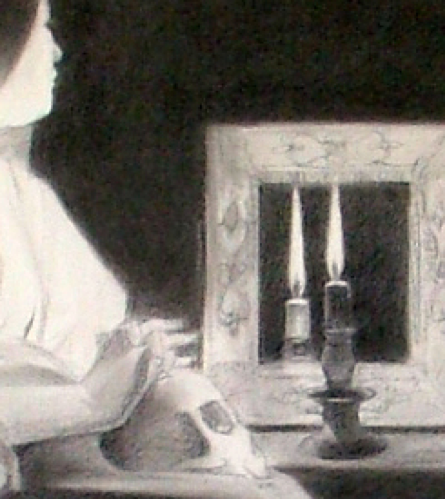
In most of Georges de La Tour's works, candles or lamps serve as the light source. The painting depicts a burning candle, but we already know that the chiaroscuro here does not depend on it. Georges de La Tour placed the face against a dark background and set the candle to create a sharp transition between tones. For high contrast, light tones are adjacent to dark, achieving an optimal effect.
d — Chiaroscuro as a composition of geometric shapes
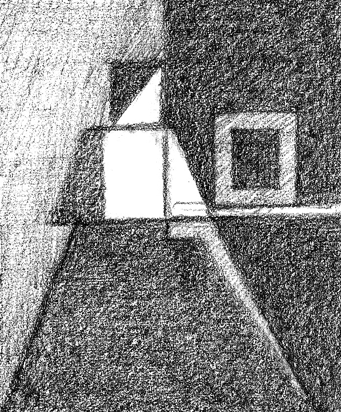
If we simplify light and shadow in this work, we will see basic geometric shapes. The unity of light and dark tones forms a simple composition. It indirectly sets a sense of space, where the positioning of objects and figures conveys the foreground and background, creating tension and energy.
2 — Basic Cinematographic Lighting Techniques
2.1 — Three-Point Lighting
One of the most popular and effective ways to illuminate any object is with three-point lighting, a classic Hollywood setup. This technique allows for depth to be conveyed.
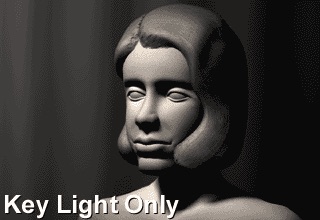
Key Light (Key Lighting)
This is usually the most powerful light in any scene. It can come from anywhere, with its source potentially located to the side or behind the object (Jeremy Birn, "Digital Lighting and Rendering").
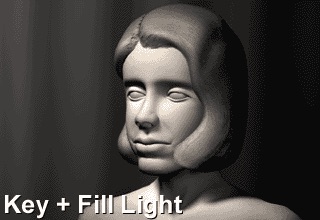
Fill Light (Fill Lighting)
As the name suggests, it is used to 'fill in' and eliminate the dark areas created by the key light. The fill light is noticeably less intense and positioned at an angle to the main light source.
Back Light (Backlighting)
This is used to convey the depth of the scene. It separates the object from the background. Like the fill light, the back light is less intense and covers a larger area of the object.

2.2 — From Below
Due to the movement of the Sun, we are accustomed to seeing people illuminated from various angles, but not from below. This method looks very unusual.
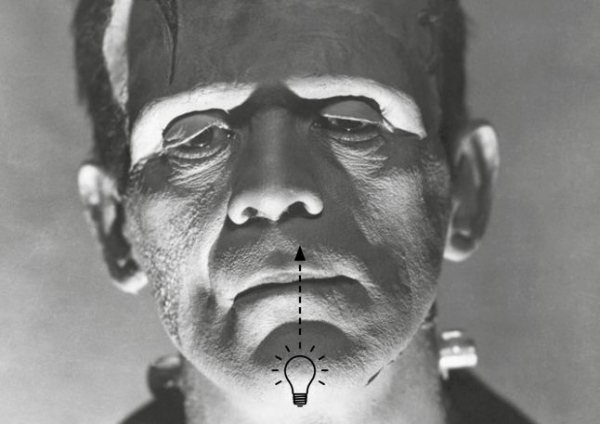
"Frankenstein," James Whale, 1931
2.3 — From Behind
The object is placed between the light source and the viewer. This causes a glow around the object while the rest remains in shadow.
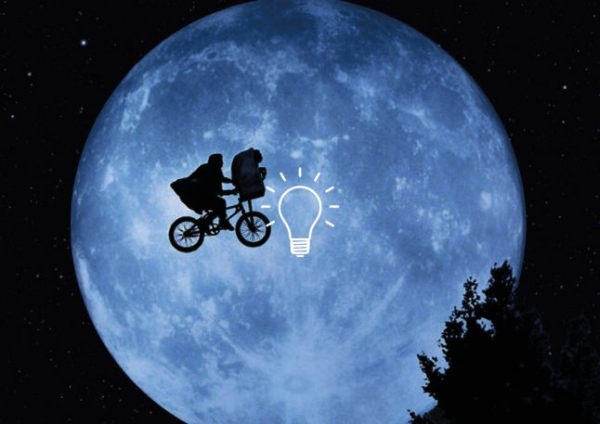
"E.T. the Extra-Terrestrial," Steven Spielberg, 1982
2.4 — From the Side
This lighting is used to illuminate the scene from the side. It creates a clear contrast, showcasing textures and highlighting the contours of the object. This approach is similar to chiaroscuro lighting.
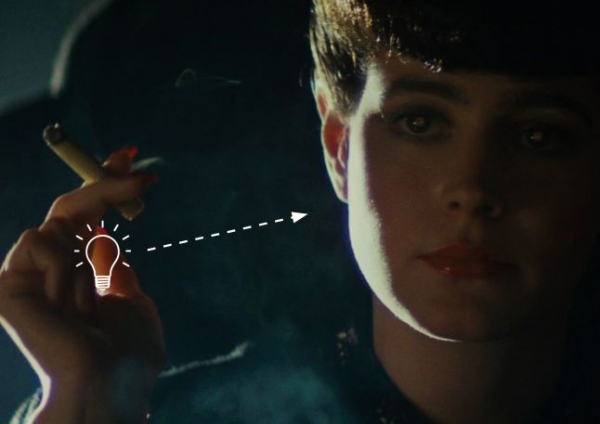
"Blade Runner," Ridley Scott, 1982
2.5 — Practical Lighting
This is actual lighting within the scene, such as lamps, candles, TV screens, and more. Such additional light can be used to enhance the intensity of illumination.
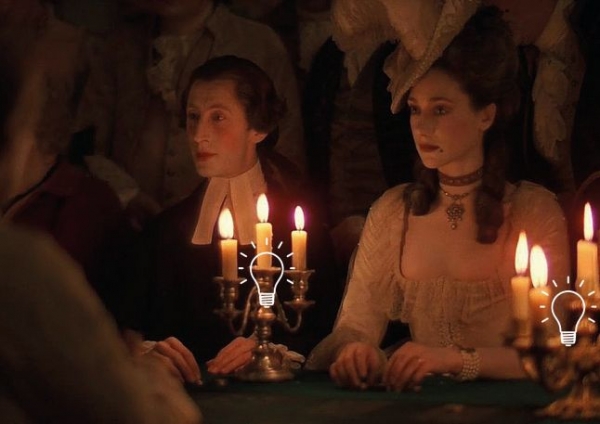
"Barry Lyndon," Stanley Kubrick, 1975
2.6 — Reflected Light
Light from a strong source is diffused using a reflector or some surface, such as walls or ceilings. This spreads the light over a larger area and makes it more even.
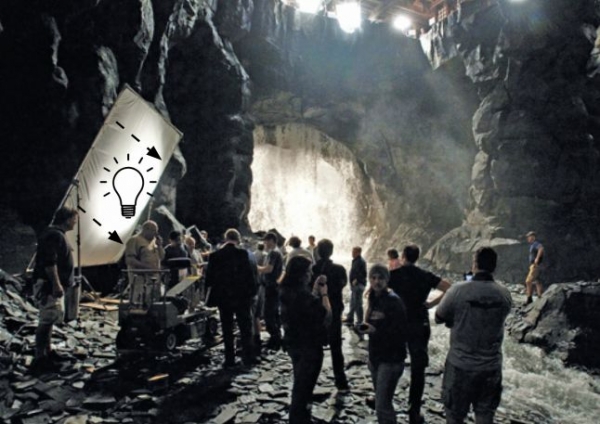
"The Dark Knight Rises," Christopher Nolan, 2012
2.7 — Hard and Soft Light
The main difference between hard and soft light is the size of the light source in relation to the subject. The sun is the largest light source in the solar system. However, it is 90 million kilometers away from us, making it a small light source. It creates harsh shadows and, accordingly, hard light. When clouds appear, the entire sky becomes a huge light source, and it's harder to distinguish shadows. Thus, soft light emerges.
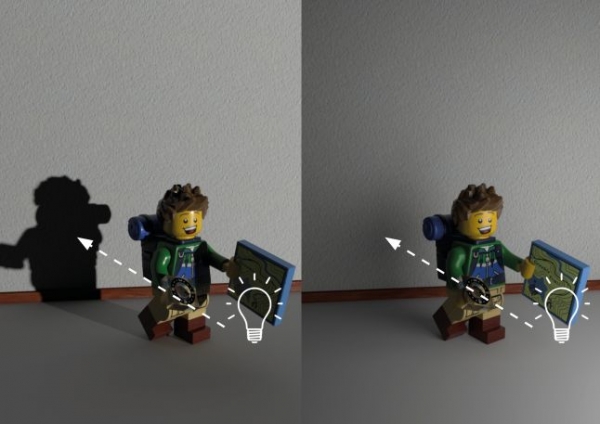
3D examples with LEGO, João Prada, 2017
2.8 — High and low key
High key lighting is used to create very bright scenes. It is often close to being overexposed. All light sources are approximately equal in power.
In contrast to high key lighting, low key scenes are heavily shadowed, and there may be a powerful light source. The main emphasis is on shadows rather than light, to convey a sense of suspense or drama.
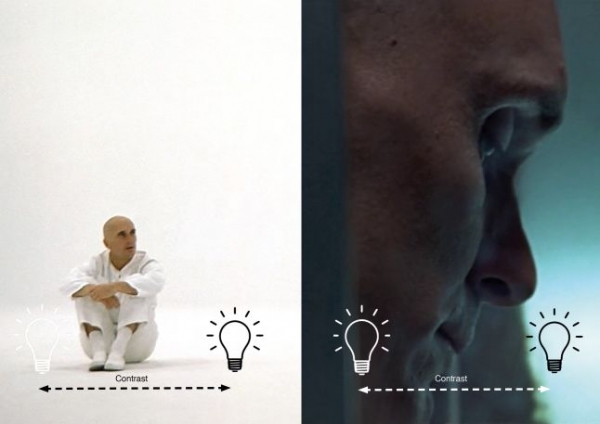
‘THX 1138’, George Lucas, 1971
2.9 — Motivated Lighting
This type of lighting mimics natural light—sunlight, moonlight, streetlights, and so on. It is used to enhance practical lighting. Special techniques help to make motivated lighting look natural, such as filters (gobos) to create the effect of draped windows.
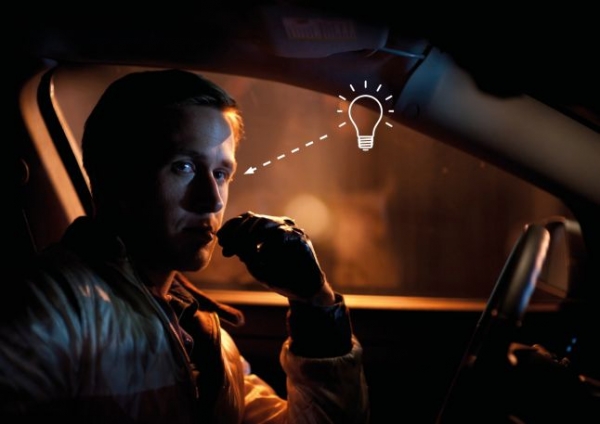
‘Drive’, Nicolas Winding Refn, 2011
2.10 — Outdoor Light
This can be sunlight, moonlight, or streetlights that are visible in the scene.
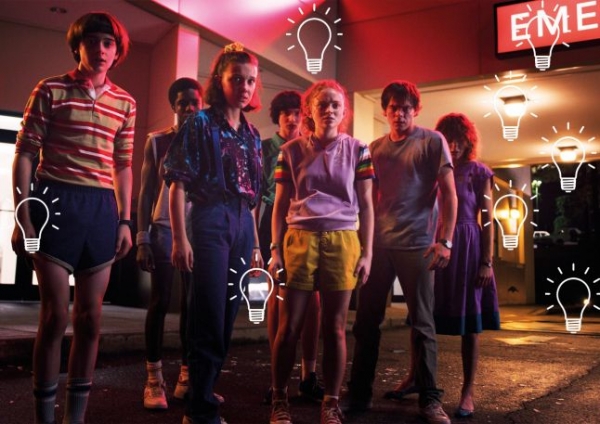
‘Stranger Things, Season 3’, the Duffer Brothers, 2019
III — Basics of Rendering
Level designers recognize the importance of lighting and use it to achieve a specific perception of the scene. To illuminate the level and achieve desired visual goals, they need to define static light sources, their spread angles, and colors. They set the required atmosphere and necessary visibility. But it's not that simple, because lighting depends on technical specifications—such as CPU power. Thus, there are two types of lighting: precomputed lighting and real-time rendering.
1 — Precomputed Lighting
Designers use static lighting to define the characteristics of each light source, including its position, angle, and color. Generally, implementing global illumination in real-time is impossible due to performance constraints.
Pre-computed static global illumination can be utilized in most engines, including Unreal Engine and Unity. The engine 'bakes' this illumination into a special texture known as a 'lightmap.' These lightmaps are stored along with other map files, and the engine refers to them when rendering the scene.
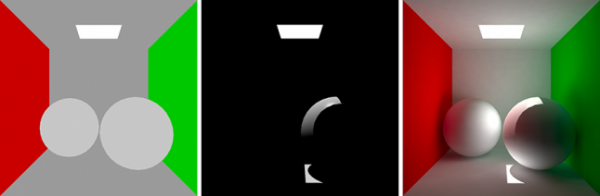
The same scene: without lighting (on the left), with direct lighting only (in the middle), and with indirect global illumination (on the right). Illustrations from Unity Learn.
In addition to lightmaps, there are shadow maps, which are used to create shadows. First, everything is rendered considering the light source — it generates a shadow that reflects the pixel depth of the scene. The resulting pixel depth map is called a shadow map. It contains information about the distance between the light source and the nearest objects for each pixel. Then, rendering occurs, where each surface pixel is checked against the shadow map. If the distance between the pixel and the light source is greater than that recorded in the shadow map, the pixel is in shadow.
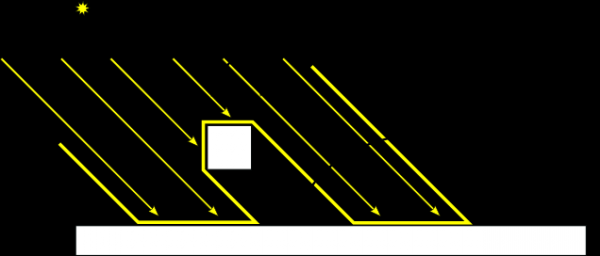
Shadow map application algorithm. Illustration from OpenGl-tutorial.
2 — Real-time rendering.
One of the classic lighting models for real-time rendering is the Lambert model (named after the Swiss mathematician Johann Heinrich Lambert). When rendering in real-time, the GPU typically processes objects one at a time. This method uses the object's transformation (its position, rotation, and scale) to determine which of its surfaces should be rendered.
In the Lambert lighting model, light emanates from each point on the surface in all directions. However, certain nuances, such as reflections, are not considered (as discussed in Chandler Prall's article). To make the scene appear more realistic, additional effects are added to the Lambert model — such as specular highlights.
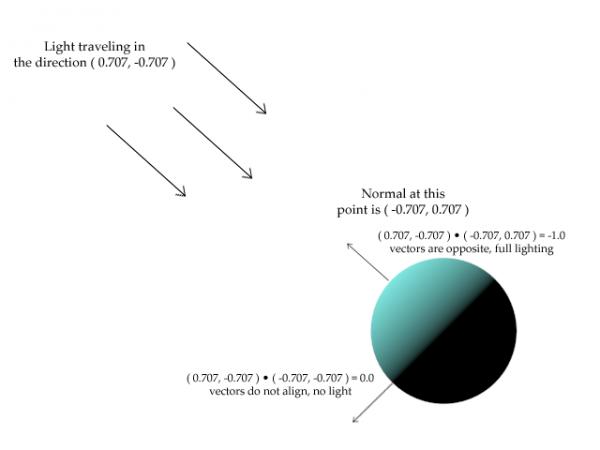
Lambert shading illustrated on a sphere. Illustration from materials by Petr Dyachikhin.
Most modern engines (Unity, Unreal Engine, Frostbite, and others) use Physically Based Rendering (PBR) and shading (article by Lucas Orsvarn). PBR shading offers more intuitive and user-friendly ways and parameters for describing surfaces. In Unreal Engine, PBR materials have the following parameters:
- Base Color — the actual texture of the surface.
- Roughness — how uneven the surface is.
- Metallic — whether the surface is metallic.
- Specular — the amount of specular highlights on the surface.
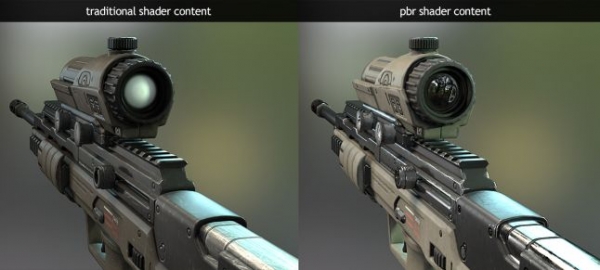
Without PBR (left), PBR (right). Illustrations from Meta 3D studio
However, there is another approach to rendering — ray tracing. This technology was previously disregarded due to performance and optimization issues. It was only used in the film and television industries. But the arrival of next-generation graphics cards has made it possible to use this approach in video games for the first time.
Ray tracing is a rendering technology that creates more realistic light effects. It mimics the principles of light propagation in the real environment. Rays emitted from a light source behave like photons. They reflect off surfaces in random directions. When they hit the camera, the reflected or direct rays convey visual information about the surface they bounced off of (for example, reporting its color). Many projects from E3 2019 will support this technology.
3 — Types of Light Sources
3.1 — Point light
Emits light in all directions, like a regular bulb in real life.
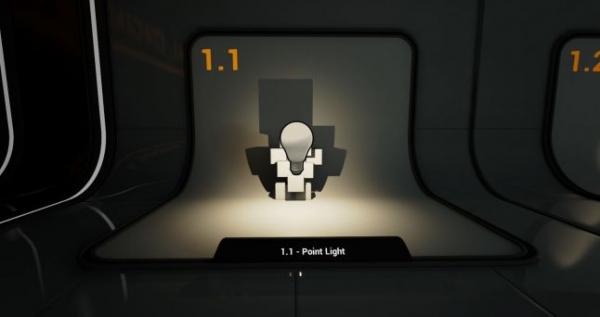
Unreal Engine Documentation
3.2 — Spot light
Emits light from a single point, spreading out like a cone. A real-life example: a flashlight.
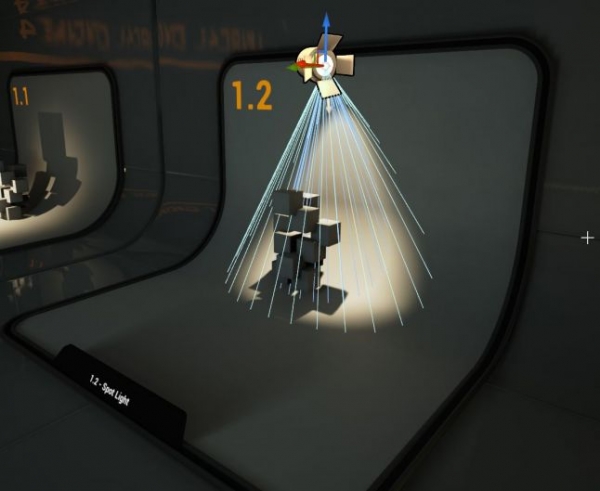
Unreal Engine Documentation
3.3 — Area light
Emits direct light rays from a defined shape (e.g., a rectangle or circle). This type of light heavily burdens the processor because the computer calculates all points emitting light.
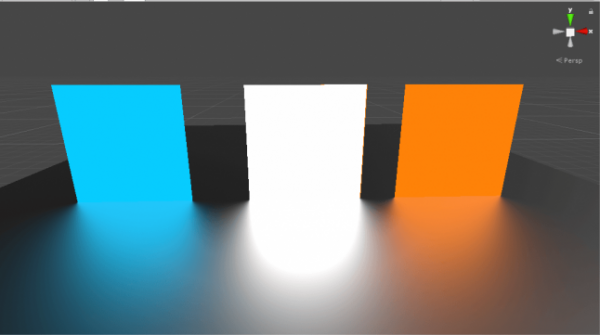
Unity Documentation
3.4 — Directional light
Mimics the Sun or another distant light source. All rays move in one direction and can be considered parallel.
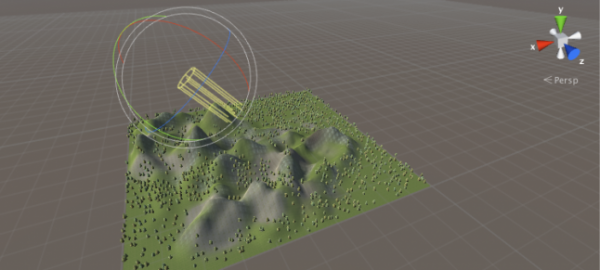
Unity Documentation
3.5 — Emissive light
Light-emitting sources or emitting materials (Emissive Materials in UE4) easily and effectively create the illusion that a material is emitting light. This results in a light blur effect — it's noticeable when looking at a very bright object.
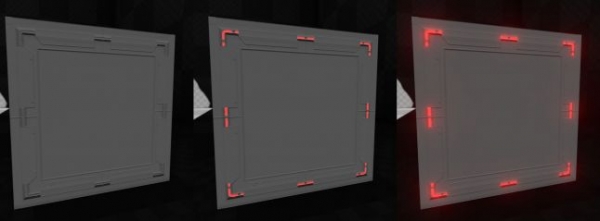
Unreal Engine Documentation
3.6 — Ambient Light
The scene from Doom 3 is lit by lamps on the walls, and the engine creates shadows. If a surface is in shadow, it colors it black. In real life, particles of light (photons) can reflect off surfaces. In more advanced rendering systems, light is baked into textures or calculated in real-time (global illumination). Older game engines — for example, ID Tech 3 (Doom) — consumed too many resources to calculate indirect lighting. To address the issue of insufficient indirect lighting, ambient light was used. As a result, all surfaces were at least partially illuminated.
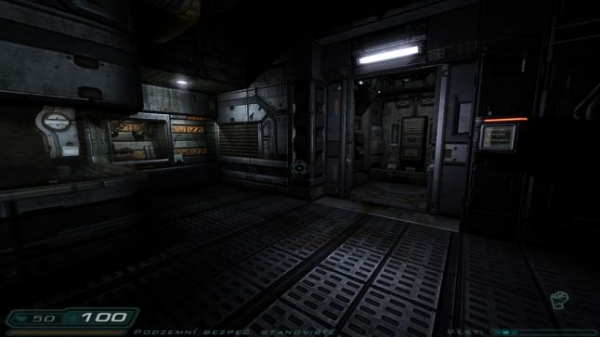
The Doom 3 engine (IdTech 4 engine)
3.7 — Global Illumination
Global illumination is an attempt to calculate the reflection of light from one object onto another. This process places a much heavier load on the processor than ambient light.
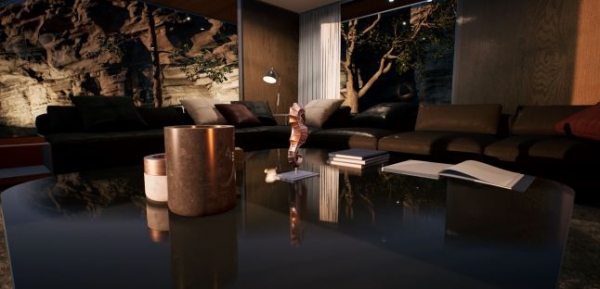
Unreal Engine Documentation
IV — Lighting Design in Video Games
Visual composition (the position of light, its angles, colors, field of view, movement) greatly influences how users perceive the game environment.
Designer Will Wright discussed visual composition functions in the game environment at GDC. In particular, it directs the player's attention to important elements — this is achieved by adjusting the saturation, brightness, and color of objects in the level.
All this affects gameplay.
The right atmosphere emotionally engages the player. Designers should pay attention to this by creating visual integrity.
Maggie Safe El-Nasr conducted several experiments — she invited users unfamiliar with FPS shooters to play Unreal Tournament. Due to poor lighting design, players noticed enemies too late and quickly died. They were frustrated and often abandoned the game.
Light creates effects, but in video games, it can be used differently than in theater, cinema, and architecture. From a design perspective, seven categories can be identified that describe lighting patterns. And one must not forget about emotions.
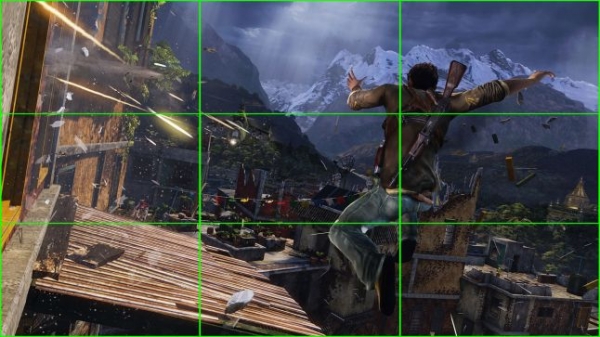
Design Elements in Level Art, Jeremy Price
1 — Guide
Uncharted 4
In the book '100 Things Every Designer Needs to Know About People', Susan Weinschenk explores the significance of central and peripheral vision.
Since central vision is the first thing we see, critically important elements that the player must notice should be placed there by the designer. Peripheral vision provides context and reinforces central vision.
The Uncharted series is a good example — light enters the central field of vision and guides the player. However, if the elements that fall within peripheral vision contradict the central ones, the connection between the designer and the player breaks down.
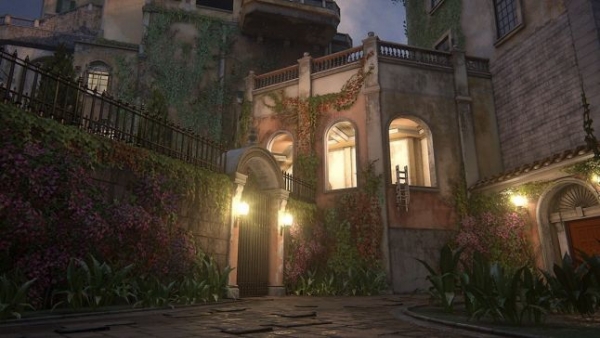
Until Dawn
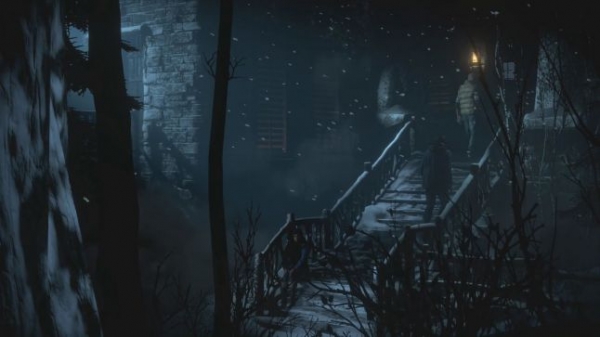
Lighting in this game is used to guide the player. Creative director Will Byles said: 'The most challenging aspect for us was creating an atmosphere of fear without plunging everything into darkness. Unfortunately, when the image becomes too dark, the game engine tries to brighten it up, and vice versa. We had to invent new techniques to deal with this problem.'
As shown in the illustration below, warm light stands out against a blue background, drawing the player's attention.
2 — Lighting/Cropping
Resident Evil 2 Remake
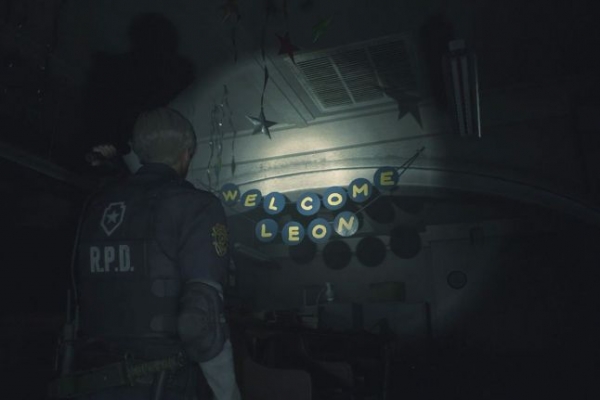
Light in RE2 Remake can change the frame. When you walk through the dark corridors of the Raccoon City police station, the player's flashlight serves as the main source of light. This kind of lighting is a powerful mechanic. The altered perspective draws the player's gaze to the illuminated area while cutting everything else out due to the strong contrast.
Dark Souls I
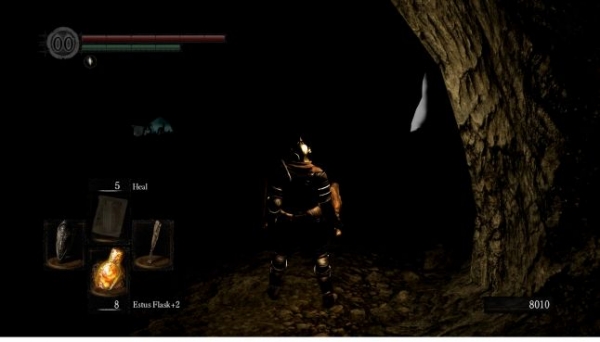
The Tomb of the Giants is one of the very dark locations in the game with lots of dangerous cliffs. It can be navigated by following the glowing stones and moving carefully to avoid falling. Also, beware of the bright white eyes, as they indicate an enemy.
The radius of light from the player is significantly reduced, and visibility in the dark is limited. By holding the flashlight in their left hand, the player increases both brightness and field of view. However, the flashlight significantly reduces damage dealt, creating a choice between visibility or protection.
3 — Narrative
Prey
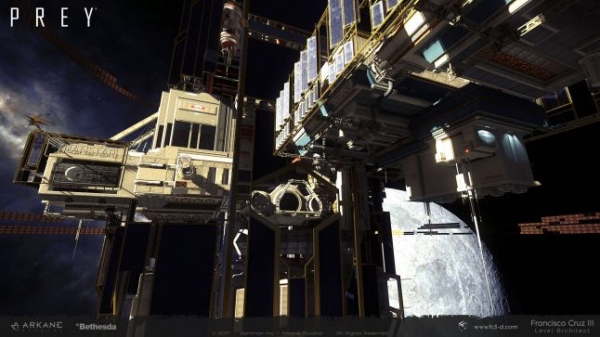
Since the station where the action takes place is in orbit, there is a unique light cycle in the game. This affects the direction of light and, consequently, has a significant impact on gameplay. In this game, it is harder to find items and locations than usual. In distant sections, players can solve emerging problems by looking at them from one angle inside the station and from a different angle outside.
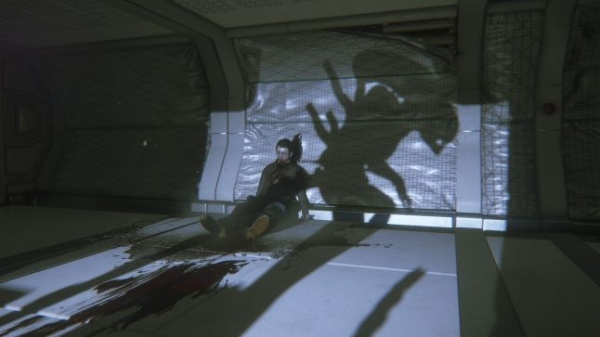
Alien Isolation
In 'Alien,' light is used to guide the player and create a sense of fear. The player is in constant tension — somewhere in the darkness, the xenomorph is lurking.
4 — Stealth
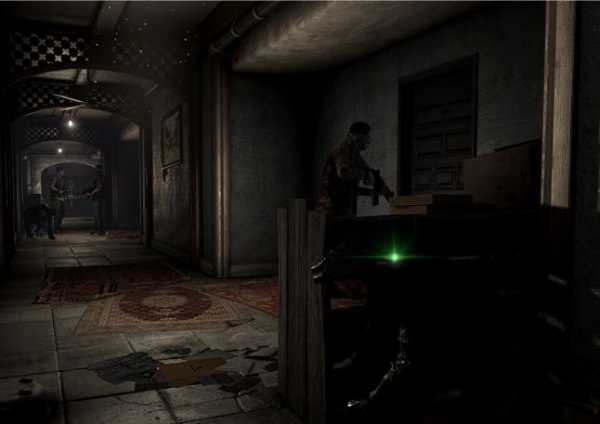
Splinter Cell: Blacklist
In this game, light not only guides the user but also serves as a gameplay mechanic.
In many locations, players utilize shadows to stay on a safe course and avoid enemies. In Splinter Cell, the role of a 'visibility meter' is played by a light on the character's equipment — the more hidden the player is, the brighter the bulb lights up.
Mark of the Ninja
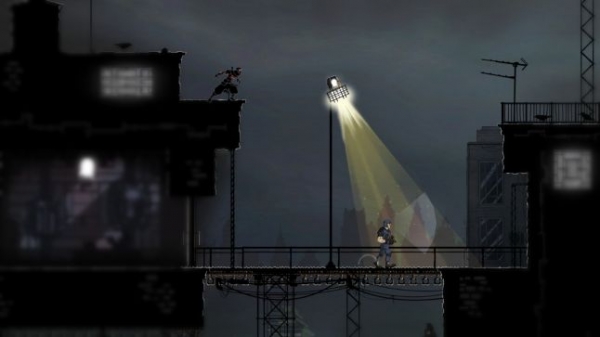
In Mark of the Ninja, light and darkness are completely opposed to each other. Lead designer Nels Anderson stated: 'How the character looks indicates whether you are visible or not. If you are hidden, you are dressed in black, with only some details highlighted in red; in the light — you are fully colored' (article on Mark of the Ninja's five stealth design rules).
5 — Combat/Defense
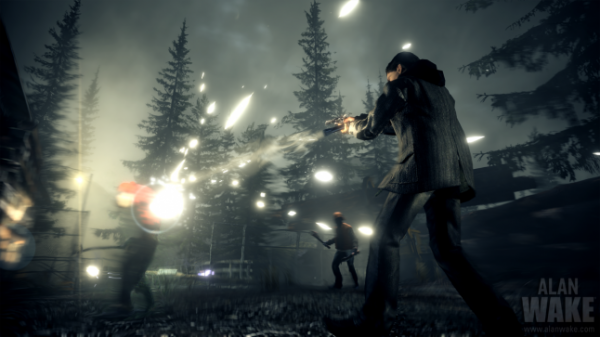
Alan Wake
The flashlight in Alan Wake is a weapon. Without it, you cannot eliminate enemies. You need to shine it on them and hold it for a certain period — this makes them vulnerable and allows you to kill them. When light falls on an opponent, a halo appears, which then shrinks and the object begins to glow. At this moment, the player can shoot the enemy.
You can also use flares and flashbangs to eliminate opponents.
A Plague Tale: Innocence
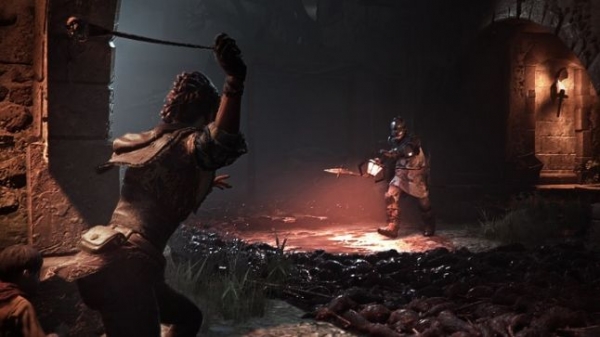
In the project by Asobo Studio, you can use rats against people. For example, if you break an enemy's lantern, they will instantly be plunged into darkness, which does not hold back swarms of rats.
6 — Alert/Feedback
Deus Ex: Mankind Divided
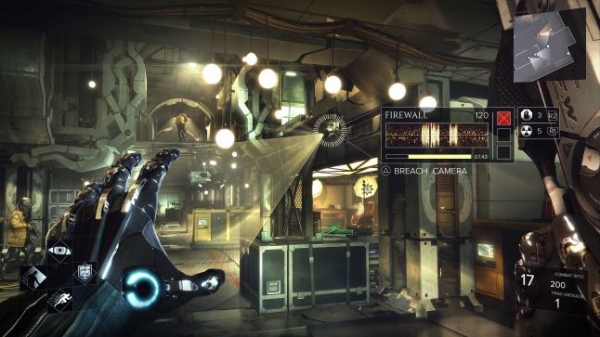
In Deus Ex, surveillance cameras monitor what happens within their field of view, which is limited to a cone of light. The light is green when they are neutral. Upon detecting an enemy, the camera changes the light to yellow, emits a beep, and tracks the target for a few seconds or until the enemy escapes its line of sight. After a few seconds, the light turns red, and the camera sounds an alarm. This way, light is used to interact with the player.
Hollow Knight
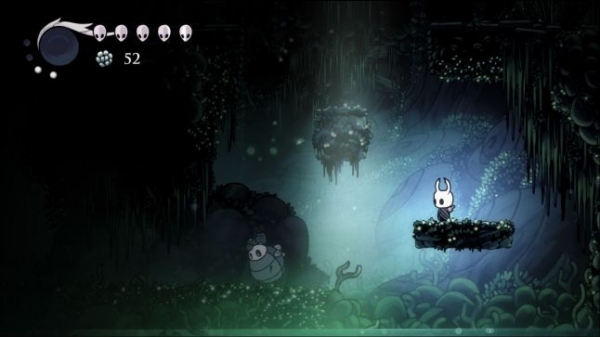
The Metroidvania by Team Cherry changes lighting more frequently than players notice.
For example, every time you take damage, the screen freezes for a moment, and a broken glass effect appears next to the hero. Overall lighting is dimmed, but nearby light sources (lamps and fireflies) do not go out. This emphasizes the significance and impact of each hit taken.
7 — Separation
Assassin’s Creed Odyssey
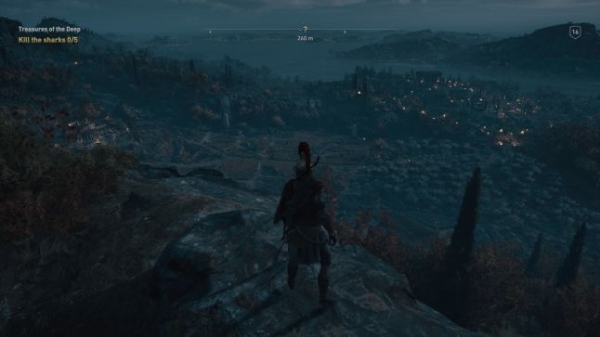
The day and night cycle is central to 'Odyssey.' At night, patrols are fewer, and players are more likely to go unnoticed.
The time of day can be changed at any moment — this is built into the game. At night, enemies' vision is weakened, and many of them go to sleep. It becomes easier to avoid and attack opponents.
The transition between day and night here is a unique system, and the rules of the game change drastically depending on the time of day.
Don’t Starve
The survival simulator Don’t Starve shows no mercy to newcomers at night — walking in the dark is fatal. After five seconds, the player is attacked and takes damage. A light source is essential for survival.
Mobs fall asleep as soon as night falls and wake up with the sunrise. Some creatures that sleep during the day may wake up. Plants do not grow. Meat does not dry out. The day and night cycle establishes a system, dividing the rules of the game into two categories.

V — Conclusion
Many lighting techniques we see in visual arts, cinema, and architecture are applied in game development to enhance the aesthetics of the virtual space and improve the player's experience. However, games differ greatly from film or theater — the environment is dynamic and unpredictable. In addition to static lighting, dynamic light sources are used, adding interactivity and the necessary emotions.
Light is a whole spectrum of tools. It offers artists and designers great possibilities for even stronger player engagement.
The development of technology has also influenced this. Now game engines have much more light settings — it's no longer just about illuminating locations, but also affects game design.
List of References
- Seif El-Nasr, M., Miron, K. and Zupko, J. (2005). Intelligent Lighting for a Better Gaming Experience. Proceedings of the Computer-Human Interaction 2005, Portland, Oregon.
- Seif El-Nasr, M. (2005). Intelligent Lighting for Game Environments. Journal of Game Development, 1(2),
- Birn, J. (Ed.) (2000). Digital Lighting & Rendering. New Riders, Indianapolis.
- Calahan, S. (1996). Storytelling through lighting: a computer graphics perspective. Siggraph Course Notes.
- Seif El-Nasr, M. and Rao, C. (2004). Visually Directing User’s Attention in Interactive 3D Environments. Siggraph Poster Session.
- Reid, F. (1992). The Stage Lighting Handbook. A&C Black, London.
- Reid, F. (1995). Lighting the Stage. Focal Press, Boston.
- Petr Dyachikhin (2017), Modern Videogame Technology: Trends and Innovations, Bachelor’s thesis, Savonia University of Applied Sciences.
- Adorama learning center (2018), Basic Cinematography Lighting Techniques, from (https://www.adorama.com/alc/basic-cinematography-lighting-techniques)
- Seif El-Nasr, M., Niendenthal, S., Knez, I., Almeida, P. and Zupko, J. (2007), Dynamic Lighting for Tension in Games, the International Journal of Computer Game Research.
- Yakup Mohd Rafee, Ph.D. (2015), Exploring Georges de la Tour’s Painting Based on Chiaroscuro and Tenebrism Theory, University Malaysia Sarawak.
- Sophie-Louise Millington (2016), In-Game Lighting: Does Lighting Influence Player Interaction and Emotion in an Environment?, University of Derby.
- Prof. Stephen A. Nelson (2014), Properties of Light and Examination of Isotropic Substances, Tulane University.
- Creative Commons Attribution-ShareAlike License (2019), The Dark Mod, from (https://en.wikipedia.org/wiki/The_Dark_Mod)
Source: habr.com
