

It is not entirely accurate to call the discrete graphics solutions of the Xe family the first for Intel, as the company has already made attempts to establish itself in the discrete graphics market. In the 1990s, it released gaming graphics cards with varying degrees of success, and at the beginning of this century, it tried to return to this market segment but ultimately turned the 'Larrabee project' into Xeon Phi computation accelerators, which were recently produced as expansion cards resembling graphics cards in their layout.
According to the resource , in a bid to maintain its own rating, decided to release a specialized news piece in the free section, the first discrete graphics solutions of the Intel Xe family will be presented by the middle of next year and will be produced using 10nm technology. There is no news in the last part of the claim, but the timing of the corresponding products is somewhat surprising. Chris Hook, who heads Intel's graphics solutions marketing, following Raja Koduri, who moved from AMD to Intel, announced in late March on Twitter that the first discrete graphics solutions of the Xe family would be available for sale by the end of 2020. DigiTimes' information does not fundamentally contradict this view. Intel may introduce new graphics processors in the middle of the year, but they might only appear in retail graphics cards by the end of the year. A difference of a few months between the two stages of announcement for such a 'triumphant return' is not as much as it seems at first glance.
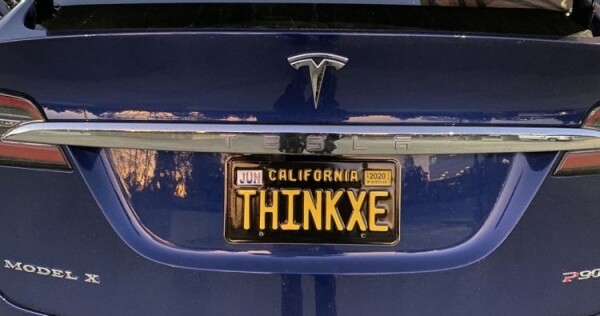
Against the backdrop of DigiTimes' fresh publication, the photograph featuring the license plate 'THINKXE' took on new colors, which Raja Koduri, the head of Intel's graphics division, shared on his Twitter at the beginning of October. Chris Hook, who still adheres to the idea of a later availability of Intel's discrete graphics solutions for sale, urged not to look for mystical coincidences in the timing of the registration of the electric vehicle with that license plate. According to him, Raja Koduri simply registered his electric vehicle in June several years ago, and now regularly renews the registration in the same month, occasionally changing the vehicle's registration number. on his Twitter at the beginning of October. Kris Hook, who still holds onto the idea of a later release of Intel's discrete graphics solutions for sale, urged not to look for mystical coincidences in the timelines of the electric vehicle registration that bears the license plate. According to him, Raja Koduri simply registered his electric vehicle in June a few years ago, and now he regularly renews the registration in the same month, occasionally changing the vehicle's registration number.
Intel executives have been much more willing to discuss the company's plans for releasing a discrete 7nm graphics processor, which is scheduled to debut in 2021. It is set to become Intel's first mass-produced product manufactured using 7nm technology. Moreover, this graphics processor will utilize Foveros 3D packaging. It is expected that multiple separate chips will be placed on a single substrate. Only after that will the 7nm technology be used for the production of central processors, with the server segment processor being next in line. However, the first 7nm GPU branded by Intel will also be used in server systems to accelerate computations, while the 10nm predecessors may find their way into gaming configurations.
Source: 3dnews.ru
