

Zero Trust ("zero trust") is a security model developed by former Forrester analyst in 2010. Since then, the zero-trust model has become the most popular concept in cybersecurity. Recent massive data breaches only underscore the need for companies to pay more attention to cybersecurity, and the Zero Trust model may be the right approach.
Zero Trust signifies a complete lack of trust in anyone— even users inside the perimeter. The model assumes that every user or device must verify their credentials every time they request access to any resource inside or outside the network.
Read on if you want to learn more about the Zero Trust security concept.
How the Zero Trust Concept Works
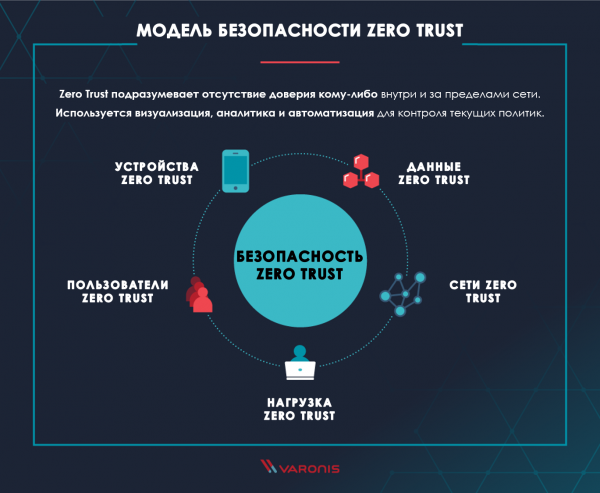
The Zero Trust concept has evolved into a comprehensive approach to cybersecurity, encompassing various technologies and processes. The goal of the zero trust model is to protect the company from modern cybersecurity threats and data breaches while also achieving compliance with legal regulations on data protection and security.
Let's analyze the key areas of the Zero Trust concept. Forrester advises organizations to focus on each of these points to build the best zero-trust strategy.
Zero Trust Data: Your data is what attackers are trying to steal. Therefore, it is entirely logical that the first principle of the zero trust concept is This means the necessity to analyze, protect, classify, track, and maintain the security of your corporate data.
Zero Trust Networks: For information theft, attackers need to be able to move within the network, so your task is to make this process as difficult as possible. Segment, isolate, and control your networks using modern technologies, such as next-generation firewalls specifically designed for these purposes.
Zero Trust Users: People are the weakest link in the security strategy. Limit, monitor, and strictly enforce principles of user access to resources within the network and internet. Set up VPN, CASB (Cloud Access Security Brokers), and other access options to protect your employees.
Zero Trust Load: The term load is used by service and infrastructure control representatives to refer to the entire stack of applications and backend software that your clients use to interact with your business. Unpatched client applications are a common attack vector that needs to be defended against. Consider the entire technology stack—from the hypervisor to the web frontend—as a threat vector and protect it with tools that adhere to the 'zero trust' concept.
Zero Trust Devices: With the rise of the Internet of Things (smartphones, smart TVs, smart coffee makers, etc.), the number of devices residing within your networks has sharply increased in recent years. These devices are also potential attack vectors and should be segmented and monitored like any other computer on the network.
Visualization and Analytics: For the successful implementation of the 'zero trust' principle, provide your security and incident response staff with tools for visualizing everything happening in your network, as well as analytics for understanding the significance of events. and User Behavior Analytics Automation and Management:
helps maintain the operability of all your systems under a 'zero trust' model and track compliance with Zero Trust policies. People simply cannot keep up with the volume of events required for the 'zero trust' principle. 3 Principles of the Zero Trust Model
Require secure and verified access to all resources
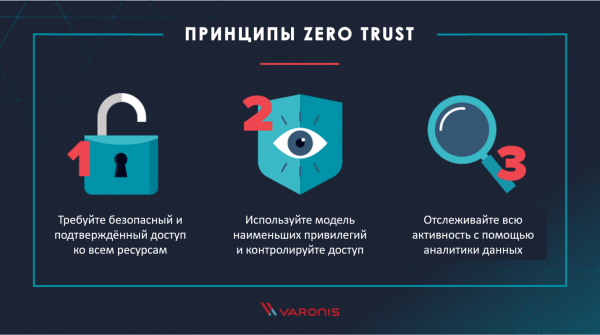
The first foundational principle of the Zero Trust concept is—
authentication and verification all access rights to all resources. Every time a user accesses a file resource, application, or cloud storage, it's necessary to perform re-authentication and authorization of that user for that specific resource.
You should consider every attempt to access your network as a threat until proven otherwise, regardless of your hosting model and the source of the connection.
Use the principle of least privilege and control access
is a security paradigm that limits each user's access rights to the level necessary for them to perform their job duties. By restricting access to each employee, you prevent an attacker from gaining access to a large amount of data through the compromise of a single account.
Use , in order to achieve least privilege and give business owners the ability to manage permissions to their controlled data themselves. Regularly conduct assessments of rights and group membership.
Monitor everything
The principles of 'zero trust' imply controlling and verifying everything. Logging every network call, file access, or email for analysis of malicious activity is not something that a single person or an entire team can achieve. Therefore, use on top of the collected logs to easily detect threats in your network, such as , malware, or silent data exfiltration.
Implementing a zero trust model
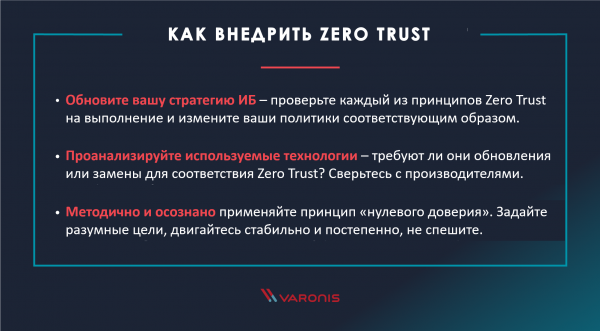
Let's highlight several key recommendations for implementing a zero trust model:
- Update every element of your cybersecurity strategy to align with the principles of Zero Trust: Review all parts of your current strategy for compliance with the aforementioned principles of 'zero trust' and adjust them as necessary.
- Analyze the technology stack being used and check if it requires updates or replacements to achieve Zero Trust: Consult the manufacturers of the technologies used about their compliance with the principles of Zero Trust. Reach out to new vendors to explore additional solutions that may be required for implementing a Zero Trust strategy.
- Adhere to a methodical and conscious approach when implementing Zero Trust: set measurable tasks and achievable goals. Ensure that new solution providers also align with the chosen strategy.
Zero Trust Model: Trust Your Users
The term ‘Zero Trust’ is somewhat misleading; however, the phrase ‘trust nothing, verify everything’ doesn’t quite capture its essence either. You do need to trust your users, if (and that’s a significant 'if') if they have passed an adequate level of authorization and your monitoring tools have not detected anything suspicious.
Zero Trust Principle with Varonis
When implementing the Zero Trust principle, Varonis allows for a security-centric approach: data security:
- Varonis scans access rights and folder structures to achieve , assigning business data owners and process for access rights management by the owners themselves.
- Varonis analyzes content and identifies critical data to add an extra layer of security and monitoring to the most important information, as well as to comply with legal requirements.
- Varonis tracks and analyzes file access, activity in Active Directory, VPN, DNS, Proxy, and email for of each user's behavior in your network.
compares current activity with the model of standard behavior to identify suspicious actions and generates a security incident with recommendations for next steps for each of the detected threats. - Varonis offers a foundation for monitoring, classification, permission management, and threat detection, which is essential for implementing the Zero Trust principle in your network.
Why Choose the Zero Trust Model?
The Zero Trust strategy provides a substantial level of protection against data breaches and modern cyber threats. All an attacker needs to penetrate your network is time and motivation. No firewalls or password policies will stop them. It is essential to establish internal barriers and monitor everything that happens to detect their actions during a breach.
Source: habr.com
