

Friday. I suggest we talk about one of the best Soviet science fiction writers, in my opinion.
Nikolai Nikolayevich Nosov holds a special place in Russian literature. Unlike many others, he is becoming more relevant as time goes on. He is one of the few writers whose books were genuinely read (voluntarily read!) and fondly remembered by the entire population of the country. Furthermore, although Soviet classics are almost all in the past and have not been reissued for a long time, the demand for Nosov's books has not only remained unchanged but is continuously growing.
De facto, his books have become a symbol of successfully selling literature.
Just recall the loud departure of Parkhomenko and Gornostayeva from the Azbuka-Attikus publishing group, which was attributed to ideological disagreements with the leadership of the publishing house, which was "not ready to publish anything other than the 58th edition of 'Nevazhka on the Moon'"..
However, almost nothing is known about the author himself.
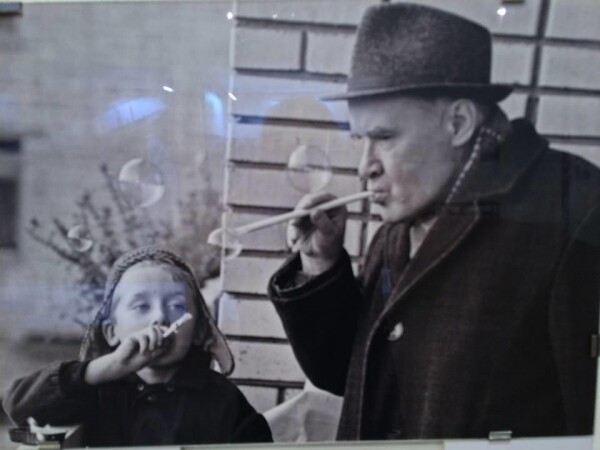
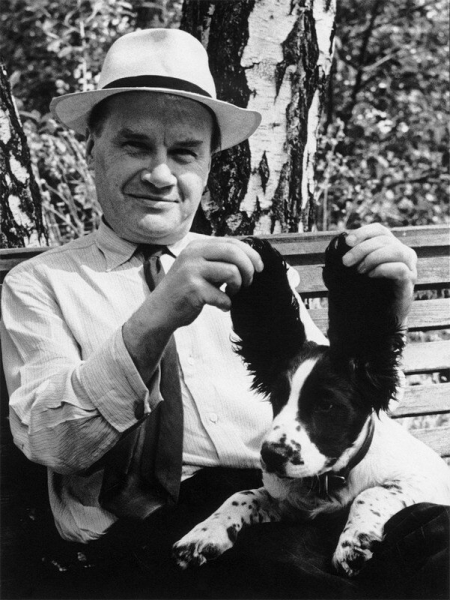
N. Nosov with his grandson Igor
His biography truly does not resemble that of an adventurous novel – he was born in Kyiv to a family of a variety performer, changed numerous jobs in his youth, then graduated from the institute of cinematography, left cinema for literature, and wrote all his life.
Yet, some circumstances of this trivial fate indeed capture the imagination. You all surely remember Nosov's famous stories from the conditional cycle 'Once we were with Misha'. Yes, those – how they cooked porridge, turned over tree stumps at night, transported a puppy in a suitcase, etc. Now please answer the question – when does the action of these stories take place? In which years does it all happen?
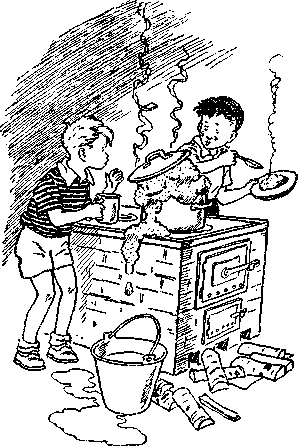
Usually, the range of opinions is quite large – from the thirties to the 'thawing' sixties. There are many possible answers, any – except for the correct ones.
The truth is that Nosov began writing stories shortly before the war (his first publication was in 1938), but the most famous, bright, and memorable ones were written during the most terrible years. From 1941 to 1945. During that time, the professional filmmaker Nosov shot documentary films for the front (and for the educational film 'Planetary Transmissions in Tanks,' he received his first award - the Order of the Red Star), while in his free time, for his soul, he wrote those very stories – 'Mishkina Kasha,' 'Druzhok,' 'Ogorodniki'… The last story of this cycle, 'Tut-tut-tut,' was written in late 1944, and in 1945, the budding writer published his first book – a collection of stories titled 'Tut-tut-tut.'
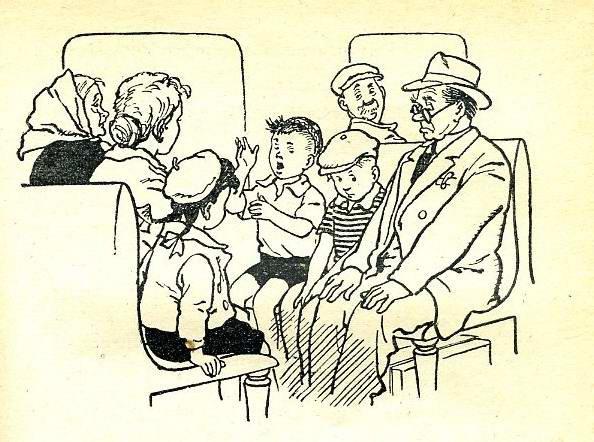
The main thing is that when you know the answer, a sense of annoyance awakens immediately – well, how could it be, it's all so clear! All the young characters only have mothers, where the fathers went is unclear. And in general, there are not many male characters throughout the cycle — there is a rather elderly 'Uncle Fedya' in the train who was always outraged by the recitation of poems, and the counselor Vitya, apparently a high school student. The ascetic lifestyle is taken to the extreme, with jam and bread as a treat…
But still, there is no war there. Neither in words, nor a hint, nor in spirit. I think it’s unnecessary to explain why. Because this was written for children. For children, who have already been dealt so much in life that God save us from knowing it. It’s like that movie 'Life is Beautiful,' just in reality.
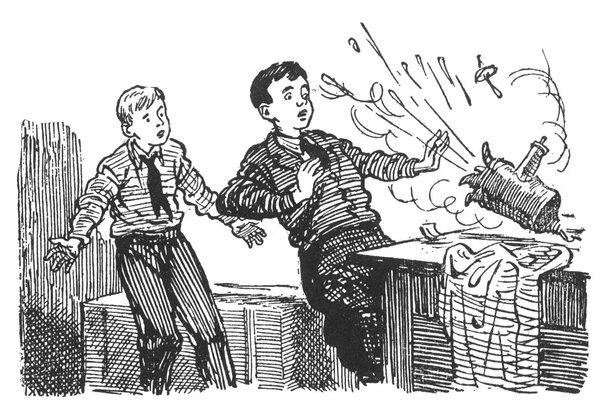
Everything is clear. And yet – how? How did he manage to do it? The answer can only be one – this is what distinguishes a real children's writer from a fake one.
By the way, the story with the order was also quite interesting.
In his youth, Nosov was seriously interested in photography and later in cinematography, which is why at the age of 19 he entered the Kyiv Art Institute, from which he transferred to the Moscow Institute of Cinematography, graduating in 1932 from both the directing and cinematography faculties.
No, he did not become a great film director; he never made any feature films at all. In fact, Nosov was a true geek. Throughout his life, he was very passionate about technology, which is quite evident in his books. Remember how passionately he describes the workings of any mechanism—whether it’s a homemade incubator for hatching chicks or a car running on carbonated water with syrup?
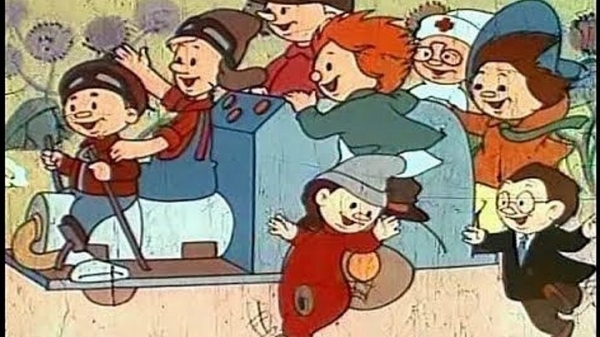
Thus, director Nosov only filmed what he loved—popular science and educational films, and he did this for 20 years, from 1932 to 1952. In 1952, having already become a well-known writer, he received the Stalin Prize for his story "Vitya Maleev at School and at Home" and only after that finally decided to turn to "literary pursuits."
His love for technology helped him many times during the war when he worked at the studio "Voentechfilm," producing educational films for tank crews. After his death, his widow, Tatyana Fyodorovna Nosova-Sereidina, recounted a humorous episode in her book "The Life and Work of Nikolai Nosov."
The future writer was making a film about the structure and operation of the English Churchill tank, which was supplied to the USSR from England. A major problem arose—the sample sent to the film studio wouldn’t turn in place and only made wide arcs. The filming was being delayed, and the technicians couldn’t do anything, so Nosov asked to get into the tank to observe the driver’s actions. The military, of course, looked at the civilian director like he was an idiot but let him in—on the film set he seemed to be in charge.
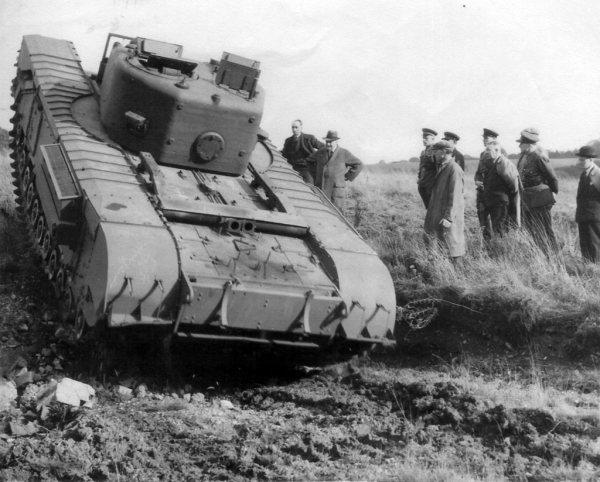
Members of the Soviet military mission at the Churchill IV tank trials. England, spring 1942.
And then… Here’s what happened next:
Before this, Nikolai Nikolaevich had worked on an educational film about tractors and was generally well-versed in machinery, but the tank driver, of course, did not know that. While criticizing foreign equipment unnecessarily, he started the engine and again made the tank perform ridiculous turns, while Nikolai Nikolaevich attentively monitored the controls, repeatedly asking the tank driver to turn the tank first one way and then the other, until he finally discovered the mistake. When the tank gracefully turned around on its axis for the first time, the studio workers watching applauded. The driver was very pleased but also embarrassed; he apologized to Nosov and could hardly believe that he knew the technology simply as an enthusiast.
Soon, the film 'Planetary Transmissions in Tanks' was released, where the 'Churchill' performed pirouettes to Beethoven's 'Moonlight Sonata'. And then...
Then an intriguing document came to light — a decree from the Presidium of the Supreme Soviet of the USSR awarding orders and medals. There, under the heading 'For exemplary execution of combat tasks of the Command on providing tank and mechanized troops of the active army and the achievements in training tank crews and equipping armored and mechanized troops' were the names of lieutenant generals, captains, and other 'officers and majors'.
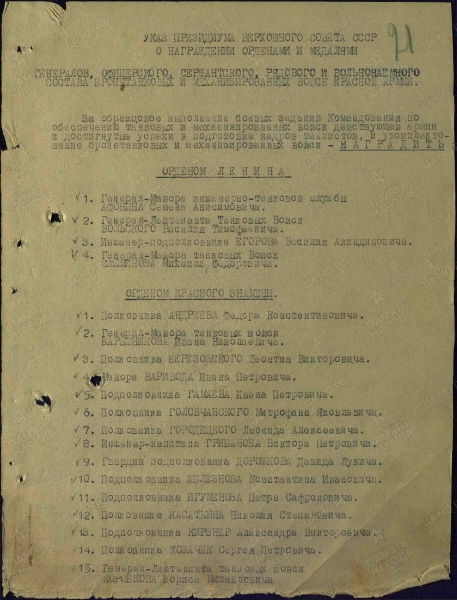
And only one name — without a military rank. Just Nosov Nikolai Nikolaevich.
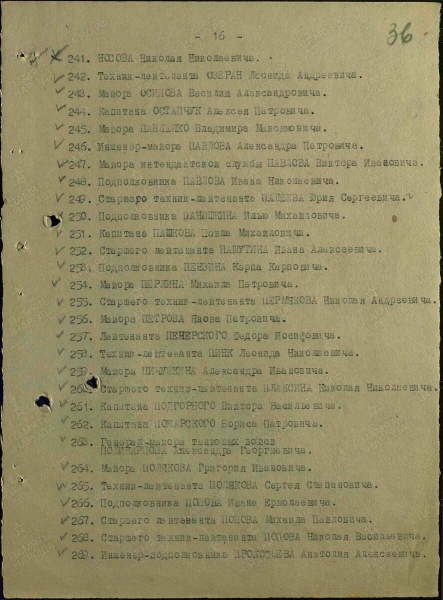
Simply Nosov Nikolai Nikolaevich was awarded the Order of the Red Star.
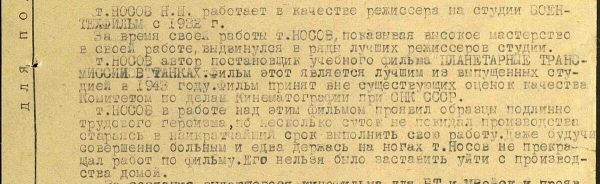
For what? This was written in the presentation:
'Comrade Nosov N. N. has been working as a director at the 'Voentechfilm' studio since 1932.
During his time at work, Comrade Nosov, showcasing high mastery in his work, rose to become one of the best directors at the studio.
Comrade Nosov is the author-director of the educational film 'Planetary Transmissions in Tanks'. This film is the best produced by the studio in 1943. The film was accepted outside the existing quality assessments by the Committee for Cinematography under the Council of People's Commissars of the USSR.
Mr. Nosov exhibited true labor heroism in his work on this film, often staying for several days without leaving the production, trying to complete his work in the shortest time possible. Even when he was very ill and could hardly stay on his feet, Mr. Nosov did not cease work on the film. He could not be forced to leave production and go home.
According to reports, this award was the one the writer was most proud of. More so than the Order of the Red Banner of Labor, received for his literary work, and more than the Stalin or State Prizes.
But, by the way, I always suspected something like that. There is something unyielding, armored, frontal, and fearless about Neznaika. And it burns the friction clutches straight away.
Yet, there are mysteries in Nosov's works that are even more complex, over which literary critics still fiercely argue. For instance, everyone is usually puzzled by Nosov's peculiar 'reverse evolution.'
During the most ideologically charged Stalinist years, Nikolai Nikolaevich wrote almost demonstratively apolitical books, where, as I recall, the pioneer organization was mentioned only in passing. These events could take place anywhere – hatching chicks in a homemade incubator or training a puppy could indeed be 'children of different nationalities.' Isn’t it clear why in the list of the most translated Russian writers published in 1957 by the 'UNESCO Courier,' Nosov ranked third, following Gorky and Pushkin?
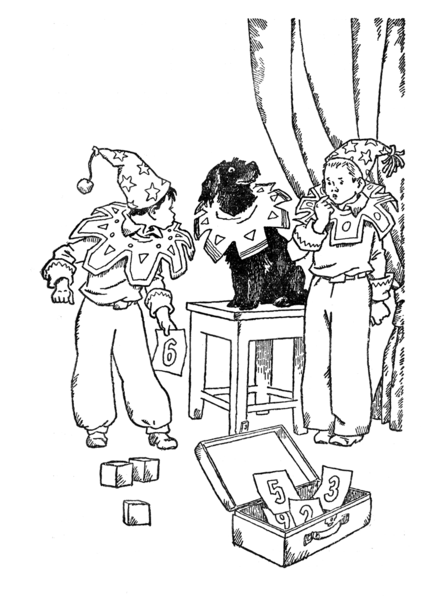
However, when the thaw came and ideological pressure significantly decreased, instead of joining his fellow writers in celebrating newfound freedom, Nosov wrote two large fundamentally ideological programmatic books – the 'communist' tale 'Neznaika in the Sunny City' and the 'capitalist' fairy tale novel 'Neznaika on the Moon.'
This unexpected twist continues to perplex all researchers. Well, yes, these things happen, but usually when the creative forces of the author are on the decline. That's why they try to compensate for a drop in quality with relevance. But one cannot attribute this to Nosov; there can be no talk of a decline in quality, and 'Neznaika on the Moon' is considered by almost everyone to be the pinnacle of his work. The well-known literary critic Lev Danilkin even proclaimed him “one of the main novels of Russian literature of the 20th century”. Not just children's books, nor just fantasy novels, but Russian literature as such — on par with 'Quiet Don' and 'The Master and Margarita.'
The trilogy about Neznaika, this 'fourth N' of the author, is indeed remarkably talented and astonishingly multilayered; it is no wonder that adults read it with as much pleasure as children do.
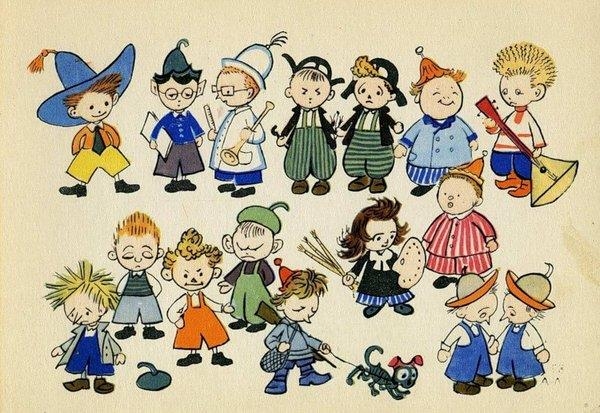
Take, for instance, the not-so-hidden allusions that today are called postmodernism. In 'Neznaika,' almost all of classical Russian literature is cleverly tucked away. Neznaika’s boasting before the little girls: “I built the ball; I am their most important one, and I wrote these poems” — a pure Chlestakov; the wanderings of the police officer Svistulkin, who witnessed the miracle that Neznaika performed with a magic wand, clearly refer us to similar trials of Ivan Bezukhov in 'The Master and Margarita.' The gallery of characters could go on: the Wizard with his “The sun shines equally for everyone” – a perfect Platonic Karataev, the bare-bottomed comforter of those heading to Fool's Island (“Listen to me, brothers! No need to cry!.. We'll have enough — we’ll live somehow!”) – is clearly Gorky's wanderer Luka.
And comparing the appearances of Zhadin and Spruts — Zhadin very much resembled Mr. Spruts. The difference was that his face was slightly wider than Mr. Spruts’s, and his nose a tad narrower. While Mr. Spruts had very neat ears, Zhadin’s ears were large and absurdly sticking out to the sides, which further increased the width of his face. — again Gogol, his famous Ivan Ivanovich and Ivan Nikiforovich: Ivan Ivanovich is thin and tall; Ivan Nikiforovich is a bit shorter, but broader. Ivan Ivanovich's head resembles a radish with the tail down; Ivan Nikiforovich's head resembles a radish with the tail up.
Moreover, as one of my friends pointed out, Nosov prophetically parodied a classic that simply didn't exist at that time. Does this excerpt remind you of anything?
Shutilo began to shake Svistulkin by the shoulder. Finally, Svistulkin woke up.
"How did you get here?" he asked, looking perplexed at Shutilo and Korzhik, who stood before him in nothing but their underwear.
"Us?" Shutilo stumbled. "Hey, Korzhik, how is it... well, I mean, let me not be Shutilo. He asks how we got here! No, it’s us who wanted to ask you how you got here?"
"Me? As always," Svistulkin shrugged.
"'As always'!" Shutilo exclaimed. "Where do you think you are?"
"At home. Where else?"
"What a situation, let me not be Shutilo! Listen, Korzhik, he says he's at home. And where are we with you?"
"Yes, that's true," Korzhik interjected. "But, then, where are we with him?"
"Well, you are at my place."
"Oh really! Are you sure about that?"
Svistulkin looked around in surprise and even sat up in bed.
"Listen," he finally said, "how did I get here?"

Here it is, the word that explains everything – "prophetically."
Today's readers are clamoring to marvel at how accurately Nosov described capitalist society. Everything, down to the smallest details. Here you have "black PR":
"And what? Can a society of giant plants burst?" Grizl (editor of the newspaper – VN) asked cautiously, twitching his nose as if sniffing something.
"It must burst," Krabs answered, emphasizing the word "must."
"Must?… Oh, it must!" Grizl smiled, and his upper teeth bit into his chin again. "Well, it will burst if it must, I assure you! Ha-ha!…"
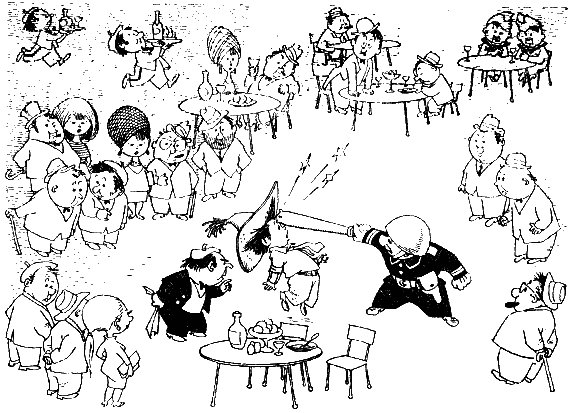
Here are the "werewolves in uniform":
"And who are these police officers?" Seledochka asked.
"Thugs!" Kolosok said irritably.
— Honestly, the police are supposed to protect the public from robbers, but in reality, they only protect the wealthy. And the wealthy are the real robbers. They rob us while hiding behind laws that they create themselves. So tell me, what's the difference if I'm robbed by the law or not? I don't care!"
Here is the "current art":
— Brother, it’s better if you don’t look at this painting, — Kozlik told him. — Don’t waste your time trying to understand it. You won’t get anything out of it anyway. All our artists paint this way because only the wealthy buy such paintings. One will create these bizarre swirls, another will depict some incomprehensible doodles, and a third will just pour liquid paint into a bowl and splash it onto the canvas, resulting in some absurd, meaningless blot. You look at this blot and can't make sense of it — it’s just disgusting! But the wealthy look at it and praise it. 'We don't need the painting to be understandable,' they say. 'We don’t want some artist teaching us anything. The rich understand everything even without artists, while the poor don’t need to understand anything. That's why they are poor, to live in the dark and understand nothing.'
And even "credit slavery":
— I then got a job at the factory and started earning decent money. I even began to save for a rainy day, just in case I suddenly became unemployed again. But it was, of course, hard to resist the temptation to spend the money. And then everyone started saying that I needed to buy a car. I said: why do I need a car? I can walk. But they told me: it's shameful to walk. Only poor people walk. Besides, you can buy a car on credit. You make a small down payment, get the car, and then pay a little each month until all the money is paid off. So, that’s what I did. Let them think I’m wealthy too. I paid the first installment, got the car, got in, drove off, and immediately crashed it (out of excitement, Kozlik even began to stutter). I broke the car, understand? I broke my leg and four ribs too.
— Well, did you fix the car later? — asked Neznayka.
— What are you talking about! While I was sick, they fired me from work. And now the time has come to pay the car installment. But I have no money! So they tell me: give the car back then. I said: go ahead and take it to the junkyard. They wanted to sue me for damaging the car, but when they saw I had nothing to take from me, they let it go. So now I have neither a car nor money.
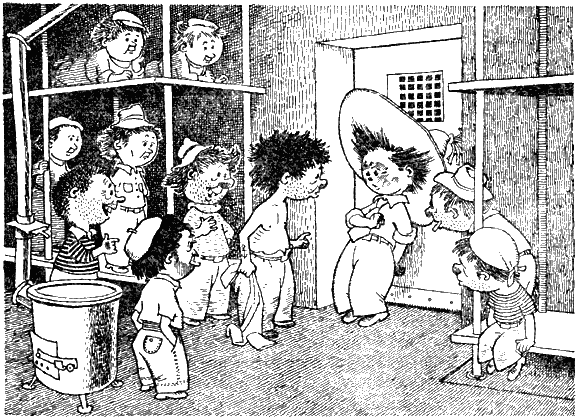
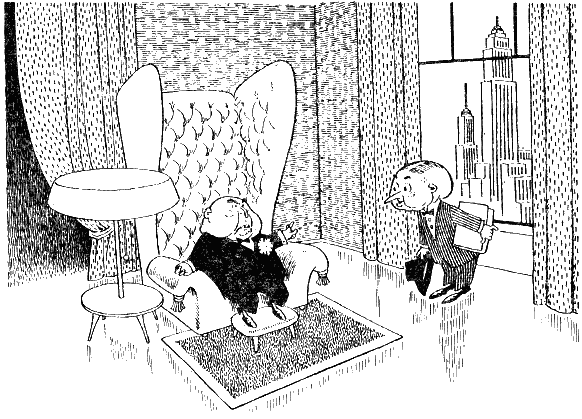
The descriptions are so precise and detailed that one can't help but wonder—how could a person, who spent their whole life behind the then-impenetrable 'iron curtain,' depict such a grand and flawlessly executed canvas? Where did he acquire such detailed knowledge about stock trading, brokers, 'inflated' stocks, and financial pyramids? And where, finally, did the rubber batons with built-in electric shockers come from? They simply weren't available to the police at that time—neither in Western countries nor here.
To explain this at all, a witty theory even emerged, turning everything upside down. It suggested that the new society was built by people who derived all their knowledge of capitalism from Nosov's novel. Thus, on an unconscious level, they reproduced the realities embedded in their minds since childhood. So, it wasn't Nosov who described today's Russia; instead, Russia was built 'according to Nosov.'
However, the hypothesis that Nosov was simply a prophet, foreseeing the future and trying to warn exactly those who would live in that future—the children—makes much more sense. First about what would happen to their world. Then about what the new world would be like.
To substantiate this, let’s turn to the most important aspect—the key idea of both books. What do you think 'Dunno in the Sunny City' is about? About communism? About technical innovations like remote-controlled cars? You say it’s a utopia?
Just remember the book, recall the plot, the storyline! The book is, after all, largely about how fragile and vulnerable this constructed 'society of justice' turned out to be. Do you remember how Dunno turned donkeys into humans and the ensuing fatal movement of the 'wind-runners' that followed?
What do we have? There is a quite happy and seemingly closed community (remember how warmly they welcome outsiders, literally pulling them in by the sleeve). But even the slightest push from the outside proves fatal; a virus brought in from the outside affects the entire organism, everything collapses, and not just a little, but down to the foundation.
New-fangled trends, which emerged not without the help of outsiders, throw this community into complete anarchy, and the stunned police (remember our ‘cops,’ who never even took their guns on duty) helplessly observe the uproar of social chaos. Hello, the '90s!

Of course, Nosov is a good storyteller, so he couldn't end on such a pessimistic note. But it is telling that even he had to pull a piano out of the bushes to save Sunny City, calling upon the 'god from the machine' — the Wizard, who came and performed a miracle.
Is 'Neznaika on the Moon' really about a capitalist society? The book is about two happy 'homely puppies' who suddenly find themselves on the street, amidst a pack of wild animals. Some, like Ponchik, adapted; others, like Neznaika, fell to the very bottom. In short, as aptly stated in the collection of articles 'Cheerful Little People. Cultural Heroes of Soviet Childhood': ‘Reading the book 'Neznaika on the Moon' in the 2000s is fraught with 'reading into' the text meanings that Nosov, who passed away in 1976, could not possibly have intended. This tale eerily describes the self-awareness of those Soviet citizens who, in 1991, awakened as if on the Moon: they had to survive in a situation where what seemed like the eventless Street of Bellflowers remained in the distant past — along with its so-called eternal time...’.
However, the former residents of Flower Town understand everything. And on the day of their beloved writer's centenary, they write on their blogs: ‘Thank you, Nikolai Nikolaevich, for the prophecy. And although we ended up not in Sunny City, as we were supposed to, but on the Moon, we send you our love, gratitude, and admiration from here. Everything is exactly as you described. The majority has already passed through Foolish Island and bleats peacefully. The minority, in despair, hopes for a salvational ship led by Znayka. It certainly won't come, but they wait.’.
Source: habr.com
