

Quora: What can be considered the most amazing thing that computers have made possible?
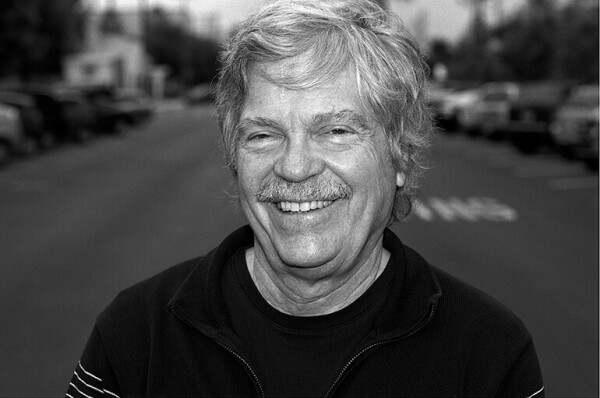
Alan Kay: I'm still trying to learn to think better.
I think the answer will be very similar to the answer to the question of 'what is the most amazing thing that writing (and then the printing press) has made possible.'
It's not just that writing and printing have enabled a completely new form of travel through time and space, which is a remarkable and important aspect, but rather that a new way to travel through ideas has emerged, as a consequence of learning to read and write fluently. Many studies have shown that cultures with developed writing systems are qualitatively different from traditional oral cultures, and that there is a correlation between literacy and civilizations, which is no coincidence.
Further qualitative changes occurred with the advent of printing, and both of these changes can be somewhat puzzling, as each was initially a kind of automation of what had existed before: recording speech and printing the written word. In both cases, the difference lay in 'what else?'. 'What else?' relates to 'how it differs', which comes into play when a person freely masters any tool, especially one that carries both ideas and actions.
There is much more to add here that would exceed the size of a standard Quora answer, but for starters, let's consider what writing and printing mean for description and argumentation. New ways of writing and reading are now available in terms of form, volume, structure, and type of content. And all of this is evolving alongside new types of ideas.
In light of this, one can pose the question this way: what qualitatively new and important things do computers bring? Think about what it means not only to describe an idea but also to be able to model it, implement it, explore its implications and hidden assumptions like never before. Joseph Licklider, who organized the first ARPA research that led to today's personal computer technologies and ubiquitous networks, wrote in 1960 (slightly rephrased): 'In a few years, the relationships between people and computers will start thinking in ways that no one has ever thought before.'
This vision was initially compared to additional tools and vehicles, but soon it was perceived as a much larger idea of changing the types of communication and modes of thinking, which would be as revolutionary as those brought by writing and printing.
To understand what happened, we only need to look at the history of writing and printing to note two completely different consequences: (a) the first, massive change in the last 450 years in how the physical and social worlds are viewed through the inventions of modern science and governance, and (b) that most people who read, in principle, still primarily prefer fiction, self-help books, religion, cookbooks, etc. (based on the most read books in the last 10 years in America). All topics that would be familiar to any caveman.
One way to look at this is that when a new powerful mode of self-expression arises, one that was not lacking in our genes to become part of traditional cultures, we need to learn to master and use it freely. Without specialized training, new media will mainly be used to automate old forms of thinking. And here we also face consequences, especially if new means of information dissemination are more effective compared to the old, which can lead to saturation that acts like legal drugs (as in the case of the industrial revolution’s ability to produce sugar and fat, there may also be an excess of stories, news, statuses, and new ways of oral interaction in the environment).
On the other hand, almost all science and engineering are only possible thanks to computers, mainly due to the ability of computers to actively model ideas (including the very 'idea of thinking'), considering the huge contribution that printing has already made.
Einstein noted that 'we cannot solve our problems with the same level of thinking that created them.' We can use computers to address many of our biggest issues in new ways.
On the other hand, we will face terrible trouble if we use computers to create problems of a new level that our thinking is not equipped to handle, which should be avoided and eliminated. A good analogy is found in the phrases, "nuclear weapons are dangerous in any human hands," but "nuclear weapons in the hands of cavemen are much more dangerous."
A great quote from Vi Hart: "We must ensure that human wisdom surpasses human power."
And we do not gain wisdom without significant effort, especially with children who are just beginning to form their understanding of the world they were born into.
Translation: Yana Shchekotova
More articles by Alan Kay
Source: habr.com
