

Engineers from the Massachusetts Institute of Technology (MIT CSAIL) have developed a 'smart surface' called RFocus, which 'can function like a mirror or a lens' to focus radio signals on the desired devices.
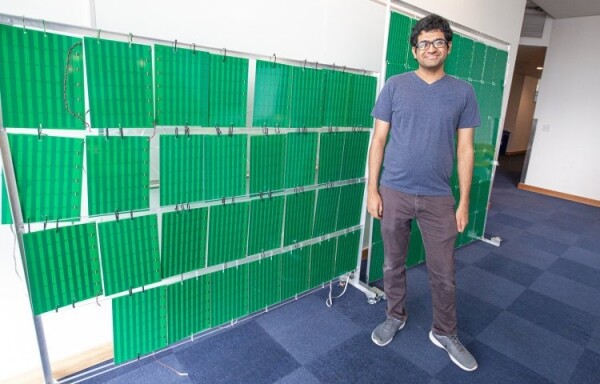
Currently, there is a significant problem in providing stable wireless connections for miniature devices, which have virtually no space for antennas. The 'smart surface' RFocus may address this, with an experimental version increasing the average signal power nearly tenfold while simultaneously doubling the channel capacity.
Instead of several monolithic antennas, the developers of RFocus have utilized over 3,000 miniature antennas, complemented by appropriate software, which has achieved such a significant increase in signal power. In other words, RFocus acts as a beamforming controller placed in front of the end-user devices. The project authors believe that this array will be relatively inexpensive to manufacture, as each miniature antenna costs only a few cents. It is noted that the RFocus prototype consumes less energy compared to conventional systems, achieved through the elimination of signal amplifiers.
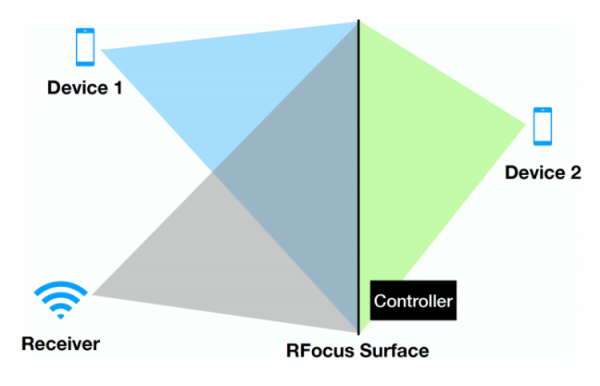
The project authors believe that their system, released in the form of 'thin wallpaper', could find widespread application, including in the Internet of Things (IoT) and fifth-generation (5G) communication networks, enhancing the signal transmitted to end-user devices. It is currently unclear when the developers plan to launch their creation on the commercial market. Until then, they need to refine the final product design to make the system as efficient and appealing as possible to potential buyers.
Source: 3dnews.ru
