

A recent news article titled, is unlikely to have left any of us indifferent, as we all own mobile devices that support these very SMS messages.
It’s clear that the conversation is about the introduction of a new (essentially, well-forgotten old) RCS platform, and no one is planning to completely eliminate the good old SMS, at least for now. But what is the point of this? The packaging from the four mobile operators is quite colorful—promising the convenience of using a universal platform that boasts a rather ‘rich’ functionality. But what lies beneath this corporate ‘gift’ for the eager masses? Where did this RCS come from, and why should it replace SMS? Who, in 2019, needs yet another messenger that may impress only compared to the capabilities of SMS, but clearly not against its direct competitors like iMessage, WhatsApp, Viber, and Telegram? Some say that the mercantile mobile operators seek to take revenge on the free messaging apps, leading to the reincarnation of the stillborn RCS. Currently, there are more questions than answers, but we will shed light on some of them...

SMS — the pioneer
SMS (Short Message Service) — emerged back in 1992 and quickly became popular. For the average user, the functionality of the new service — the ability to send text messages, one packet of up to 140 bytes (a message of 160 characters in Latin script, or 70 in Cyrillic) — was the priority, while operators also enjoyed high profitability from the service, as the actual costs of transmitting such a negligible amount of data have always been comfortably covered by . A clear advantage of the technology was also the fact that sending short text messages occurred over a separate communication channel, thus not congesting the voice channel, allowing SMS to be received during phone calls. However, the end of this idyll was not far off.
The combination of factors such as the development of network infrastructure, the implementation of high-speed data transmission technologies, the increased performance of gadgets, and the introduction of more advanced software did not allow the situation to remain the same.
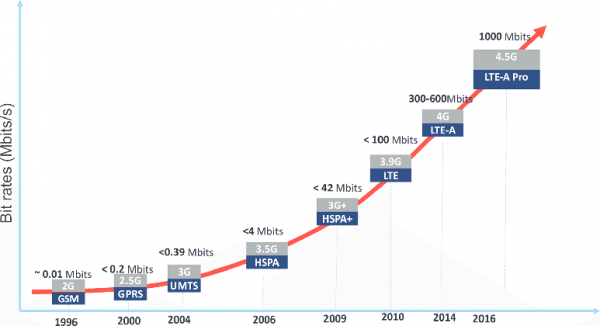
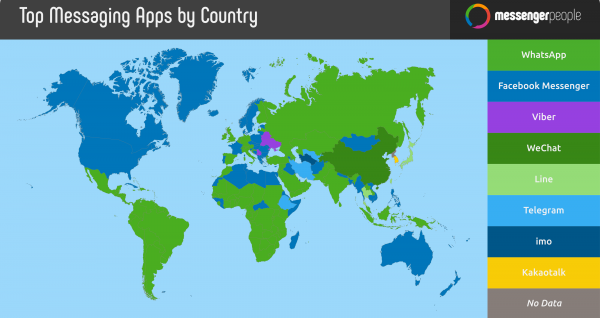
In the early 2000s, the attempt to introduce the first messenger, Jimm (an abbreviation for Java Instant Mobile Messenger), on smartphones did not achieve widespread popularity. However, by the end of the decade, the technology had moved beyond the narrow circles of advanced youth. By now, the use of applications for unlimited sending of text, audio, and video messages over the internet has, without exaggeration, become ubiquitous. For the vast majority of smartphone users, SMS has turned into an anachronism. Although SMS remains a reliable tool with minimal network requirements for sending text messages, it has become akin to wired radio. Yes, we know where to plug it in, and yes, we even regularly pay for its operation in our bills, although we have forgotten when we last used it for its intended purpose.
RCS — better late than never?
There are things in this world that are already biased negatively before they even appear. The harmless and unremarkable RCS (Rich Communication Services) is precisely such a phenomenon.
The first unsettling "alarms" for mobile operators began sounding at the turn of the millennium, and the culprit was instant messengers. Of course, in the early 21st century, to send a message to your recipient without SMS, one needed a fully functional workstation — a PC connected to the internet, which was burdensome in itself. A bit more headache for mobile operators came from small companies providing VoIP services, which enabled communication over the network at much more acceptable rates than those of cellular operators, especially when one of the interlocutors was roaming.
The growth of mobile internet traffic was primarily driven by technological progress, which continually reduced the cost per megabyte and expanded the coverage areas of 2-3G networks. The emergence of the mobile application Jimm in 2004 essentially provided the means to organize live chat on phones. In fact, there weren't many advantages of the messenger compared to the then-common email. The bonuses were with Skype. Although
Skype was still far from having a standalone client for smartphones, consumers increasingly began to 'escape' from traditional services offered by cellular operators through mobile internet.
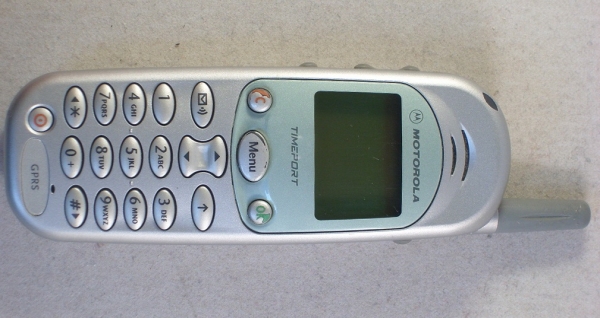
Having a monochrome Motorola Timeport T260 in 2001, which supported modem functions, along with a separately purchased cable (the phone also had an IR port) and the most standard software on your computer, you could already organize communication through the ICQ client. At the early stages, the connection speed to the network, under stable 2G coverage, could reach up to 5 KB/s, but this was sufficient for text messaging. The time of the thoughtless monopoly of telecommunications operators over the entire spectrum of communication services was fading away.
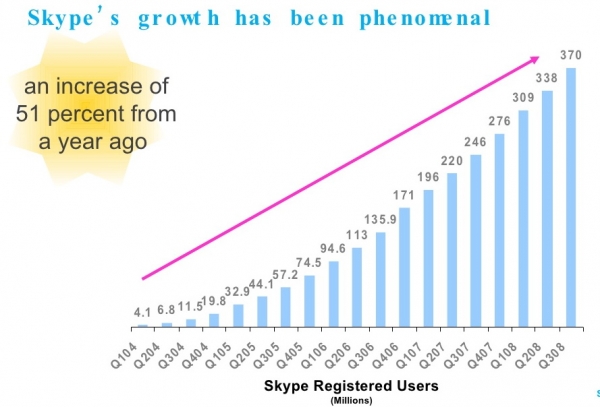
If the news of the mass implementation of RCS, replacing the outdated SMS, had been announced in the second half of the 2000s, it could have been a truly significant event; however, too much time has passed since then. In 2008, Skype made a real revolution by releasing the mobile application Skype lite for free, designed for gadgets running the most popular smartphone OS, Symbian.
Unlike its predecessor from 2004 — Jimm, by 2008, Skype was not just a handful of amateur enthusiasts trying to make the world better in their spare time. By the time Skype fully entered the mobile application market, it was backed by substantial financial resources, hundreds of employees worldwide, years of experience in supporting communication services, and of course, a vast number of satisfied users.
In fact, what the aforementioned four mobile operators are now bringing to consumers was already implemented ten years ago! Just think about it, , the RCS technology supports: emojis, changeable statuses, group chats, file transfer, IP voice communication, video calls, and even, after the update in 2017, offline SMS notifications. However, regarding end-to-end encryption, which is present in all popular messengers, the 'rich communication system' still lacks it. The RCS protocol itself uses standard digital data transmission channels and, in the absence of an internet connection, practically all RCS functionality, like in most other modern messengers, will cease to work.
Ordinary greed
The year 2008 was significant for RCS in many ways. Apparently, the release of the mobile application by Skype marked a turning point in the understanding of major cellular operators about how this could impact their multi-billion dollar business. Since then, there has been a wave of initiatives, as well as , aimed at . Among the most remarkable proposals were attempts by companies , generated by messengers.
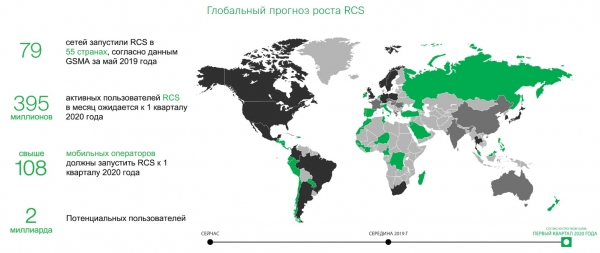
There was also a more reasonable approach taken by telecom operators regarding the impending 'disaster.' If you can't fight the movement, you must lead it. This is apparently the motto that corporations followed when creating RCS. The GSM Association (Groupe Spécial Mobile), established back in 1995, consisting of about 1,100 mobile operators worldwide, announced the creation of RCS and its subsequent implementation in 2008. Over more than 10 years, the platform's developers have done considerable work. Each year, up to the very latest time, updates were released for the communication platform, thus keeping its technical relevance 'afloat.' Additionally, the project's marketers never let us forget about it. From time to time, headlines popped up about the implementation and start of support for RCS . However, we still do not see a successfully operating messenger based on RCS.
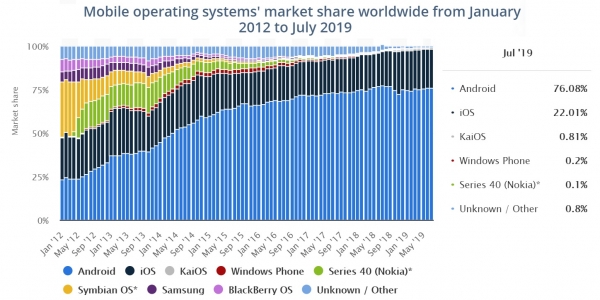
An interesting phase in the quest to bury SMS was Google's involvement in developing a universal messaging protocol. Having absorbed its creation—Android OS, which controls 3/4 of the smartphone operating system market—Google has, ironically, still not launched its own modern mobile communication app. Despite being a high-tech and multifaceted company that offers a range of integrated communication services, Google still lacks a unified, multifunctional platform like iMessage from its main competitor—Apple.
By joining the development and integration of the RCS protocol into its operating system and developing the Chat application based on it, Google has encountered several challenges that have significantly delayed the rollout of a competitive app. Marketing issues have also played a role here.
Strangely enough, not all mobile operators were interested in RCS. For smaller operators, implementing such a complex set of tasks to unify their software products with a diverse subscriber base involves guaranteed, significant financial costs, with benefits from its introduction remaining unclear. Apple, as before, has no intention of simply giving up iMessage, and regardless of the new platform, it still won't become truly universal. It has long been clear that customers’ need for reliable message encryption, for an RCS-based messenger, will not be supported by a vast number of mobile operators. Operators are very sensitive to national legislation and always collaborate with security agencies in the countries they operate in, and the additional problems of introducing a new service that they could potentially monetize are not something they need.
Afterword
The trend of mobile operators increasingly transforming into mobile internet providers has become a reality. The main revenue, as well as expenses, for operators revolve around expanding communication channels and increasing coverage of high-speed internet access. Nowadays, few are interested in details like when outgoing call minutes are charged, which operator serves your interlocutor, or even where they are located. When choosing a communication service package, we naturally focus first on the volume of included internet traffic, and only then on the appealing bonuses like free minutes/SMS/MMS. The window of opportunity for operators to earn additional income is narrowing. Competing for a share of financial flows in the multibillion-dollar IT services market, although very tempting, is practically futile without a unique product.
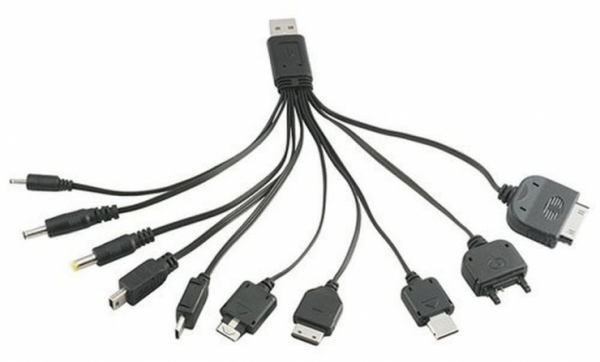
In theory, if certain conditions are met, the RCS protocol could become a unified platform that has successfully served SMS for a quarter of a century. Functional, colorful, conditionally confidential, yet fragmented messengers add some discomfort and chaos to our lives. Certainly, a product that could connect billions of users into a single, modern system could easily thrive. However, in practice, the stance of one of the market leaders — Apple Inc., which is not interested in strengthening its competition, is unlikely to change. Apple will not abandon existing SMS, just as it has not relinquished the Lightning port in favor of standardization and convenience for the masses.
A little advertisement 🙂
Thank you for staying with us. Do you enjoy our articles? Want to see more interesting content? Support us by placing an order or recommending us to your friends, , 30% discount for Habr users on a unique entry-level server designed by us for you: (options available with RAID1 and RAID10, up to 24 cores and up to 40GB DDR4).
Dell R730xd for half the price? Only with us in the Netherlands! Dell R420 — 2x E5-2430 2.2GHz 6C 128GB DDR3 2x960GB SSD 1Gbps 100TB — from $99! Read about how
Source: habr.com
