

I had the opportunity to visit Stanford University, which is one of the most prestigious and highly ranked educational institutions in the world, as well as one of the most advanced in the IT field. The campus and academic buildings are impressive! While I was exploring the buildings, inspiration struck and I became interested in the educational opportunities for international students (why not?). I decided to share the information and prepared a review.
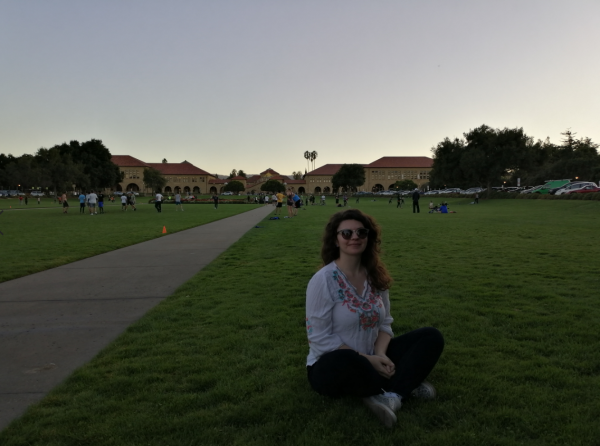
The history of Stanford University is unique:
the founders — railroad magnate, former governor of California, senator L. Stanford and his wife Jane. The university was founded in 1891 in memory of their only son, who did not live to see his 16th birthday. There is a beautifully written story circulating online about its founding (I pondered whether to publish it or just leave a link, but decided to post it as this story is significantly different from the founding stories of other universities, and it's up to you whether to read it or not):
A woman in a modest dress, accompanied by her husband dressed in a simple suit, got off the train at Boston station and headed to the office of the president of Harvard University. They did not have an appointment. The secretary immediately recognized that such provincials had no business at Harvard.
— We would like to meet with the president, — the man said in a low voice.
— He will be busy all day, — the secretary replied curtly.
— We will wait, — the woman said.
For several hours, the secretary ignored the visitors, hoping that at some point they would become disappointed and leave. However, realizing that they were not going anywhere, he finally decided to disturb the president, though he very much did not want to.
— Maybe if you meet with them for a minute, they’ll leave sooner? — he asked the president.
The president sighed in indignation and agreed. A person as important as he definitely did not have time to meet with people dressed so modestly.
When the visitors entered, the president looked at the couple with a stern and haughty expression. The woman addressed him:
— We had a son who studied at your university for a year. He loved this place and was very happy here. But, unfortunately, he passed away unexpectedly a year ago. My husband and I would like to leave a memory of him on the university grounds.
The president was quite displeased, in fact he seemed irritated.
— Madam! — he replied boldly, — we cannot erect statues for everyone who studied at Harvard and died. If we did that, this place would look like a cemetery.
— No, — the woman quickly countered, — we do not wish to erect a statue; we want to build a new building for Harvard.
The president looked at her faded checkered dress and the poor suit, exclaiming: — A new building! Do you have any idea how much one such building costs? All Harvard buildings cost more than seven million dollars!
For a moment, the woman said nothing. The president smiled smugly, pleased with himself. Finally, he would be rid of them!
The woman turned to her husband and quietly said:
— Is it really so cheap to build a new university? So why don’t we just build our own university?
The man nodded in agreement. The Harvard president turned pale and looked bewildered.
Mr. and Mrs. Stanford stood up and left the office. In Palo Alto, California, they founded a university named after them, Stanford University, in memory of their beloved son...The children of California will be our children»
(the literary story is copied from historytime.ru)
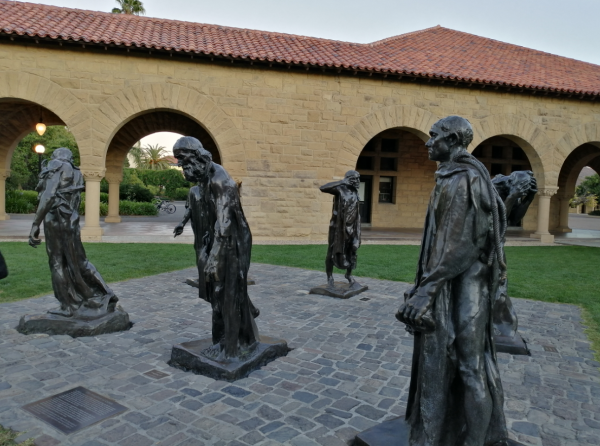
Monument to the founders:
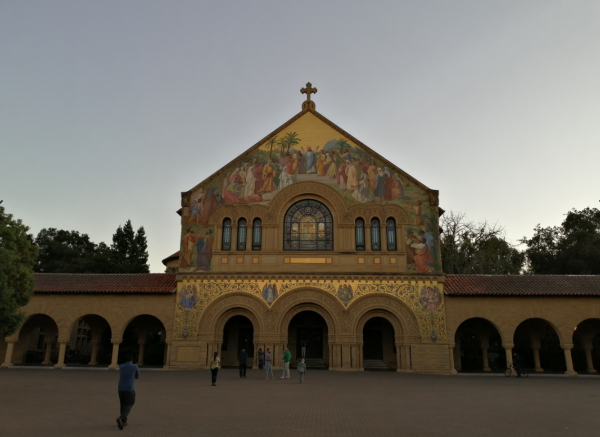
Memorial church on the premises:
Description of the university's prestige
The university is known for its research activities and "close" ties with Silicon Valley. Visiting the offices of one of the IT companies (in another of my posts on Habr), I asked the question, why is the concentration of headquarters of the most advanced companies in the world (Google, Apple, Amazon) located here? One of the responses I received was that it historically occurred due to the close proximity of the 'talent pool' represented by Stanford University.
In terms of popularity among universities in the US, Stanford ranks second only to Harvard University. Every year, it accepts about 7% of all applicants.
Among its alumni are:
- founders of major corporations (Google, Yahoo!, PayPal, etc.)
- Inventors: co-author of the TCP/IP network protocols V. Cerf, noise reduction system designer R. Dolby, inventor of the 56K modem B. Townsend
- Entrepreneurs who founded their billion-dollar companies
About the university
Location — Santa Clara, near San Francisco, California, USA.
The university campus, along with laboratories and other buildings, occupies more than 33 km² of land.
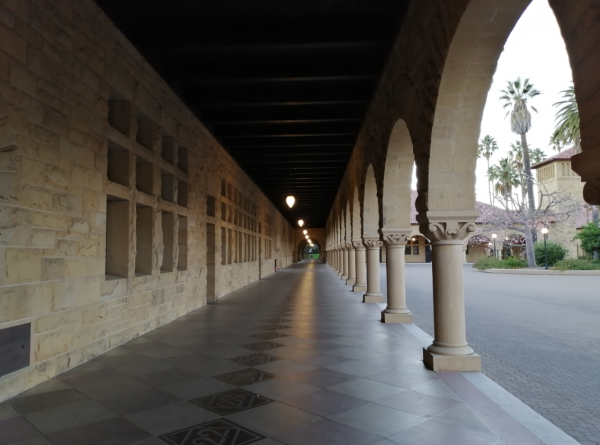
Stanford has over seven hundred buildings with state-of-the-art lecture halls, 18 independent laboratories, institutes, and research centers, and nearly 24/7 access to 20 libraries for students (with 8.5 million books). Nearby, there are hospitals and clinics. The campus features a church, a shopping center (with 140 boutiques and shops), and even an art gallery.
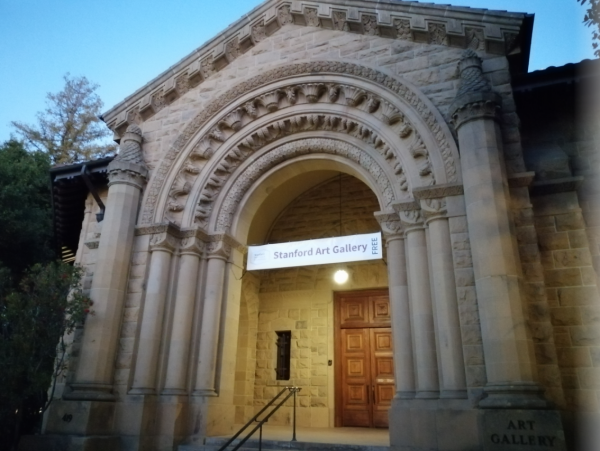
Faculties of Stanford University: School of Medicine, Law School, School of Earth Sciences, School of Humanities and Sciences, Engineering School, Business School (ranked in the top 10 worldwide).
The undergraduate program consists of the top 5 fields: Computer Science, Human Biology, Engineering, Mechanical Engineering, and Science, Technology, and Society.
Engineering Faculty Building:
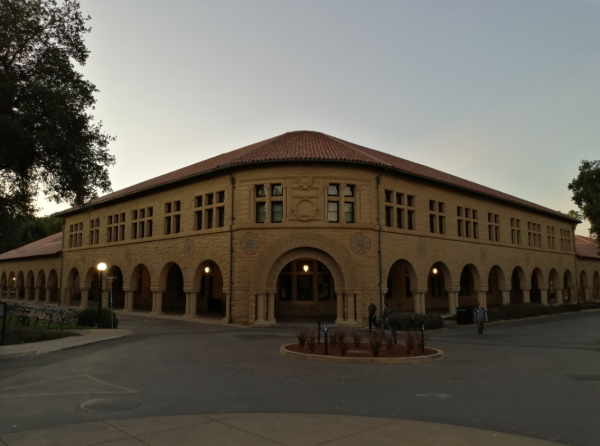
Anyone can apply to the university.
The annual tuition fee ranges from $30,000 to $60,000; there are free programs for gifted students. If the full amount cannot be paid upfront, U.S. citizens can take out a student loan, repayable after graduation.
Before submitting applications and paying the application fee, foreign students must take the TOEFL exam to prove their excellent English language skills.
Only after this can they begin taking American tests (similar to how it is done in Belarus after high school for university admission, but for the undergraduate program, there are different ones).
Particular attention is given to the personal qualities of the prospective student, so recommendations from employers who sent the employee for training or from American teachers are necessary (it is unclear where foreign students can obtain these, but I think relevant information can be found online).
A transcript, an essay, etc., are also required.
And... a motivational letter (!). According to the university's requirements, an applicant must have a clear idea of what they want to do in the future and what benefits they can bring to others (especially candidates for master's or doctoral programs). Since Stanford is imbued with an entrepreneurial spirit, they enjoy reading motivational letters with original ideas.
The final stage of the admission campaign is a personal interview. To assess the intellectual potential of the applicant and their interest in studying, instructors ask questions not only related to the chosen specialty but also general ones.
Russian applicants have the opportunity to interview in Moscow.
You can find more detailed information about the admission requirements .
A brief overview of the campus
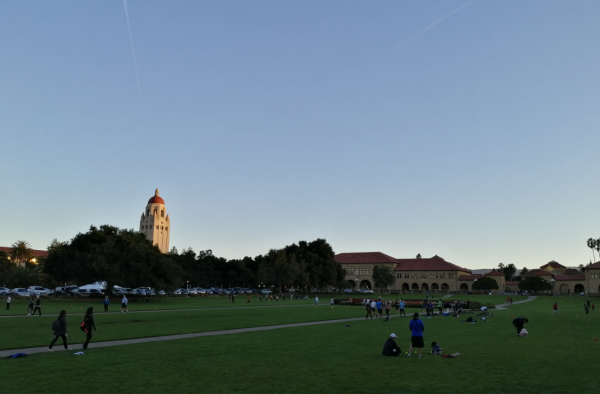
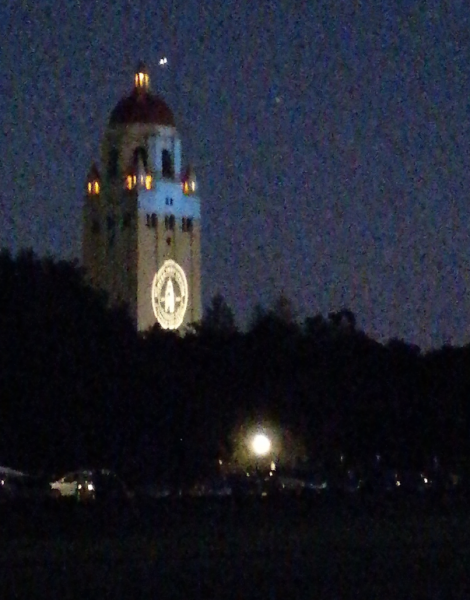
The Hoover Tower is the tallest building on campus at 87 meters, built in 1941 and named after one of the American presidents who studied at Stanford. It houses a library and an archive collected by Hoover during his studies.
The tower at night with a projection of the tower itself (apologies for the photo quality):
Each flowerbed at the university contains unique plants gathered from around the world:
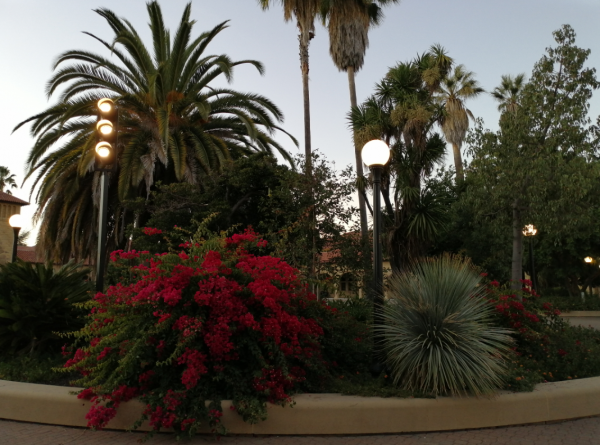
Photo of the classroom:

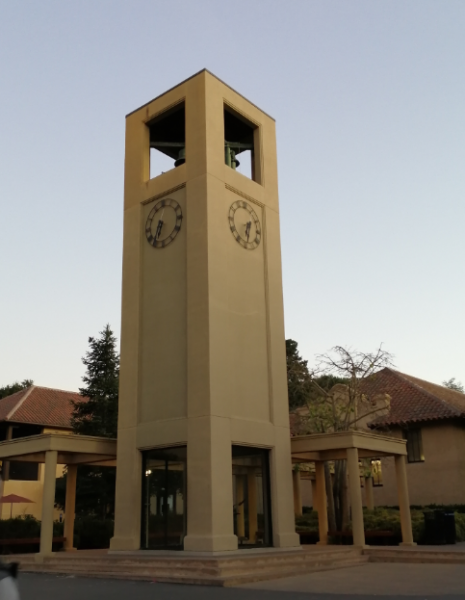
The clock that chimes loudly every hour:
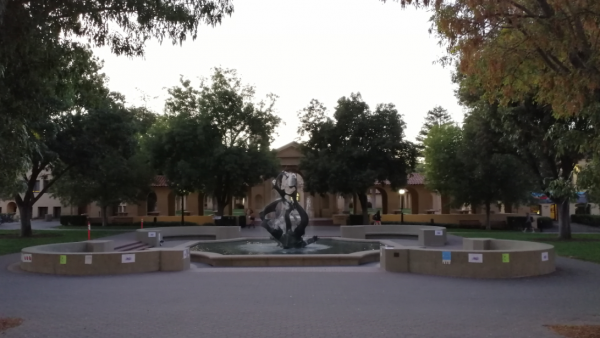
There are many fountains on the campus. This one is opposite the shopping center, covered with announcements from student organizations:
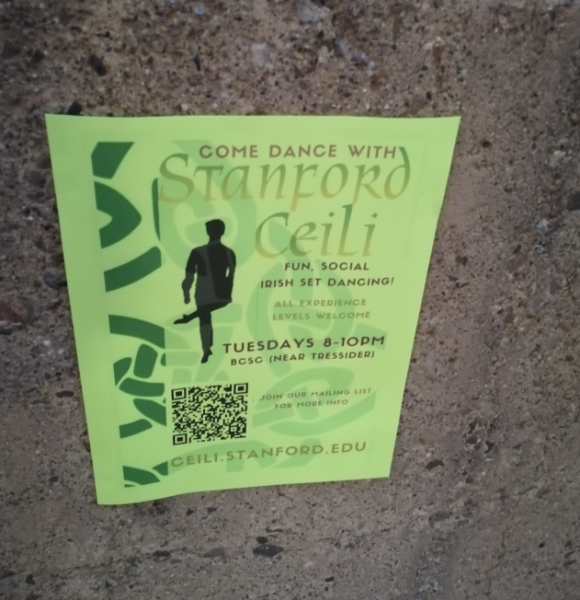
A few photos from the campus:
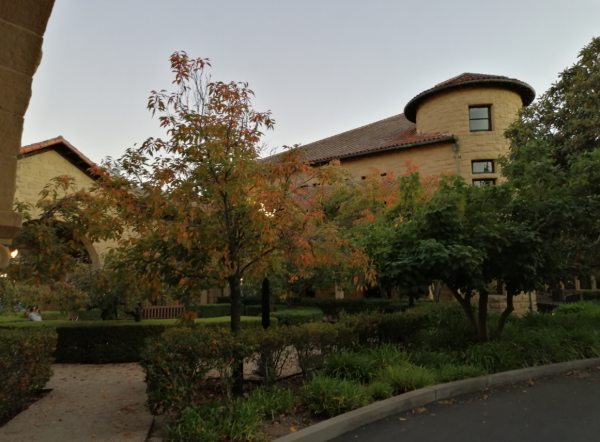
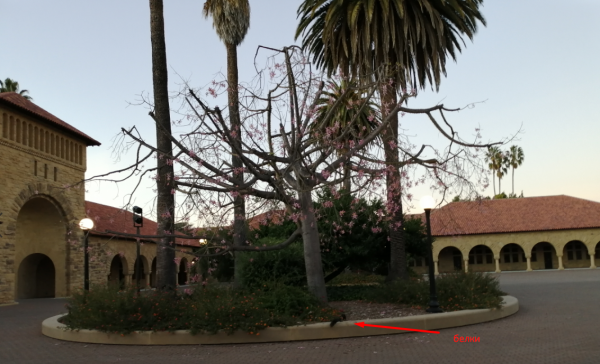
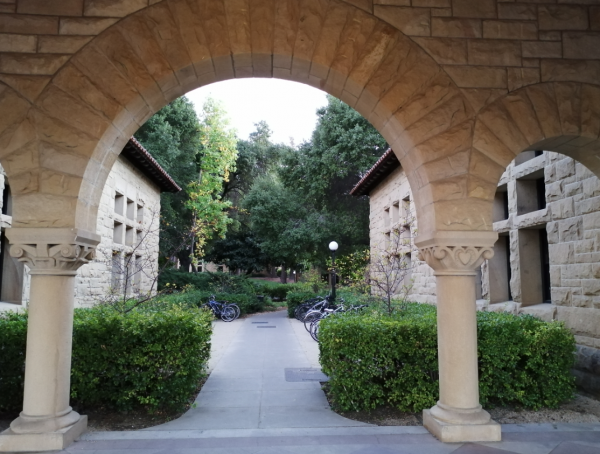
The impressions of the university are all positive. For 'non-students', the campus area can be visited on weekends. Strolling on foot or by bicycle is very pleasant — the old, sturdy buildings, the silence, the squirrels scurrying around, the sound of water from the fountains, and the atmosphere filled with the spirit of knowledge.
Source: habr.com
