

SynQuacer E-Series motherboard for a 24-core ARM server powered by the ARM Cortex A53 processor with 32 GB of RAM,
For many years, ARM processors with a reduced instruction set (RISC) have dominated the mobile device market. However, they have yet to break into data centers, where Intel and AMD still reign with the x86 instruction set. Occasionally, there are exotic solutions, such as , but there have been no serious offerings until this week.
This week, AWS launched its own 64-core ARM processors in the cloud, — this is a system-on-chip with an ARM Neoverse N1 core. The company claims that Graviton2 is much faster than previous-generation ARM processors in EC2 A1 instances, and here are .
Infrastructure business is all about comparing numbers. Essentially, clients of data centers or cloud services do not care about the architecture of the processors. What matters to them is the price-to-performance ratio. If operating on ARM is cheaper than on x86, they will choose it.
Until recently, it was hard to say definitively that computing on ARM would be more advantageous than on x86. For example, the server 24-core ARM Cortex A53 is a model priced at around $1000, which could run a web server on Ubuntu, but it fell significantly short of x86 processors in performance.
However, the stunning energy efficiency of ARM processors makes them constantly worth reconsidering. For example, the SocioNext SC2A11 consumes only 5 W. Energy costs account for almost 20% of a data center's expenses. If these chips demonstrate decent performance, x86 won't stand a chance.
The first coming of ARM: EC2 A1 instances
At the end of 2018, AWS introduced based on its own ARM processors. This was definitely a signal for the industry about potential changes in the market, but the benchmark results were disappointing.
The table below shows of EC2 A1 (ARM) and EC2 M5d.metal (x86) instances. The testing used the utility stress-ng:
stress-ng --metrics-brief --cache 16 --icache 16 --matrix 16 --cpu 16 --memcpy 16 --qsort 16 --dentry 16 --timer 16 -t 1m
As we can see, A1 performed worse in all tests except for caching. In most other metrics, ARM lagged significantly. This performance difference is greater than the 46% price difference between A1 and M5. In other words, instances on x86 processors remain more cost-effective in terms of price/performance.
Test
EC2 A1
EC2 M5d.metal
The difference
cache
1280
311
311,58%
icache
18209
34368
-47,02%
matrix
77932
252190
-69,10%
cpu
9336
24077
-61,22%
memcpy
21085
111877
-81,15%
qsort
522
728
-28,30%
dentry
1389634
2770985
-49.85%
timer
4970125
15367075
-67,66%
Of course, microbenchmarks do not always present an objective picture. The difference in real application performance is what matters. But even here, the situation was not better. Colleagues from Scylla compared a1.metal and m5.4xlarge instances with the same number of processors. In a standard NoSQL database read test in a single-node configuration, the first showed 102,000 read operations per second, while the second showed 610,000. In both cases, all available processors were utilized 100%. This corresponds to a performance drop of about six times, which is not compensated by the lower price.
Additionally, A1 instances only run on EBS without support for fast NVMe devices, unlike other instances.
Overall, A1 was a step in a new direction but did not live up to expectations for ARM.
The Second Coming of ARM: EC2 M6 Instances
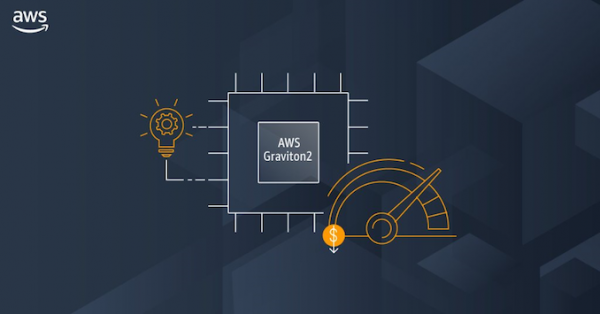
Everything changed this week when AWS introduced a new class of ARM servers, along with a range of instances on new processors. , including .
The comparison of these instances shows a completely different picture. In some tests, ARM performs better, and in some cases, much better than x86.
Here are the results of running the same stress-testing command:
Test
EC2 M6g
EC2 M5d.metal
The difference
cache
218
311
-29,90%
icache
45887
34368
33,52%
matrix
453982
252190
80,02%
cpu
14694
24077
-38,97%
memcpy
134711
111877
20,53%
qsort
943
728
29,53%
dentry
3088242
2770985
11,45%
timer
55515663
15367075
261,26%
This is completely different: M6g is five times faster than A1 in reading operations from the Scylla NoSQL database, and the new M6gd instances feature fast NVMe drives.
The Assault of ARM on All Fronts
The AWS Graviton2 processor is just one example of ARM usage in data centers. But signals are coming from various directions. For instance, on November 15, 2019, the American startup Nuvia .
The startup was founded by three leading engineers who developed processors at Apple and Google. They promise to develop processors for data centers that will compete with Intel and AMD.
According to , Nuvia has designed from scratch a processor core that can be built "on top of" the ARM architecture, but without obtaining a license from ARM.
All of this indicates that ARM processors are ready to conquer the server market. After all, we are living in a post-PC era. Annual x86 shipments have declined by nearly 10% since their peak in 2011, while RISC chips have soared to 20 billion. Today, 99% of 32-bit and 64-bit processors in the world are RISC.
Turing Award winners John Hennessy and David Patterson published an article in February 2019 . Here’s what they write:
The market has settled the RISC vs CISC debate. While CISC won the later stages of the PC era, RISC is winning now that we are in the post-PC era. No new ISAs for CISC have been created in decades. To our surprise, the consensus on the best ISA principles for general-purpose processors today still favors RISC, 35 years after its invention… In open-source ecosystems, expertly crafted chips will convincingly demonstrate advancements, thereby accelerating commercial adoption. The philosophy of general-purpose processors in these chips will likely be RISC, which has withstood the test of time. Expect rapid innovations akin to those during the last golden age, but this time with a focus on cost, energy, and security, not just performance.
“In the next decade, a Cambrian explosion of new computer architectures is expected, marking exciting times for computer architects in academia and industry,” they conclude in the article.
Source: habr.com
