

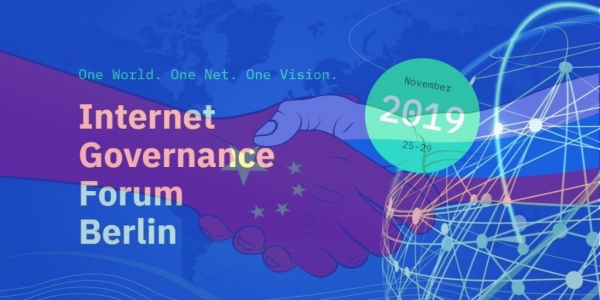
Ended in Berlin. A week of intense debates among experts from around the world under the UN flag about . All internet multistakeholders who create, use, exploit, and protect the Internet on different continents attended IGF.
The annual Forum raised many pressing issues that concern progressive humanity today. Among other things, the following was discussed:
- The risks of civil discrimination created by the use of artificial intelligence (AI).
- The order and extent of law enforcement's access to data located beyond the borders of their own jurisdictions in the fight against cybercrime
- How to protect privacy on digital platforms
- How to address the challenges of effectively combating illegal content on the Internet while simultaneously protecting digital rights
To resolve these issues at the international level, states need solidarity. Solidarity in the effort to preserve the internet as a global asset, ensuring its indivisibility and connectivity. The result of such solidarity could be a long-overdue international treaty defining the status of the internet and the obligations of participating states regarding cyberspace. However, such unanimity is lacking.
There is also no common understanding of the processes themselves or even the terms that describe these processes. Those who built this Internet under the concept of "sovereign Internet" understand sovereignty as the independence of the global network from states and individual players, as well as the sovereignty of each individual within it, while others believe that sovereignty refers to the right to lawful violence by states and the supremacy of national authority.
What did the "key figures" discuss?
The conference was opened by UN Secretary-General Antonio Guterres and Chancellor Angela Merkel. Both noted that the global network technology, once created by scientists and engineers, is now falling apart. Merkel mentioned that we should expect even more surveillance online in the near future, and government filtering and censorship of information will increase.
It has been noted that the approaches of different countries to internet regulation are not necessarily bad. They include things like privacy laws, cybersecurity, and illegal speech. However, they are increasingly diverging in various countries, and some nations are even trying to enforce their national laws beyond their borders. This, according to her, is a recipe for legal uncertainty, high compliance costs in different countries, and possibly a gradual shift towards what is called the 'splinternet.' The concept of splinternet was discussed extensively at the IGF. Splinternet is a new term describing the phenomenon where national governments seek to turn the World Wide Web into a series of unilaterally managed national internet networks.
It is now clear to everyone that there is a Chinese model that the CPC is now exporting throughout Southeast and Central Asia and Africa, as well as Russia with its 'sovereign internet', 'ready for an attacking American adversary', and even the quite wild practice of a total 7-day shutdown in . Therefore, they could not avoid discussing this at the IGF.
The creator of the World Wide Web, current head of the World Wide Web Consortium Sir Tim Berners-Lee, published just before the start of the Forum in an attempt to develop fundamental principles for states, companies, and citizens. The father of URL, HTTP, HTML, and now an evangelist for the open web, explained at the IGF how the contract was created and why adopting these principles would ensure humanity a unified and indivisible internet.
According to the published 'contract', which has already been supported by major IT giants and leading digital rights advocacy organizations (including ), the following principles are established:
For governments:
- Ensure universal access to the internet.
- Maintain internet availability at all times.
- Protect and respect people's fundamental rights to privacy online and data protection.
For companies:
- Make the internet accessible to everyone.
- Respect and protect people's privacy and personal data to build 'network trust.'
- Develop technologies that support the best in humanity and challenge the worst.
For citizens:
- To be creators and co-participants of the Network.
- To build strong communities that respect civil discourse and human dignity.
- To fight for the Network.
"One world. One network. One vision"
This was the slogan under which the Forum took place. However, there is no reason to be optimistic that everyone will suddenly come to an agreement. A recent study showed that 95% of the surveyed experts agreed that in the next three years, there will be an increase in clashes between the digital laws of different countries. Only 4.5% believe that there is "sufficient international coordination and consistency" to address this issue. Moreover, these few optimists were representatives of governments and large tech companies, whose identities are unfortunately unknown.
An interesting message came from the country hosting the IGF this year. The Chancellor and Minister of Transport and Digital Infrastructure of Germany called for a review of internet governance, that is, the regulatory framework. "The traditional multilateral approach as cooperation between governments must be expanded," Merkel noted, asserting that new structures must be created. Since the internet affects everyone, science, business, citizens, and civil society should also have a voice. German officials did not elaborate on this but referred to other forums, such as G20 and EU meetings, which may soon attempt to lead the process of harmonization or take on some functions of Internet Governance.
However, it is already clear that not everyone shares the West's multistakeholder approach to internet governance. Looking at the world map, we see that today a large part of the planet is within the technosphere of China and Russia, which are spreading their own models of information control as well as technologies for surveillance and censorship in 110 countries. These countries either directly acquired such exported practices and technologies or copied them. More details can be found in the report by the Open Technology Fund. .
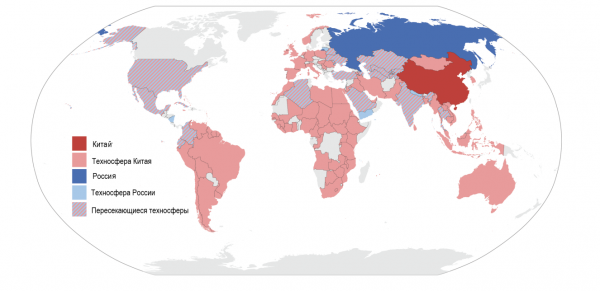
However, at the IGF, Russian and Chinese delegates did not discuss this. At numerous IGF sessions, representatives from Russia and China spoke about digital transformation, privacy protection, intellectual property rights, ethical use of AI, joint efforts against cybercrime, and other regulatory aspects that require collaborative integration within a multilateral international approach. When questioned about blatant censorship, concentration camps in East Turkestan, and the isolation of their own networks, representatives smiled and replied that these were all fabrications by the media and the lies of local discontented activists. The countries, they claimed, share common values and look in the same direction as the rest of the world in terms of synchronizing regulatory processes.
Regarding Russia , which can hardly be called a multistakeholder platform for joint decision-making, was reported by Leonid Levin, Chairman of the State Duma's Information Policy Committee. He read exclusively from a paper and in Russian, which is strange for the IGF, where even representatives from Zimbabwe and Malaysia speak decent English.
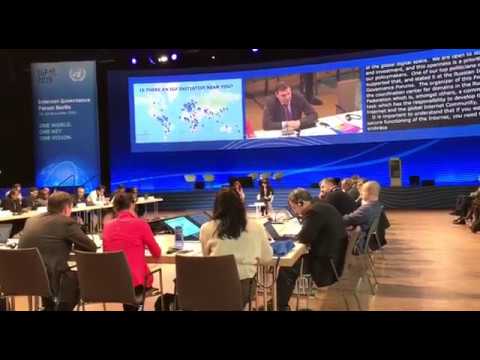
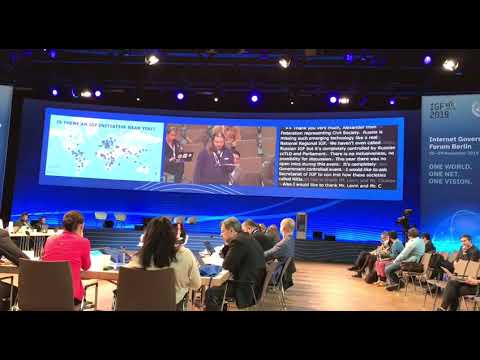
Mr. Levin, of course, forgot to mention the long-uncontrolled online censorship, new surveillance technologies based on , repression for words on the Internet, Russia's first shutdowns, and the recently adopted law on . However, this was pointed out to him and the other delegates by Alexander Isavnin, a representative of Roskomsvoboda and OZI.
Their path
Meanwhile, as the global community discusses joint internet governance at the IGF year after year, information control technologies and information management methods have been gradually implemented in many third-world countries according to two main models: the 'Belt and Road' (Chinese model) and the Greater Eurasian Partnership (Russian model). However, these two models began to into a single one in 2019 and are already forming a unified framework for regulating cyberspace for both countries. This framework significantly differs from the approaches developed at the IGF.
I would like to remind you that on April 30, 2015, the Government of the Russian Federation issued ‘On the Signing of the Agreement between the Government of the Russian Federation and the Government of the People's Republic of China on Cooperation in the Field of International Information Security.’ On October 20 of this year, at the VI International Conference on Internet Issues in Uzhun, China, Roskomnadzor and the Chinese Cyber Administration signed a cooperation agreement. The document is dedicated to joint efforts against prohibited information. According to Roskomnadzor spokesman Vadim Ampelonsky, 'close working contacts' among internet censors have been ongoing for the past few years. Now, they are formalized by an international agreement.
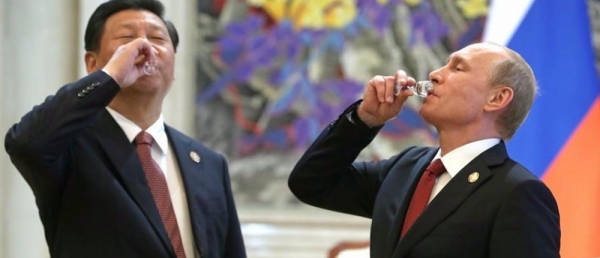
The document has not yet been published; however, the measures both countries propose to implement in harmonizing approaches to regulating the digital environment can already be understood from a document published by the Chinese Cyber Administration in September 2019. The draft law, reflecting a purely Sino-Russian approach to ‘Internet Management,’ has a quite substantial new list of grounds for restricting access to information. In addition to prohibitions, it also promotes the encouragement of certain information. In particular, thoughts from Chairman of the People’s Republic of China Xi Jinping, information about Chinese socialism, and the policies of the CPC. At the same time, the new document requires website operators to:
- create mechanisms for real-time content verification to combat rumors and false information;
- promote encouraged content through push notifications;
- create a user rating system.
Drink, Surf, for sovereignty!
Meeting several times a year at events dedicated to internet governance and digital rights protection, we love to gift each other something national. As a national gift this time, in the Moscow duty-free, I picked up a bottle of "Beluga" for my Belarusian colleagues. Upon meeting the guys from Minsk, I handed them the vodka and successfully forgot about it, diving into the atmosphere of the forum. But then it turned out that in order not to carry extra weight, the Belarusians left the bottle at the Internet Protection Society's booth. And in the end, they forgot to pick it up from there. They assumed that I, having visited the booth, picked it up and intended to return it to them.
Already at the airport, Isavnin texts me, telling me that he accidentally met the grandfather of the internet, , and gifted him that bottle of vodka. He laughed and said that he remembered the joke told at the forum, in which we in Russia hope only that all the money will be stolen and we will have no sovereign internet.
Well, for some it's a joke, but for others, it will be necessary to live under the conditions of this sovereign internet. So drink, Vint Cerf, our Russian vodka for our sovereign Internet.
Source: habr.com
