

Some time ago, the journal Cellulose published a study by Finnish scientists who discussed the creation of optical fiber from cellulose. The idea of creating light-conducting fiber structures was first formulated in 1910. Many decades later, fiber optic cables became a daily reality and an indispensable means of energy-efficient information transmission over tens of thousands of kilometers.
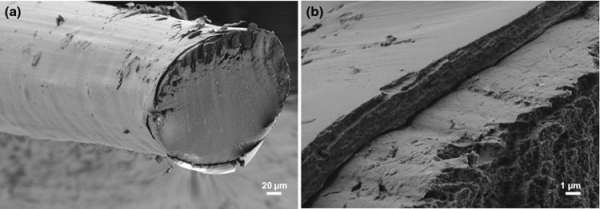
The optical fiber created by Finnish scientists from cellulose is unsuitable for telecommunications purposes. Its light attenuation is too high—up to 6.3 dB per centimeter in open air for a wavelength of 1300 nm. In water, the attenuation increased to 30 dB per centimeter. However, this property turned out to be the most sought after. Such cellulose optical fibers, due to their inherent wetting property, will provide a valuable and convenient solution for moisture measurement.
The world of smart sensors and Internet-connected devices could benefit from flexible, extensive, simple, and energy-efficient sensors for moisture measurement. Such solutions can be embedded in the foundations of buildings and structures to monitor moisture in monolithic constructions, for example, to manage flood and groundwater levels. Wearable electronics could be enhanced with body and clothing moisture sensors, useful in everyday life for monitoring the condition of small children and for outdoor enthusiasts.
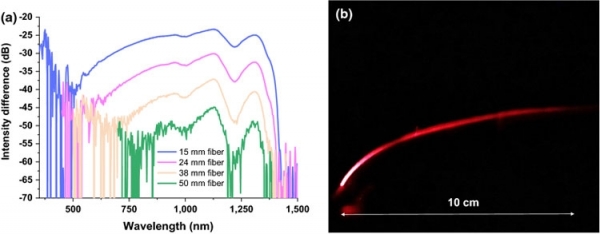
Optical fibers made of plastic materials have already found their niche in sensors for collecting seismic data, including even and particularly loud noises in city streets (gunshots, sounds of accidents, and similar). With the advent of cellulose optical fibers, the field of flexible, thermally stable, and durable optical cables will expand to include moisture monitoring, which plastic optical fibers are fundamentally incapable of.
Source: 3dnews.ru
