

Hello, Habr users! I present to you the translation of the article "" authored by Robert Triggs. It might seem odd for the original author to write about this topic in 2019 and for me to translate it on the brink of 2020. Today, NFC has come into its own and has ceased to be just a geeky technology for token keychains. Now it encompasses payments and, to some extent, smart homes and smart manufacturing. So why not revisit what's been covered, which may also be new for some?
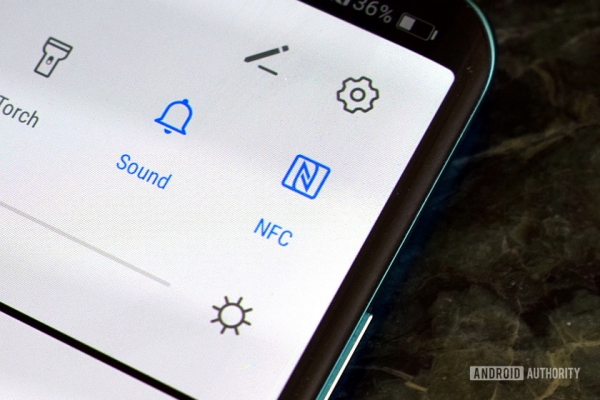
NFC is a rapidly evolving wireless technology, driven by the rise of online payment systems like Samsung Pay and Google Pay. This is especially true when it comes to flagship devices and even mid-range smartphones. Perhaps you have heard this term before, but what exactly is NFC? In this part, we will discuss what it is, how it works, and what it is used for.
NFC stands for "Near Field Communication," and as the name suggests, it enables short-range communication between compatible devices. This requires at least one device to transmit and another to receive the signal. A range of devices uses the NFC standard and can be classified as either passive or active.
Passive NFC devices include tags and other small transmitters that send information to other NFC devices without needing their own power source. However, they do not process any information sent from other sources and do not connect to other passive devices. They are often used for interactive signs on walls or, for example, advertisements.
Active devices can send or receive data and exchange information with each other, as well as with passive devices. Currently, smartphones are the most common form of active NFC device. Public transport card readers and contactless payment terminals are also good examples of this technology.
How does NFC work?
Now we understand what NFC is, but how does it work? Like Bluetooth, Wi-Fi, and other wireless signals, NFC operates on the principle of information transfer via radio waves. Near Field Communication is one of the standards for wireless data transmission. This means that devices must conform to specific specifications in order to interact with each other properly. The technology used in NFC is based on older concepts of RFID (radio-frequency identification), which utilized electromagnetic induction for information transfer.
This highlights a significant difference between NFC and Bluetooth/Wi-Fi. The former can be utilized to induce electricity in passive components (in passive NFC), as well as simply to send data. This means that passive devices do not require their own power source. Instead, they draw power from the electromagnetic field created by active NFC when it comes within range. Unfortunately, the NFC technology does not provide sufficient inductance to charge our smartphones, but Qi wireless charging is based on a similar principle.
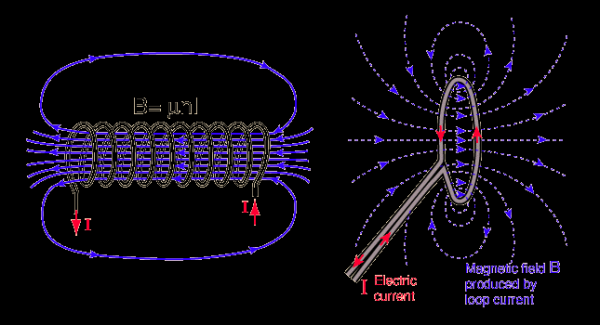
The data transmission frequency for NFC is 13.56 megahertz. You can send data at speeds of 106, 212, or 424 kbps. This is fast enough for data transfer ranges—from contact details to sharing images and music.
To determine what type of information will be available for exchange between devices, the NFC standard currently has three different operating modes. Perhaps the most common use of NFC in smartphones is the peer-to-peer mode. This allows two NFC-enabled devices to exchange various information between each other. In this mode, both devices switch between active when sending data and passive when receiving.
The read/write mode is a one-way data transmission. The active device, possibly your smartphone, connects with another device to read information from it. NFC advertising tags also utilize this mode.
The last operating mode is card emulation. The NFC device functions like a smart or contactless credit card to make payments or connect to public transportation payment systems.
Comparison with Bluetooth
So, what sets NFC apart from other wireless technologies? You might think that NFC isn't particularly necessary, considering that Bluetooth is more widely adopted and has been the leader for many years (and, by the way, dominates in the aforementioned smart home and smart manufacturing systems). Nevertheless, there are several important technical differences between them that give NFC some significant advantages in certain circumstances. The main argument for NFC is that it requires much less power consumption than Bluetooth. This makes NFC ideal for passive devices, such as the interactive tags mentioned earlier, as they operate without a primary power source.
However, this energy saving comes with several significant drawbacks. In particular, the transmission range is much shorter than that of Bluetooth. While NFC has a working range of 10 cm, just a few inches, Bluetooth transmits data from a distance of just over 10 meters from the source. Another disadvantage is that NFC is somewhat slower than Bluetooth. It transmits data at a maximum speed of just 424 kbps compared to 2.1 Mbps for Bluetooth 2.1 or around 1 Mbps for Bluetooth Low Energy.
But NFC has one major advantage: faster connection. Due to inductive coupling and the lack of manual pairing, the connection between two devices takes less than one-tenth of a second. While modern Bluetooth connects quite quickly, NFC is still very convenient for certain scenarios. And as long as mobile payments are its undeniable area of application.
Samsung Pay, Android Pay, and Apple Pay use NFC technology — although Samsung Pay operates on a different principle compared to the others. While Bluetooth performs better for connecting devices for data transfer/sharing, connecting to speakers, etc., we hope that NFC will always have a place in this world due to the rapidly evolving technologies of mobile payments.
By the way, a question for Habr—are you using NFC tokens in your projects? How so?
Source: habr.com
