

In 2005, the developers of GNOME set an ambitious goal to capture 10% of the global desktop market by 2010. Fourteen years have passed since this initiative was announced, and nearly ten years since it was supposed to be a reality. Yet, GNOME still holds a significantly smaller share than anticipated. What went wrong?
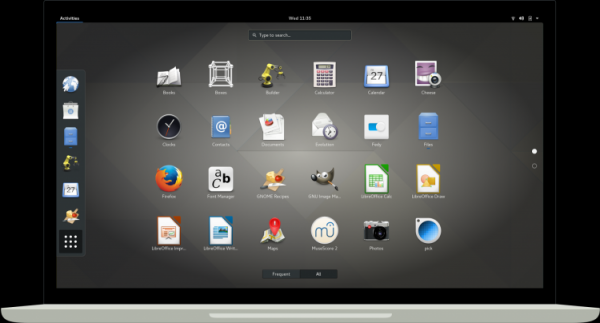
Currently, the 'gaming' share of Linux in the market is less than 1% of the total number of users on the Steam platform, as games are the main drivers of OS popularity. The proportion of desktop computers with Linux does not exceed 2% globally.
Thus, GNOME's share on a global scale has not reached the expected level. However, the same can be said for Canonical, which aimed to reach 200 million users of Ubuntu in 2015 but did not achieve this on either desktop or mobile platforms.
Overall, the situation with Linux on desktops is in stark contrast to its status on server and network platforms, where the free OS reigns almost uncontested. However, on workstations, Windows holds the advantage due to better performance with games and specialized software.
This is the reason for the low popularity of the free OS. Additionally, the GNOME graphical interface is squeezed by numerous forks and alternatives, from KDE to Cinnamon. Unfortunately, this seems to be the 'Achilles' heel' of open source, as independence from corporations and strict control translates into a host of standards and 'workarounds.'
Source: 3dnews.ru
