

Hello, Habr! I present to you the translation of the article by John Hotterbeekx.
Recently, I watched a presentation by a speaker on architecture. The talk was engaging, the concept and idea definitely made sense, but the speaker was not likable.
What happened?
More than half of the presentation was excellent, it included suitable examples, and the audience could see that the speaker truly knew his stuff. However, the way the man talked about others' solutions and methods seemed clearly wrong. He called them inferior platforms, insulted people who still used solutions outside of the presentation, labeling the methods and methodologies that have been used by the entire IT community for years as "big mistakes." You probably understand my viewpoint; throughout the presentation, examples of such things were constantly heard. Therefore, even though the content was top-notch, his attitude towards other methods forced a lack of respect for him. This example, of course, is overly crystallized, even extreme, and it made me ponder why sometimes people put their own solution above others, even when they are not always superior?
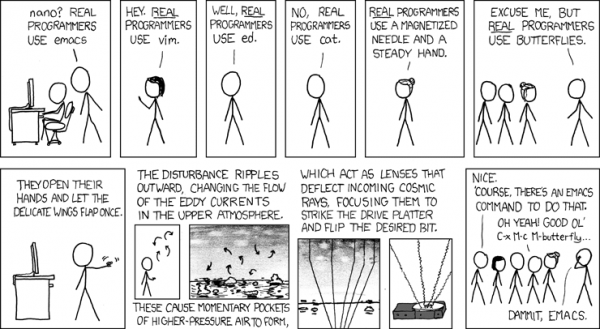
My solution is better!
What causes such behavior?
We know a sufficient number of technologies that a person can utilize in their work, and most people seem to think that the method they have chosen is the best. This feeling is natural; it is part of human nature and reflects our passion for the subject or our choice. Although immediately after choosing a particular technology, you may feel some uncertainty about the decision, once you master it, that feeling will shift to a fervent commitment. If you pay attention to yourself and your behavior while talking to others, you'll notice that you defend your choice passionately. Soon, doubts may arise, which could seem strange, but don’t worry, you are perfectly fine; this is normal for a human.
Open yourself
Who hasn’t participated in the discussion about whether Windows is better than Linux, iOS is better than Android, or React is better than Angular? Everyone has at some point, is, or will engage in this. I’m not urging you to give up these discussions; rather, try to open up. Put yourself in others' shoes and acknowledge that we don’t know everything, and other solutions may work just as well, or even better. It’s easy to judge something without having worked with it, and I believe this stems from that passionate side of human nature that exists in everyone. A thought I find useful is: 'If many people use something, you’ll likely find useful things there too.' Millions can’t be wrong 🙂.
There is no best solution.
When we talk about this topic, there’s one thing with a clearly growing trend: every language, framework, or other technical solution targets different situations. I don’t think that’s entirely true. There is no 'best' solution for a scenario; at best, there are options. Our possibilities in software development are too vast, and various solutions are too widely used, making it impossible to have a single best solution. I think the more you learn about new technologies, the more likely you’ll discover that they are much more similar to each other than they seem at first glance.
What can we change?
Now, looking back at the mentioned presentation, let’s assume, what was the speaker doing wrong? It’s actually easy; they could have simply said nothing about these matters, since they added zero value to the presentation. If the goal of the talk was to make it funny, they could have tried adding a joke or at least said something without offending or belittling others. Presenting in this way would generate enthusiasm and inspiration regarding the topic discussed. That topic would be the goal the speaker aimed to achieve. Nothing less.
In considering daily tasks, one might start by attempting to comprehend everything that has been said, as awareness is key to self-improvement. As I mentioned earlier, refrain from judging others' methods and solutions, and instead try to approach this from a more logical or rational perspective. You will then notice that if you show more agreement with the choices of others and acknowledge your own lack of knowledge on the subject, others will also be more inclined to open up, allowing you to learn much more.
I would like to conclude this article on a positive note, and urge you to try to treat others with respect; you don't need to belittle others to elevate the value of your own ideas or developments. Your vision, your idea, your opinion deserves to be shared; they are powerful enough to stand on their own!
Have you encountered such speakers at conferences? Are you fighting for your programming language?
Source: habr.com
