


The long holidays are ahead, which means it's time to revisit the bookmarks in Read later or reread important articles from the past year. In this post, we have gathered a list of the most interesting materials from our blog in 2019 and hope you find them useful.
The past year has been interesting and eventful: new technologies, new speeds, and new professional challenges. To help our readers keep up with progress, we have worked hard to quickly report on all key events in the industry on our blog. Our engineers and testers actively assisted us by trying out hardware and software innovations firsthand. All the collected information eventually got organized into articles for developers, engineers, system administrators, and other technical specialists. We are happy to share our experience with you and hope that we have occasionally been able to help you make the right choice and save your time. Thank you for being with us!
For developers
Serverless in racks
Serverless is not about the physical absence of servers. It is not a 'killer' of containers, nor a fleeting trend. It is a new approach to building systems in the cloud. In today's article, we will touch on the architecture of Serverless applications, look at the role of the Serverless service provider, and open-source projects. Finally, we will discuss the issues of applying Serverless.
Implementation of OpenStack LBaaS User Interface
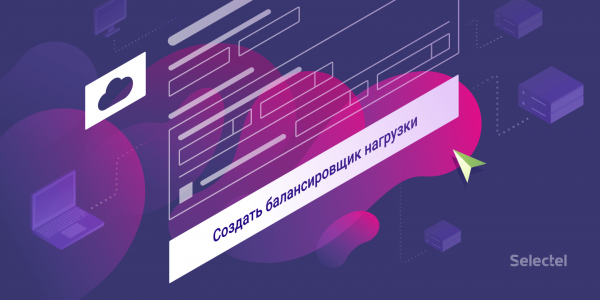
From the author: 'When implementing the load balancer user interface for the virtual private cloud, I faced significant challenges. This led me to reflect on the role of the frontend, which I want to share first.'
For system administrators
From High Ceph Latency to Kernel Patch using eBPF/BCC.
Linux has a wide range of tools for debugging the kernel and applications. Most of them negatively affect application performance and cannot be used in production.
A couple of years ago, another tool was developed — eBPF. It allows tracing the kernel and user applications with low overhead and without the need to rebuild programs or load third-party modules into the kernel.
IP-KVM via QEMU

Troubleshooting operating system boot issues on servers without KVM is a challenging task. We create KVM-over-IP through a recovery image and a virtual machine.
In case of issues with the operating system on a remote server, the administrator loads a recovery image and performs the necessary work. This method is highly effective when the cause of the failure is known, and the recovery image and the operating system installed on the server belong to the same family. If the cause of the failure is still unknown, it is important to observe the boot process of the operating system.
For hardware enthusiasts
Introducing new Intel processors

On April 2, 2019, Intel Corporation announced the long-awaited update of the Intel® Xeon® Scalable Processors family, first introduced in mid-2017. The new processors are based on the microarchitecture codenamed Cascade Lake and are built using an enhanced 14nm technology process.
From Naples to Rome: new AMD EPYC CPUs

On August 7, the global launch of the second generation of the AMD EPYC™ lineup was announced. The new processors are based on the microarchitecture Zen 2 and are manufactured using a 7nm technology process.
In conclusion
We hope you enjoyed our articles, and next year we will strive to cover even more interesting topics and present the coolest innovations.
We wish all our readers a Happy New Year and the achievement of their goals alongside continuous professional growth!
Feel free to congratulate each other in the comments, us, and of course, let us know what you would like to read about next year in our blog 🙂
Source: habr.com
