

I have several topics I could write about endlessly. One of them is 'icons.'
Of course, this is not a list of the most esteemed people in the world. I think it's unlikely anyone could compile such a list, even with a great desire to do so.
For example, Einstein is not on my list, but he certainly deserves a place among the most respected people. Once I asked a friend of mine, who studies physics, if Einstein was really such a genius, and she confirmed this. So why is he not on the list? It's simply because this list includes those people who have influenced me, not those who could have influenced me if I had recognized the value of their work.
I needed to think of someone and determine if that person is my hero. The thoughts were varied. For instance, Montaigne, the creator of essays, was eliminated from my list. Why? Then I asked myself, what does it take to call someone a hero? It turns out, you just need to imagine what that person would have done in my place in a given situation. Agree, that's not admiration at all.
After I compiled the list, I noticed a common thread. Each person on the list had two distinctive traits: they cared deeply about their work, yet they were extremely honest. By honesty, I don't mean fulfilling every desire of the audience. They all fundamentally acted as provocateurs for this reason, although they concealed it to varying degrees.
Jack Lambert
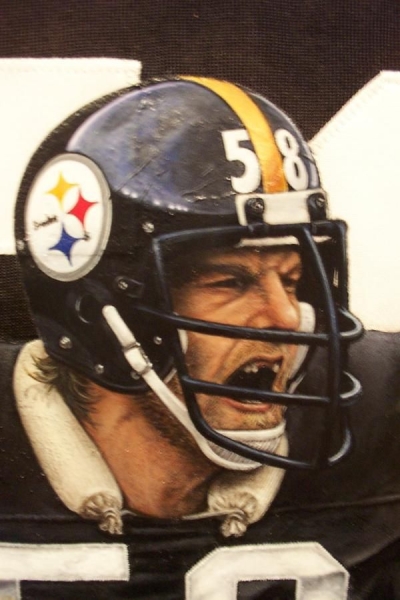
I grew up in Pittsburgh in the 70s. If you weren't there at that time, it's hard to even imagine how the city felt about the 'Steelers.' All the local news was bad, the steel industry was dying. But the 'Steelers' remained the best team in American football, and in a way that reflected the character of our city. They didn't perform miracles; they just did their job.
Other players were more famous: Terry Bradshaw, Franco Harris, Lynn Swann. But they played on offense, and you always pay more attention to players like that. As a 12-year-old expert in American football, I believe the best of them was Jack Lambert. He was completely ruthless, which is why he was so good. He didn't just want to play well; he wanted to play exceptionally. When an opposing player had the ball on his side of the field, he took that as a personal offense.
The suburbs of Pittsburgh in the 1970s were quite dull. School was boring. All the adults were drudging away at their jobs in big companies. Everything we saw in the media was the same and produced somewhere else. The exception was Jack Lambert. I had never seen anyone like him.
Kenneth Clark
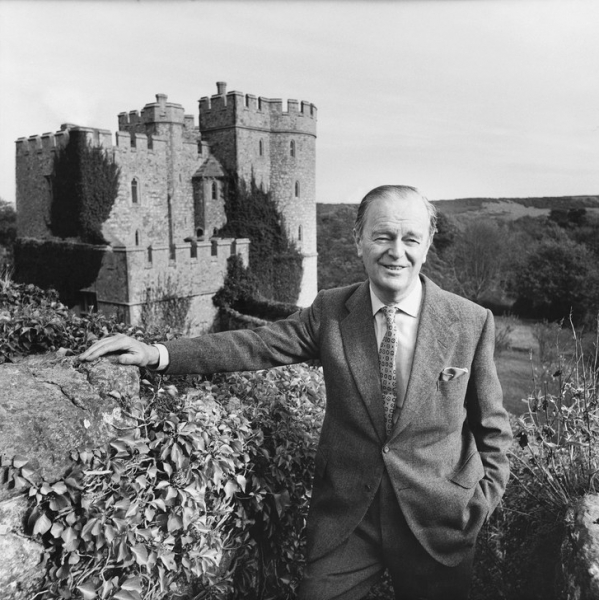
Kenneth Clark is undoubtedly one of the best nonfiction writers. Most who write about art history know absolutely nothing about it, and the countless little details prove that. But Clark was exceptional in his work to the extent that one could imagine.
So what makes him so special? The quality of ideas. At first, the style of expression may seem ordinary, but that's a deception. Reading "The Nude" is akin to riding in a Ferrari: once you settle in, you are pressed into the seat by the speed. While you are getting used to it, you will be thrown around as the car turns. This man generates ideas so quickly that there's no chance of catching them. You'll finish a chapter with your eyes wide open and a smile on your face.
Thanks to the documentary series "Civilization," Kenneth was popular in his day. And if you want to familiarize yourself with art history, "Civilization" is what I recommend. This work is far better than what students are forced to buy when studying art history.
Larry Mihalko
Everyone has had their mentor in childhood regarding one thing or another. Larry Mihalko was my mentor. Looking back, I see a certain distinction between the third and fourth grades. After I met Mr. Mihalko, everything changed.
Why is that? First of all, he was curious. Yes, many of my teachers were quite educated, but not curious. Larry didn’t fit the mold of a schoolteacher, and I suspect he was aware of that. It might have been challenging for him, but for us students, it was enjoyable. His lessons were a journey into another world. That’s why I loved going to school every day.
Another thing that set him apart was his love for us. Children never lie. Other teachers were indifferent to their students, while Mr. Michalco sought to be our friend. On one of the last days of 4th grade, he played us a James Taylor record featuring "You've Got a Friend." Just call my name and I'll be there. He passed away at 59 from lung cancer. The only time I cried was at his funeral.
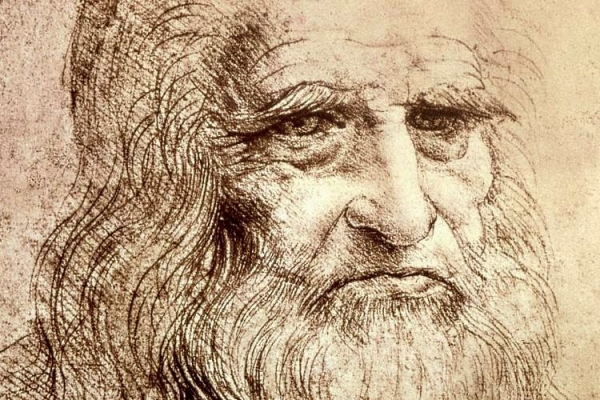
Leonardo
Recently I realized what I didn't understand as a child: all the best things we manage to do, we do for ourselves, not for others. You see paintings in museums and assume they were created solely for you. Most of these works are meant to show the world, not to satisfy people. These discoveries can often be more enjoyable than things created for mere satisfaction.
Leonardo was multifaceted. One of his most esteemed qualities was that he accomplished so much remarkable work. Today, people only know him as a great artist and the inventor of flight. This might lead one to believe that Leonardo was a dreamer who dismissed all concepts of space travel. In reality, he made a significant number of technical discoveries. Thus, it can be said that he was not only a great artist but also a wonderful engineer.
For me, his paintings still play the main role. In them, he tried to explore the world rather than just show beauty. And still, Leonardo’s paintings stand alongside the works of world-class artists. No one before or since has been that good when no one was looking.
Robert Morris

Robert Morris was always characterized by his correctness in everything. It seems that to achieve this one must be all-knowing, but in reality, it is surprisingly easy. Don't say anything if you're not sure about it. If you're not all-knowing, just don’t talk too much.
Specifically, the trick is paying attention to what you want to say. Using this trick, Robert, as far as I know, only made a mistake once when he was a student. When the Mac came out, he said that small desktop computers would never be suitable for real hacking.
In this case, it’s not called a trick. If he had been aware that it was a trick, he would have certainly stumbled in moments of excitement. Robert has this quality in his blood. He is incredibly honest. He is not just always right; he also knows that he is right.
You might have thought how nice it would be to never be wrong, and everyone did this. It's too difficult to pay as much attention to mistakes in ideas as to the idea as a whole. But in practice, no one does this. I know how hard it is. After meeting with Robert, I tried to apply this principle in software; he seems to have used it in hardware.
P. G. Wodehouse
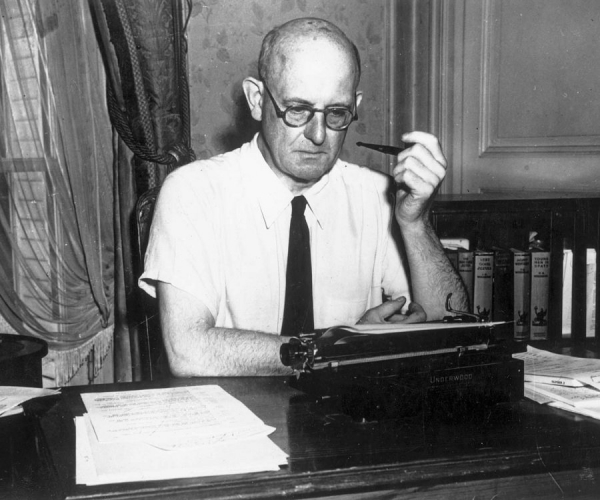
Finally, people have recognized the importance of the writer Wodehouse. If you want to be accepted as a writer today, you need to be educated. If your creation gains public recognition and is funny, then you are putting yourself under suspicion. That’s what makes Wodehouse's works so captivating—he wrote what he wanted and understood that contemporary peers would view him with disdain.
Evelyn Waugh acknowledged him as the best, but at that time, people called it overly chivalrous and at the same time a misguided gesture. Back then, any random autobiographical novel from a recent college graduate could expect more respect from the literary establishment.
Wodehouse may have started with simple atoms, but the way he combined them into molecules was nearly flawless. His rhythm in particular. It makes me shyly write about it. I can only think of two other writers who approached him in style: Evelyn Waugh and Nancy Mitford. These three used the English language as if it belonged to them.
But Wodehouse had nothing. He was not shy about it. Evelyn Waugh and Nancy Mitford cared what others thought of them: he wanted to seem aristocratic; she was afraid she wasn't smart enough. But Wodehouse didn't care what people thought of him. He wrote exactly what he wanted.
Alexander Calder

Calder made this list because he makes me happy. Can his works rival those of Leonardo? Probably not. Just as nothing from the 20th century likely can. But all the good in Modernism is found in Calder, and he creates with his characteristic ease.

The good thing about Modernism is its novelty, its freshness. The art of the 19th century began to suffocate.
The paintings popular at the time were mostly artistic equivalents of mansions — large, ornate, and false. Modernism meant beginning anew, creating things with as serious motives as children do. The artists who took the best advantage of this were those who maintained a childlike confidence, like Klee and Calder.
Klee was imposing because he could work in many different styles. But out of the two, I prefer Calder because his works seem more joyful. Ultimately, the meaning of art is to engage the viewer. It's hard to predict what they will like; often what seems intriguing at first will bore you in a month. Calder's sculptures never get old. They just sit there quietly, radiating optimism like a battery that never runs out. From what I can judge by books and photographs, the happiness in Calder's works is a reflection of his own happiness.
Jane Austen
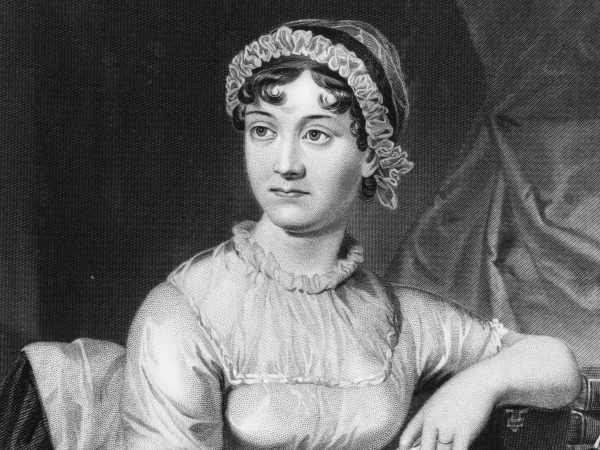
Everyone admires Jane Austen. Add my name to that list. I believe she is the greatest writer of all time. I wonder how she does it. When I read most novels, I pay just as much attention to the author's choices as to the story itself. But in her novels, I can't see the mechanism at work. While I'm curious about how she accomplishes what she does, I can't fully grasp it because she writes so beautifully that her stories don't seem fictitious at all. I feel as though I'm reading an account of what actually happened. When I was younger, I read a lot of novels. Most of them I can't read anymore because they lack substance. Novels seem so sparse compared to history and biography. But reading Austen is like reading academic literature. She writes so well that you don't even notice her.
John McCarthy
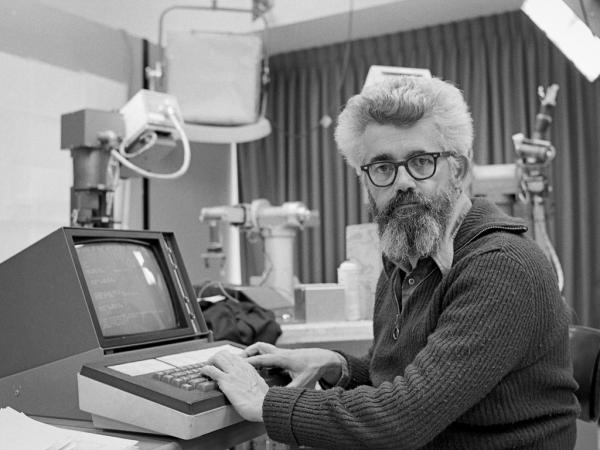
John McCarthy invented Lisp, the domain (or at least the term) of artificial intelligence, and was one of the first members of the best computer science departments at the Massachusetts Institute of Technology and Stanford. No one would dispute that he is one of the greats, but for me, he holds a special place because of Lisp.
It's hard for us to understand the conceptual leap that occurred at that time. Paradoxically, one reason why it is so difficult to appreciate his achievement is that it was so successful. Almost every programming language invented in the last 20 years incorporates ideas from Lisp, and year by year, the average programming language becomes more and more similar to Lisp.
In 1958, these ideas were not at all obvious. In 1958, programming was thought of in two key ways. Some people viewed it as mathematics and proved everything that related to Turing machines. Others saw programming languages as a way to accomplish tasks and developed languages that were too heavily influenced by the technology of the time. Only McCarthy bridged the gap between these perspectives. He invented a language that was mathematics. But 'invented' is not quite the right word; it would be better to say he discovered it.
Spitfire

As I was writing this list, I caught myself thinking about people like Douglas Bader, Reginald Joseph Mitchell, and Jeffrey Quill, and I realized that although they all did many things in their lives, there was one factor, among others, that connected them: the Spitfire.
This should be a list of heroes. How could there be a machine in it? Because this machine was not just a machine. It was a prism of heroism. Extraordinary devotion flowed into it, and extraordinary courage emerged from it.
It is commonly said that World War II was a struggle between good and evil, but between battles being fought, it truly was. The original retribution was the Spitfire, ME 109, a hard-nosed practical aircraft. It was a killing machine. The Spitfire was the embodiment of optimism. And not just in those beautiful lines: it was the pinnacle of what could fundamentally be manufactured. But we were right when we decided that it could go higher. Only in the air does beauty have a limit.
Steve Jobs
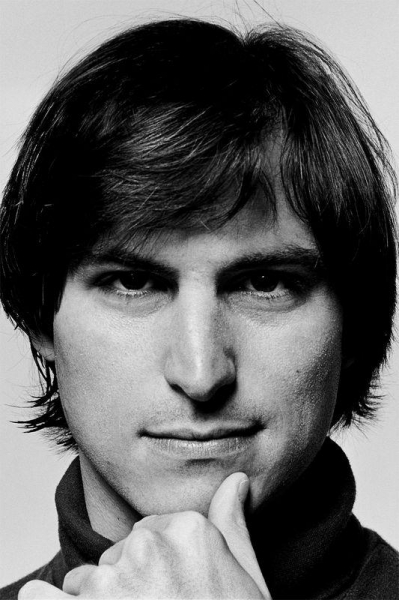
People who lived at the time when Kennedy was assassinated usually remember exactly where they were when they heard about it. I remember exactly where I was when a friend asked me if I had heard that Steve Jobs had cancer. It felt as if the ground had slipped away from under my feet. A couple of seconds later, she told me it was a rare operable form of cancer and that he would be fine. But those seconds seemed to last forever.
I wasn't sure whether to include Jobs in the list. Most people at Apple seem to fear him, which is a bad sign. Yet he inspires awe. There is no word that could describe who Steve Jobs is. He didn't create Apple's products by himself. Historically, the closest analogy to what he did is patronage in the arts during the great Renaissance. As the company's CEO, this makes him unique. Most leaders pass their preferences on to their subordinates. The paradox of development is that, to a greater or lesser extent, choice is determined randomly. But Steve Jobs had his own taste—so good that he showed the world that taste means much more than they think.
Isaac Newton
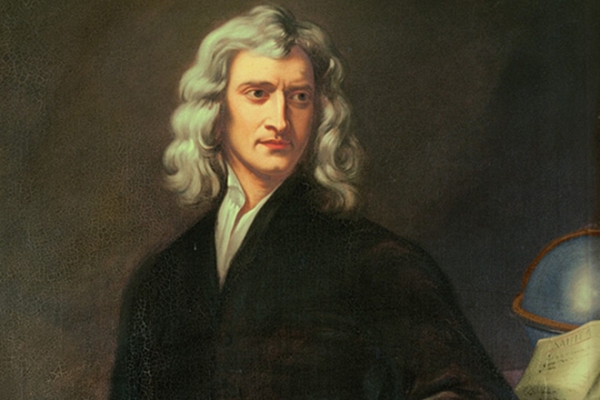
Newton has a strange role in my pantheon of heroes: he is the one I reproach myself for. He worked on significant things for at least part of his life. It's so easy to get distracted when you're working on minor details. The questions you answer are well known to everyone. You get immediate rewards — essentially, you earn more accolades over time if you work on issues of primary importance. But it makes me uneasy to realize that this is a path to well-deserved obscurity. To do truly great things, you need to seek questions that people don't even consider questions. There were probably others at that time who were engaged in this as well, like Newton, but Newton is my model of such a mindset. I'm just starting to understand how it must have felt for him. You only have one life. Why not do something grand? The phrase 'paradigm shift' is now overused, but Kuhn understood something. And behind this lies a greater, now-separated wall of laziness and stupidity that will soon seem very thin to us. If we work like Newton.
Thanks to Trevor Blackwell, Jessica Livingston, and Jackie McDonough for reading drafts of this article.
The translation was partially done
About the GoTo School
- June 17-30, July 15-28, August 12-25
Source: habr.com
