

 Photo: Lisa Shvets/Facebook
Lisa Shvets started her career at a cable factory, worked as a saleswoman in a small shop in Oryol, and a few years later joined Microsoft. She is now working on the IT brand 'Dodo Pizza.' Her ambitious task is to prove that 'Dodo Pizza' is not just about food, but also about development and technology. Lisa turns 30 next week, and we decided to summarize her career journey together and share this story with you.
"You need to experiment as much as possible at the beginning of your career"
I come from Oryol, a small city with a population of about 300-400 thousand. I studied marketing at the local institute, but I didn’t plan to be a marketer. It was 2007, and the crisis hit. I wanted to study crisis management, but all the budget spots were taken, and marketing was the closest available option (my mom suggested it). At that time, I had no idea what I wanted and who I wanted to be.
In school, I took career orientation courses for the profession of 'secretary-referent,' learned to type quickly using all five fingers, although I still type with one finger because it's convenient. People are always surprised.
There was a lack of understanding from relatives. They said I should either become a lawyer or an economist.
I don’t mention my first job anywhere because it's a super irrelevant and super strange story. I was in my second or third year and decided to work at a cable factory. I thought, I’m a marketer, I’ll come in and help you! I started working while still studying. I went to work at 7 a.m. on the other side of the city, and they docked pay for every 10 minutes I was late. My first salary was about 2000 rubles. I worked there for a few months and realized that the economics didn’t add up: I spent more on transportation than I earned. Plus, they didn’t believe in marketing but did believe in sales and tried to make me a sales manager. I remember this epic moment: I went to my boss and told her that I couldn’t work there anymore, sorry. And she replied: fine, but first call 100 companies and find out why they don’t want to work with us. I took my mug, turned around, and left.
After that, I worked as a sales associate at a women's clothing store called 'Sublime.' It provided me with great experience in dealing with people and established a solid principle: when you work in a small town, you must help people, otherwise the customers won't return, and there are few of them.
After five years of studying, I moved to Moscow, and by chance, I ended up at the startup ITMozg, which at that time was a competitor of HeadHunter — helping companies find developers and vice versa. I was 22 years old then. At the same time, I was pursuing my master's degree, writing research articles on marketing based on my work at the startup.
In Russia, the story with developers was just starting. The startup's founder, Artem Kumpel, had lived in America for a while, grasped the HR trend in IT and came back home with this idea. At that time, HeadHunter had no focus on IT, while our innovation was in the narrow specialization of the resource for the IT audience. For example, back then, job platforms didn’t allow you to choose a programming language, while we were the first to come up with that.
That's how I began to delve into the IT market, even though I had friends in Oryol who rewrote their programs on Linux and read Habr. We entered the market by participating in conferences, creating our blog, and at some point, on Habr. We could have become a cool advertising agency.
This was a pivotal place that gave me a lot. I encourage students to experiment as much as possible at the start of their careers because when you study, you don’t understand what you want, and realization comes only through work. By the way, a friend from the States recently told me that there’s a trend in education there — teaching kids how to learn. Knowledge will come; the important thing is to have a goal.
At the startup, I had the chance to try myself in completely different roles, given various tasks. After university, I had a marketing foundation but no practical experience. Within six months, I refined my understanding of what I liked and what I didn't. I go through life with the theory of chocolates. People fall into two categories: those who know how to make these chocolates and those who know how to wrap them perfectly! I can wrap them, and that aligns very well with marketing.
‘Corporations provide experience in structured thinking.’
After the startup, I changed several jobs, worked at a cool digital agency, and tried my hand at coworking. Overall, when leaving the startup, I was confident that I was a PR specialist, but it turned out that in the real world, I'm a marketer. I wanted grand plans. I decided that I needed to find another startup again. There was an e-commerce project creating tools for marketers. There, I grew into a high position, defining the development strategy and setting tasks for the developers.
At that time, we were friends with Microsoft in terms of information partnership. A girl from there suggested I apply for an SMM position. I went for an interview, chatted, and then there was silence. My English was at the level of 'how are you?'. There were also thoughts about leaving a place where you are the master for a super minimal position in a corporation. A tough choice.
I was lucky to find myself in a division that was a mini-startup within Microsoft. It was called DX. This division is responsible for all new strategic technologies coming to market. They reached us, and our task was to figure out what they were. In this department, there were Microsoft evangelists, tech experts who explained everything. Two or three years ago, we were sitting and thinking about how to reach developers. That's when the idea of communities and influencers emerged. Now it’s just gaining momentum, and we were at the forefront.
We created a plan for individual development. The goal emerged to learn English to communicate with colleagues, plus I needed to translate articles and read company news. And you start to immerse yourself and absorb, not delving deeply into the intricacies of grammar. Over time, you understand — it seems I can talk to a colleague from Poland.
There, my dream came true — I on Habr. It had been a dream since the ITMozg days. It was very scary, but the first post took off, it was amazing.
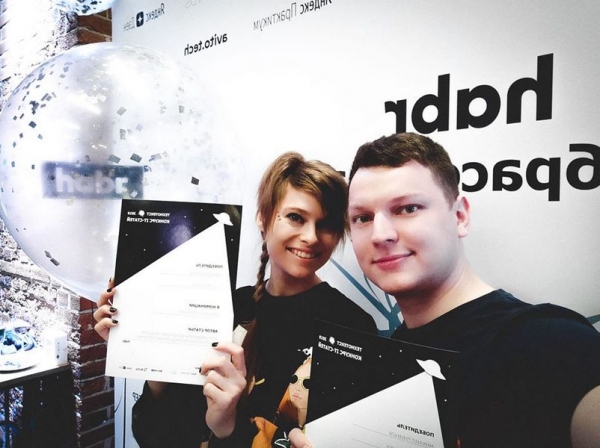 Photo: Lisa Shvets/Facebook
I would recommend everyone to work in a corporation. It provides experience in structured thinking, including global thinking. The processes established there are very valuable, contributing to 30% of success.
Getting into Microsoft is quite possible if you are someone who primarily aligns with the company's values and, of course, is a good specialist. It's not difficult but rather lengthy. There's no need to put on a show in the interview.
I believe the key values at Microsoft that will make you feel comfortable there are the desire to grow and take on responsibility. Even a small project is your achievement. We all pursue our selfish goals at work. I still feel driven by the fact that I contributed to marketing tool research there. At Microsoft, you need to do not just something cool, but something very cool; the initial requirements are high.
Additionally, it's important to correctly perceive feedback and criticism and use it for personal growth.
"I would walk around and scold everyone who tried to write even a word about pizza."
I understood that I would have to repeat the story of community development but in other countries. And I thought it was time to join a startup again.
"Dodo" was at that time a partner of Microsoft, using the company's cloud. I advised "Dodo" on working with the developer community. And they invited me — come work with us. Prior to that, I had attended their party and felt energized by the atmosphere in the office.
I had to go through an interview with the CEO. I didn't think it would happen before I accepted the job offer. But in the end, everything worked out. Plus, the task was quite motivating — to present the pizzeria as an IT company. I remember our first article on Habr. And the comments on it, like — wait, what developers, are you going to learn how to deliver pizza?
There were rumors in the industry: something is not going well for the person, leaving a corporation for some pizzeria.
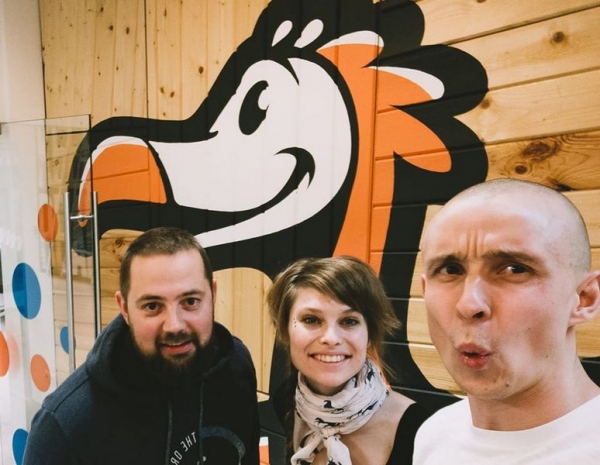 Photo: Lisa Shvets/Facebook
Honestly, for the whole past year, I walked around scolding everyone who tried to write even a word about pizza. The temptation to write about it is enormous, but no. Even understanding that this company is really about pizza, I find myself on the scales balancing between being an IT company.
I assess the situation realistically. I have my own strengths, and the developers have theirs. I’m not trying to say that I’m the same as them, but rather that they are incredibly talented individuals, as I genuinely believe they are the ones building the future. My role isn’t to dive deep into the code; instead, it’s to understand high-level trends and assist them in crafting narratives. When technical details arise, I strive to ask the right questions and help package the information beautifully (referring to the concept of candy theory). It’s essential not to try to be a developer but to cooperate and focus on motivation, not holding back on kind words. In the flow of tasks, it’s vital to have someone who acknowledges that you've done something great. I also try to avoid speaking on topics I’m uncertain about, relying on fact-checking. Sometimes, you might find yourself in a position where you can’t admit ignorance in front of a developer, but then you rush off and diligently search for information.
For a whole year, my projects included , and I considered that my major failure. We conducted a billion different experiments to make an impact when entering the market. Eventually, we decided that the website needed to be genuinely impressive; for six months, we searched for ideas, surveyed developers, enlisted a leading designer, and engaged the entire team. And we launched it.
The most important lesson I learned is the principle of 'there are no fools,' which greatly helps in life. If you approach everyone with kindness, people open up. Long ago, I internalized the saying by Werber: 'Humor is like a sword, and love is like a shield.' And it truly works.
I realized that you can’t become overly fixated on strategy; intuition must also be applied. And having a strong team is crucial.
This year, we entered the developer market, and 80% of our target audience of developers knows about us.
Our goal wasn’t to recruit exactly 250 developers; rather, it was to change mindsets. It’s one thing when the discussion is about 30 developers and you need to recruit 5 more, but it’s another when the aim is to select 250 specialists over two years. We hired 80 people, which doubled the number of developers, and the entire company’s workforce grew by a third in a year. These are incredible figures.
We don't take everyone; the values of the company are important to us. I'm a marketer, not an HR specialist. If someone likes what we do, they will join us. Our values are openness and honesty. Overall, your work values should align well with your personal relationships—trust, honesty, belief in people.
A good person loves every moment of life.
When it comes to things that don't fit into my workspace, I have dogs, and I sometimes try to train them. At 15, I thought I couldn't sing. Now I attend singing classes because we create our own challenges. For me, singing is relaxing, plus my voice has started to develop. I love to travel. If someone says, 'Let's go to Cape Town tomorrow,' I'll respond, 'Okay, I need to plan my tasks, and I also need the internet.' I enjoy photography because it changes my perspective. I played online games like WOW and Dota. I like to alternate between reading popular science and fiction.
I am heavily influenced by my grandfather. There wasn't a single person who could say something bad about him. I recently talked to my mom, and she asked, 'Why did you grow up this way? I taught you to eat eggs with a knife and fork!' I replied, 'Because I grew up with my grandfather, we could sit at the table and eat with our hands, and that was normal; people do that. To me, a good person is someone who understands themselves, accepts themselves, and is honest with others, can criticize out of good intentions, loves every moment of life, and transmits this to others.
Source: habr.com
