

A correct and accurate translation is a complex and responsible task. The more critical the translation, the more catastrophic the consequences a translator's mistake can lead to.
Sometimes, a single mistake can cost a human life, but among them, there are also those that have cost tens of thousands of lives. Today, we will examine translation errors that have proved far too costly in history, focusing on those related to the English language due to the specific nature of our work. Let's dive in.
A false friend of the translator left an 18-year-old boy disabled.
Arguably, the most famous case of a medical error due to a single word occurred in South Florida in 1980.
Eighteen-year-old Cuban Willy Ramirez suddenly felt a severe headache and a strong sense of dizziness. The disorientation was so intense that he couldn't see or think clearly. After that, he lost consciousness and remained in that state for two days.
Willy's mother thought he was poisoned—it had been just a few hours since he had lunch at a new café. However, Mrs. Rodriguez spoke very little English. She tried to explain to the paramedic that his condition might be due to bad food and used the Spanish word 'intoxicado,' which translates to 'poisoned.'
But in English, there's the word 'intoxicated,' which has a completely different meaning—'overdose from alcohol or drugs,' which caused his critical condition. The paramedic thought the boy was merely 'high' and reported this to the hospital.
In reality, the boy was experiencing a hemorrhagic stroke—a ruptured blood vessel and bleeding in the brain. It's a rare case for such young individuals, but not exceptional.
As a result, Willy was 'treated' for an overdose; they administered fluids, but he never regained consciousness, and the stroke progressed to a stage that led to complete paralysis.
The family was ultimately awarded a record compensation of $71 million, but we can hardly imagine what it’s like to live with a disability due to a single mistranslated word.
The situation itself led to serious reforms in US healthcare, during which the order of patient care changed significantly. Partly because of this, getting treated without insurance in the US is now incredibly expensive.
You can read more about Ramirez's story .
"We will bury you!" — how a wrong translation nearly led to war between the USSR and the USA
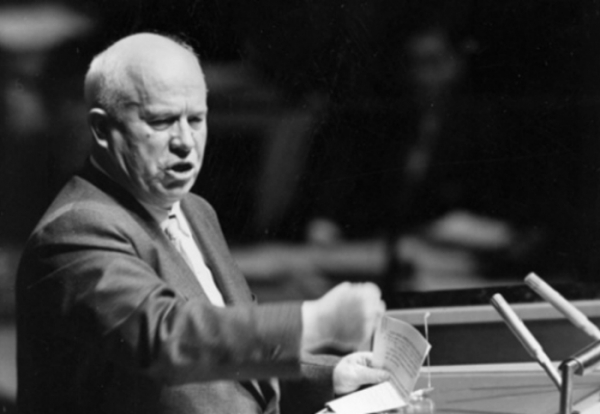
1956, the height of the Cold War between the USSR and the USA. In speeches by leaders of both countries, threats increasingly appear, but not everyone knows that a translator's mistake nearly sparked a real war.
Nikita Khrushchev, General Secretary of the USSR, was speaking at a reception at the Polish embassy. The issue was that he often was indiscreet in public speeches and used idiomatic expressions that were difficult to translate without a deep understanding of the context.
The phrase was as follows:
"Whether you like it or not, history is on our side. We will bury you."
Clearly, Khrushchev was interpreting Marx here and his thesis that "the proletariat is the gravedigger of capitalism." But the translator took the last phrase literally, which caused an international scandal.
"We will bury you!" — the phrase quickly appeared in all American newspapers. Even the popular magazine "Time" published an entire article about it (). If anyone wants to read the original, .
The US diplomatic mission immediately sent a note to the USSR, and Soviet diplomats had to hastily apologize and explain that Khrushchev's phrase did not signify a direct threat of military action but was a rephrased postulate of Marx, which should have been translated as "We shall be present at your funeral" or "We shall outlive you."
Later, Khrushchev himself publicly apologized for the figure of speech and explained that he did not mean literal grave digging, but rather that capitalism would destroy its own working class.
However, Khrushchev's speaking style did not change, and by 1959, he was eager to "show the USA Kuzka's mother." At that time, the translator also failed to convey the expression correctly and translated it literally — "we shall show you Kuzka’s mother." American society interpreted Kuzka's mother as a new nuclear bomb developed by the Soviet Union.
In general, simultaneous interpretation at the highest state meetings is a complex task. One wrong phrase can lead the whole country into chaos.
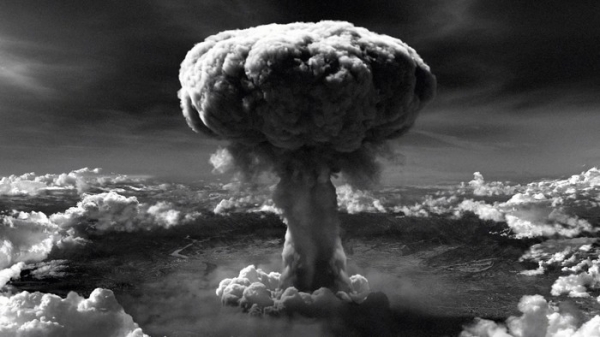
A mistake in a single word led to the bombing of Hiroshima and Nagasaki.
The most terrible mistake of a translator in world history occurred after the Potsdam Conference on July 26, 1945. In an ultimatum declaration, demands were issued for the Japanese Empire to surrender in World War II. Failure to comply would result in "complete destruction."
Three days later, Japanese Prime Minister Kantaro Suzuki stated at a press conference (translated into English):
My thinking is that the joint declaration is virtually the same as the earlier declaration. The government of Japan does not consider it having any crucial value. We simply mokusatsu suru. The only alternative for us is to be determined to continue our fight to the end.
I believe that the [Potsdam] joint declaration is essentially the same as the earlier declarations. The Parliament of Japan does not consider it to have any special significance. We simply mokusatsu suru. The only alternative for us is to continue our fight to the end.
Mokusatsu means "to not attach importance to," "to remain silent." In essence, the Prime Minister stated that they would simply remain silent. A cautious response that implies complex diplomatic maneuvering.
However, in English, the word "mokusatsu" was translated as "we ignore that."
Such a "unequivocal" response from the Japanese government ultimately led to an act of intimidation against the Japanese people through atomic bombing. On August 6, an atomic bomb equivalent to 15 kilotons was dropped on Hiroshima, and on August 9, a 21-kiloton bomb fell on Nagasaki.
, direct casualties among the civilian population amounted to 150,000 residents of Hiroshima and 75,000 residents of Nagasaki. However, the actual number of affected individuals is much higher. According to various estimates, the number of victims from radiation contamination amounted to 450,000.
Yes, there is no subjunctive mood in history. But let’s just imagine, if only one word had been translated correctly, perhaps there would have been no bombings at all. from the U.S. National Security Agency.
How Jimmy Carter included a lewd remark in Poland.
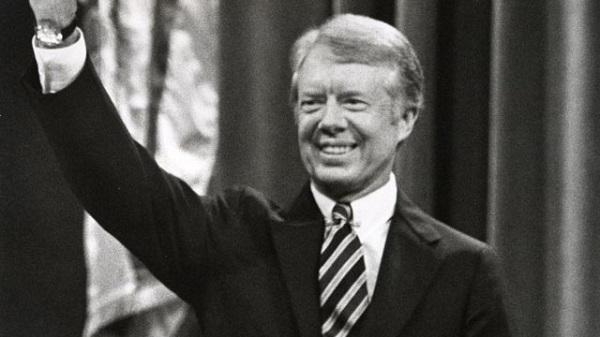
Let's end on a lighter note. In 1977, the elections in the U.S. were won by Democrat Jimmy Carter. In his first year in office, he actively engaged in a program of visits to other countries. In December, he visited Poland and delivered a speech.
However, there was one small problem — there were 17 translators in the White House, but none spoke Polish. Therefore, one of the freelancers was brought in for the mission.
Overall, Carter's speech to the Polish people was quite friendly. He praised the Polish Constitution of 1791, talked about the plans of the U.S., and expressed his desire to hear about the dreams of the Polish people.
But in the end, the short speech turned into a disaster. The translator made a multitude of serious mistakes.
The harmless phrase "when I left the United States" turned into "when I permanently left the United States". Naturally, in context, it was understood as "I left the U.S. and came to live with you". An imprudent statement from the president of another country.
Instead of a phrase highlighting the great value of the Polish Constitution of 1791 for human rights, the Poles heard that their constitution was laughable. But the peak of absurdity was the phrase about the dreams of the Polish people. "Desires" was translated in a way that meant "a man's desire for a woman", so the phrase came to mean "I want to have sex with the Poles."
The Polish diplomatic mission sent a complaint to the U.S. embassy. They understood that the problem lay with the translator, not the president, but this did not reduce the heat of the scandal. As a result, the diplomats had to apologize profusely for the translator's mistakes.
Partly due to this situation, relations between Poland and the U.S. remained quite cool until the end of Carter's presidency.
in the New York Times from December 31, 1977.
This is why translation and working with foreign languages is a much more responsible task than students usually think. A mistake in communication with a friend might lead to an argument, but a mistake at a high level could result in war or significant embarrassment.
Learn English properly. And let's hope that presidents will always have top-notch translators. Then we can sleep more soundly. And you can sleep even more soundly if you learn English yourself 🙂
The online school EnglishDom.com — inspiring you to learn English through technology and human care
Exclusively for Habr readers ! When purchasing classes, receive up to 3 lessons for free!
Get a full month of premium subscription to the ED Words app for free.
Enter promo code utterfail or directly . The promo code is valid until 02/04/2021.
Our products:
Source: habr.com
