

Open-source software is slowly but steadily conquering the corporate sector, as evidenced by the study conducted by the RedHat team (). The company surveyed 950 IT executives worldwide. Of these, 400 are based in the USA, 250 in Latin American countries, 150 in the UK, and another 150 in English-speaking companies in the Asia-Pacific region. According to the results, RedHat concluded that open source is replacing proprietary solutions in their historical market— the Enterprise segment.
Here’s how executives evaluated the importance of open source software during the study:
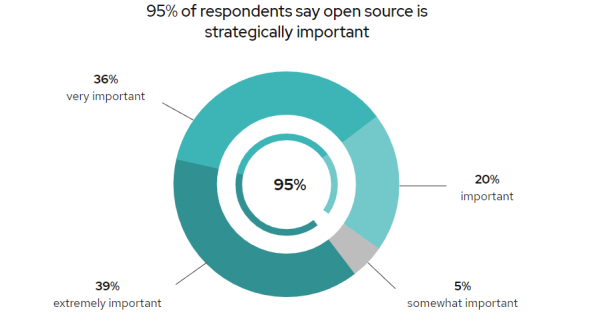
Notably, the figures reflecting the importance of open-source software have been rising year by year: in 2019, in a similar survey, 89% of respondents rated the development of open source as important or very important, indicating a 6% annual increase.
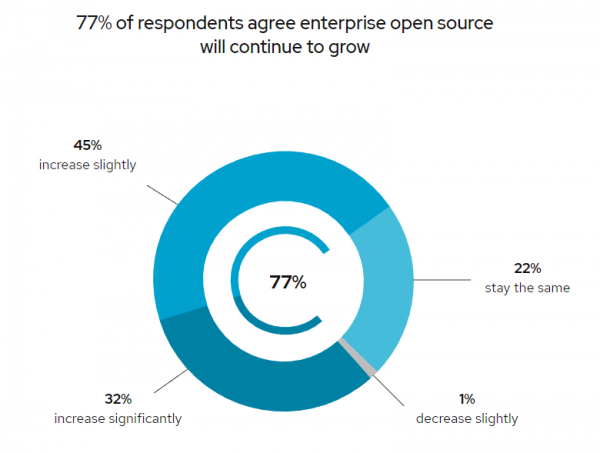
Moreover, 77% of respondents believe that the share of open source will only grow in the market. Considering the daunting reputation of open source—especially Linux-based systems—as complex, unfriendly, and highly specific, a 77% approval rate among management is an excellent indicator. At the same time, 22% of surveyed individuals assert that the open-source market will no longer grow and only 1% believe it will shrink..
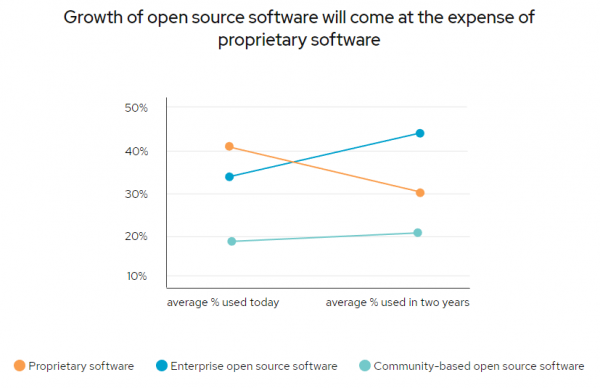
It’s also important to note that according to RedHat’s research, the share of proprietary software in the corporate segment has been steadily decreasing for several years at a significant pace. According to the 2019 report, the share of proprietary solutions accounted for 55% of all software used by businesses. Currently, this figure has decreased to 42%., and according to forecasts and respondents' opinions, by 2021, the share of proprietary software used will shrink to 32%..
An interesting observation is that according to 86% of respondents, the most innovative companies in their fields use open-source software. Does this mean that the most advanced software is open source?
In fact, this statement is not far from the truth when we look at the actions of some major companies and their relationships with the open-source community over the past decade. Back in 2014, Tesla , related to the development and construction of electric vehicles, available to the public. In 2018, , to protect Linux from patent trolls and other lawsuits. It’s worth reminding that MS is a platinum member of the Linux Foundation and actively supports the Open Source movement (which is surprising, given that historically Microsoft has been an antagonist of the free software movement and Linux in particular) — it shouldn't be overlooked.
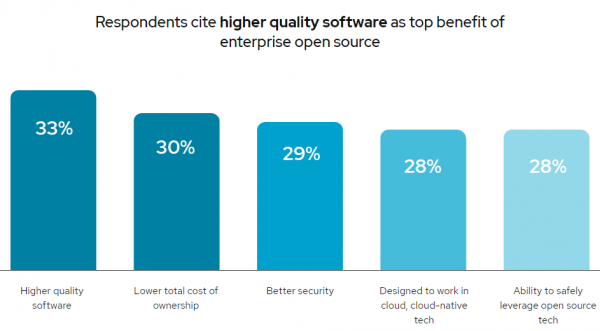
It's also surprising that the main advantage of open source compared to proprietary solutions is cited by executives as the higher quality of open-source products compared to similar closed solutions. Lower cost is only the second reason for choosing open source. Following this are reasons related to information security, adaptability to work with cloud systems, and lastly, as the fifth argument — the lack of threat from legal action.
Additionally, open source is pushing proprietary solutions out of their classic niches: information security, database management, and big data.
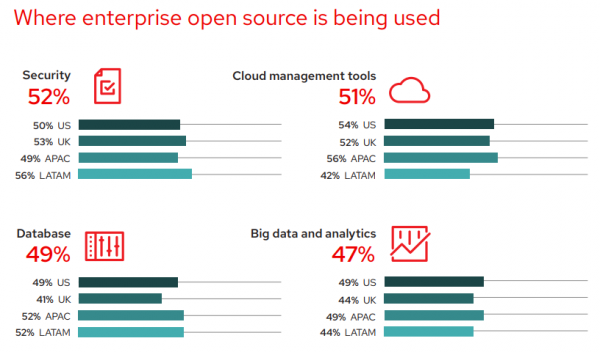
The growth of trust in open solutions in the security field is particularly notable: by the end of the decade, businesses stopped being haunted by the idea of malicious hackers fiddling with their Linux cores and dreaming of stealing their data through backdoors in open software, and began to trust open-source products more than proprietary ones.
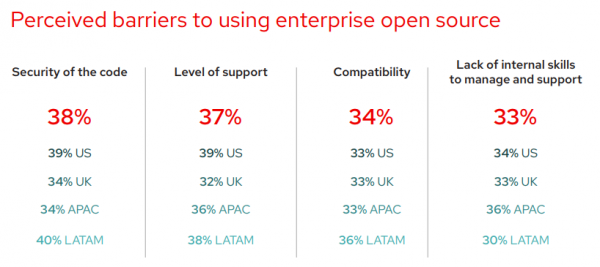
However, businesses are now concerned, not about hypothetical hackers posing as developers, but about the quality of open source code products. The main barriers to fully transitioning to open software that executives cite are the perennial issues of open-source software: doubts about code quality, poor support, compatibility with existing infrastructure, and lack of qualified personnel within the company for such a transition.
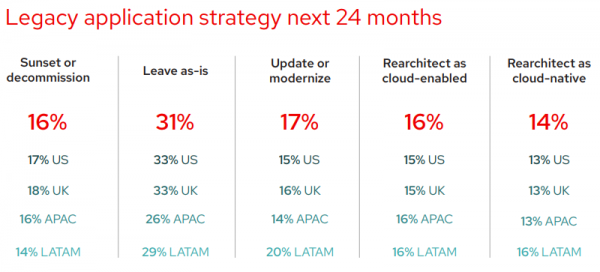
Respondents shared their plans regarding software infrastructure for the next two years. Nearly one-third of companies will adhere to the golden rule of 'if it works, don’t touch it,' meaning they will keep everything as it is and continue to use proprietary software products since they perform their functions without needing any changes. Seventeen percent of companies plan to retire legacy programs in the next 24 months as they struggle to meet modern challenges. The remaining 52% of respondents stated that they would implement some form of software updates, either through modernization or by transitioning to cloud-based solutions.
Of course, the RedHat study could be considered somewhat biased, as the results are evidently beneficial to the company. On the other hand, it is hard to deny the general trend towards open source products and the increasing influence of the open source movement on the industry. The penetration of Linux systems in the server environment is approaching 100%, and the Linux Foundation receives active support from many companies, including the corporate giant Microsoft. Open source projects are also being actively developed by other giants, such as Google, which has been providing access to the Chromium engine for anyone interested for many years.
There are many examples, so there is no strong reason to doubt the findings of the RedHat study.
Source: habr.com
