

The concept of the RX100 series, , can be described in the simplest terms: maximum functionality with minimal size. Significant changes were observed in the previous model RX100 VI: the company altered the concept of the built-in lens, taking a step towards increasing the focal length range while reducing aperture. The new model uses the same lens, so we have a true superzoom with an equivalent focal length range of 24–200 mm. In many respects, the Sony RX100 VII duplicates its predecessor; however, it cannot be said that the changes made are purely cosmetic: in particular, the focusing system has been improved — in many ways, the new model has taken the best features from the company's professional cameras. There has also been significant progress in video recording — for example, the five-minute recording limit has been lifted and a microphone port has been added. The camera is clearly aimed at bloggers, travelers, and, in general, enthusiasts of mobile, lightweight, and high-quality photo and video shooting. Let's see if it can impress in practice as much as it does in theory.
Key features
Like its predecessor, the Sony RX100 VII is equipped with a 1-inch type sensor (13.2 × 8.8 mm) with a resolution of 20.1 megapixels. But don’t be quick to be disappointed: this is not the same sensor. The RX100 VII has the highest number of phase-detection autofocus points in its class — a total of 357, covering 68% of the frame. Additionally, the sensor features 425 contrast-detection autofocus points. The camera impresses with its speed specifications: the autofocus activation time is only 0.02 seconds, which is a record for this class of cameras. The continuous shooting speed has also significantly increased — the new model allows for shooting at 90 frames per second (of course, with some limitations, but this is still a very progressive figure). An important innovation: as in the higher-end models, we see real-time tracking functionality here. Focusing is available not only on human eyes but also on animal eyes (this technology is applied, for example, in the company's top cameras — and Sony A9 II).
Data processing continues to be handled by the Bionz X processor. The camera traditionally features the proprietary image stabilization system. According to the manufacturer, the algorithm provides image stabilization that gives the photographer a gain of 4 exposure stops. The display and viewfinder remain unchanged.
The camera supports 4K video recording (QFHD: 3840 × 2160) to the memory card without pixel binning. Real-time tracking and eye autofocus (only for people, not animals as in the case of photos) are now available during video recording. The camera now has a microphone input, significantly improving audio recording quality.
| Sony RX100 VII | Sony RX100 VI | |||
| Image Sensor | 13.2 × 8.8 mm (1"), CMOS | 13.2 × 8.8 mm (1"), CMOS | 13.2 × 8.8 mm (1"), CMOS | 17.3 × 13 mm (Micro 4/3) Live MOS |
| Effective pixel count | 20 megapixels | 20 megapixels | 20 megapixels | 17 megapixels |
| Stabilizer | Built into the lens | Built into the lens | Built into the lens | Built into the lens |
| Lens | 24-200 mm (equivalent), f/2.8-4.5 | 24-200 mm (equivalent), f/2.8-4.5 | 24-120 mm (equivalent), f/1.8-2.8 | 24-75 mm (equivalent), f/1.7-2.8 |
| Photo Format | JPEG, RAW | JPEG (DCF, EXIF 2.31), RAW | JPEG, RAW | JPEG, RAW |
| Video Format | XAVC S, AVCHD, MP4 | XAVC S, AVCHD, MP4 | MOV (MPEG 4/H.264) | AVCHD, MP4 |
| Bayonet | No | No | No | No |
| Frame size (in pixels) | Up to 5472 × 3684 | Up to 5472 × 3684 | Up to 5472 × 3684 | Up to 4736 × 3552 |
| Video resolution (in pixels) | Up to 3840 × 2160 (30 frames per second) | Up to 3840 × 2160 (30 frames per second) | Up to 3840 × 2160 (30 frames per second) | Up to 3840 × 2160 (30 frames per second) |
| Sensitivity | ISO 125–12800 with expansion to ISO 80 and ISO 25600 | ISO 125–12800 with expansion to ISO 80 and ISO 25600 | ISO 125–12800 with expansion to ISO 25600 | ISO 200–25600 with expansion to ISO 100 |
| Shutter | Mechanical shutter: 1/2000 – 30 s; electronic shutter: 1/32000 – 1 s; long exposure (Bulb); silent mode | Mechanical shutter: 1/2000 – 30 s; electronic shutter: 1/32000 – 1 s; long exposure (Bulb); silent mode | Mechanical shutter: 1/2000 – 1 s; electronic shutter: 1/25000 – 30 s; long exposure (Bulb); silent mode | Mechanical shutter: 1/4000 – 60 s; electronic shutter: 1/16000 – 1 s; long exposure (Bulb); silent mode |
| Continuous shooting speed | Up to 90 frames per second with electronic shutter and first frame focus; 20 frames per second with autofocus and no 'blackout' | Up to 24 frames per second | Up to 30 frames per second with first frame focus; up to 8 frames per second with continuous autofocus | Up to 11 frames per second; in 4K photo mode up to 30 frames per second with electronic shutter |
| Autofocus | Hybrid (phase detection + contrast system), 315 points, eye recognition | Hybrid (phase detection + contrast system), 315 points | Contrast, 31 points, face recognition | Contrast, 49 points, eye recognition |
| Exposure measurement, operating modes | Multi-point/Center-weighted/Highlight priority/Average/Spot | Multi-point/Center-weighted/Spot | Multi-point/Center-weighted/Spot | Multi-point/Center-weighted/Spot |
| Exposure compensation | ±3 EV with a step of 1/3 stop | ±3 EV with a step of 1/3 stop | ±3 EV with a step of 1/3 stop | ±5 EV with a step of 1/3 stop |
| Built-in flash | Yes, guide number 5.9 | Yes, guide number 5.9 | Yes, guide number 7.5 | No |
| Self-timer | 2/10 sec | 2/10 sec | 2/10 sec | 2/10 sec |
| Memory Card | Memory Stick PRO Duo / Memory Stick PRO-HG Duo; SD / SDHC / SDXC (UHS-I) | Memory Stick PRO Duo / Memory Stick PRO-HG Duo; SD / SDHC / SDXC (UHS-I) | SD / SDHC / SDXC (UHS-I) | SD / SDHC / SDXC (UHS-I) |
| Display | LCD, 3 inches, 921k dots, touch, tiltable | LCD, 3 inches, 1,228k dots, touch, tiltable | LCD, 3 inches, 1,040k dots, touch | LCD, 3 inches, 1,240k dots, touch |
| Viewfinder | Electronic (OLED with 2,359k dots) | Electronic (OLED with 2,359k dots) | Electronic (OLED with 2,760k dots) | Electronic (OLED with 2,760k dots) |
| Interfaces | HDMI, USB, microphone | HDMI, USB | HDMI, USB | HDMI, USB |
| Wireless modules | Wi-Fi, Bluetooth, NFC | Wi-Fi, NFC | Wi-Fi, Bluetooth | Wi-Fi, Bluetooth 4.2 (LE) |
| Power | Lithium-ion battery NP-BX1, 4.5 Wh (1240 mAh, 3.6 V) | Lithium-ion battery NP-BX1, 4.5 Wh (1240 mAh, 3.6 V) | Lithium-ion battery NB-13L with a capacity of 4.5 Wh (1240 mAh, 3.6V) | Lithium-ion battery DMW-BLG10E with a capacity of 7.4 Wh (1025 mAh, 7.2V) |
| Dimensions | 102 × 58 × 43 mm | 102 × 58 × 43 mm | 111 × 61 × 46 mm | 115 × 66 × 64 mm |
| Weight | 302 grams (with battery and memory card) | 301 grams (with battery and memory card) | 340 grams (with battery and memory card) | 392 grams (with battery and memory card) |
| Current price |
Design and ergonomics
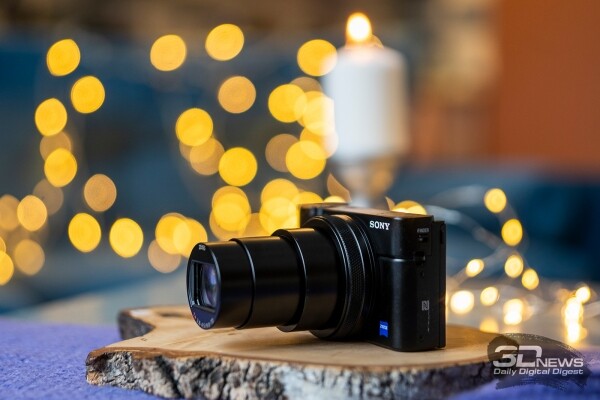
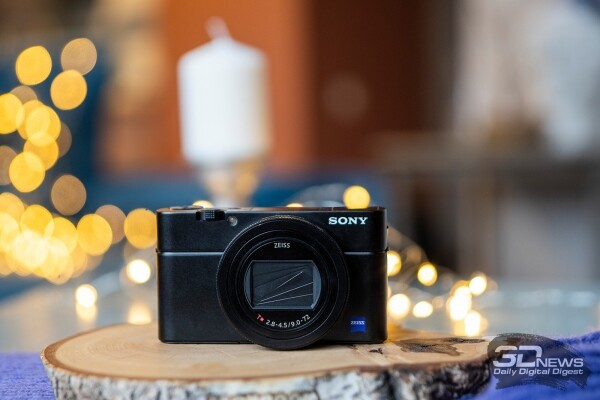
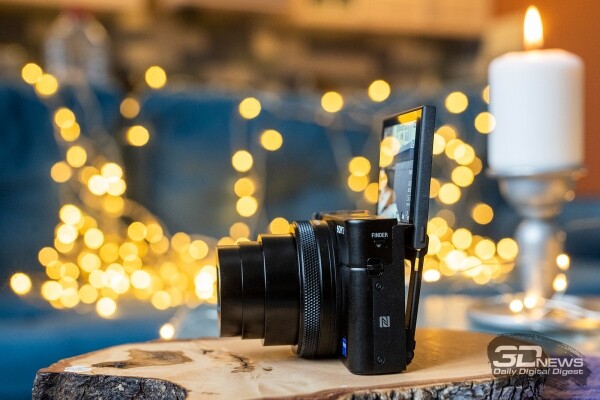
Sony does not invent anything radically new regarding design. Efforts are focused on maintaining maximum compactness while preserving broad functionality — through compromise and without abrupt movements. For example, the camera lacks a protruding grip for right-hand holding, the viewfinder retracts into the body, and the lens, when turned off, protrudes less than a couple of centimeters above the body surface — all of which allows the photographer to carry it in a pocket. This is undoubtedly very convenient: one can go for a walk with the camera without carrying any bags at all, and during longer strolls, one can put it in a waist bag or even a small clutch. In numerical terms, this translates to camera dimensions of 101.6 × 58.1 × 42.8 mm, weight with battery and memory card of 302 grams. The body is made of metal and, unfortunately, does not have weather protection — which is quite common for this class of cameras, but considering the considerable cost of the RX100 VII, you expect an abundance of advantages over competitors. Let’s take a closer look at how the camera's ergonomics are organized.
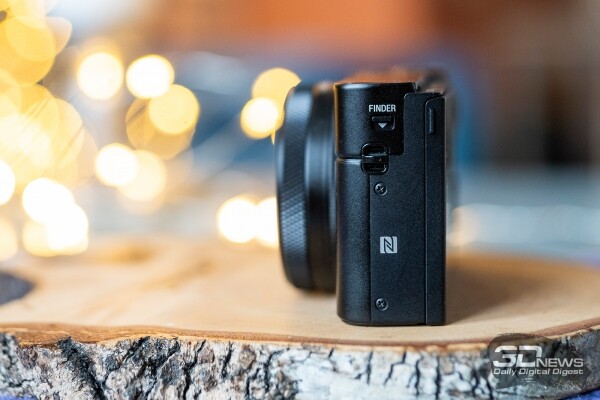
On the left edge we see the viewfinder pop-up button and the NFC module contact plate.
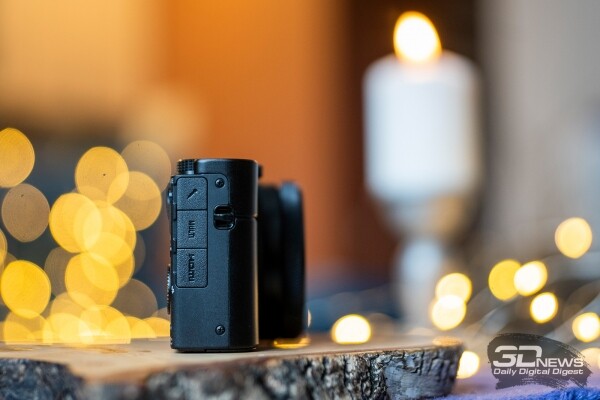
On the right edge, hidden behind three separate covers, are the microphone connection, microUSB, and HDMI ports. I should note that the covers are small, making them quite inconvenient to open.
 |  |
At the front, we see a built-in ZEISS Vario-Sonnar T* lens with a focal length of 9.0–72 mm (equivalent to 24–200 mm in 35-mm format, with an eightfold zoom) and an aperture of f/2.8–4.5. The lens has a control ring for setting the aperture value and, in manual focus mode, for achieving sharpness. There is also an autofocus assist light and a zoom lever at the front.
At the bottom, there is a compartment for the battery and memory card, as well as a tripod socket. They are positioned closely together, so when using a tripod, the compartment is blocked: it's not very convenient, but expected given the compact body.
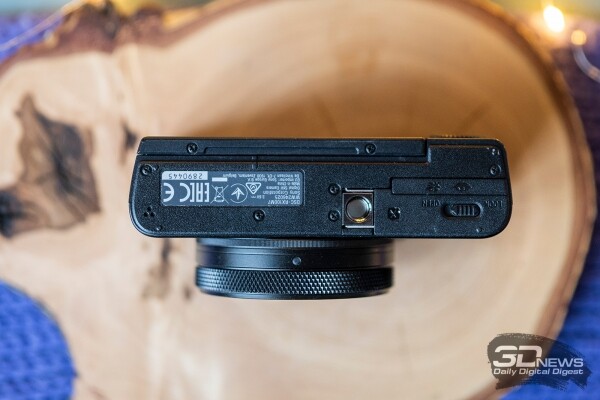 | 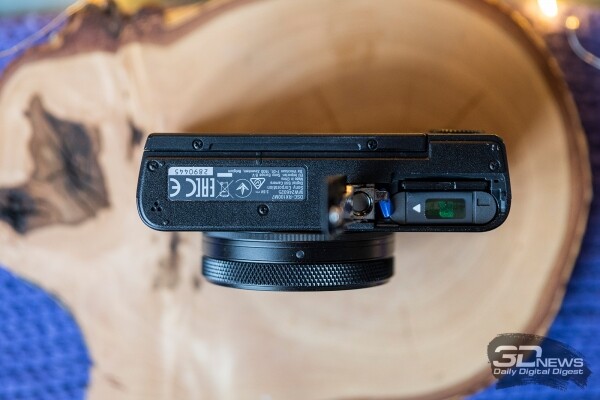 |
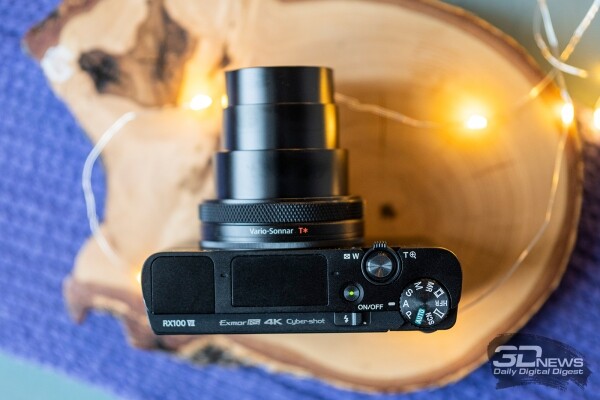
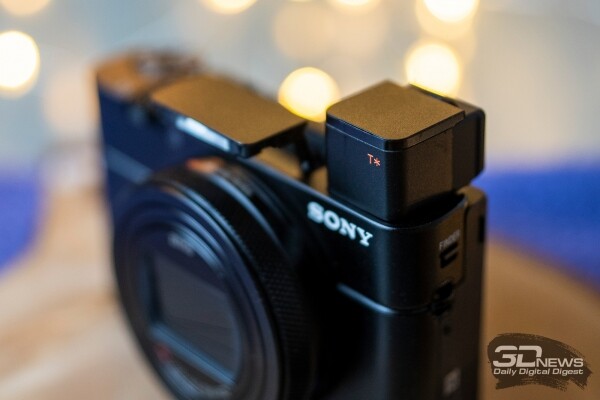
At the top, there is a viewfinder and a built-in flash. Both are recessed into the body by default and are raised using special levers (the flash lever is also located on top). Here we also see the on/off button for the camera: it is quite small, but conveniently placed and easily located by touch. Next to it is the shutter button integrated with the zoom lever, as well as the mode selection wheel — it does not have a safety button but is stiff enough; I don't think there will be issues due to accidental mode switching.
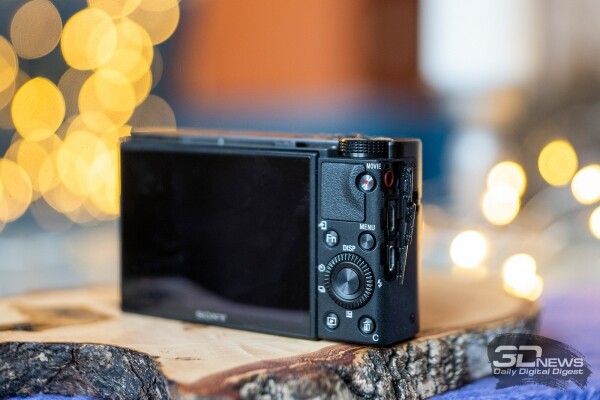
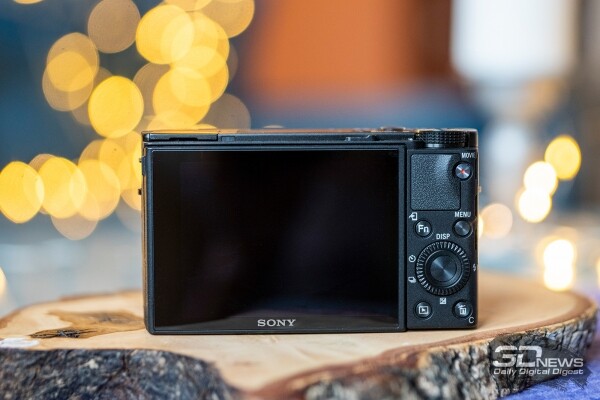
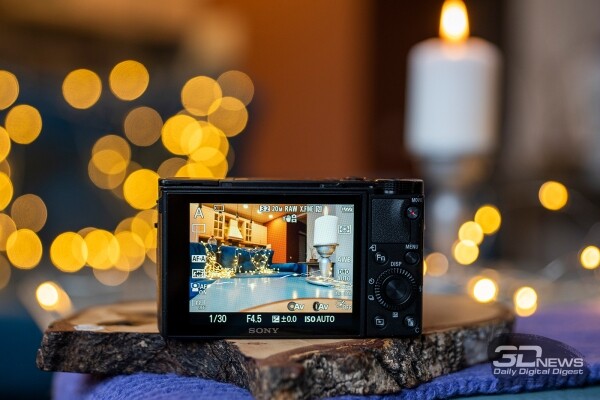
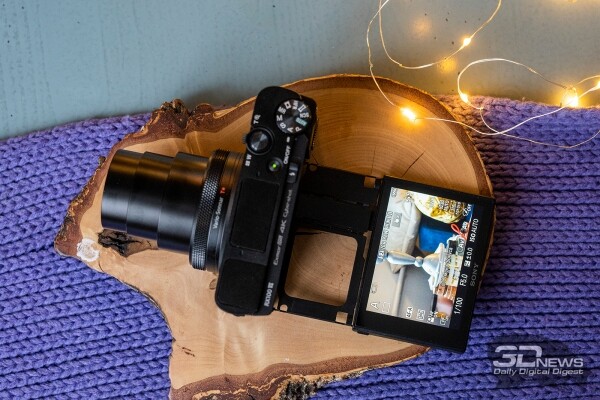
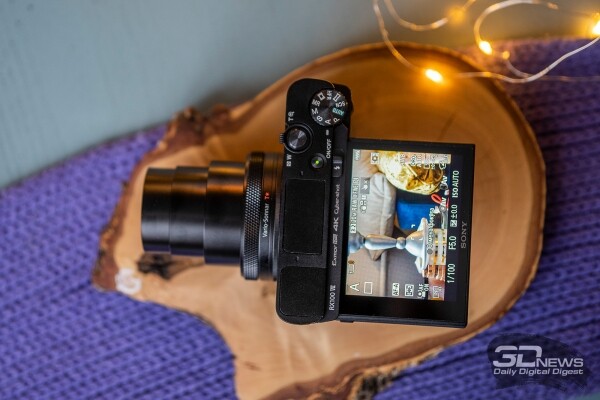
Most of the rear surface is occupied by an LCD screen. To the right of it are the video recording button, a Fn button that calls up a quick menu, the main menu button, buttons for viewing and deleting shots, and in the center — a confirmation button, encircled by a selection dial.
The display and viewfinder
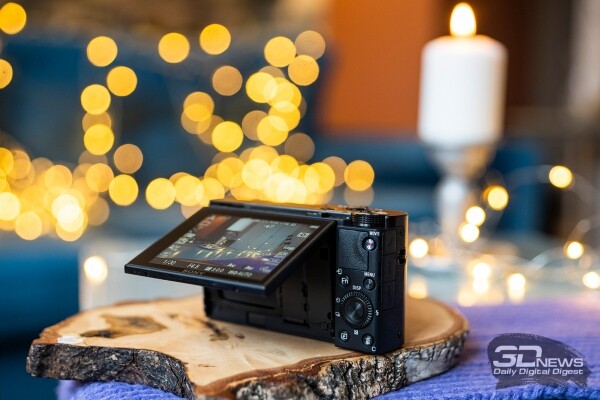
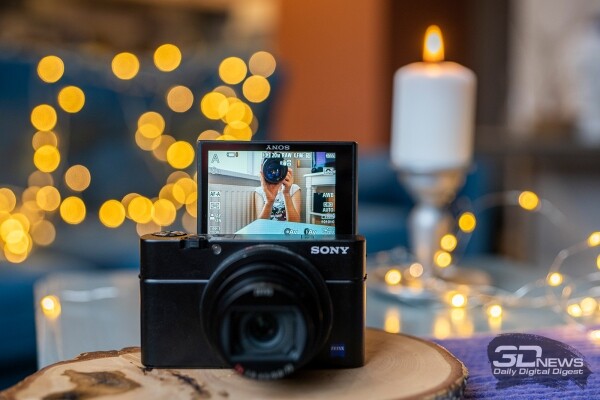
In the area of tools for visualizing changes, there has been no update since the previous model. The Sony RX 100 VII also features a 3-inch LCD display with a resolution of 1,228 million pixels. It is equipped with a touch screen, allowing you to set the focus point and take shots as desired. There is also a tilting mechanism: the screen can be raised vertically for easy selfie shooting or vlogging, lowered, or tilted at the desired angle. Given the need to maintain maximum compactness, such a mechanism seems practical and convenient. I found working with the LCD display comfortable — the image was clear and vibrant, and even when shooting on a sunny day, switching to the viewfinder was mostly unnecessary.
 |  | |
 |  | |
 |  |
In challenging situations — for example, shooting at sunset against the sun — the electronic OLED viewfinder proves helpful. As I mentioned, it is ‘hidden’ in the camera body and becomes accessible by pressing a special button — another clever move by Sony in the pursuit of compactness. The viewfinder has a resolution of 2.36 million pixels, magnification of 0.59x, size of 0.39 inches, and a field of view coverage of 100%. Diopter adjustment is available from -5 to +3, and there is a five-step brightness adjustment. During testing, I didn't use the viewfinder often — I found it more convenient to frame shots using the screen. However, in those instances when I did use it, I didn't notice any problems: the image was clear and didn’t have any lag.
The PerformanceResourceTiming
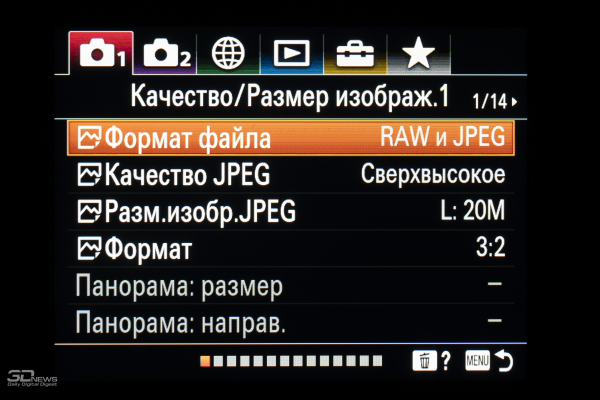
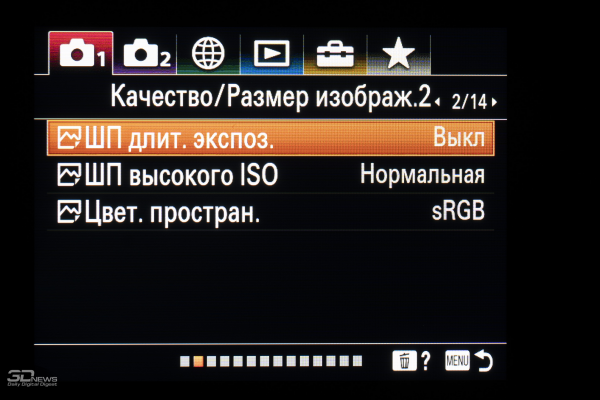
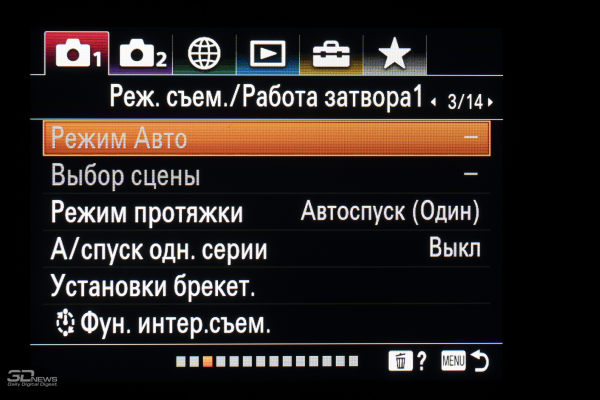
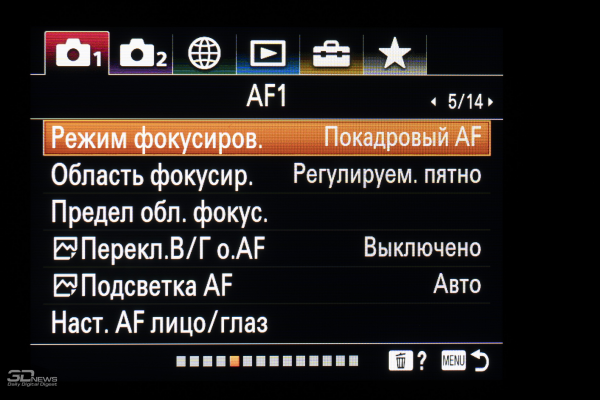
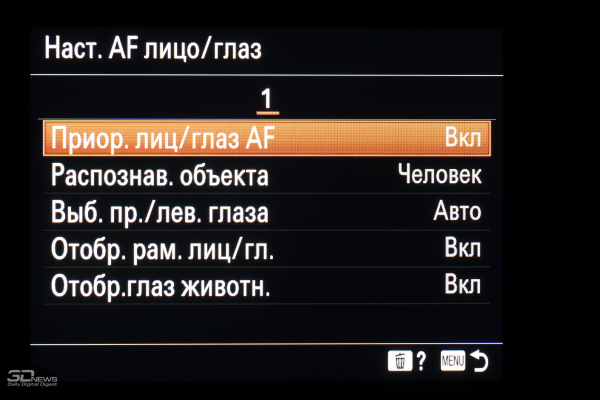
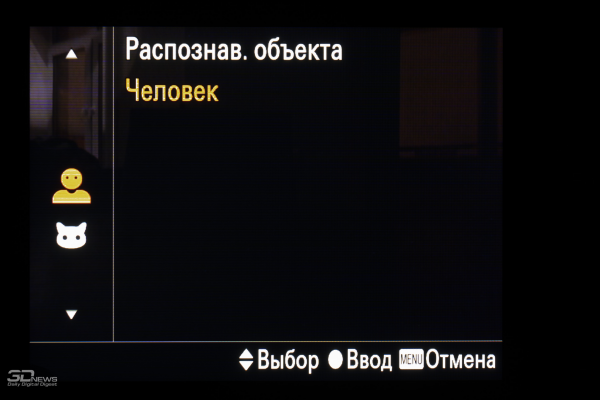
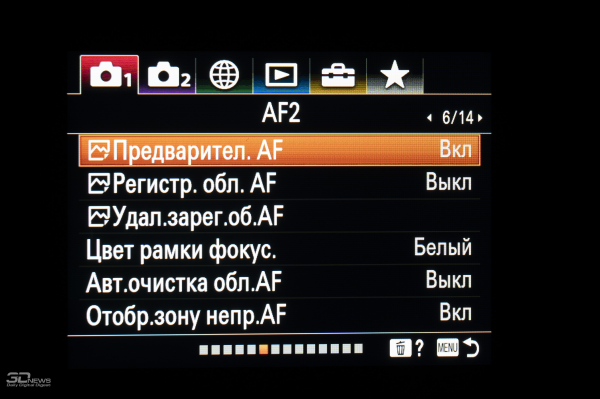
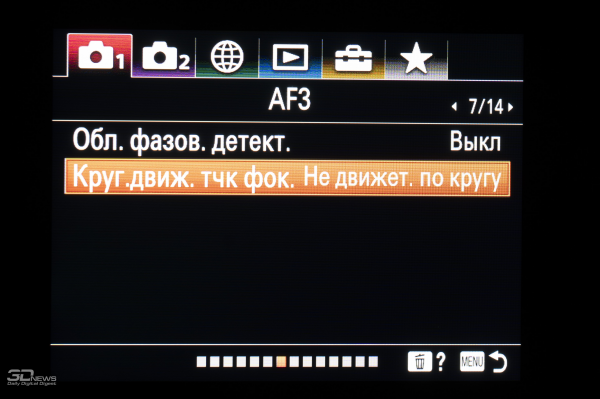
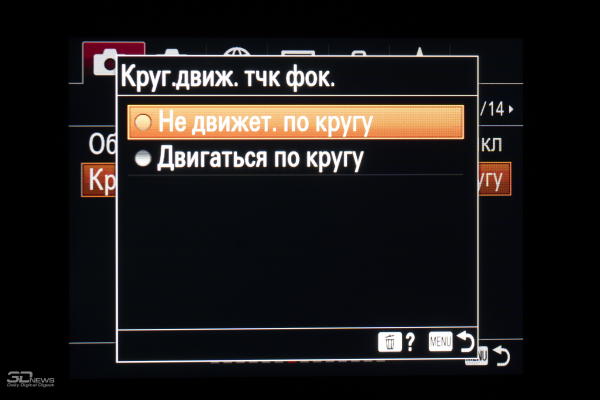
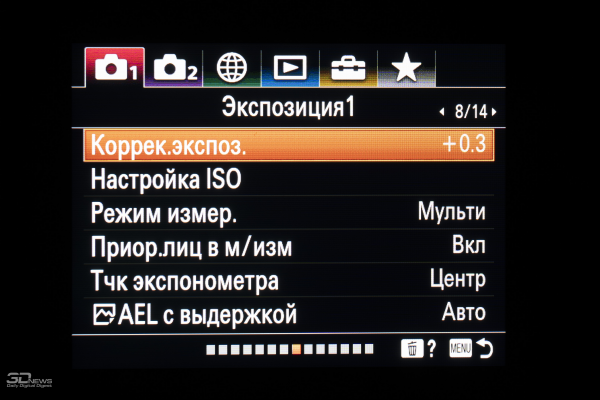
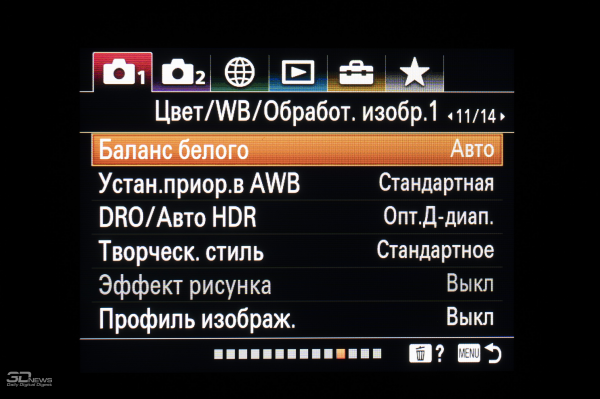
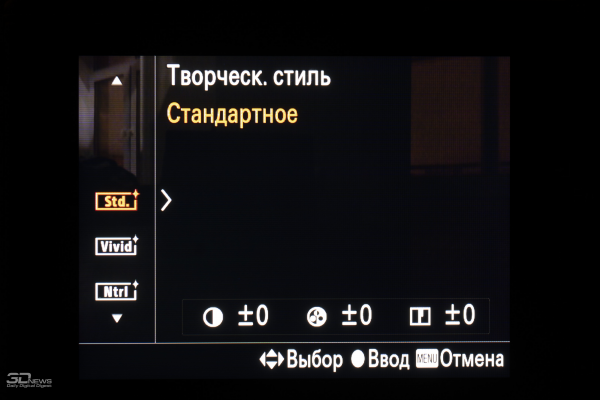
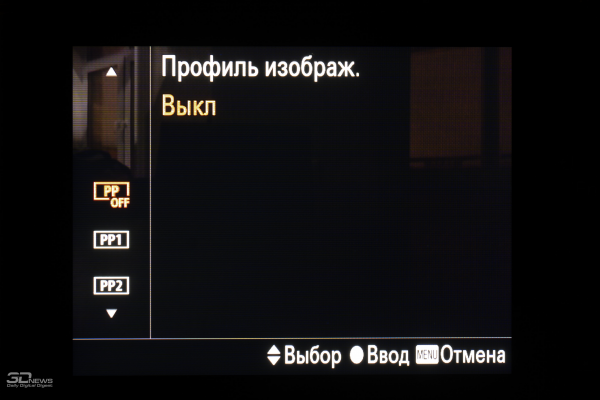
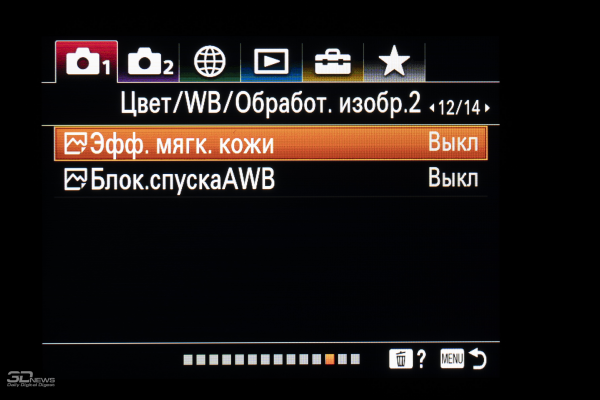
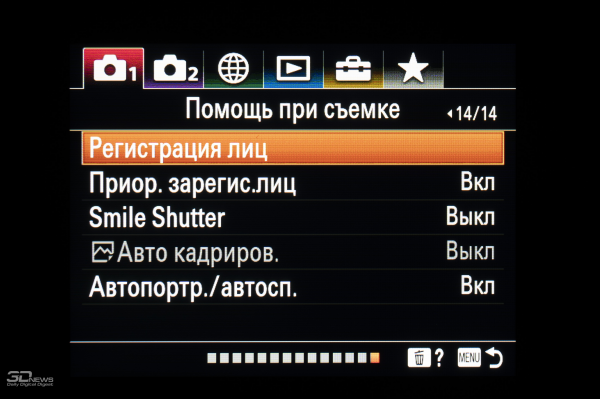
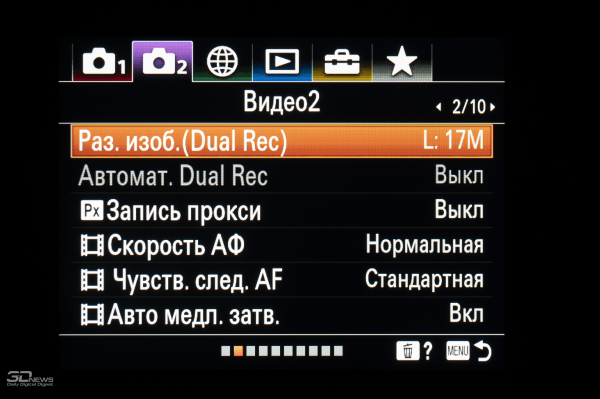
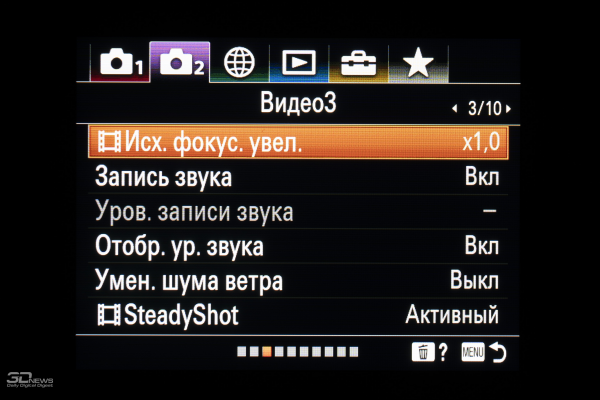
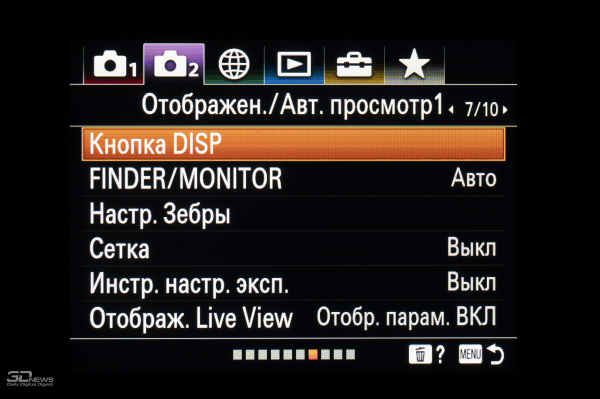
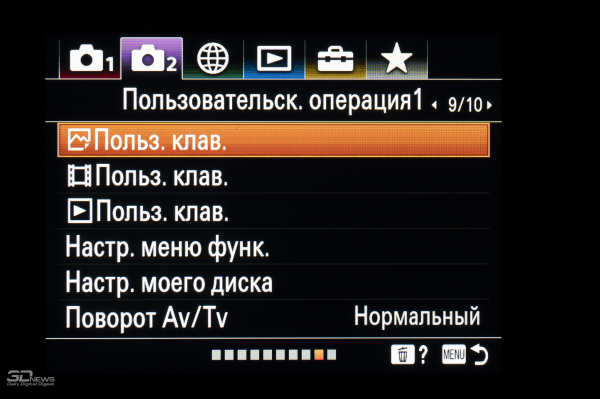
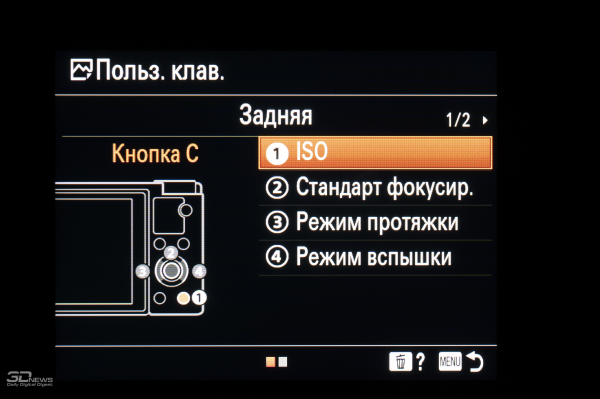
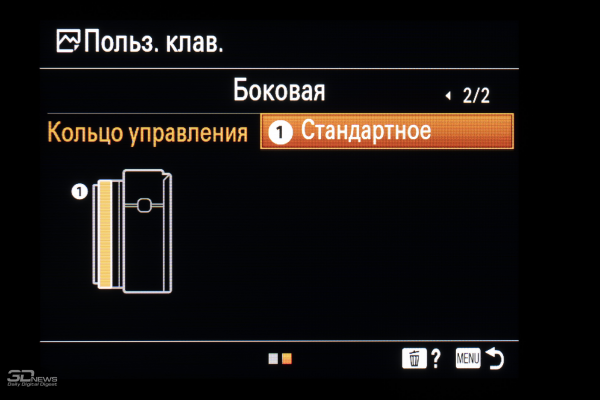
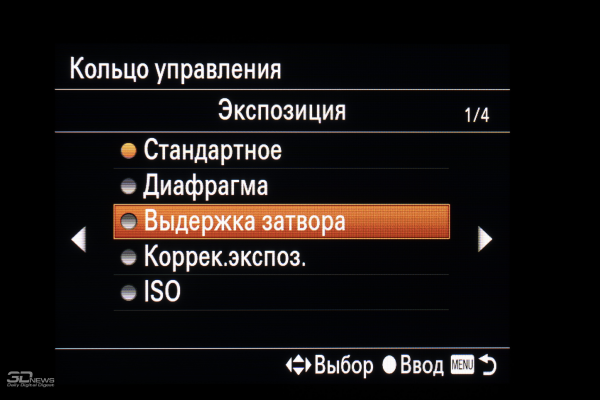
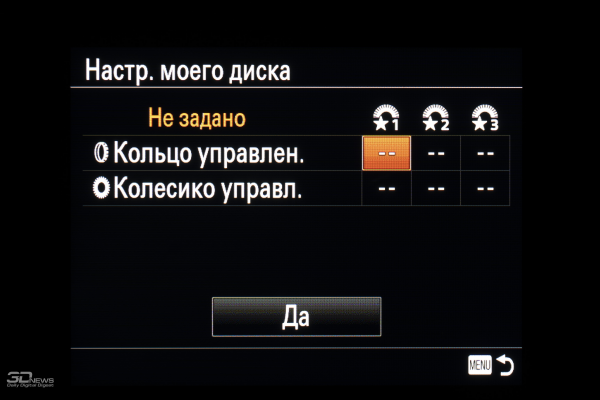
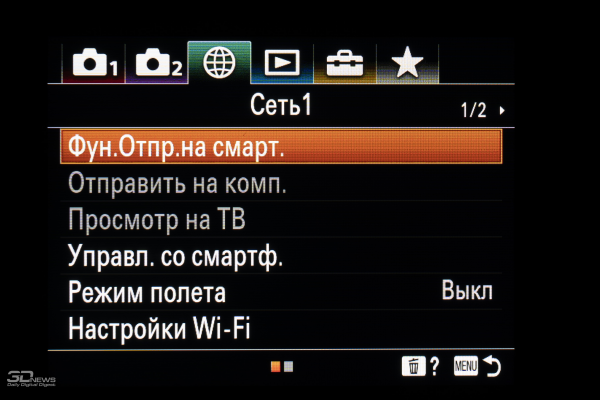
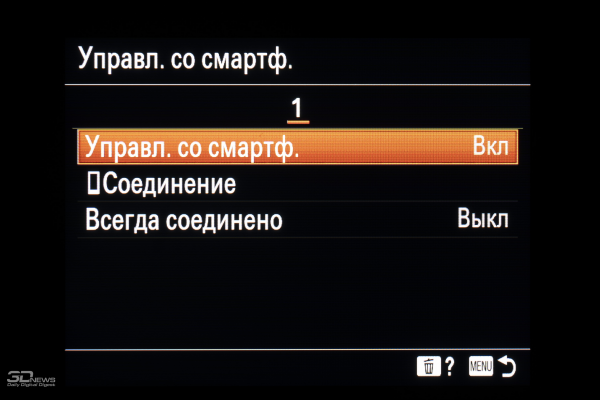
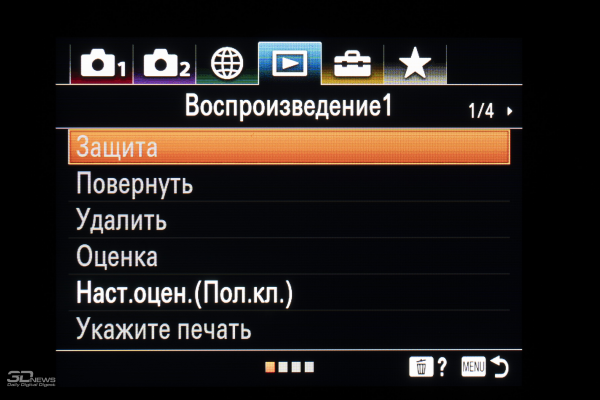
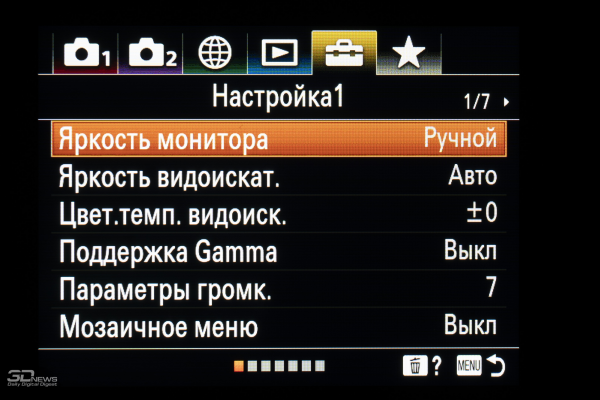
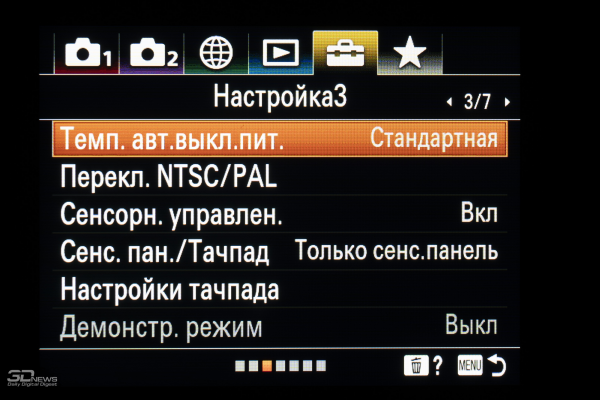
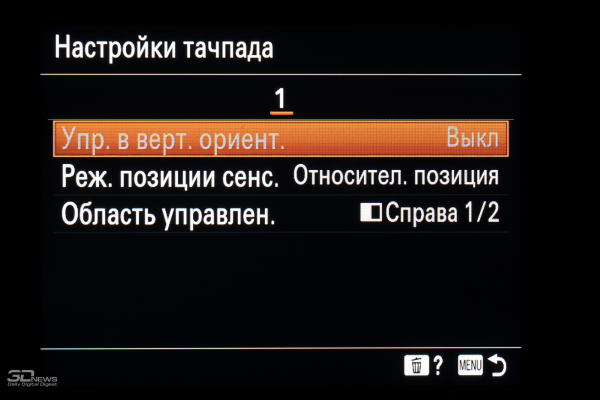
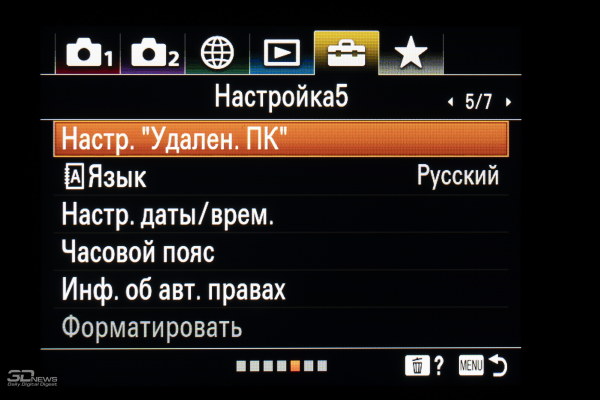
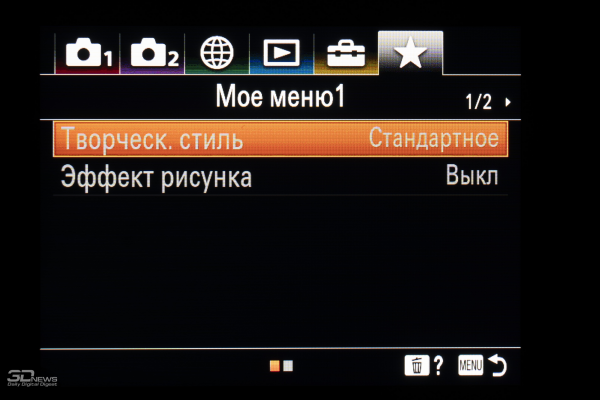
The camera menu is organized in the traditional Sony way: horizontal navigation with vertical lists for selecting settings. It's not the most convenient menu in the world; firstly, there is no option for touch navigation, secondly, some functions are buried deeper than one might wish, making it quite confusing overall. Despite being an entry-level camera, there are many sections and subsections, so users who have not dealt with Sony cameras before will need considerable time to master it. The menu is fully localized in English. The 'quick menu' is certainly helpful, allowing the addition of the most frequently used shooting functions. It is organized as a small matrix located at the bottom of the screen. Camera functions activated by the Fn buttons can now be assigned separately for photo and video shooting. There is also the option to assign necessary settings to different controls for instant access.
Source: 3dnews.ru
