

The topic of harvesting electricity from 'thin air' — from electromagnetic noise, vibrations, light, humidity, and much more — intrigues both civilian researchers and their uniformed counterparts. Their contribution to this topic from Pennsylvania State University. They managed to harvest electricity ranging in power from adjacent electrical wiring, enough to directly power a digital alarm clock.
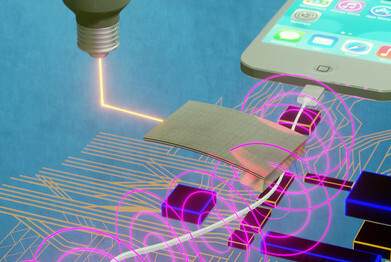
In an article published in the journal, the scientists discussed their calculations and the creation of special converters that transform electromagnetic fields into electrical current. The harvesting element is designed as a multi-layered thin plate with a permanent magnet on one end (the other end of the plate is securely fixed). The plate consists of a layer of piezoelectric material and a layer of material (Fe85B5Si10 Metglas).
Magnetostrictive material is interesting because its volume and linear dimensions change when its magnetization state changes. The annoying buzzing of coils in graphics cards is usually due to magnetostrictive changes in their cores. In an alternating magnetic field from standard wiring operating at 50 or 60 Hz, the Metglas plate begins to vibrate and deform the attached piezoelectric layer. This causes a current to flow in the connected plates.
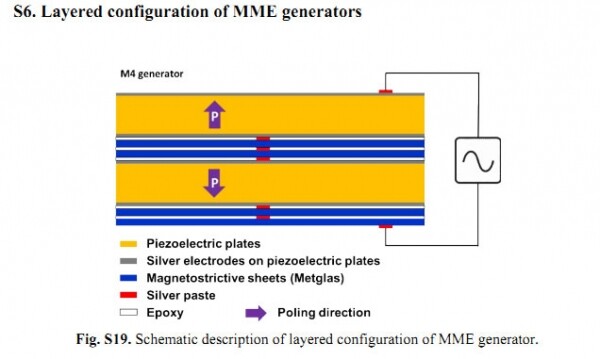
However, the magnetostrictive material paired with the piezoelectric element generates only up to 16% of the electricity produced by the device. The primary generation is due to the oscillation of the permanent magnet in the electromagnetic field. It is claimed that the peak voltage across the element reaches 80 V in a field strength of 300 µT. The most valuable aspect is that the developed element could harvest enough energy to directly power a digital clock in a field strength of less than 50 µT, at a distance of 20 cm from the wiring.
The research was conducted by scientists from Pennsylvania State University alongside researchers from Virginia Tech and a group from the U.S. Army Combat Capability Development Command.
Source: 3dnews.ru
