


Noticed something strange with the network lately? For instance, my Wi-Fi regularly disconnects, my favorite VPN stopped working, and some websites take five seconds to load, or ultimately don't display images.
Governments in many countries have imposed quarantine and restricted people's movement during the coronavirus pandemic. As a result, there has been a significant increase in internet traffic across the board. People are gaming, video chatting, binge-watching series on streaming services, and even working. The network's capacity has never been tested on such a global scale. And as a result, the first signs are starting to appear.
For instance, Zuckerberg , as they at Facebook "are trying at least not to crash," because traffic on their platforms, including Instagram and WhatsApp, is hitting all historical records. Zoom and YouTube have also openly acknowledged overload issues.
You may have also noticed some glitches. Your Zoom meeting partner froze for a few seconds. The video quality on YouTube, Twitch, or Netflix seems worse than before for some reason. Global traffic has risen by 20% in just a month, according to Cloudflare, and the infrastructure of some services is suffering more than others.
Is the network really slowing down?
A few dozen percent may seem very insignificant, but the thing is, there's no escape from it. This isn't just one small service that received a "hub effect" and its users increased by 5000% in a day. The entire internet is under strain. In Seattle, for example, where traffic rose by 30% in March, even the "slowest" night hours in March exceed daytime peak loads that were seen in January.
And many users feel this. Data loading speeds, according to Ookla, have dropped by 4.9% just in the past week. Over the month, the average loading speed fell by 38% in San Jose and by 24% in New York (data from Broadband Now). Both cities are currently experiencing an active spread of COVID-19.
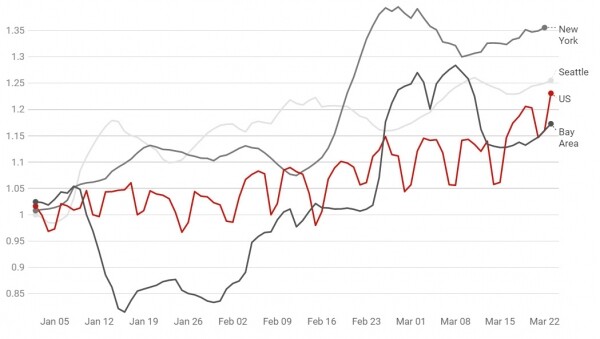
Traffic in the USA increased on average by 23%
However, in the USA, the average download speed for wired internet is 140 Mbps, so for most users, even "slowed" internet is sufficient. And the internet is a world that has learned to grow every year, albeit not at such rapid rates. Currently, about 80% of traffic is video, and major players like Google and Netflix to work with it in ways that avoid "bottlenecks" in the system. They have invested billions and built their own massive -infrastructure to deliver content directly from servers in large volumes. This infrastructure is designed to account for traffic growth to their portals of 30-50% per year. This time, such growth simply happened faster.
In Europe, according to Telefónica, internet traffic has increased by 35% since the beginning of the pandemic. Traffic for online games and video conferences has doubled, while messages on WhatsApp have been sent four times more frequently.
The internet has replaced all other forms of activities for people. Movies, restaurants, city walks, resorts. In Spain, its use is now sharply declining only once a day, at 8 PM, when people across the country approach their windows to for doctors and other healthcare workers. The whole country applauds. And internet services get a breather for literally five minutes.
The network infrastructure follows . Tier-one providers, the largest ISPs, manage major highways, including traffic between countries and continents. Tier-two companies, including most internet providers licensed by Roskomnadzor, handle regional traffic. And tier-three ISPs provide the specific line into your home. It’s in these “last miles” where the problem usually arises. If in the last week the speed has become absolutely unbearable, it’s most likely due to the users in your apartment building. Or perhaps the old cables that were meant to carry TV signals into your home, rather than retrieve data packets for the global network.
Network overloads can lead to increased latency (by the way, how is your ping in your favorite game?). Some websites also start to "think" for a long time. Large companies like Amazon and Facebook have the capability to shift the load from server to server, and scale resources when necessary. Smaller operators do not have such capabilities. If they were not prepared for a sudden surge in traffic beforehand, the bottlenecks can become very noticeable.
Slow Dance
To somewhat assist local ISPs with traffic (and also to quietly reduce their own costs, of course), large companies are taking active measures. Netflix, Apple, Amazon (Prime Video and Twitch), Google (YouTube), and Disney with its Disney+ have all reduced the video quality on their services.
For some of them, this is a forced measure: they earn their profit from monthly subscriptions, which were anticipated for a certain number of viewing hours. Previously, streaming video in the U.S. occurred for no more than 4 hours in the evening on weekdays. Now, the peak period lasts 10 hours, 2.5 times longer. Here, they either need to raise subscription prices (which won't be understood during record unemployment) or find ways to cut costs through certain methods.

Kids in Manchester are practicing aerobics using YouTube
Steam for concurrent players (7.25 million) and for active users (23.5 million with the PC client). Valve announced that it automatically updating games to avoid overloading users' home networks. For games that you haven't played in a long time, updates will only trigger during the next off-peak period.
Sony also recently , that it will begin slowing down game downloads for PlayStation in Europe to cope with the increased traffic. Meanwhile, Facebook has reduced video quality on Facebook Live (the number of viewers on streams has increased by over 50% since January) and simplified the view to only the audio version for those with slow internet.
by Microsoft , that in its Teams platform for corporate messaging and video conferencing, 12 million new users (+37.5%) appeared in just a week. Slack also reported a 40% increase in paid subscribers. However, Microsoft Teams did not lower the quality, and now the service, according to Downdetector, goes down literally every few days (although everything was stable for them back in February).
And how about you, have you felt anything? Or is everything okay?
Source: habr.com
