

Hello, Habr, my name is Sasha. After 10 years of working as an engineer in Moscow, I decided to make a drastic change in my life — I took a one-way ticket and moved to Latin America. I didn’t know what to expect, but I must admit it was one of my best decisions. Today, I want to share my experiences over the past three years in Brazil and Uruguay, how I improved two languages (Portuguese and Spanish) in challenging conditions to a good level, what it’s like to work as an IT specialist in a foreign country, and why I ultimately returned to where I started. I’ll describe everything in detail and with vividness (all the photos in the article are taken by me), so make yourself comfortable — let’s get started!

How it all began...
Of course, to leave a job, you first need to have one. I joined KROK in 2005 while studying in my final year. Our university had a 'Cisco Networking Academy,' where I took the basic course (CCNA); IT companies turned there to find young employees with basic knowledge of network technologies.
I started working as a duty engineer in technical support for Cisco. I took calls from clients, troubleshot issues — replaced broken equipment, updated software, helped configure devices, or investigated reasons for their incorrect operation. A year later, I moved to the implementation group, where I worked on designing and configuring equipment. The tasks varied, but I particularly remember those that required working in unusual conditions: configuring equipment at outdoor temperatures of -30° C or changing a heavy router at four in the morning.
One memorable case was when a client had a network in a chaotic state, which included programmable machines, several default gateways in each VLAN, multiple subnets within one VLAN, and static routes added to desktops via the command line, as well as static routes configured using domain policies. The company operated 24/7, so it was impossible to just come in on a weekend, turn everything off, and set it up from scratch. The strict client even dismissed one of my predecessors for a slight downtime in operations. Therefore, a plan needed to be developed with small steps, reconnecting elements gradually. It resembled the Japanese game 'Mikado' or 'Jenga'—one had to carefully extract pieces while ensuring that the entire structure did not collapse. It was difficult, but it gave me a ready answer to the favorite HR question: 'What project are you proud of?'
There were also many business trips—always interesting, although initially I hardly saw anything. But eventually, I learned to plan better and managed to explore both cities and nature. At some point, however, I 'burned out.' Perhaps this was due to starting work early—I hadn’t had the time to gather my thoughts and justify to myself why I was doing what I was doing.
It was 2015. I had been working at KROK for 10 years, and at some point I realized I was tired and wanted something new—to better understand myself. So I notified my manager six weeks in advance, gradually handed over my responsibilities, and left. We said goodbye warmly, and my boss mentioned that I could return if I found it interesting.
How did I end up in Brazil, and why did I later go to Uruguay?

Brazilian beach
After resting for just under a month, I recalled two of my long-held dreams: to learn a foreign language to a level of fluent conversation and to live abroad. These dreams perfectly fit into a common plan— to travel to a place where Spanish or Portuguese is spoken (both of which I had previously studied as a hobby). So, just a month and a half later, I found myself in Brazil, in the city of Natal in the northeastern state of Rio Grande do Norte, where I worked for the next six months as a volunteer for a non-profit organization. I also spent two weeks in São Paulo and in the coastal city of Santos, which many in Moscow might know from the coffee brand of the same name.
To briefly summarize my impressions, I can say that Brazil is a multicultural country, where regions differ significantly from each other, as do people with various roots: European, African, Indigenous, and Japanese (there are surprisingly many of the latter). In this respect, Brazil resembles the USA.

São Paulo
After six months, according to Brazilian rules, I was required to leave the country— since I wasn't drawn back to Russia, I simply took a bus over to neighboring Uruguay and... ended up staying there for several years.
For almost all that time, I lived in the capital, Montevideo, occasionally traveling to other cities—to relax on the beaches and just to sightsee. I even attended the City Day in San Javier— the only city in the country founded by Russians. It's in a remote province, and few from other cities move there to live, so the locals still somewhat resemble Russians, although almost no one speaks Russian there, except for the mayor who habla un poco de ruso.
How can a Russian engineer find a job in Uruguay?

Uruguayan owl. A beauty!
In the beginning, I worked at the reception in a hostel: helping guests settle in and find the right places in the city, and in the evenings, I would tidy up. Because of this, I could live for free in a separate room and have breakfast. I cooked my own lunch and dinner, often using what had been left in the fridge by guests who had already left. The difference compared to working as an engineer was certainly noticeable— people came to me in good spirits, sharing how enjoyable their vacation was, while engineers usually get approached when 'things are going poorly' and 'urgent help is needed.'
Three months later, the hostel closed, and I decided to look for a job in my field. After creating a resume in Spanish, I sent it out, attended six interviews, received three offers, and ultimately got a position as a network architect at the local free economic zone. It's a kind of "business park" consisting of warehouses and offices where foreign companies rented spaces to save on taxes. We provided internet access to tenants, and I maintained and developed the local data transmission network. By the way, at that time, I needed to restore the corporate email of KROK to transfer some account information to my personal inbox — and I was allowed to do that, which pleasantly surprised me.
Overall, there is a noticeable lack of qualified personnel in almost all sectors in Uruguay, with many skilled professionals moving to Spain for better living conditions. During my job search, I wasn't asked any complex technical questions as there was simply no one to ask them; the company lacked specialists in similar positions. In such situations (when one programmer, accountant, or network architect is needed), it's certainly difficult for the employer to assess the candidate's competencies. At KROK, it’s simpler; if there are five engineers in the team, the most experienced among them will interview the sixth and ask him challenging questions related to the profession.
In general, during my work, I noted that in Russia, employers primarily seek strong hard skills in technical specialists. That is, if a person is grumpy and difficult to communicate with but is knowledgeable and skilled in their field, capable of designing and configuring everything, their character can be overlooked. In Uruguay, however, it’s the opposite — the main thing is to be pleasant to communicate with, as comfortable business communication motivates better work and problem-solving, even if it’s not immediately clear how to resolve an issue. Corporate rules are also quite 'company-like'. In many Uruguayan offices, there is a tradition of having pastries on Friday mornings. Every Thursday, someone is appointed responsible, who goes to the bakery at seven in the morning on Friday to buy pastries for everyone.

A bucket of croissants, please!
Another pleasant aspect is that in Uruguay, the law provides for 14 salaries a year, not 12. The thirteenth is given at New Year, while the fourteenth is paid when taking vacation — meaning that vacation pay is not part of the salary, but a separate payment. Overall, salary levels in Russia and in Uruguay are roughly the same.
An interesting point is that at work, among other things, I helped maintain public wi-fi. In spring, almost every access point had bird nests. Clay-colored Horneros built their homes there from clay and grass, apparently attracted by the warmth from the working equipment.
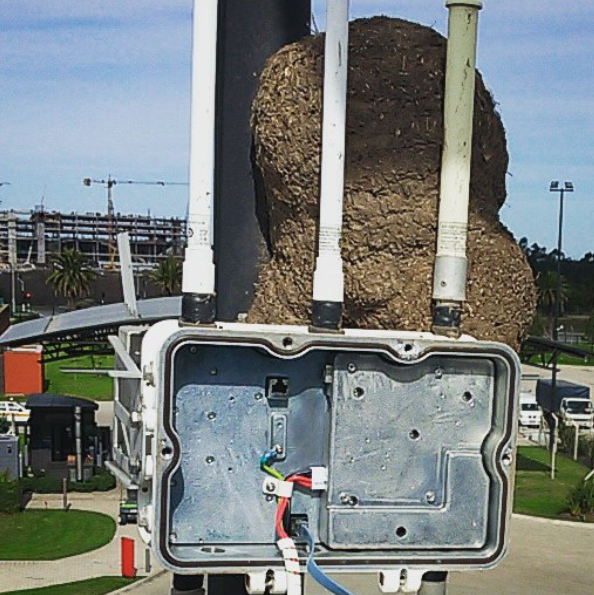
It takes about two weeks for a pair of birds to build such a nest.
On a sad note, there are many people in Uruguay with low motivation to work. I believe this is related to the poor functioning of social mobility in the country. The vast majority of people receive the same education and get jobs at the same level as their parents, whether as a housekeeper or a department head at an international company. This cycle continues from generation to generation — the less affluent resign themselves to their social status, while the well-off do not worry about their future and feel no competition.
However, there are things we could learn from Uruguayans. For instance, the culture of carnivals — it doesn’t have to be 'like in Brazil' (I missed those, and from what I hear, it's a bit too much for me), it can also be 'like in Uruguay'. A carnival is a time when it’s considered normal to dress in something bright and crazy, to spontaneously play musical instruments, and to dance in the streets. In Uruguay, many singers and drummers are found at intersections where passersby can stop, dance, and then continue on their way. In the nineties, we had raves and rock festivals in the open air in the city center, but that culture is no longer present. There is a need for something like that, which was palpable during the FIFA World Cup.

Carnival in Uruguay
Three beneficial habits I acquired during three years of living in Latin America
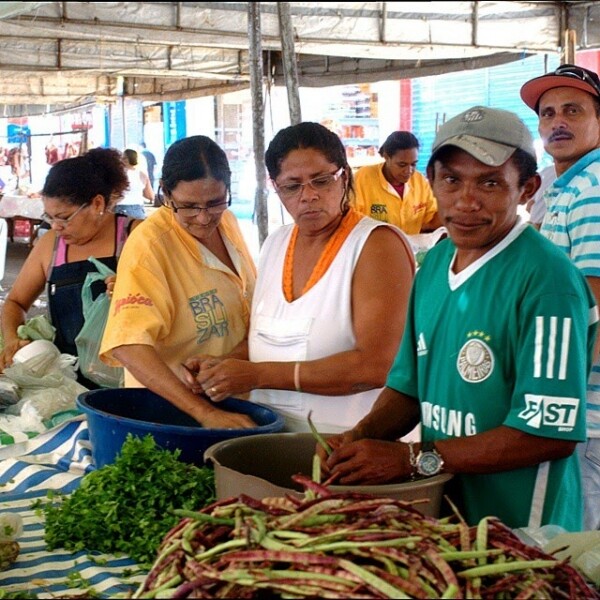
Uruguayan market
Firstly, I became more mindful in building communication. I worked in a company that was almost entirely made up of locals, and here, no one was used to multicultural communication. Overall, Uruguay is probably the most monocultural country I have visited; everyone loves pretty much the same things: football, mate, barbecue. Additionally, my Spanish was imperfect, influenced by six months of speaking Portuguese. As a result, I was often misunderstood, even though I thought I was explaining things clearly, and I didn't understand many things myself, especially those related to emotions.
Once you learn the meaning of a word but don’t grasp all its nuances, you start to pay more attention to intonation, facial expressions, gestures, and simplify constructs. When you work in your native language, you often overlook this, thinking that everything is simple and clear. However, when I transferred my more meticulous approach to communication back home, I realized that it helps me a lot here as well.
Secondly, I became better at planning my time. Communication was slower, and I needed to keep up with getting my work done in the same timeframe as local employees, even though part of my work time was consumed by the 'challenges of translation.'
Thirdly, I learned to build an internal dialogue and became more open to new experiences. I interacted with expats and migrants, read blogs, and understood that almost everyone experiences a 'six-month crisis' — about six months after moving to a new culture, you feel irritation, thinking that everything around is wrong, while everything in your home country seems much more reasonable, simple, and better.
So, when I started noticing such thoughts arising within myself, I told myself: 'Yes, it’s strange here, but this is an opportunity to get to know myself better and learn something new.'
How to improve two languages 'in real conditions'?

A wonderful sunset
In both Brazil and Uruguay, I found myself in a kind of 'vicious circle': to learn to speak the language, you need to converse a lot in it. But you can only talk a lot with those who find you interesting. Yet with a B2 level (also known as Upper-intermediate), you speak at about the level of a twelve-year-old, and you can't say anything interesting or tell a joke.
I can't claim that I came up with the perfect solution to this problem. I traveled to Brazil already having acquaintances among the locals, which helped a lot. However, in Montevideo, I was initially alone, and I could only communicate with the landlord of the room I rented, but he turned out to be uncommunicative. So, I started looking for options — for example, I began attending couchsurfer meetups.
I tried to interact with people more when there was an opportunity. I listened carefully to all the conversations around me, recorded words and phrases with non-obvious meanings on my phone, and then learned them with flashcards. I also watched a lot of films with subtitles in the original language. And not just watched, but rewatched — during the first viewing, you sometimes get caught up in the plot and miss a lot. Overall, I aimed to practice something like 'language awareness' — I contemplated all the phrases I heard, analyzed them in my mind, checked whether I understood each word, and not just the general meaning, capturing nuances of meaning… By the way, I still watch every episode of the popular Brazilian comedy show 'Porta dos Fundos' on YouTube. They have English subtitles, I recommend it!
Honestly, I used to think that learning a language was comparable to the usual process of acquiring knowledge. You sit down with a book, study it thoroughly, and then you can take the exam. But now I've realized that language is akin to sports — you can't prepare for a marathon in a week, even if you run 24 hours a day. Only regular training and gradual progress will work.
Returning to Moscow (and to KROK)

We are setting sail!
In 2017, due to family circumstances, I returned to Russia. By that time, the mood in the country was still post-crisis — there were only a few job openings, and those that existed were mostly aimed at beginners for a low salary.
There were no interesting job openings in my field, and after a couple of weeks of searching, I wrote to my former boss, who invited me to the office for a chat. KROK was just starting to develop the SD-WAN direction, and I was offered to take an exam and get a certificate. I decided to give it a try and agreed.
As a result, I am now developing the SD-WAN direction from a technical perspective. SD-WAN is a new approach to building corporate data transmission networks with a high level of automation and visibility into what is happening in the network. This field is new not only for me but also for the Russian market, so I spend a lot of time consulting clients on technical issues, conducting presentations, and building test stands for them. I am also partially involved in projects related to unified communications (IP telephony, video conferencing, software clients).
My return to the company is not an isolated case — since last year, the "CROC Alumni" program has been in place to maintain contact with former employees, and currently, over a thousand people are participating. We invite them to celebrations and business events as experts, and they continue to receive perks for referring people to vacancies and participating in sports activities. I like this — after all, it's more pleasant to create something new and drive the industry toward a bright future with those with whom there is a good informal and human relationship, not just a business one. Plus, they know and understand how everything works in your company.
Do I regret my adventure?

Tea in dreary Moscow is no worse than in sunny Latin America.
I am satisfied with my experience: I fulfilled two long-standing dreams, learned two foreign languages to a very good level, and discovered how people on the other side of the Earth think, feel, and live. Ultimately, I have reached a point where I feel most comfortable. A "reset" happens differently for everyone — for some, a two-week vacation would suffice; for me, it took three years to completely change my environment. Whether to repeat my experience or not is up to you.
Source: habr.com
