

Transitioning from silicon to wide bandgap semiconductors (gallium nitride, silicon carbide, and others) significantly raises operating frequencies and enhances solution efficiency. Thus, one of the promising applications for wide bandgap chips and transistors is in communications and radars. Electronics based on GaN solutions deliver power gains and extended radar ranges, which military operations have promptly utilized.
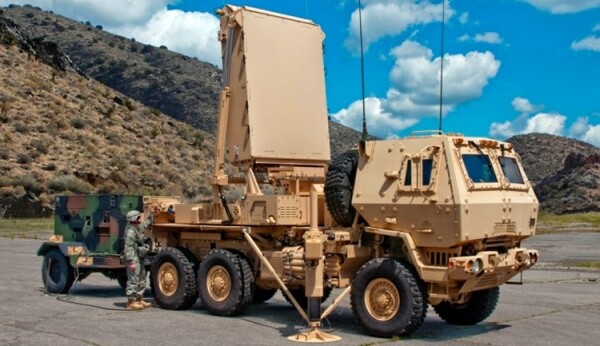
Lockheed Martin , marking the delivery of the first mobile radar systems (RLS) based on gallium nitride electronics to U.S. troops. The company did not invent anything new. The power of the AN/TPQ-53 counter-battery radar, adopted for use since 2010, has been transitioned to a GaN-based component. This is the first and currently the only radar in the world using wide bandgap semiconductors.
By shifting to active GaN components, the AN/TPQ-53 radar has increased detection range for concealed artillery positions and gained the ability to simultaneously track aerial targets. In particular, the AN/TPQ-53 radar has started to be used against drones, including small devices. Identification of concealed artillery positions can be conducted both in a 90-degree sector and with a full 360-degree view.
Lockheed Martin is the sole supplier of radar with an active phased array (AESA) to U.S. military forces. The transition to a GaN component base allows it to expect further years of leadership in the improvement and production of radar systems.
Source: 3dnews.ru
