

A Familiar Story. As soon as more powerful computers emerge, as soon as processor performance and storage capacities increase, and users breathe a sigh of relief — 'now I have enough for everything, no need to tighten my belt,' almost immediately new demands arise, consuming more and more resources, alongside new software that also 'doesn't hold back.' An Eternal Problem. An Endless Cycle. And a Continuous Search for New Solutions. Cloud storage, neural networks, artificial intelligence — it's hard to imagine the gigantic resources these technologies require. But let's not be disheartened, as a solution is eventually found for every task.

One such solution is the NVM Express protocol, which, according to experts, has revolutionized the use of solid-state non-volatile memory. So what is NVMe and what advantages has it brought?
The speed of a computer's performance largely depends on how quickly data can be read from storage and how fast commands can be processed. No matter how high-performing the operating system is as a whole, an ordinary hard drive can nullify that with delays when opening programs or 'pausing' during resource-intensive tasks. Moreover, HDDs have practically exhausted their potential for increasing data storage capacities and have therefore become obsolete. Mechanical drives are even more outdated and hinder the advancement of computer technologies.
And so SSDs — solid-state drives, non-mechanical, non-volatile storage devices — have replaced HDDs. The first SSDs hit the market in the late 2000s. They quickly began to compete with hard drives in terms of capacity. However, it took time for them to fully realize their potential and speed advantages due to existing interfaces and protocols being built on outdated standards, designed to support HDDs through SATA interfaces and even older SCSI (SAS).
The next step in unlocking the potential of non-volatile memory was the transition to PCI-express buses. However, by that time, new industrial standards had not yet been developed for them. In 2012, the first computers implementing the NVM-express protocol were released.
It should be noted immediately that NVMe is neither a device nor an interface for connecting it. It is a protocol, more precisely, a specification for data exchange.
Therefore, the phrase "NVMe drive" is not entirely correct, and the comparison like "HDD — SSD — NVMe" is absolutely erroneous and misleads users who are just getting acquainted with the topic. It is accurate to compare HDD with SSD on one side, and SSD connected via the SATA interface (under the AHCI protocol) with SSD connected via PCI-express using the NVM-express protocol on the other side. It is likely that comparing HDD with SSD is already of little interest to anyone. Everyone understands the difference, and the advantages of the latter are well-known. One might note some (quite striking) advantages. Compared to hard drives, solid-state drives are smaller and lighter, operate silently, and the complete absence of mechanical drives makes them significantly more resistant to damage (for instance, from falling) and simply increases their lifespan.
Comparing the capabilities of SSDs with the old bus and old protocol to SSDs on the PCIe bus with the NVMe protocol is certainly of much greater interest and will be useful to everyone who likes to stay informed about innovations, those who are looking to buy a new computer, and even those who, for example, are searching for the best hosting.
The SATA interface, as mentioned, was created for hard drives, where the head can physically access only one cell at a time. It's not surprising that SATA devices have only one channel. For SSDs, this is regrettably minimal since one of their advantages is the support for parallel streams. The SSD controller also manages the initial positioning, which is another significant advantage. The PCI-express bus enables multi-channel operation, and the NVMe protocol realizes this advantage. As a result, data stored on solid-state drives is transmitted through 65,536 parallel control queues, each of which can contain over 65,536 commands simultaneously. In comparison, SATA and SCSI can only use one queue, supporting up to 32 and 254 commands, respectively.
Moreover, older interfaces require two accesses to memory for each command, whereas NVMe manages to do this in one go.
The third significant advantage is handling interrupts. The NVMe protocol was designed for modern platforms using multi-core processors. Therefore, it incorporates parallel processing of streams, as well as an optimized mechanism for handling queues and interrupts, which allows for a higher level of performance. In other words, when a command with a higher priority appears, its execution begins more quickly.
Numerous tests conducted by various organizations and experts prove that the speed of NVMe SSDs is, on average, five times higher than that of SSDs connected through older interfaces.
Now, let's talk about whether SSDs utilizing PCIe with the NVMe protocol are accessible to everyone. This isn't just about cost. While the price for such implementations is currently noticeably higher, it’s known that prices for computer components tend to be high only at the start of sales and generally decrease quite rapidly.
We're discussing design solutions, what is commonly referred to in professional language as "form factor". In other words, in what form these components are released by manufacturers. Currently, there are three form factors on the market..
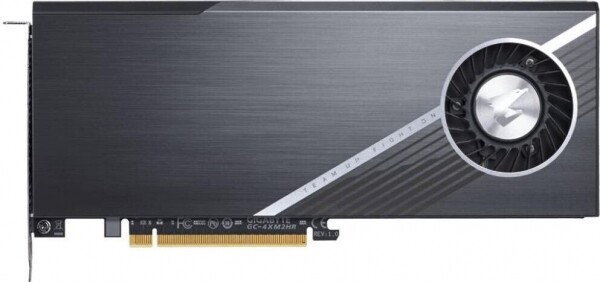
First This is called "NVMe SSD." It is an expansion board and connects in the same slots as a video card. It is not suitable for laptops. However, it is also not ideal for many desktop computers, as more and more of them are built on compact motherboards where there are usually only one or two PCIe slots (often occupied by the video card).
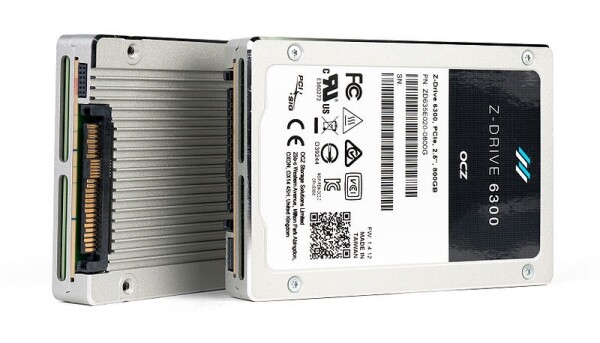
The second form factor — U2. Externally, it resembles a regular hard drive, but is much smaller in size. U2 is usually used in servers, so an average user is unlikely to need to purchase one.
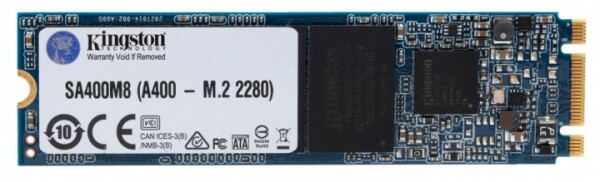
The third is M2. This is the most rapidly developing form factor. It is actively used in laptops and has recently been implemented on some motherboards for desktop PCs. However, when purchasing an M2, one should be very careful, as SATA SSDs are still being released in this form factor.
Nevertheless, caution is also needed when evaluating the feasibility of acquiring any of the mentioned form factors. First, you should assess whether your laptop or PC motherboard has the necessary slots. And even if there are some, is your computer's processor powerful enough? A weak processor won't allow you to feel the benefits of an SSD anyway. If you have all this and also frequently handle large data sets, then NVMe SSD is undoubtedly what you need.
Advertising
— this is specifically about the virtual servers from our company.
We have long been using only fast server drives from Intel; we do not skimp on hardware, using only branded equipment and some of the best data centers in Russia and the EU. Hurry up and check it out 😉
Source: habr.com
