

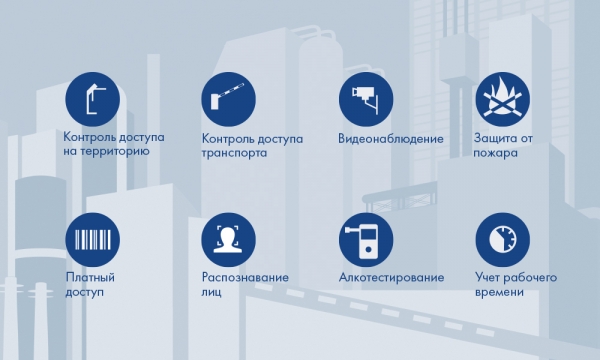
One of the main trends in the access control system market is the simplification of integration with other systems: video surveillance systems, security and fire alarm systems, enterprise management systems, and ticketing systems.
Integration Principles
One way to integrate is to provide an SDK of the software to third-party software for managing access control controllers. By using web technologies, the process of integration can be simplified by implementing SDK functions in the JSON API format. Another method of integration may involve passing the SDK of the controller to third-party software for managing the controller. Another method of integration in access control systems is the use of additional inputs/outputs of the controller to connect supplementary equipment: cameras, sensors, alarm devices, and external verification devices.
Building a Comprehensive Security System
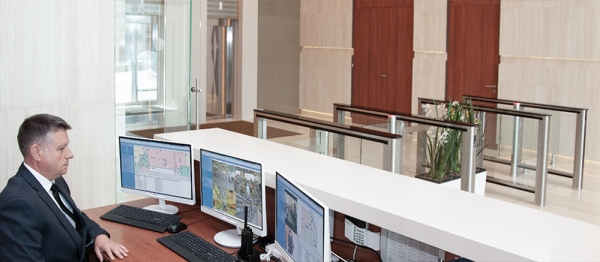
A comprehensive security system is built on the combination of four sequential layers of protection: deterrence, detection, assessment, and response. Deterrence implies preventing the emergence of a threat, detection and assessment involve filtering out false threats, and response entails countering real threats.
To implement the first stage, turnstiles and barriers are installed. Access to the controlled area is strictly via identifiers – access cards, fingerprints, smartphones, and facial recognition. Integration with video surveillance systems allows for the use of automatic license plate recognition systems when organizing vehicle access.
Signage indicating that video surveillance is in effect is installed on the premises. Cameras and security alarm sensors are used for detection and assessment.
The presence of additional inputs/outputs on controllers for connecting cameras, sensors, and alarm devices ensures hardware interaction among all devices in the comprehensive security system. For example, when a fire alarm is triggered, doors are automatically unlocked. Cameras with facial recognition capability can directly transmit information about a person's identity to the controller, which then decides whether to grant or deny access.
Integrating access control systems with video surveillance and security-fire alarm systems ensures seamless operation of the comprehensive security system and enables monitoring of situations and management of all system devices through the access control software interface. For detection, assessment, and response, security personnel can promptly receive information about alarm events and assess the situation remotely on a monitor.
For example, when a fire alarm is triggered, data from the nearest video camera is automatically displayed on the monitor. The staff member can assess whether there is indeed a fire or if it is a false alarm. This allows for quick action without wasting time checking the event on-site.
To expand the functionality, the access control system can be integrated with external verification devices: pyrometers, breathalyzers, scales, and contactless hand sanitizer dispensers. Breath testing prevents access for intoxicated employees. The access control system can notify security personnel in real-time about positive alcohol results, enabling prompt responses to incidents and timely screening. Subsequently, the access control operator can generate reports based on the breath testing results to obtain information about offenders and their number among employees. To prevent theft, access can be organized with verification from scales as an external verification device.
In the context of combating the coronavirus infection, access control systems that allow integration with pyrometers—devices that measure body temperature—and contactless hand sanitizer dispensers are becoming increasingly widespread. In such systems, access to the facility is allowed only with a normal body temperature and only after using the disinfectant. To implement contactless identification, access control turnstiles are integrated with facial recognition terminals and barcode scanners.
To simplify the installation process of external verification devices, special racks and brackets are used: for example, a bracket for installing a barcode scanner, a rack for a breathalyzer, or a facial recognition terminal.
Integration with document management and HR systems
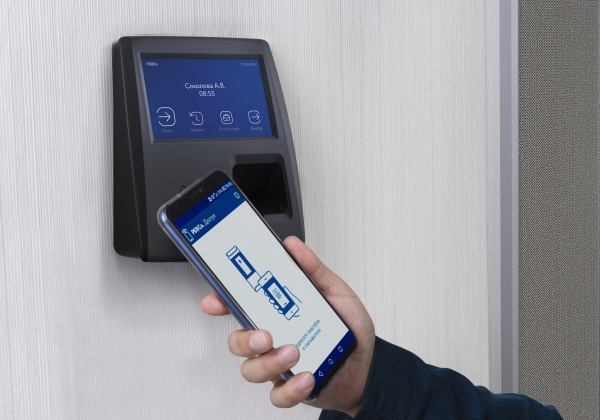
To automate the tracking of working hours and control labor discipline, the access control system can be integrated with ERP systems, particularly with 1C. Working hours are tracked based on entry-exit events recorded by the system controllers and transmitted from the access control system to 1C. During integration, synchronization of lists of departments, organizations, positions, employee names, work schedules, events, and classifiers is carried out.
Employee working hours can be recorded using access control equipment – turnstiles or locks with readers, or through special time tracking terminals: either stationary or mobile. Stationary terminals are used in locations where there is no need to install turnstiles or when workstations are far from the entrance. Mobile registration terminals, which utilize a smartphone with an NFC module, are used in remote areas where it is impossible or impractical to install stationary terminals.
The enterprise's territory is divided into working zones (offices, workshops) and non-working zones (cafes, smoking rooms). Based on data about employee entries and exits in working and non-working zones, a time tracking table is generated in the system, which is then sent to 1C for accurate payroll calculations.
Integration with ticketing systems
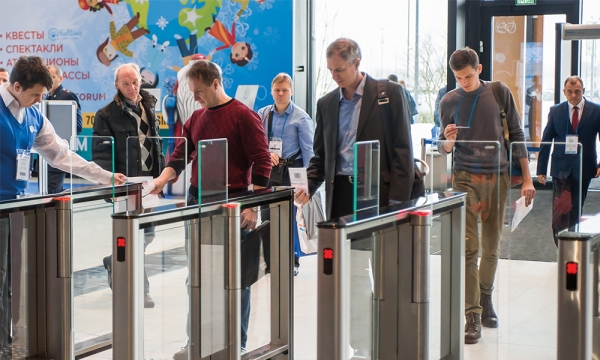
Integration of the access control system with ticketing systems is widely used in transportation and sports and entertainment venues. Obtaining the access controller's SDK simplifies integration with ticketing systems and allows the controller to be used in paid access systems: in fitness centers, museums, theaters, amusement parks, and many other venues.
In places where large numbers of people gather, the ticketing system can operate in conjunction with a facial recognition-based access control system. When a ticket is purchased, the buyer's photo is transmitted to the system's database and subsequently serves as an identifier. For online ticket purchases, identification can be completed by taking a selfie. Such solutions help minimize contact between staff and visitors and prevent the sale of counterfeit tickets.
At airports, passenger verification can be conducted by simultaneously recognizing faces, documents, and the barcode on the boarding pass. This solution significantly simplifies the verification process: the system makes access decisions to the boarding area and opens the turnstile without the involvement of airport staff. Integrating the ticketing system with the access control system allows for storing access events in the controller's memory and generating reports based on specified parameters.
Source: habr.com
