

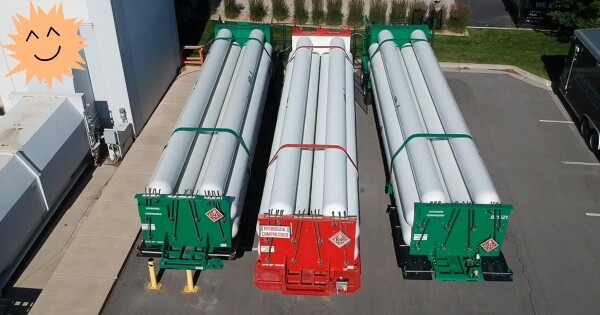
by Microsoft about the world's first large-scale experiment using hydrogen fuel cells to power servers in the data center.
The 250 kW installation was carried out by the company . In the future, a similar 3-megawatt installation will replace traditional diesel generators, which are currently used as backup power sources in data centers.
Hydrogen is considered an environmentally friendly fuel because its combustion produces only water.
Microsoft has set the goal .
Like in other data centers, diesel generators in Azure data centers are used as backup power sources when electricity is lost from the primary feed. This equipment sits idle 99% of the time, but the data center still maintains it in operational condition, ensuring it runs smoothly in case of rare outages. In practice, Microsoft runs only a monthly functionality check and annual load testing, where actual load is drawn from them onto the servers. Power outages from the main supply do not occur every year.
However, Microsoft specialists have calculated that the latest models of hydrogen fuel cells are already more economically viable than diesel generators.
In addition, batteries are currently used for backup power (UPS), which provide power for a brief interval (from 30 seconds to 10 minutes) between network disconnection and the startup of diesel generators. The latter can operate continuously until the fuel runs out.
A hydrogen fuel cell replaces both UPS and diesel generator. It consists of hydrogen storage tanks and an electrolysis unit that splits water molecules into hydrogen and oxygen. Here’s what the 250 kW model from Power Innovations looks like in practice:
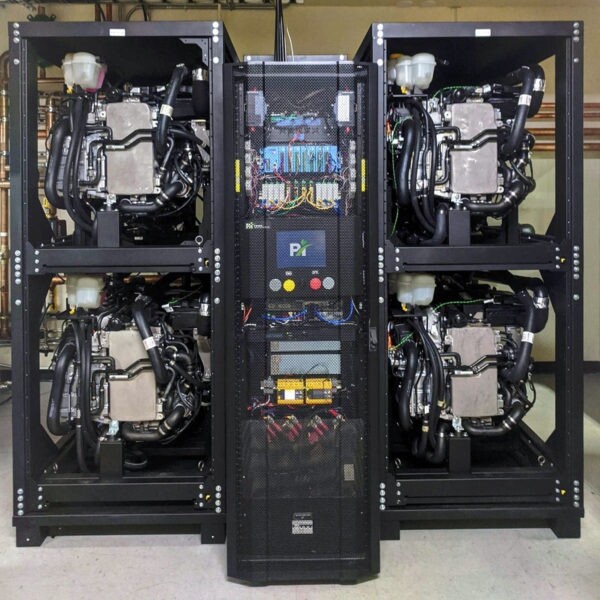
The installation simply connects to the existing electrical network—no fuel delivery is required from outside, as with a diesel generator. It can be integrated with solar panels or wind farms, which will generate enough hydrogen to fill the tanks. Thus, hydrogen is used as a chemical battery for solar and wind facilities.
In 2018, researchers from the National Renewable Energy Laboratory in Colorado (USA) conducted the first successful experiment powering server racks with PEM (proton exchange membrane) fuel cells, meaning .
PEM is a relatively new hydrogen production technology. These systems are gradually replacing traditional alkaline electrolysis. At the heart of the system is an electrolyzer cell, which contains two electrodes, a cathode and an anode. A solid electrolyte, the proton exchange membrane made from advanced polymer, is situated between them.
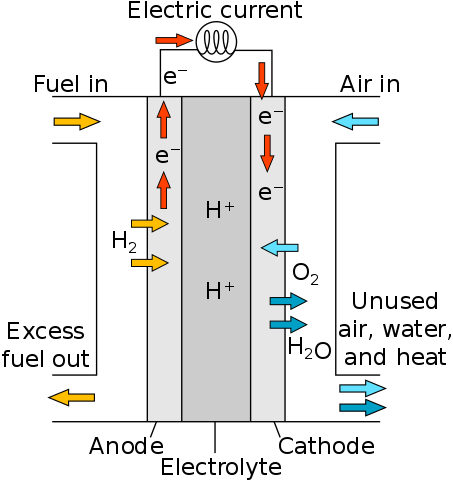
Protons reliably flow inside the membrane, while electrons move through an external channel. Deionized water is supplied to the anode, where it splits into protons, electrons, and gaseous oxygen. Protons pass through the membrane, and electrons flow through the external electric circuit. At the cathode, protons and electrons reunite to form gaseous hydrogen (H2).
This is an exceptionally high-performance, reliable, and cost-effective way to produce hydrogen directly at the point of consumption. When hydrogen and oxygen combine, water vapor is generated, and electricity is produced.
In September 2019, Power Innovations began experimenting with a 250-kilowatt fuel cell that powers 10 full server racks. In December, the system underwent a 24-hour reliability test, followed by a 48-hour test in June 2020.
During the last experiment, four such fuel cells operated automatically. :
- 48 hours of continuous operation
- 10,560 kWh of electricity generated
- 814 kg of hydrogen used
- 7,000 liters of water produced
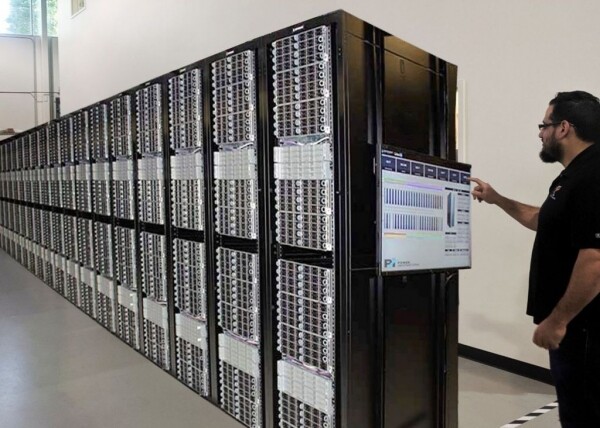
The company now plans to design a 3-megawatt fuel cell using the same technology. This will fully match the power of diesel generators installed in Azure data centers.
The promotion of hydrogen as fuel is handled by the international organization , which brings together equipment manufacturers, transport companies, and large clients — Microsoft has already appointed its representative to this council. In principle, all technologies for hydrogen production and electricity generation are already available. The organization's task is to scale them. There is still much work to be done here.
Experts see a bright future for PEM-type fuel cells. In the past two years, their cost has decreased by about four times. They complement photovoltaic and wind power stations perfectly, storing energy during peak generation periods — and supplying it to the grid during peak demand times.
Again, they can be used for brokering on the energy exchange, when the system buys energy at times of minimum or even — and sells it at times of maximum value. Such brokerage systems can operate automatically, like trading bots.
Advertising
The backup power sources of our data centers may not run on hydrogen, but their reliability is top-notch! Our epic servers — are powerful , which use modern processors from AMD.
About how we built the cluster for this service in on Habr.
Source: habr.com
