

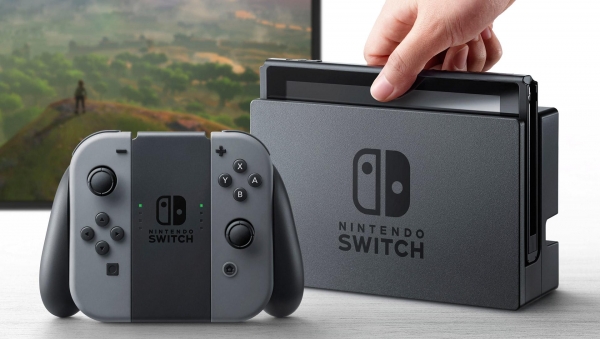
For the past 40 years, Nintendo has been actively experimenting in the field of mobile gaming, trying various concepts and creating new trends that other console manufacturers follow. During this time, the company has developed several portable gaming systems, most of which have been successful. The culmination of Nintendo's long-standing efforts was supposed to be the Nintendo Switch, but something went wrong: this one-of-a-kind hybrid gaming console turned out to be surprisingly raw and evidently underdeveloped in many aspects.
40 Years in Mobile Gaming: A Retrospective of Nintendo's Portable Consoles
If Nintendo Switch had been the first portable console created by the Japanese company, many issues could have been overlooked. After all, everyone is entitled to mistakes, especially when venturing into previously unexplored areas. But the catch is that Nintendo has been developing successful and quite high-quality portable gaming systems for 40 years, making it seem particularly strange that they would stumble over the same issues. However, let's not get ahead of ourselves. First, let's look at how the Japanese company began its journey in mobile gaming and what Nintendo has achieved over the years.
Game & Watch, 1980
Nintendo's first portable console was released in 1980. The device, invented by Gunpei Yokoi, was named Game & Watch and was, in a sense, a pocket version of the home system Color TV-Game. The principle is the same: one device — one game, with no interchangeable cartridges. A total of 60 models were released with various games, including 'Donkey Kong' and 'Zelda'.
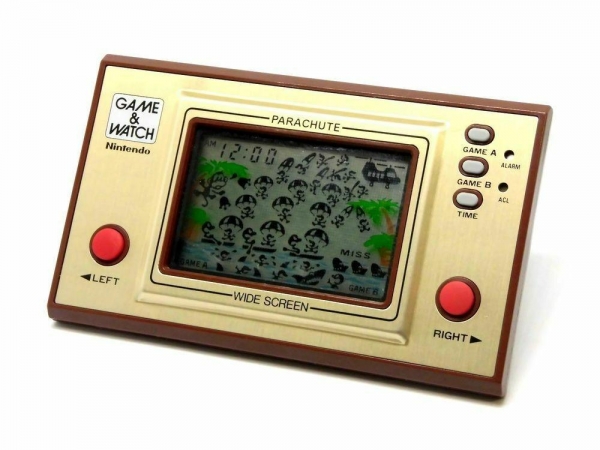
Although Game & Watch consoles were not officially supplied to the USSR, residents of the post-Soviet space are well acquainted with these devices thanks to clones known as 'Elektronika'. For instance, the Nintendo EG-26 Egg became 'Nu, pogodi!', the Nintendo OC-22 Octopus turned into 'Secrets of the Ocean', and the Nintendo FP-24 Chef became 'Cheerful Cook'.
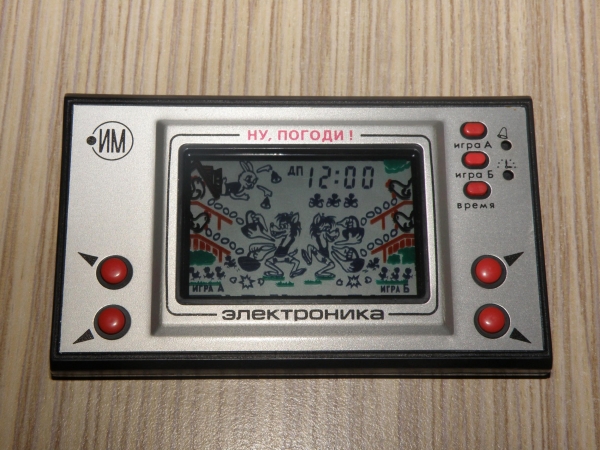
That very 'wolf with eggs' from our childhood
Game Boy, 1989
A logical evolution of the Game & Watch ideas was the portable console Game Boy, which was developed by Gunpei Yokoi. The main feature of this new device was its interchangeable cartridges, and among the best-selling games on the platform, along with the expected Mario and Pokémon, was the beloved Tetris.
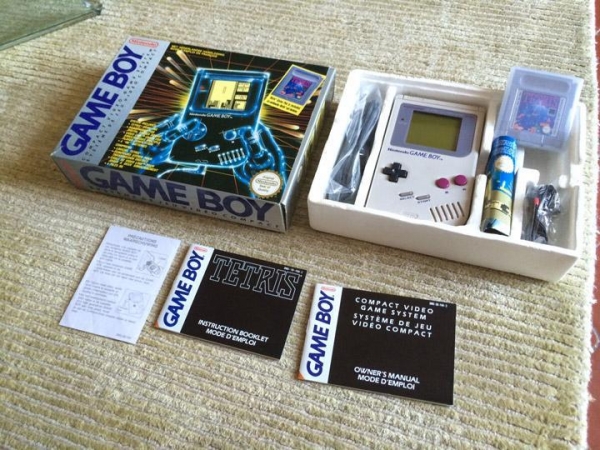
The Game Boy had a monochrome display with a resolution of 160×144 pixels, boasted a 4-channel audio system, and supported the GameLink function, allowing two devices to be connected via a cable for local multiplayer gameplay with a friend.
In the following years, Nintendo released two more modifications of the portable console. The first of these, Game Boy Pocket, was introduced in 1996. The updated version of the console was 30% more compact than its predecessor, and it was also lighter because it was powered by 2 AAA batteries instead of the original 4 AA cells (though this reduced the console's battery life from 30 to 10 hours). Additionally, the Game Boy Pocket featured a larger display, although its resolution remained the same. In other respects, the updated console was identical to the original.
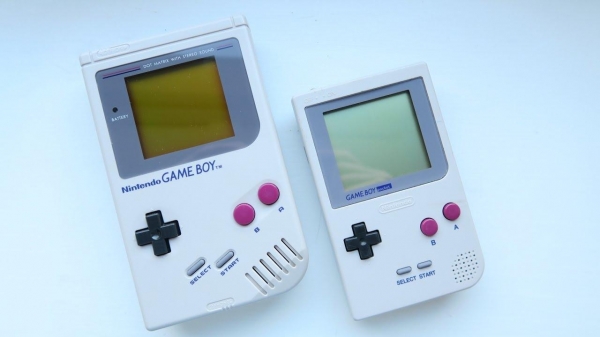
Comparison of Game Boy and Game Boy Pocket
Later, in 1998, Nintendo's lineup of portable consoles was enriched by the Game Boy Light, which featured a built-in screen backlight. The hardware platform remained unchanged, but the company's engineers managed to significantly reduce power consumption: the handheld console used 2 AA batteries, which lasted almost a day of continuous play with the backlight off, or 12 hours with it on. Unfortunately, the Game Boy Light remained exclusive to the Japanese market. This was largely due to the imminent release of the Game Boy Color; Nintendo simply did not want to invest in promoting a previous-generation console in other countries, as it could no longer compete with the new product.
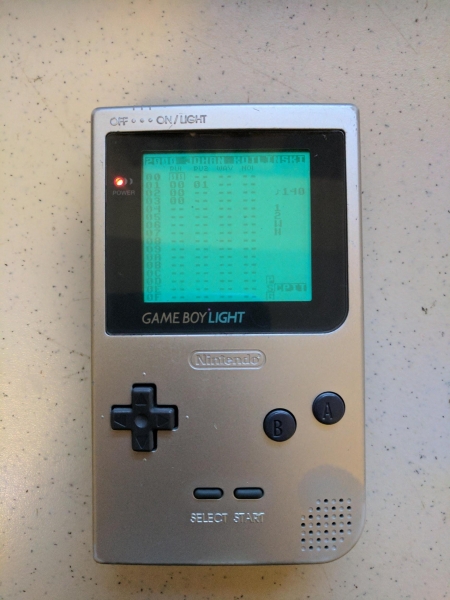
Game Boy Light with backlight on
Game Boy Color, 1998
The Game Boy Color was destined for success, becoming the first portable console to feature a color liquid crystal display capable of displaying up to 32,000 colors. The device's internals underwent significant changes as well: at its heart, the GBC featured an 8 MHz Z80 processor, the RAM quadrupled (32 KB versus 8 KB), and the video memory doubled (16 KB versus 8 KB). Meanwhile, the screen resolution and the form factor of the device remained the same.
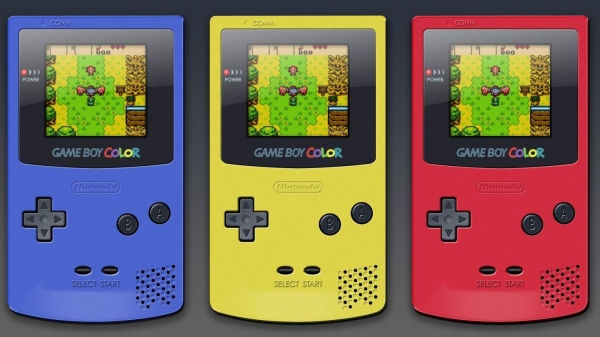
Additionally, the Game Boy Color was available in 8 different color options.
During its lifespan, around 700 diverse games were released for the system across various genres, including a special version of 'Alone in the Dark: The New Nightmare'. Unfortunately, one of the most visually stunning games released for the original PlayStation looked merely dreadful on the Game Boy Color and was generally considered 'barely playable'.
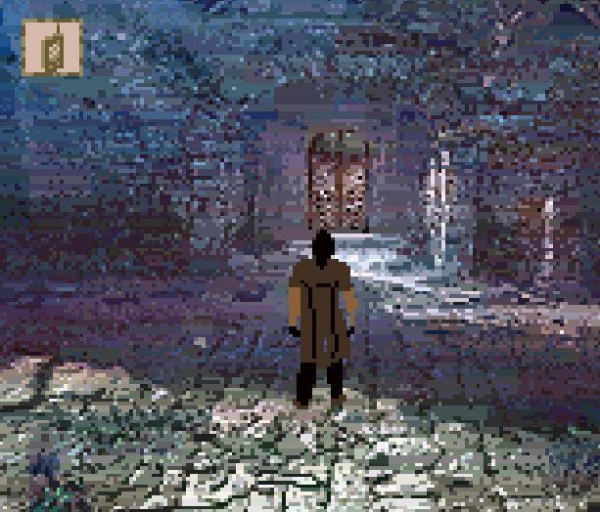
'Alone in the Dark: The New Nightmare' for Game Boy Color — the pixel art we didn't deserve.
Interestingly, the Game Boy Color supported backward compatibility with the previous generation of handheld consoles, allowing it to run any game designed for the original Game Boy.
Game Boy Advance, 2001.
Released three years later, the Game Boy Advance closely resembled the modern Switch: the screen was now centered, and the controls were spaced out along the sides of the console. Given the console's compact size, this design proved more ergonomic than the original.
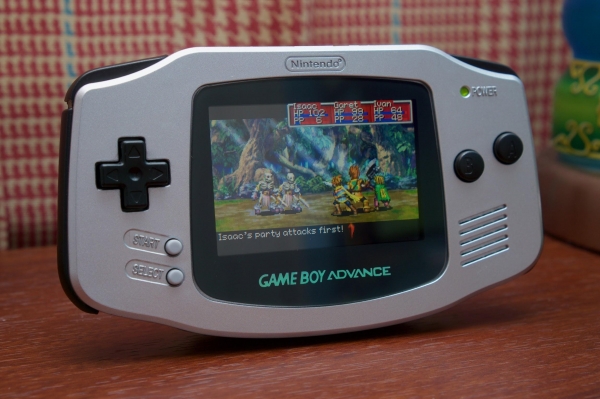
The updated platform was powered by a 32-bit ARM7 TDMI processor clocked at 16.78 MHz (although there was a version that ran on the old Z80), the amount of built-in RAM remained the same (32 KB), but external RAM support grew up to 256 KB, while VRAM increased to a respectable 96 KB, allowing for an increased screen resolution of 240×160 pixels and some rudimentary 3D capabilities.
As before, there were special modifications. In 2003, Nintendo released the Game Boy Advance SP in a clamshell format with a built-in lithium-ion battery (the original relied on two AA batteries). Then in 2005, at the annual E3 event, an even more miniature version of the handheld console was revealed, named the Game Boy Micro.
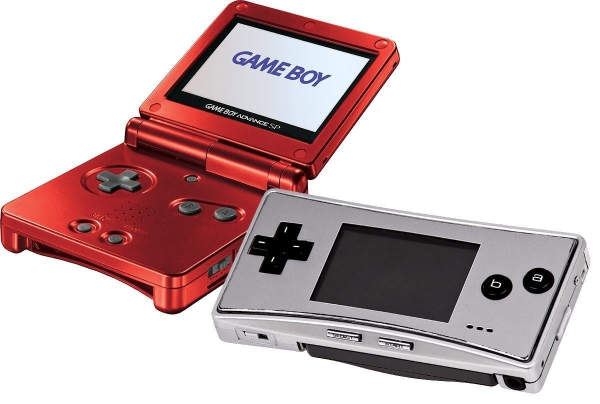
Game Boy Advance SP and Game Boy Micro.
This little device marked the end of the Game Boy era, becoming a complete commercial failure. This is not surprising, as the Game Boy Micro was literally caught between the Advance SP and the truly groundbreaking Nintendo DS at the time of its release. Moreover, the Game Boy Micro was significantly inferior to the Advance SP in functionality: the console lost support for games from the previous generation of Game Boy and the ability to play multiplayer using a Link cable — there simply wasn't enough space on the miniature body for the port. However, this does not mean the console was bad; it's just that Nintendo targeted a rather narrow audience ready to make sacrifices to play their favorite games anywhere and anytime.
Nintendo DS, 2004
The Nintendo DS became a true hit: while the Game Boy family sold a total of 118 million units, the various DS models exceeded 154 million devices sold. The reasons for such explosive success are clear.
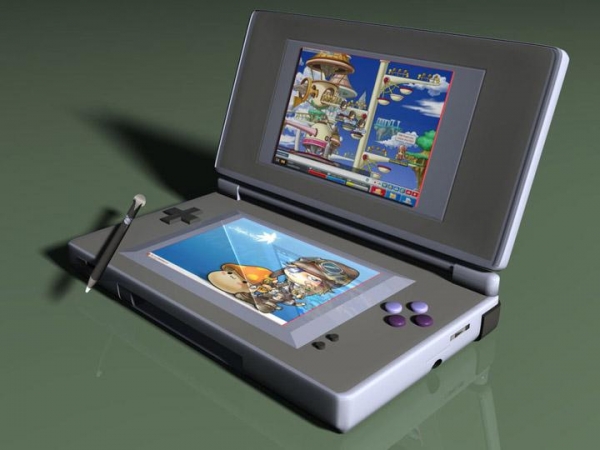
Original Nintendo DS
Firstly, at that time, the Nintendo DS was genuinely powerful: an ARM946E-S processor running at 67 MHz and an ARM7TDMI co-processor at 33 MHz, combined with 4 MB of RAM and 656 KB of video memory with an additional 512 KB buffer for textures, produced outstanding visuals and fully supported 3D graphics. Secondly, the console featured two screens, one of which was touch-sensitive and served as an additional control element, enabling numerous unique gameplay features. Finally, thirdly, the console supported local multiplayer over WiFi, allowing friends to play together without lag and delays. As a bonus, it could run Game Boy Advance games, for which a separate cartridge slot was provided. In short, it was not just a console, but a true dream.
Two years later, the Nintendo DS Lite was released. Despite the name, it was not a downgraded version but an improved one of the portable console. The battery capacity in this new revision increased to 1000 mAh (up from 850 mAh previously), and the microchips made using a thinner fabrication process became much more energy-efficient, allowing for an impressive 19 hours of battery life at the minimum screen brightness. Among the changes, there are also higher quality LCD screens that provide better color reproduction, a 21% reduction in weight (down to 218 g), more compact dimensions, and an expanded functionality of the secondary port, which now supported a variety of accessories like a special controller for playing Guitar Hero.
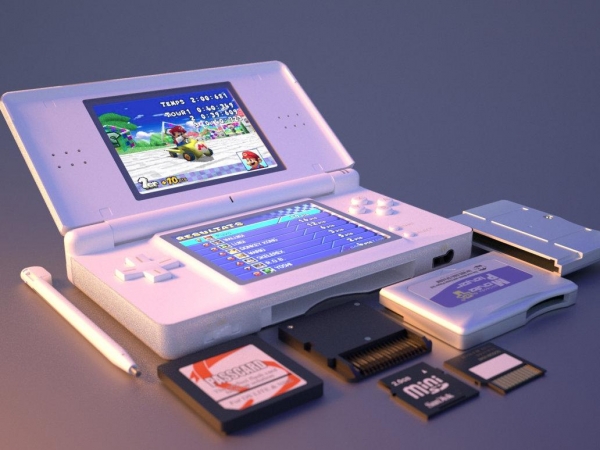
Nintendo DS Lite
In 2008, the Nintendo DSi was released. This console turned out to be about 12% thinner than its predecessor, featured 256 MB of built-in memory, and had a slot for SDHC cards, as well as a pair of VGA cameras (0.3 megapixels) that could be used to create fun avatars in the proprietary photo editor, as well as in some games. At the same time, the device lost the GBA slot, and along with it, support for running games from the Game Boy Advance.
The last in this generation of portable consoles was the Nintendo DSi XL from 2010. Unlike its predecessor, it only received screens that were one inch larger and an extended stylus.
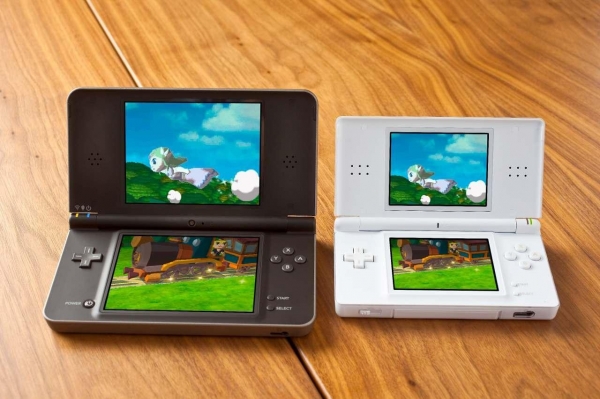
Nintendo DS Lite and Nintendo DSi XL
Nintendo 3DS, 2011
The 3DS was largely an experiment: this console added support for autostereoscopy — technology that creates 3D images without requiring additional accessories like anaglyph glasses. For this, the device was equipped with an LCD screen with a resolution of 800×240 pixels with a parallax barrier for creating a three-dimensional image, a sufficiently powerful dual-core ARM11 processor with a clock speed of 268 MHz, 128 MB of RAM, and a DMP PICA200 graphics accelerator with a performance of 4.8 GFLOPS.
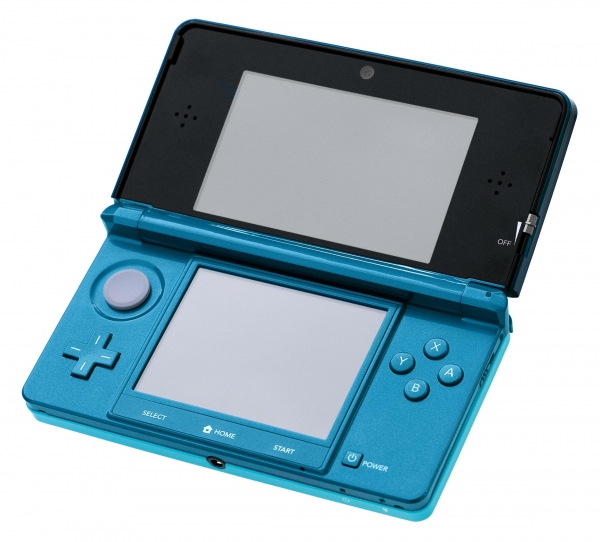
Original Nintendo 3DS
Traditionally, this portable console also received several revisions:
- Nintendo 3DS XL, 2012
It received updated screens: the diagonal of the upper one increased to 4.88 inches, while the lower one grew to 4.18 inches.
- Nintendo 2DS, 2013
The hardware is completely identical to the original, with the only difference being that instead of stereoscopic displays, the Nintendo 2DS uses standard two-dimensional screens. The console itself is designed in a monoblock form factor.
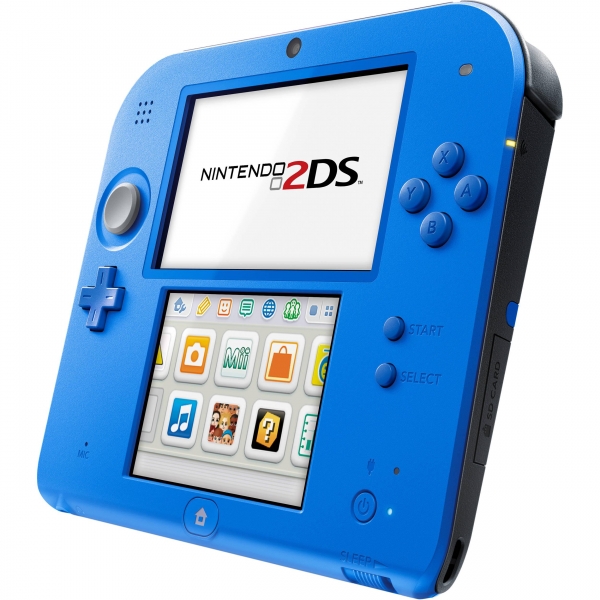
Nintendo 2DS
- New Nintendo 3DS and 3DS XL, 2015
Both consoles were announced and released to the market simultaneously. They received a more powerful main processor (ARM11 MPCore 4x) and coprocessor (VFPv2 Co-Processor x4), as well as double the amount of RAM. The front camera now tracked the player's head position to enhance 3D visualization quality. Improvements also extended to the controls: a miniature analog stick, the C-Stick, was added on the right, and ZL/ZR triggers appeared on the sides. The XL version featured a larger screen.
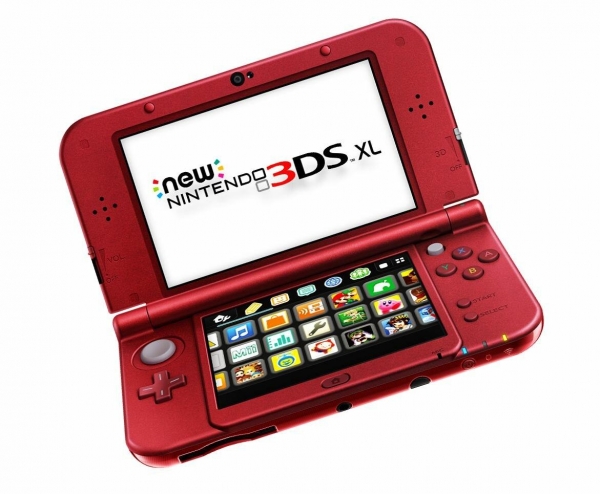
- New Nintendo 2DS XL, 2017
The new revision of the console returned to the original clamshell form factor and, like the 3DS XL, featured larger displays.
Nintendo Switch: What Went Wrong?
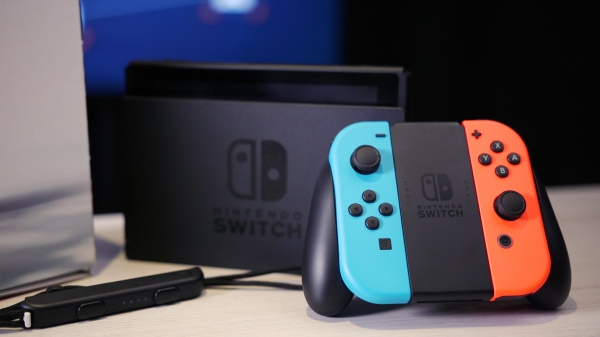
In 2017, the hybrid console Nintendo Switch hit the electronics store shelves, combining the benefits of both stationary and mobile gaming systems. The first feeling that arises after closely interacting with this device is a profound sense of confusion.
Do you know what the above portable consoles have in common? They were all quite quality, robust products. Of course, no device is perfect: the 3DS, for example, is remembered by many for the 'black screen of death,' caused by a software error in the first firmware version. Moreover, the emergence of several revisions of the same console with numerous improvements clearly reminds us that it's impossible to foresee everything, especially when being a pioneer in the market.
While some of Nintendo's solutions have been quite controversial (like the cameras on the DSi, which were only used in a limited number of projects), other modifications of consoles have been openly unsuccessful. A good example is the Game Boy Micro, which was compact but fell short compared to its older siblings. However, with the Game Boy, you had a choice of three models, and overall, each device was made to a sufficiently high standard. In other words, in the past, Nintendo either turned a good device into a great one or conducted experiments that did not affect the end consumer. The situation with the Nintendo Switch is a bit different.
Even though the first revision of the console may not have any fatal flaws, it is still poor overall. Numerous shortcomings of varying significance cause a lot of inconvenience for its owners, and the problems are so obvious that one can only wonder why engineers from one of the most successful corporations in the digital entertainment industry allowed their emergence, especially considering Nintendo's extensive experience in developing gaming platforms in general and mobile devices in particular. It's no coincidence that in 2019, the magazine '60 Millions de Consommateurs,' published by the National Institute of Consumption in France, awarded Nintendo a 'Cactus' (similar to the 'Golden Raspberry' of the consumer electronics world) as the creator of .

The honorary cactus in Nintendo's garden
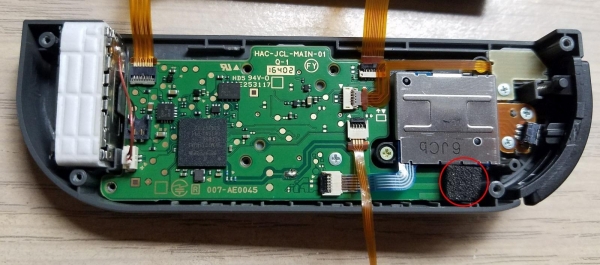
There is no doubt about the objectivity of this award. Just remember the incident with the left joy-con, which often lost connection with the console. The source of the trouble was the excessively small antenna that physically couldn’t pick up the signal when the player moved too far away from the console. Moreover, there were no objective reasons for such miniaturization. Inside the controller's casing, there is more than enough space, which resourceful gamers took advantage of: a piece of copper wire and a soldering iron could achieve stable synchronization in just a few minutes. And in the photo below, you can see what can be called the official service center's branded solution to the problem: a pad made of conductive material was simply glued to the antenna. Why something like this couldn't have been done from the start remains a mystery.
Another issue was the play in the connection points of the controllers to the console, which over time caused the joy-cons to become so loose that they would spontaneously pop out of their slots. This was resolved quite simply: it was enough to bend the metal guides a bit. However, this won't help when (not if, but when) the plastic clips on the controllers themselves eventually break. One can recall the screen play of the 3DS, but first of all, such a problem occurs in many flip devices in general, and secondly, its scale is somewhat different: in the case of the 3DS, it practically doesn’t affect the user experience, but when it comes to the Nintendo Switch, you have a good chance of breaking the console if it suddenly detaches from the joy-cons.
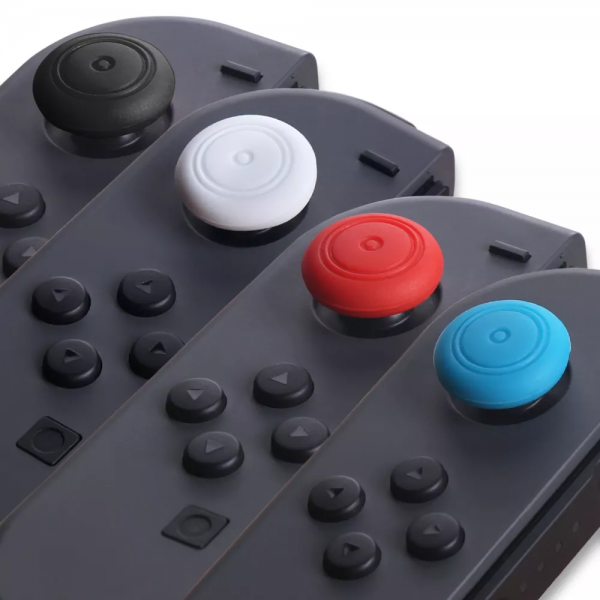
Many players complain about the controllers' overly slippery and uncomfortable 'thumbsticks', which makes gaming in a stuffy room or on public transport quite problematic. Here, AliExpress comes to the rescue, offering rubber or silicone covers for every taste. But the very necessity of upgrading the console oneself is rather disheartening.
The situation with the drift of the analog sticks can only be described as outrageous. Switch owners have noticed that after some time of use, the controller starts to register deviations of the sticks from the vertical axis while at rest. For some, the problem manifested after a few dozen hours of play, while for others, it only appeared after several hundred hours, but the fact remains: the defect exists. Moreover, this issue is not caused by careless handling of the device. Due to the design of the Joy-Cons, dirt constantly gets into the modules (that is, controllers for the portable console, which are generally dirtier, are much worse protected than gamepads for home use), and it is this contamination of the contacts that leads to their "stickiness." The solution is simple: disassembly and cleaning of the module.
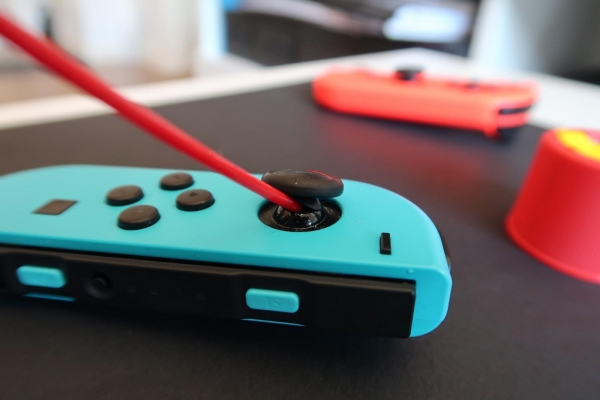
In some cases, it is possible to simply apply cleaning fluid to the contacts under the stick.
And everything would be fine if Nintendo immediately acknowledged its mistake by agreeing to a free repair or replacement of defective controllers under warranty. However, the company denied the existence of the drift problem for a long time, suggesting that users recalibrate their Joy-Cons or charging $45 for repairs. Only after , filed by the American law firm Chimicles, Schwartz Kriner & Donaldson-Smith on behalf of affected customers, did Nintendo begin replacing drifting Joy-Cons as part of its warranty obligations, and Shuntaro Furukawa, the president of the corporation, apologized to everyone who encountered this issue.
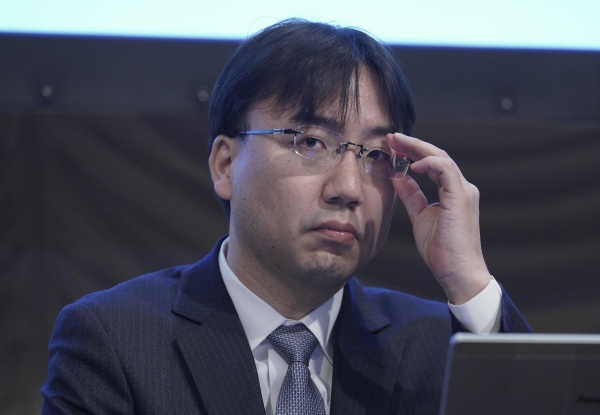
Shuntaro Furukawa, president of Nintendo
However, this had little impact. Firstly, the new policy regarding Joy-Con replacements has come into effect in a limited number of countries. Secondly, this right can only be exercised once, and if drift occurs again, the device will need to be repaired (or replaced) at one's own expense. Finally, there has been no work done to fix the bugs: the Nintendo Switch Lite released in 2019, as well as the new revision of the main console, have the exact same issues with the analog sticks. The only difference is that in the case of the portable version, the controllers are built directly into the body, making replacement impossible, and cleaning the console will require disassembly.
But that's not all. While "spaceships roam the expanses of the Bolshoi Theater," and no-name smartphones flaunt Gorilla Glass, the Nintendo Switch model gets a plastic screen that scratches not only on the go but even when docked. Speaking of which, the dock lacks silicone guides that could protect the display from damage, so buying a protective film is unavoidable.
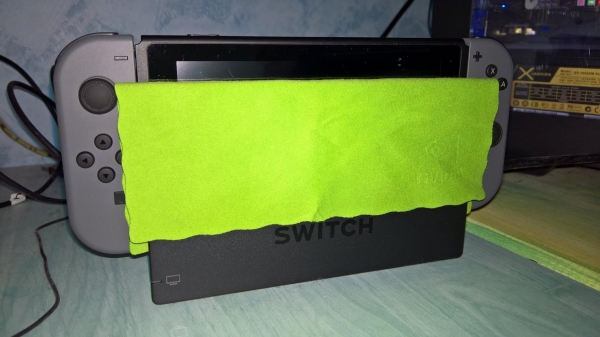
Budget tuning for the dock will protect the Nintendo Switch screen from scratches.
Another issue concerns connecting wireless headphones to the Nintendo Switch. This is simply impossible. The console comes with a 3.5mm headphone jack, which is something to be thankful to the Japanese for, but the device does not support Bluetooth headsets. The reasons are again unclear: the console has a transmitter and receiver, and it could have been utilized at least in handheld mode, when the Joy-Cons communicate with the console via wires, which would be logical and quite convenient. For now, one has to use USB adapters from third-party companies, fortunately, the console features USB Type-C with USB Audio support.
By the way, if you are used to communicating with friends on the other side of the screen using voice without any additional devices, as it is implemented on the PlayStation 4, we are sorry to disappoint you. Formally, this feature is present, but to use it, you will need to download the official Nintendo app on your smartphone. Yes, that's right: the portable gaming platform asks you to sit in voice chat from a separate device instead of talking with teammates through a headset connected to the console.
Many players also complain about online issues, pointing to the low-quality WiFi module. Here, of course, one can ponder about the technical literacy of the average user and 500-ruble routers, if only Masahiro Sakurai, who is responsible for the development of Super Smash Bros., didn’t. that players acquire an external Ethernet adapter for online play (the console does not have a built-in LAN port), which hints at Nintendo's awareness of the problem.
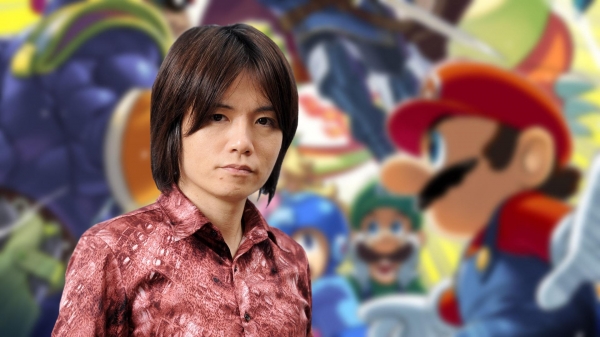
Masahiro Sakurai wouldn't give bad advice.
If we consider ergonomics, there are also minor flaws. Take the back leg, for instance: it is too thin and offset from the console's center of gravity, making the device unstable even on a flat surface. Try playing on a train with the Nintendo Switch on the table, and you will appreciate all the drawbacks of this solution. Although, it would seem that it could be simpler: just slightly widen the support, shift it towards the center of the case — and the problem would be solved.
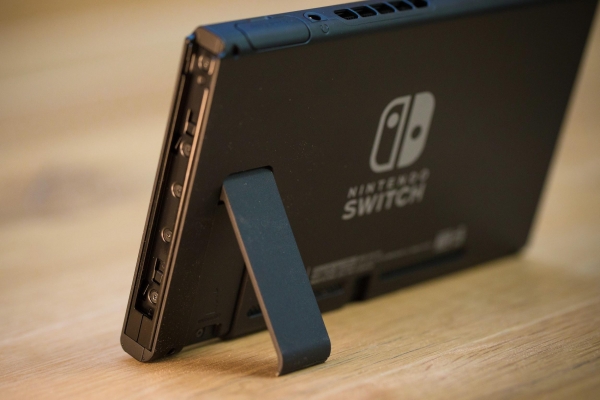
Although the leg performs well as a cover for the memory card compartment.
But how does it fare with the ‘stuffing’ of the Nintendo Switch? Unfortunately, things are not entirely smooth here either. At least, it wasn't up until last year when Big N released an updated version of the console. Let's take a quick look at the original and updated versions and see what has changed.
Nintendo Switch 2019: What's new?
Let's not beat around the bush: we present to you a table that clearly shows the difference between the 2017 Nintendo Switch model and the new 2019 version.
Revision
Nintendo Switch 2017
Nintendo Switch 2019
SoC
NVIDIA Tegra X1, 20 nm, 256 GPU cores, NVIDIA Maxwell
NVIDIA Tegra X1, 16 nm, 256 GPU cores, NVIDIA Maxwell
RAM
4 GB, Samsung LPDDR4, 3200 Mbps, 1.12 V
4 GB, Samsung LPDDR4X, 4266 Mbps, 0.65 V
Built-in memory
32 GB
Display
IPS, 6.2", 1280×720
IPS IGZO, 6.2", 1280×720
Battery
4310 mAh
There aren't many innovations, but if the first revision of the Nintendo Switch felt like a beta version, taking the updated console in hand confirms that we have finally awaited the release. What has improved?
Objectively speaking, when dealing with a hybrid console, compromises are inevitable and we cannot expect any impressive results from such a device. However, the catch is that at the launch, even the main feature of the Nintendo Switch, its mobility, hardly worked. The console's battery life was around 2.5 hours when playing major titles like 'The Legend of Zelda: Breath of the Wild,' or just over 3 hours for a 2D indie game, which is quite inadequate. It's also inconvenient to carry a power bank, especially on a long trip when you're already loaded with bags.
In the updated version of the Nintendo Switch in 2019, this issue was resolved in a rather original way: by replacing the 20-nanometer SoC NVIDIA Tegra X1 with a 16-nanometer one and by switching to advanced memory chips from Samsung. Since the second version of the SoC consumes significantly less energy and the new Samsung RAM is 40% more energy-efficient, the console's battery life nearly doubled. This was achieved without increasing the device's cost, size, or weight, which would have been inevitable with a larger battery.
Console
Nintendo Switch 2017
Nintendo Switch 2019
Battery life, 50% screen brightness
3 hours 5 minutes
5 hours 2 minutes
Battery life, 100% screen brightness
2 hours 25 minutes
4 hours 18.5 minutes
Maximum temperature of the back cover
46 °C
46 °C
Maximum temperature on the radiator
48 °C
46 °C
Maximum temperature on the radiator in dock
54 °C
50 °C
Its contribution, albeit not very significant, comes from the improved display by Sharp, made using IGZO technology. This acronym stands for Indium Gallium Zinc Oxide. Pixels in such matrices do not require constant refreshing when displaying static objects (for instance, HUD or eShop interface) and are less susceptible to interference from the screen's electronic components, which further reduces energy consumption. Additionally, the IGZO matrix allows better light transmission, enhancing backlight brightness, although in the case of the Nintendo Switch, it’s only a slight improvement: 318 cd/m² compared to 291 cd/m². Moreover, thanks to the improved matrix, gaming in bright daylight has become much more comfortable (the original model had issues with this).
As for performance, improvements are also noticeable here. This is especially evident in open-world games: in 'Legend of Zelda: Breath of the Wild', the FPS drops in complex scenes are no longer as staggering as before; the increased RAM bandwidth is making a difference.
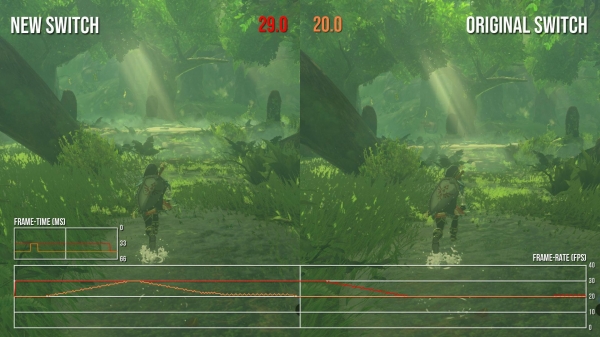
Interestingly, the temperature difference between the old and new versions is minimal, but at the same time, the 2019 console has become noticeably quieter: it’s clear that the fan speed has been intentionally reduced for less noise and again for energy savings. Considering a temperature of 50 °C on the radiator under load, this solution is quite justified.
When it comes to controllers, the Joy-Cons have received updated housings made from higher-quality plastic: it’s not soft-touch, but they are much more pleasant to hold. The issue with the left controller's antenna, as well as the play in the attachments to the body, has been resolved (although the latches remain plastic), but the sticks are still the same: the same structure, the same risks of contamination and eventual drift over time. So, for home gaming, it’s better to purchase a Pro Controller, especially since it is much more ergonomic.
In light of all that has been said above, we strongly recommend anyone who is about to join the wonderful world of Nintendo (and this is by no means sarcasm, as today the Japanese corporation is essentially the last large platform holder focusing on gameplay and releasing GAMES rather than pretentious fluff, interactive cinema, or short-term attractions) to purchase the latest revision of the Switch from 2019. Distinguishing the new version of the console from the previous one is very easy:
- The box of the Nintendo Switch 2019 is completely red.
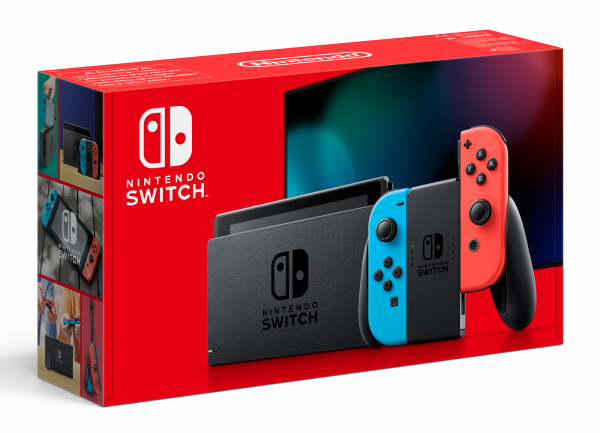
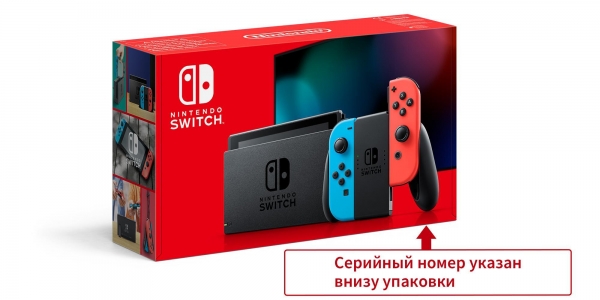
- The serial number listed on the bottom of the packaging should begin with the letters XK (the original Switch's serial number begins with XA).
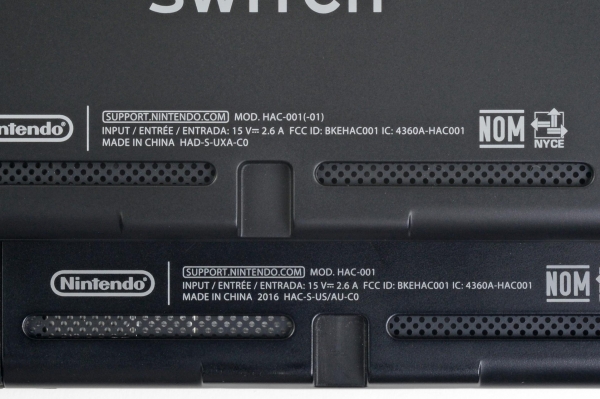
- The modification and year of manufacture of the device are also indicated on the console's body: the device of the last revision should have the following written on it:MOD. HAC-001(01), MADE IN CHINA 2019, HAD-XXXXXX, whereas the consoles of the first revision have:MOD. HAC-001, MADE IN CHINA 2016, HAC-XXXXXX».
Something has happened to my memory; I don't remember Mario or Link...
There is another problem for which Nintendo fans are still waiting for a solution: the extremely small amount of built-in memory. The storage capacity of the Switch is only 32 GB, of which the user has access to only 25.4 gigabytes (the rest is taken up by the console’s OS), and the Japanese giant does not offer any 'Premium' or 'Pro Edition' that would have at least 64 GB of memory. But how much do the games themselves weigh? Let's take a look.
Game
Size, GB
Super Mario Odyssey
5,7
Mario Kart 8 Deluxe
7
New Super Mario Bros. U Deluxe
2,5
Paper Mario: The Origami King
6,6
Xenoblade Chronicles: Definitive Edition
14
Animal Crossing: New Horizons
7
Super Smash Bros.
16,4
DRAGON QUEST XI S: Echoes of an Elusive Age — Definitive Edition
14,3
The Legend of Zelda: Link’s Awakening
6
The Legend of Zelda: Breath of the Wild
14,8
Bayonetta
8,5
Bayonetta 2
12,5
ASTRAL CHAIN
10
Witcher 3: Wild Hunt
28,7
Doom
22,5
Wolfenstein II: The New Colossus
22,5
The Elder Scrolls V: Skyrim
14,9
L.A. Noire
28,1
Assassin’s Creed: Rebels. Collection (Assassin’s Creed IV: Black Flag + Assassin’s Creed Outcast)
12,2
What do we have? Cross-platform projects inevitably fit into the memory of the Nintendo Switch with a struggle, and some of them, like "The Witcher" and "L.A. Noire", won’t fit at all. Yet, even when it comes to exclusives, the picture looks grim: you can download "The Legend of Zelda: Breath of the Wild", "Animal Crossing: New Horizons", "New Super Mario Bros. U Deluxe" and… that’s about it. If you mainly play at home, such limitations will cause minimal inconvenience, although pre-loading is out of the question: before downloading each new release, you'll have to delete one or more already installed games, and then endure the wait for the distribution download from eShop. By the way, you won't be able to save memorable moments of your playthroughs either, as there simply won't be enough space for videos.
If you're planning a vacation or a business trip, especially to places where WiFi is heard of but never used, then… it’s better to install 2-3 games right away that you will definitely spend dozens (if not hundreds) of hours on, like "Legend of Zelda" or "Animal Crossing". Of course, there’s also the option of stocking up on cartridges in advance, but, firstly, it's inconvenient, and secondly, it doesn't always help. To cut costs, the cartridge size is limited to 16 gigabytes, so for instance, you won’t be able to play "L.A. Noire" without downloading assets, in the case of "DOOM" you will only get the single-player campaign, and by purchasing the "Bayonetta 1 + 2 Nintendo Switch Collection", you’ll only be able to play the sequel: instead of a cartridge with the first part inside the box, you’ll find just a sticker with a code for the eShop.
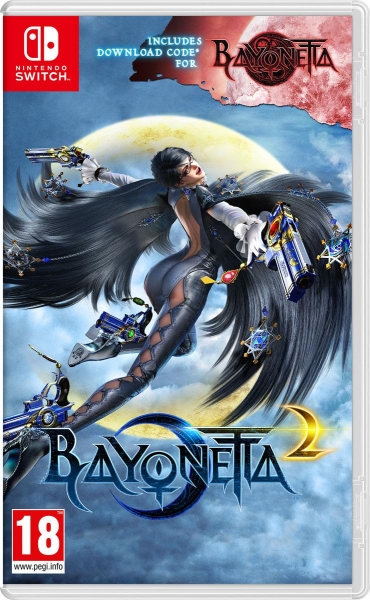
Special offer: one Bayonetta for the price of two
However, there is also an alternative solution: forgetting about memory shortage issues can be achieved by purchasing a SanDisk flash card for Nintendo Switch. Memory cards from this line are licensed by Nintendo, ensuring compatibility with the portable console and meeting the optimal requirements set by the Japanese corporation for gaming data storage.
The SanDisk series for Nintendo Switch includes three models of microSD cards: 64, 128, and 256 GB. Each of them meets the speed specifications of the SDXC standard: the cards achieve a performance of up to 100 MB/s for sequential read operations and 90 MB/s (for the 128 and 256 GB models) for sequential write operations, providing a high speed for loading and installing games, while also preventing frame rate drops in open-world games during texture streaming.
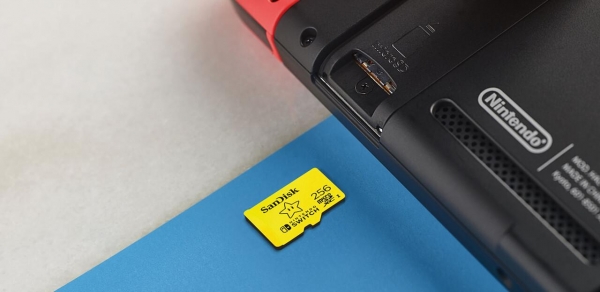
In addition to high performance, SanDisk for Nintendo Switch memory cards boast excellent resistance to environmental factors and technological influences. SanDisk memory cards:
- remain operational even after 72 hours submerged in fresh or salt water at depths of up to 1 meter;
- withstand drops from heights of up to 5 meters onto concrete floors;
- function at extremely low (-25 ºC) and extremely high (+85 ºC) temperatures for up to 28 hours;
- are protected against X-ray radiation and static magnetic fields with an induction force of up to 5000 Gs.
Thus, by purchasing SanDisk for Nintendo Switch memory cards, you can be 100% confident that your collection of video games will be completely safe.
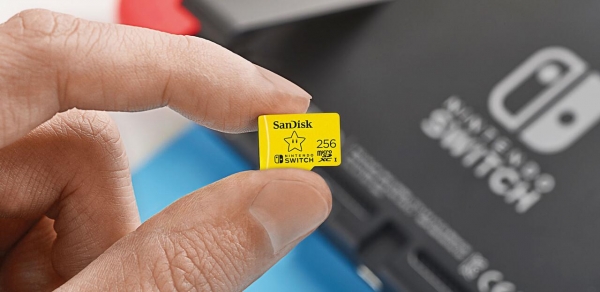
Finally, we would like to give you some tips on choosing the memory card capacity for the Nintendo Switch. The thing is that even with memory cards, the console interacts in a rather specific manner. Here’s what you need to know:
- You can store any data (games, DLC, screenshots, videos) on the memory card, except for save files. The latter always remain in the device's memory.
- It is not possible to transfer a game from the Switch's system storage to a microSD card. To free up internal memory of the console, you will need to re-download the distribution from the eShop. Screenshots and videos can be exported and imported without restrictions.
- Nintendo recommends using only one memory card, as frequent replacements may lead to the device malfunctioning.
- If you do use 2 (or more) cards at the same time, you will not be able to transfer games from them to a single card in the future. In this case, all distributions will have to be downloaded and installed anew.
Considering the mentioned features, we recommend purchasing a memory card along with the console to avoid future hassles with data transfer. Additionally, we advise you to carefully think about how you plan to use the console. Are you buying the Switch solely for Nintendo exclusives and the ability to play indie games on the go? In this case, 64 gigabytes will suffice. Planning to use the console as your main gaming platform and take it with you on long trips? It's better to invest in a 256 GB card right away.
Source: habr.com
