

operating system release , based on the Linux kernel, upstart init system, ebuild/portage build tools, open components, and web browser . The user environment of Chrome OS is limited to the web browser, and instead of standard applications, web applications are used; nevertheless, Chrome OS a full-fledged multi-window interface, desktop, and taskbar. Chrome OS 85 is available for most of Chromebook. Enthusiasts have created unofficial builds for regular computers with x86, x86_64, and ARM processors. texts are under the open Apache 2.0 license.
downward API support (simultaneously with this in :
- Added the ability to independently set the screen resolution and refresh rate for external monitors. The display settings section in the configurator has been redesigned.
- Wi-Fi Sync feature has been provided for synchronizing wireless network settings between multiple devices. When entering the Wi-Fi password, it is now saved in the user profile and automatically applied when that user logs in from other devices, without the need to re-enter the Wi-Fi connection password on the new device.
- The ability to use the search bar in the configurator for entering queries and determining necessary settings has been added. In addition to direct matches, recommended settings related to the specified query are also displayed.
- A slider has been added in the quick settings dialog to change the microphone sensitivity level.
- Additional video recording control functions have been added to the camera: recording can now be paused and resumed, as well as taking photos during video recording. Videos are recorded in the more common MP4 (H.264) format by default.
- In the Select to Speak mode, an option has been added to darken the part of the screen outside the selected area.
- Support for common screen gestures (deleting text, adding spaces, etc.) has been added in handwriting input mode.
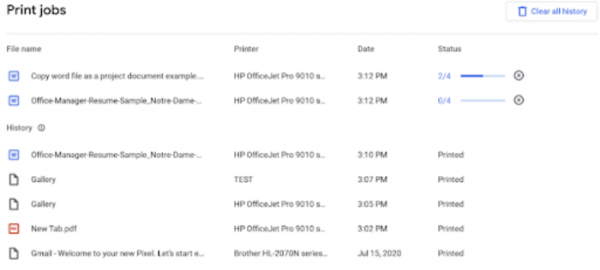
- The print output interface has been improved, allowing management of the queue of pending print documents and viewing completed jobs.

- Support for access restriction to printing using a PIN code has been added for printers from Hewlett-Packard, Ricoh, and Sharp.
Additionally, it can be noted Emil Velikov, responsible for preparing stable Mesa releases, discusses the Linux graphics stack, its use in Chrome OS, and the work being done to improve software rendering quality. Efforts are being made to eliminate the dependency on X11 in the layer. OpenGL/GLES and EGL are utilized. Specifically, Chrome OS employs the EGL extension EGL_MESA_platform_surfaceless, which allows the use of OpenGL or GLES and enables rendering to memory areas without the need to involve components for integration with the display system and without engaging Wayland, X11, and KMS code.
Source: opennet.ru
