

When plasma TVs left the stage, there was a time of uninterrupted dominance for LCD panels. However, the era of low contrast is not infinite — TVs with elements that emit light independently without the use of separate lamps are gradually taking their places. We're talking about panels based on organic light-emitting diodes. Today, they are no longer surprising in small-screen devices — in smartphones, smart bracelets, or even household appliances. However, large panels have long struggled with growing pains — and are slowly capturing the mass market. This is primarily due to the high production costs of OLED screens, especially those with larger diagonals — prices at the start of the era reached millions of rubles. Today, you won't find them in the budget segment either, but we are talking about different ranges of sums.
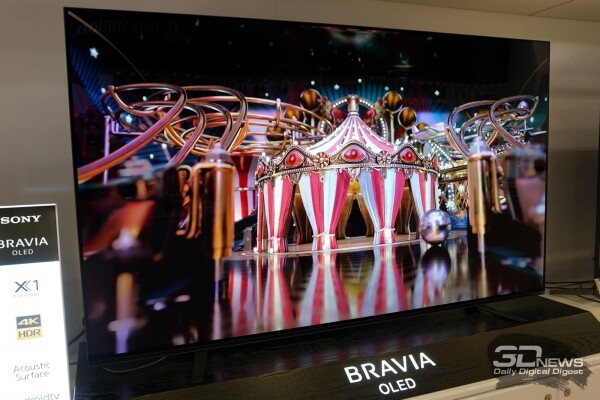
— is a perfect example of a "upper mid-range" representative. This model is extremely close to the elite, which stops at the threshold of the MASTER series but delivers very high-quality picture and sound at a relatively reasonable cost. Yes, one might raise an eyebrow upon seeing the words “reasonable cost” next to a price of 200-300 thousand rubles, which is requested for this TV depending on the diagonal (55 or 65 inches), but recall the flagship smartphones that easily surpass the 100 thousand ruble mark — this is the price range today. Moreover, upon getting to know the A8 model better, you can fully understand that it is worth its money. Let's figure out how that is possible.
| Sony BRAVIA OLED A8 | |
|---|---|
| Panel Type | OLED |
| Panel Diagonal | 55/65 inches |
| Panel Resolution | 3840 × 2160 |
| Panel Refresh Rate | 100 Hz |
| Sound System | 2 × 10 W (speakers); 2 × 10 W (subwoofers) sound is transmitted through the screen |
| Operating system | Android 9.0 (Android TV) |
| Interfaces | USB × 3, HDMI × 4, Composite × 1, Ethernet × 1, 3.5 mm × 1, Digital Optical Audio Output × 1 |
| Wireless modules | Wi-Fi 2.4/5 GHz + Bluetooth 4.2 |
| Digital Television | DVB-T2+DVB-C+DVB-S2 |
| Dimensions | 144.8 × 83.6 × 5.2 cm (without stand, 65-inch version) |
| Weight | 21.8 kg (without stand) |
| Price | |
This review is about the Sony BRAVIA OLED A8 with a diagonal of 65 inches.
Design and Construction
In addition to achieving conditionally infinite contrast through precise control over the brightness of individual pixels, LED panels are also notable for being able to be made almost as thin as desired. In fact, the claimed thickness of the television at 52 mm is due to the acoustic system hidden within the casing, various connectors, and the cooling system. The panel itself is thinner than most modern smartphones, with a reported thickness of 5.9 mm, according to company representatives.

Even considering the protrusion for the connectors, the Sony BRAVIA OLED A8 will take up little space whether installed on feet or mounted on the wall. The feet, by the way, are height-adjustable, allowing for easy placement of a soundbar underneath the television. This is very convenient.
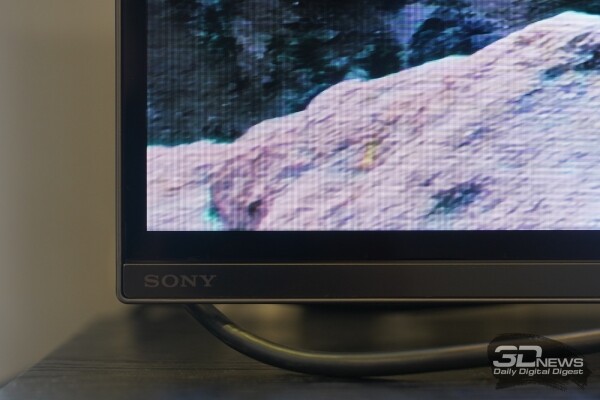 | 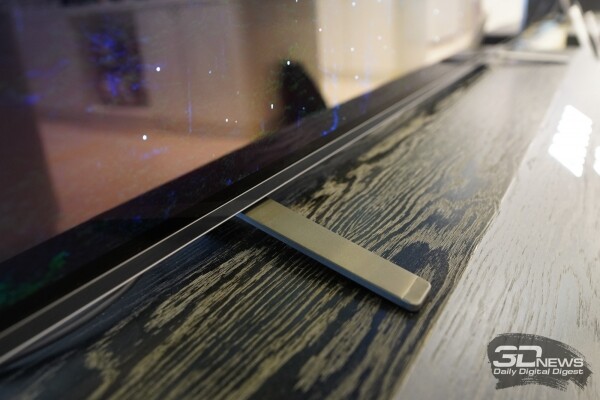 |
The appearance of the Sony BRAVIA OLED A8 is designed to ensure that the television attracts as little attention as possible, given that it is a black rectangle with diagonals of either 55 or 65 inches, while still fitting into almost any interior. The bezels are minimal, framed with dark gray metal, with a thin layer of glass to mount the panel. There are no physical buttons on the front face (none are provided in this model), nor any indicators.
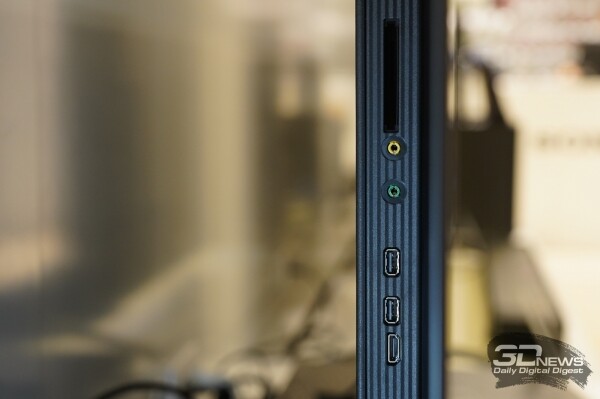 | 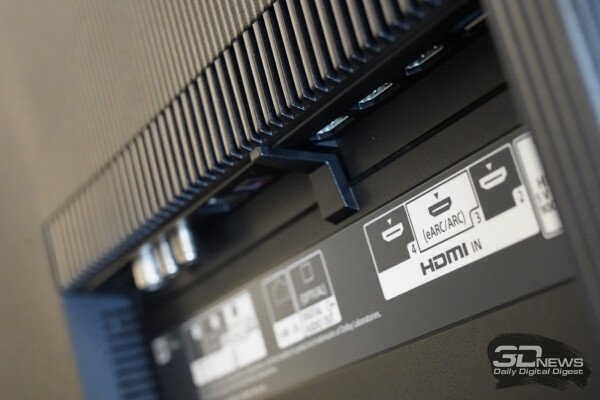 | 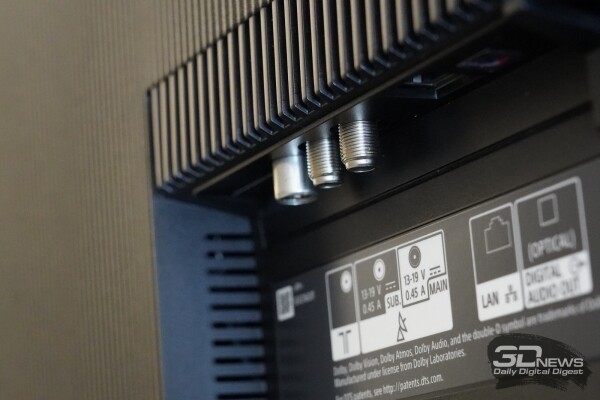 |
The interfaces are located on the back panel. Two mini-jacks, two USB ports, and one HDMI look sideways. In the main block, there is another USB, three HDMI ports, Ethernet, and a composite audio output. The power cable connector is also situated here. No connectors are located at the back, so there’s no need to bend cables at improbable angles if the television is mounted on the wall or placed flush against it.
Android TV, control
Sony uses 'pure' Android TV in its televisions, in this case, Android 9.0 Pie. This solution has its advantages: a wealth of applications, simplicity and stability of the operating system, and a logic that is understandable to most users. However, the disadvantages of the TV 'robot' are also present — for example, scrolling through applications and selecting content during television viewing is not possible. You must continually return to the home screen.
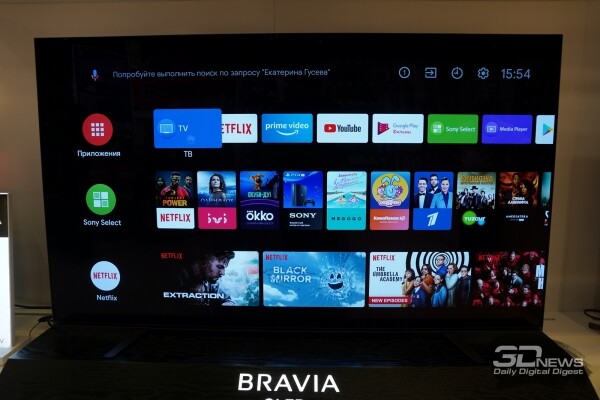 | 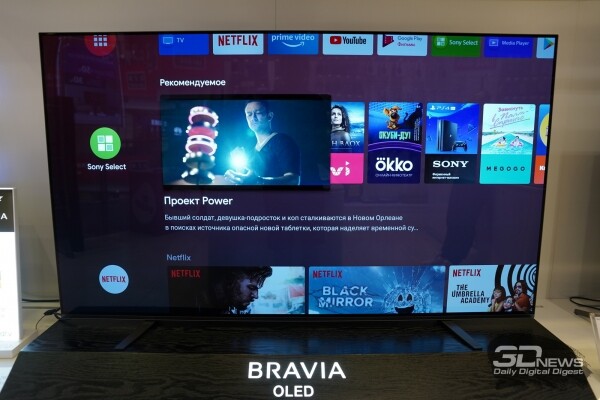 |
Some customization for Sony at a minimum — a line with recommended Sony services for the local market (the familiar set of Okko, Megogo, ivi, and so on) and a branded browser with Sony's start page. Voice input is supported, Google account integration is available, and additional applications can be installed — all as it should be.
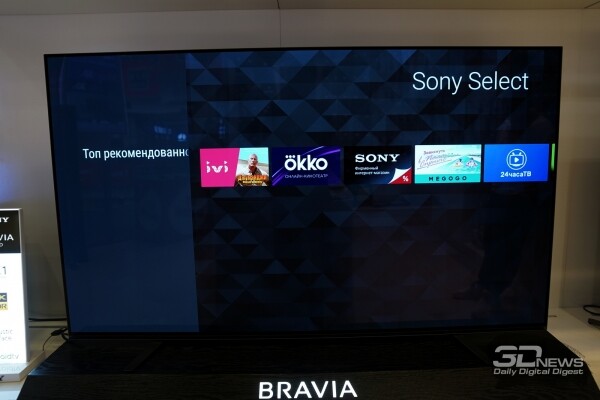 | 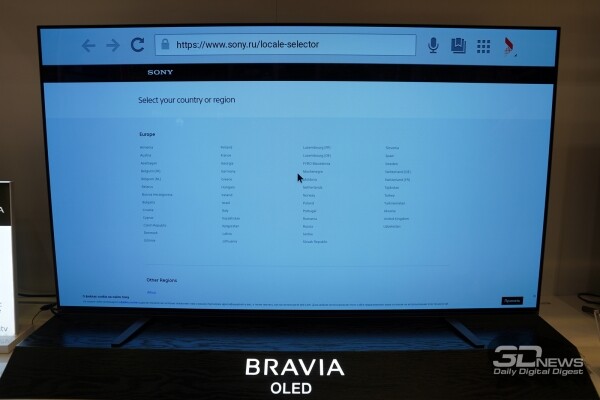 |
The TV connects to the internet both via Wi-Fi (it has a dual-band module — 802.11a/b/g/n/ac) and via cable. There is Bluetooth 4.2 — with its help, the TV interacts with both the included remote control and external sound sources (headphones, speakers) or additional control devices (mouse, keyboard).
 |  |
The remote control is standard, without additional screens, touch panels, or anything of that sort. Just the good old mechanical buttons, with a set that strongly emphasizes Android TV — there are quick access keys to Google Play, a navigation circle, and a quick access key to the inevitable Netflix. The remote is convenient, simple, and intuitive.
The built-in media player allows for playing files from an external drive connected via USB, as well as uploading them to the TV's memory. From the declared 16 GB, 6.7 GB is available to the user — you won't be able to do much with 4K content here. Mainly, this memory is needed for tech vendors — to upload demo videos. The codec list is extensive, with all important common formats present.
Support for Chromecast (which is logical for Android TV) and Apple Airplay/Apple HomeKit is also available.
Image and Sound
Image — this is essentially the sole reason to pay the asking price for an OLED panel. But it’s not enough just to install an organic light-emitting diode matrix in the TV, it also needs to be properly calibrated and 'polished' to meet modern standards.

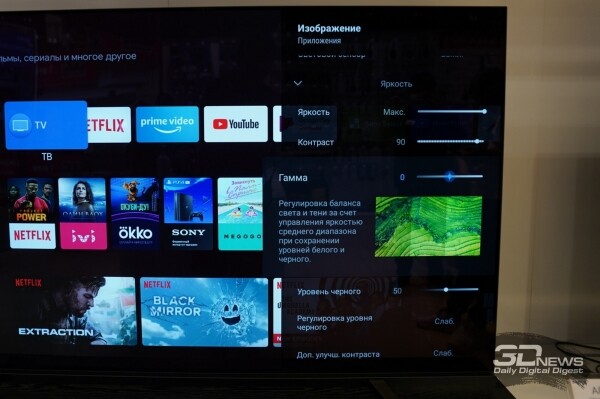
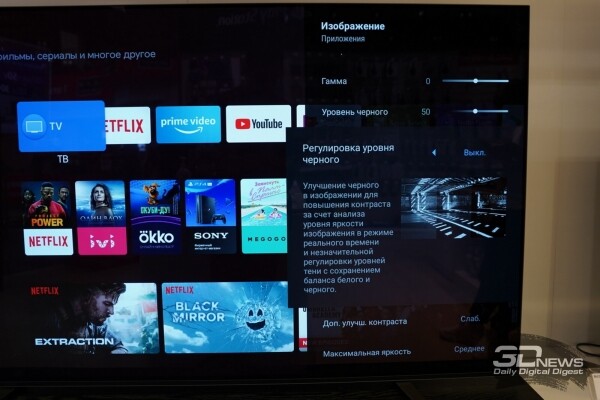
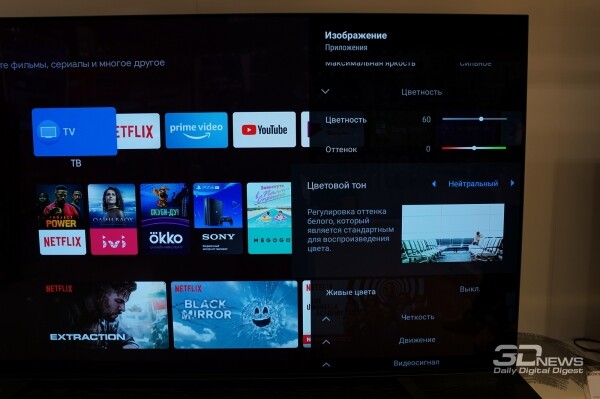
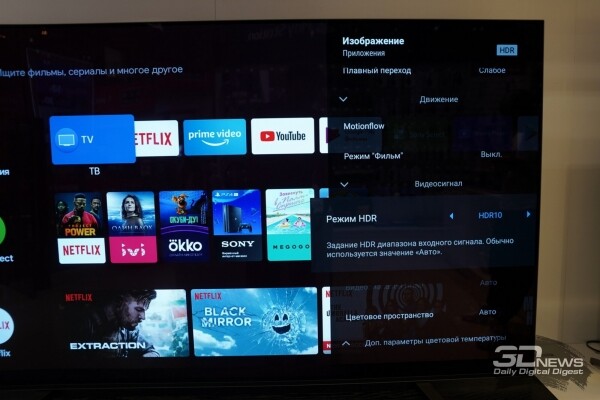
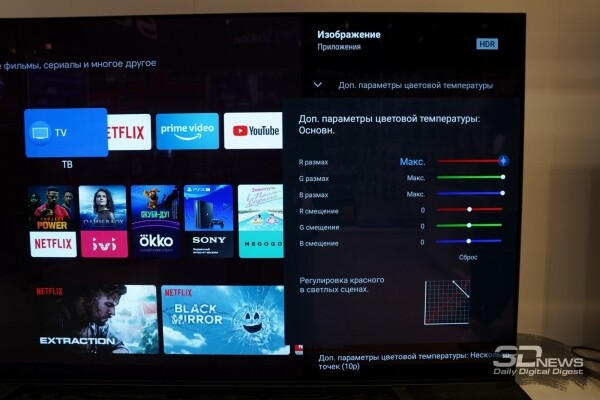
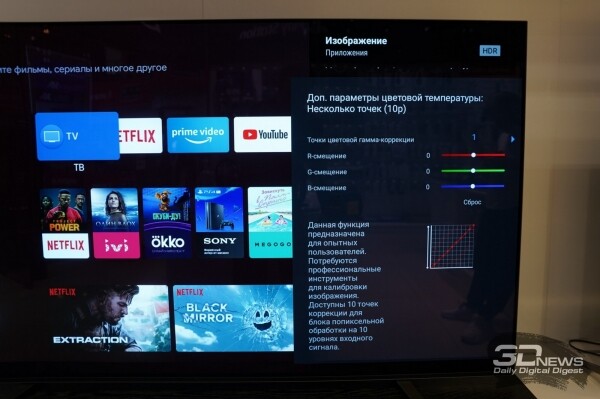
Sony has no issues with this. Just by looking into the image settings, you are struck by the number of parameters that can be adjusted. And by the clarity with which all this is presented — each parameter is not only described in detail, but also supplied with an image that conditionally demonstrates the effect of changes. This rare meticulousness means even someone far removed from working with professional video equipment can adjust the picture to their liking.
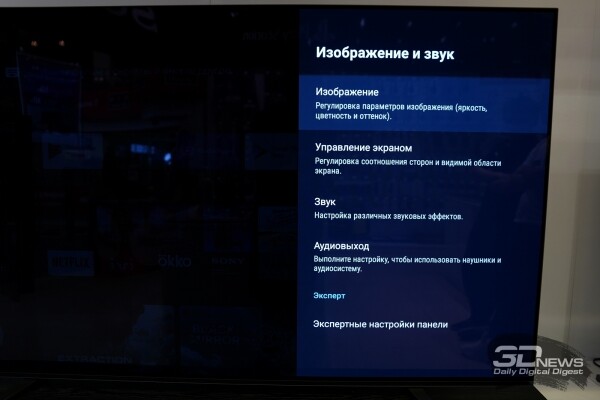 | 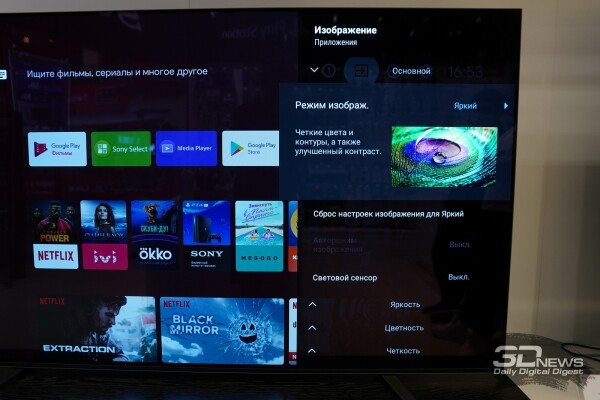 | 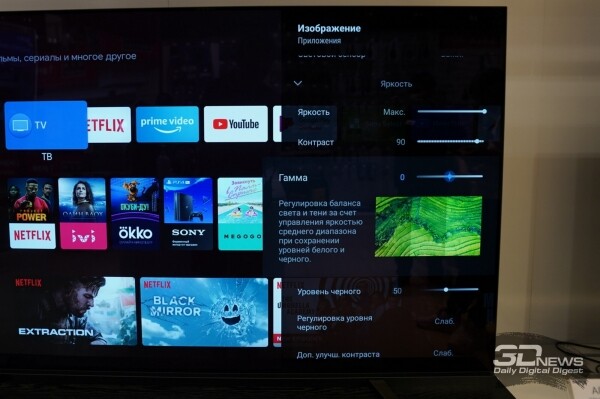 | 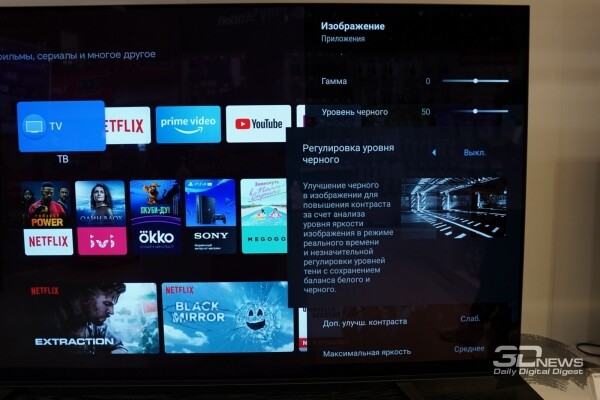 |
There are plenty of settings available, covering both familiar options (such as adjusting color temperature, including individual color components; gamma; saturation; brightness; and so on) and some unusual ones. For instance, the Sony BRAVIA OLED A8 allows for adjusting not just brightness but also color reproduction based on external lighting conditions (yes, it has the corresponding sensor). Unfortunately, we couldn't check how this works with changing lighting, as the testing conditions did not allow for it.
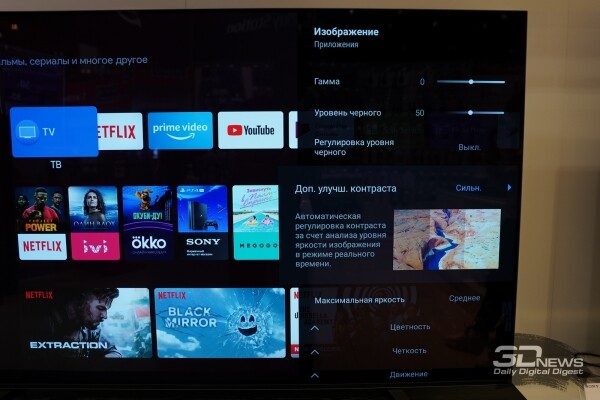 | 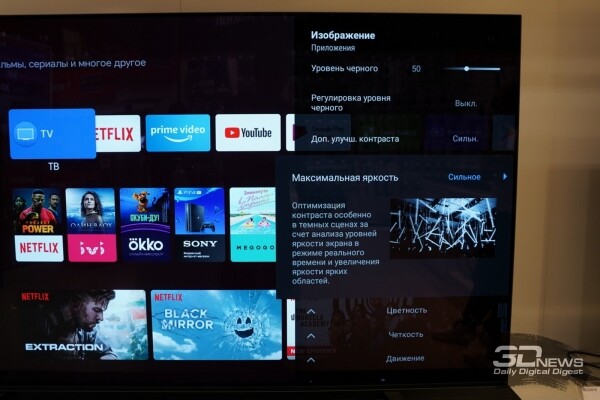 |  | 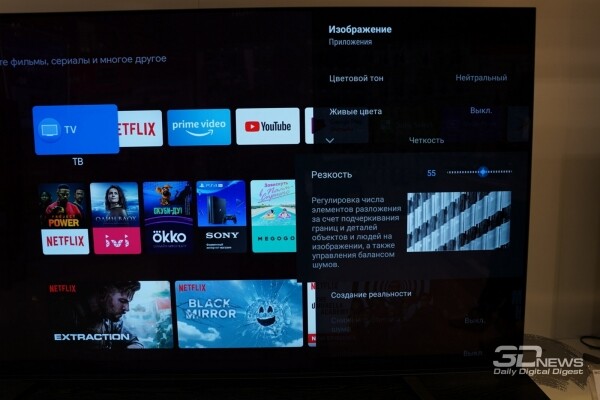 |
Several other specific settings include smart contrast enhancement through analysis of the current image, adjustable sharpness increase via software methods, and motion smoothing.
 |  |  |
One complaint about this TV that prevents it from joining the 'elite' club is the lack of support for the HDR10+ standard (only HDR10) and the absence of HDMI 2.1 support (all four inputs operate with HDMI 2.0 — however, it does support HDCP 2.3 protection system). That's all for the complaints.
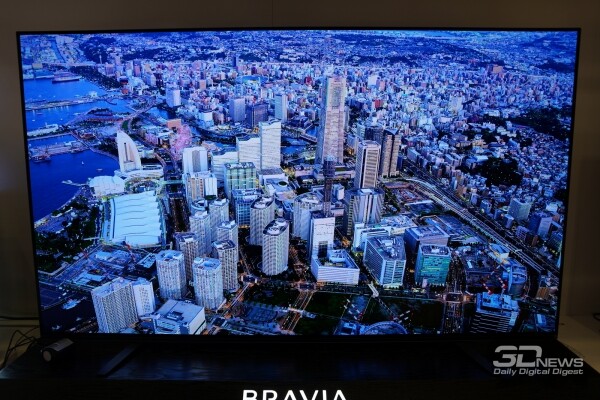
The panel's native resolution is Ultra HD (3840 × 2160). The system works confidently with native content at this resolution and also demonstrates quite good upscaling capabilities. The image in this case is nearly noise-free and sharp enough. On TVs with high native resolution, handling lower-quality image content can become a stumbling block — the A8 model does not face such issues, partly due to the use of organic LEDs, where color recalibration occurs on a per-pixel basis.
The TV is equipped with the already-famous X1 Ultimate processor, which, in particular, excels at processing HDR content — motion appears natural, and noise often associated with images in this mode is virtually absent. The same goes for SDR images that are 'stretched' to HDR. The Super Bit Mapping technology works excellently.
When it comes to the panel's compliance with the HDR10 standard, there are no issues here either. The maximum brightness measured under test conditions (in a brightly lit room) reached 778 cd/m² (in standard display mode, with brightness turned all the way up). There is no doubt that the peaks specified in the HDR10 standard of 1000 cd/m² are easily achieved by the panel while working with corresponding content. The contrast conditions are met by the OLED panel by default. There can be no talk of any blooming issues with a panel of this type. The television combats potential burn-in from static images by slightly shifting the picture pixel by pixel from time to time. There should be no problems with this.
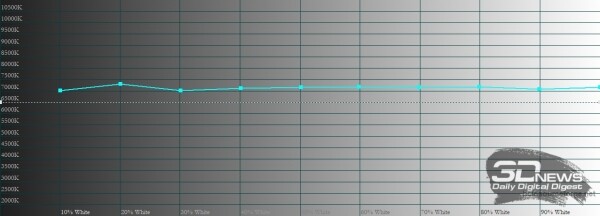
The television offers several picture presets: bright, standard, cinema, games, graphics, photo, user, bright Dolby Vision, dark Dolby Vision, and Netflix calibration mode. I measured color reproduction in the bright and cinematic modes, as well as in the 'graphics' mode, which is best suited for working with a PC.
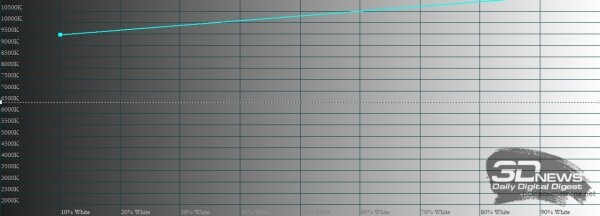 | 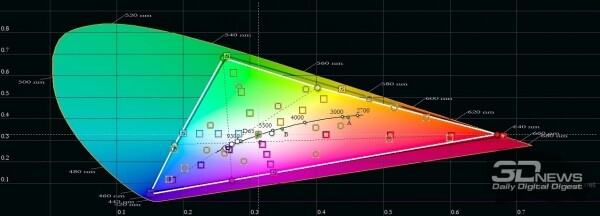 | |
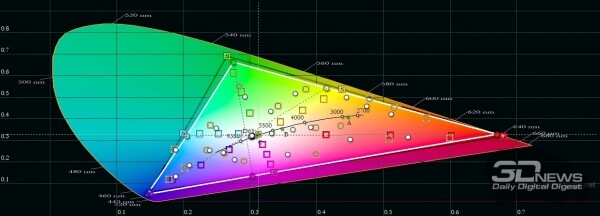
The 'Bright' mode is essentially needed for showcasing the television in a store, and it can be considered a demo mode. The picture is extremely bright, very cool (the temperature exceeds 10,000 K), and color accuracy is not a concern, though everything looks vibrant and saturated. In this mode, you can also watch broadcasts or sports in bright daylight.
 |  | |
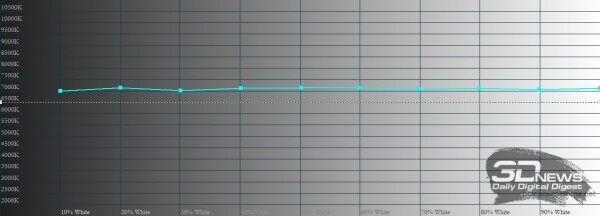 | 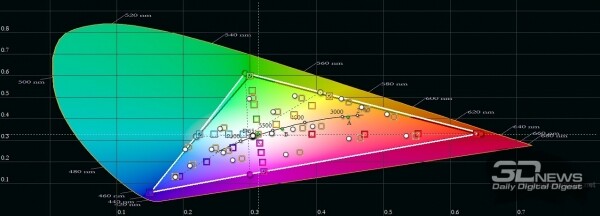 | |
The 'Cinematic mode' also works with a wide color gamut (DCI-P3) but does so in a much calmer manner (color temperature — 7,100 K). The average DeltaE deviation in the extended Color Checker palette (grayscale + a wide range of color hues) is 4.22 — it is small and quite forgivable for the testing conditions. In the 'Graphics' mode, the color space corresponds to the most common (sRGB), the color temperature is the same (note the perfectly flat line), and the average DeltaE deviation is 4.38. As a professional tool for graphic work, I probably wouldn't recommend the BRAVIA OLED A8, but considering the possibilities for manual image adjustment, one can acknowledge the panel is exceptionally well set up.
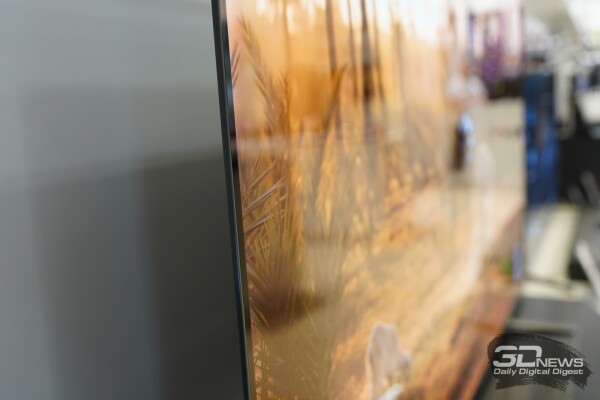
Working with contrasting scenes, even in the most complex plots, is truly gratifying — transitions between light and dark shades are perfect, with no residual glow. Hardware noise in dark scenes is imperceptible. Dolby Vision standard is supported, and the A8 series TV panels (both diagonal sizes) are IMAX certified. Viewing angles are free.
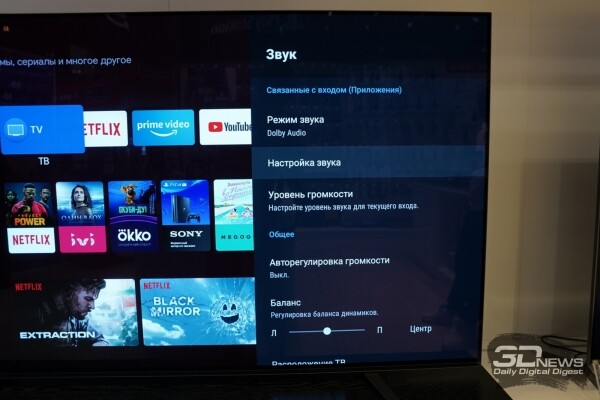 | 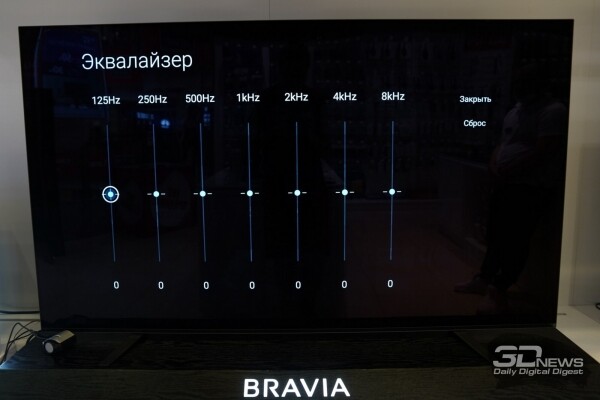 | 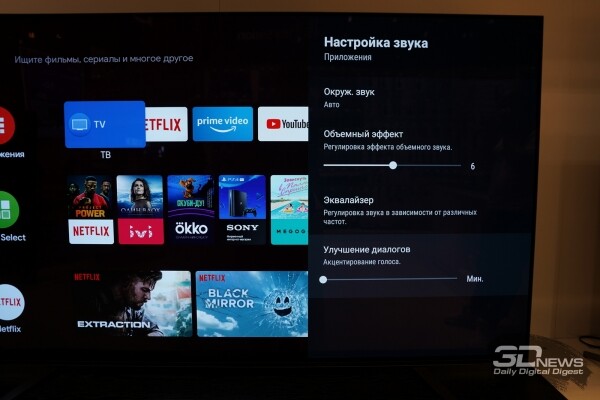 | 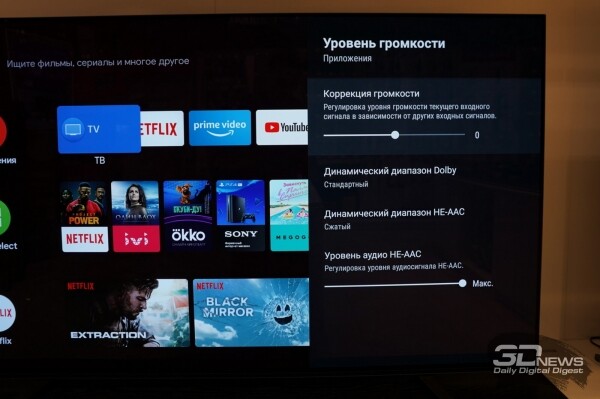 |
The Sony BRAVIA OLED A8 is equipped with an Acoustic Surface Audio sound system, where the screen itself effectively becomes the speakers — special actuators behind it vibrate, producing sound directly from the display. This technology achieves unprecedented sound source positioning for a built-in sound system. This applies both to what is happening on-screen and off-screen — the system handles such scenarios excellently. The sound system's high power isn't extraordinary, consisting of two 10W full-range drivers and two 5W subwoofers, but it is definitely sufficient for medium-sized rooms. Positioned one and a half to two meters from the screen, the sound is perceived beautifully. I didn't notice any serious limitations in dynamic range; both high and low frequencies are well reproduced. Subjectively, it is one of the best sound systems in televisions during the 'flat-panel' era that I've encountered.
Conclusion
– a television with quite a narrow specialization, and this is definitely important to understand when choosing. It is primarily designed to serve as a key component in a small home theater — in a medium-sized room, with or without an additional sound system (the built-in sound is very good). For a large home theater, the diagonal might not be sufficient — the maximum for this model is 65 inches. For a gaming center of the near future, it lacks a 4K/120p mode and HDMI 2.1 support — however, for the current generation of consoles, the TV's capabilities are quite good: response time is normal, and motion processing is of high quality.
Within its range, this is arguably the best offering available today. Watching movies on the Sony BRAVIA OLED A8 is truly enjoyable: it handles contrasting scenes with remarkable precision, displays dynamic content beautifully, and supports HDR10 and Dolby Vision. Its good brightness even allows for some usability in bright sunlight, a feat not often achievable with LED TVs — ensuring it performs well during regular broadcast viewing as well.
Thank you to Sony Centre for assisting with the device testing.
Source: 3dnews.ru
