

I'll start without mincing words; once I had a revelation (not a very strong one, to be honest) and came up with the idea of writing a program that sends an image from the client to the server. Quite simple, right? Well, it would be for an experienced programmer. The conditions are straightforward — do not use third-party libraries. In principle, it's a bit more complex, but considering that you'll have to figure things out and search for examples, it's not the most enjoyable task. I decided this task was within my capabilities. Additionally, it would be nice to have enough code to post it on the forum in case I need help. At first, my attention turned to FTP, by the way, the OS in which it's being developed is Windows. The advantage of FTP is that it can transfer not only an image but any file. After downloading Filezilla Server, sharing a directory for read/write, and creating a user with a password, I tried connecting with Filezilla Client, and everything worked. I created a simple code example in C/C++:
#include <iostream>
void main()
{
	FILE* fs;
	fopen_s(&fs, "1.txt", "w");
	if (fs)
	{
    fwrite("userrnpasswordrnsend D:\share\1.txtrnbye", 1, sizeof("userrnpasswordrnsend D:\share\1.txtrnbye"), fs);
    fwrite(" 00", 1, sizeof(" 00"), fs);
    fclose(fs);
	}
	system("ftp -s:1.txt 127.0.0.1");
}
If I remember correctly, everything worked on localhost, but transmitting over the network resulted in an error on the send line. What's convenient here is a) it's short b) you don't need to install a client, but use Microsoft’s already built-in FTP tool. Although, in my opinion, you need to activate it through Programs and Features. If you figure out the issue with this method and comment on it, that would be great.
After finding no answers on numerous forums, I abandoned this code and decided to use the sockets interface for networking. I had previous experience sending char arrays for another program. By the way, you can read about it in Tanenbaum's Computer Networks, in the chapter on the transport layer. There’s an example of client-server communication, though not for the 'many clients — one server' scenario, but just 'one client — one server'. Since the transmission occurs over the Internet, the data needs to be encrypted in some way. For this, a block cipher called the Feistel network is used. Plus, you server need to create multiple (more than one client) clients. To do this, we will use Threads; the image for transmission will be taken as a screenshot from the client, encrypted, and sent to the server, where it will be decrypted and immediately displayed on the screen using the default program for opening *.tga images.
Server code:
#include <iostream>
#include <WinSock.h>
#pragma comment (lib,"WS2_32.lib")

#include <fstream>
#include <algorithm>
#include <string>
#include <iterator>
#include <vector>
void error(const char* msg)
{
    //perror(msg);
    std::cout<<'n'<<WSAGetLastError();
    WSACleanup();
    std::cin.ignore();
    exit(1);
}
void bzero(char*buf, int l)
{
    for (int i = 0; i < l; i++)
        buf[i] = ' ';
}
struct arg_s
{
    unsigned char* buffer2;
    bool exit;
};
char** buffer;
struct arg_sa
{
    struct arg_s* lalk;
    int current;
};
#define type struct arg_sa
int sockfd, * newsockfd;//слушающий и массив клиентских сокетов
int buflen2 = 10292000;//максимальный размер изображения в байтах для RGBA*Width*Height
struct sockaddr_in *cli_addr;
int* clilen;
int currentclient,cc;//сс-клиент по счету(для записи инкремента имени файла клиента изображения)

typedef unsigned long long uint64_t;
typedef unsigned int uint32_t;
#define N 8//размер блока
#define F32 0xFFFFFFFF
uint32_t RK[N];//раундовые ключи
#define size64 sizeof(uint64_t)
#define ROR(x,n,xsize)((x>>n)|(x<<(xsize-n)))
#define ROL(x,n,xsize)((x<<n)|(x>>(xsize-n)))
#define RKEY(r)((ROR(K,r*3,size64*8))&F32)
const uint64_t K = 0x96EA704CFB1CF671;//ключ шифрования
struct hostent* server;
uint32_t F(uint32_t subblk, uint32_t key)
{
    return subblk + key;//функция шифрования
}
void createRoundKeys()
{
    for (int i = 0; i < N; i++)
        RK[i] = (ROR(K, i * 8, size64 * 8)) & F32;
}
uint64_t decrypt(uint64_t c_block)//расшифровка блоков сетью фейстеля
{
    //select subblocks
    uint32_t left = (c_block >> 32) & F32;
    uint32_t right = c_block & F32;
    uint32_t left_, right_;//subblock in the end of round
    for (int r = N - 1; r >= 0; r--)
    {
        uint32_t fk = F(left, RK[r]);
        left_ = left;
        right_ = right ^ fk;
        if (r > 0)//swap places to next round
        {
            left = right_;
            right = left_;
        }
        else //last round not swap
        {
            left = left_;
            right = right_;
        }
    }
    //collect subblock in block
    uint64_t block = left;
    block = (block << 32) | (right & F32);
    return block;
}
void session_(LPVOID args)//функция потока ля каждого клиента
{
    int current = currentclient++;
    bzero((char*)&(cli_addr[current]), sizeof(&(cli_addr[current])));
    newsockfd[current] = accept(sockfd, (struct sockaddr*)&(cli_addr[current]), &(clilen[current]));
    if (newsockfd[current] < 0)
    {
        error("Error on acceptn");
    }
    char* s = new char[100];
    int n = recv(newsockfd[current], s, 100, 0);
    int buflen2 = atoi(s);//получаем число байтов изображения
    FILE* f;
    std::string name = "Screen";
    cc++;
    _itoa_s(cc, s, 100, 10);
    name += s;
    name += ".tga";
    fopen_s(&f,name.c_str(), "wb");//создаем файл изображения с увеличиваещимся на 1 именем, чтобы не перезаписать
    if (f != NULL)
    {
        unsigned char tgaHeader[12] = { 0, 0, 2, 0, 0, 0, 0, 0, 0, 0, 0, 0 };
        unsigned char header[6];
        n = recv(newsockfd[current], buffer[current], sizeof(tgaHeader), 0);
        fwrite((unsigned char*)buffer[current], 1, sizeof(tgaHeader), f);
        bzero(buffer[current], buflen2);
        n = recv(newsockfd[current], buffer[current],sizeof(header), 0);
        fwrite((unsigned char*)buffer[current], 1, sizeof(header), f);//записали хидеры
        bzero(buffer[current], buflen2);
        n = recv(newsockfd[current], buffer[current], buflen2, 0);//получили байты самого изображения
        //
        //расшифровка байтов
        createRoundKeys();
        unsigned long long id;
        std::vector<uint64_t>* plaintext = new std::vector<uint64_t>();
        int i = 0;
        while (i<buflen2)
        {
            memcpy(&id, (buffer[current]) + i, N);
            plaintext->push_back(decrypt(id));
            i += 8;
        }
        std::cout << "i=" << i << std::endl;
        i = 0;
        char str_[N + 1];
        memset(str_, 0, N);
        str_[N] = ' ';
        for (std::vector<uint64_t>::iterator it = plaintext->begin(); it != plaintext->end(); ++it)
        {
            memcpy(str_, &*it, N);
            fwrite((unsigned char*)str_, sizeof(unsigned char), N/*strlen(str_)*/, f);
            i += 8;
        }
        std::cout << "i=" << i << std::endl;
        //конец рашифровки байтов
        //fwrite((unsigned char*)buffer[current], sizeof(char), buflen2, f);
        fclose(f);
    }
    system(name.c_str());//открываем изображение *.tga встроенным редактором
}
int main()
{
    cc = 0;
    WSADATA ws = { 0 };
    if (WSAStartup(MAKEWORD(2, 2), &ws) == 0)
    {
        currentclient = 0;
        int maxclients = 2;//максимальное число клиентов
        cli_addr = new struct sockaddr_in[maxclients];
        clilen = new int[maxclients];
        buffer = new char* [maxclients];
        for (int i = 0; i < maxclients; i++)
        {
            clilen[i] = sizeof(cli_addr[i]);
        }
        sockfd = socket(AF_INET, SOCK_STREAM, 0);//tcp сокет
        if (sockfd < 0)
            error("ERROR opening socket");
        struct sockaddr_in serv_addr;
        bzero((char*)&serv_addr, sizeof(serv_addr));
        serv_addr.sin_family = AF_INET;
        serv_addr.sin_addr.s_addr = INADDR_ANY;
        int port = 30000;//порт
        serv_addr.sin_port = htons(port);
        if (bind(sockfd, (struct sockaddr*)&serv_addr, sizeof(serv_addr)) < 0)
            error("ERROR on binding");
        if (listen(sockfd, 10) < 0)
            error("ERROR listen");
        HANDLE* thread;//массив потоков для каждого клиента отдельный
        struct arg_sa* args;
        while (true)
        {
            newsockfd = new int[maxclients];
            thread = (HANDLE*)malloc(sizeof(HANDLE) * maxclients);
            args = new struct arg_sa[maxclients];
            for (int i = 0; i < maxclients; i++)
            {
                args[i].lalk = new struct arg_s();
                buffer[i] = new char[buflen2];
            }
            int i = -1;
            while (++i < maxclients)
            {
                Sleep(1);
                args[i].current = i;
                args[i].lalk->exit = false;
                thread[i] = CreateThread(0, 0, (LPTHREAD_START_ROUTINE)(session_), args, 0, 0);
            }
                for (int i = 0; i < maxclients; i++)
                    WaitForSingleObject(thread[i], INFINITE);//ждем завершения всех потоков
            i = -1;
            while (++i < maxclients)
            {
                shutdown(newsockfd[i], 0);
                TerminateThread(thread[i], 0);
            }
            //delete[] newsockfd;
            //free(thread);
            currentclient = 0;
            for (int i = 0; i < maxclients; i++)
            {
                //delete args[i].lalk;
                //delete[] args[i].lalk->buffer;
            }
            //delete[] args;
        }
        shutdown(sockfd, 0);
        WSACleanup();
        return 0;
    }
    std::cin.ignore();
}
In brief, a thread is created for each client in an infinite loop, waiting for accept until clients connect. After that, WaitForSingleObject waits for all of them to transmit. Each client has its own socket and its own transmission buffer. That is, on server an M+1 socket, where M is the number of clients. After all transmissions are completed, everything repeats.
Now let's look at the client:
#include <iostream>
#include <WinSock.h>
#include <vector>
#pragma comment (lib,"WS2_32.lib")
void error(const char* msg)
{
    //perror(msg);
    std::cout << 'n' << WSAGetLastError();
    WSACleanup();
    std::cin.ignore();
    exit(1);
}
void bzero(char* buf, int l)
{
    for (int i = 0; i < l; i++)
        buf[i] = ' ';
}
typedef unsigned long long uint64_t;
typedef unsigned int uint32_t;
#define N 8
#define F32 0xFFFFFFFF
uint32_t RK[N];//раундовые ключи
#define size64 sizeof(uint64_t)
#define ROR(x,n,xsize)((x>>n)|(x<<(xsize-n)))
#define ROL(x,n,xsize)((x<<n)|(x>>(xsize-n)))
#define RKEY(r)((ROR(K,r*3,size64*8))&F32)
const uint64_t K = 0x96EA704CFB1CF671;//ключ шифрования
void createRoundKeys()
{
    for (int i = 0; i < N; i++)
        RK[i] = (ROR(K, i * 8, size64 * 8)) & F32;
}
uint32_t F(uint32_t subblk, uint32_t key)
{
    return subblk + key;//функция шифрования
}
uint64_t encrypt(uint64_t block)//зашифровка блоков сетью Фейстеля
{
    //select subblocks
    uint32_t left = (block >> 32) & F32;
    uint32_t right = block & F32;
    uint32_t left_, right_;//subblock in the end of round
    for (int r = 0; r < N; r++)
    {
        uint32_t fk = F(left, RK[r]);
        left_ = left;
        right_ = right ^ fk;
        if (r < N - 1)//swap places to next round
        {
            left = right_;
            right = left_;
        }
        else//last round not swap
        {
            left = left_;
            right = right_;
        }
    }
    //collect subblock in block
    uint64_t c_block = left;
    c_block = (c_block << 32) | (right & F32);
    return c_block;
}
int main()
{
    keybd_event(VK_LWIN, 0, 0, 0);
    keybd_event('M', 0, 0, 0);
    keybd_event('M', 0, KEYEVENTF_KEYUP, 0);
    keybd_event(VK_LWIN, 0, KEYEVENTF_KEYUP, 0);//эти строки сворачивают все приложения
    Sleep(1000);//чтобы сделать скриншот рабочего стола
    WSADATA ws = { 0 };
    if (WSAStartup(MAKEWORD(2, 2), &ws) == 0)
    {
        int sockfd;
        sockfd = socket(AF_INET, SOCK_STREAM, 0);
        struct sockaddr_in serv_addr, cli_addr;
        bzero((char*)&serv_addr, sizeof(serv_addr));
        bzero((char*)&cli_addr, sizeof(cli_addr));
        serv_addr.sin_family = AF_INET;

        const char* add = "127.0.0.1";//адрес сервера
        serv_addr.sin_addr.s_addr = inet_addr(add);
        int port = 30000;//порт
        serv_addr.sin_port = htons(port);
        int servlen = sizeof(serv_addr);
        int n = connect(sockfd, (struct sockaddr*)&serv_addr, servlen);

        //ниже код делает скриншот
        HDC ScreenDC = GetDC(0);
        HDC MemoryDC = CreateCompatibleDC(ScreenDC);
        int ScreenHeight = GetSystemMetrics(SM_CYSCREEN);
        int ScreenWidth = GetSystemMetrics(SM_CXSCREEN);
        ScreenWidth = ((ScreenWidth - 1) / 4 + 1) * 4;
        BITMAPINFO BMI;
        BMI.bmiHeader.biSize = sizeof(BITMAPINFOHEADER);
        BMI.bmiHeader.biWidth = ScreenWidth;
        BMI.bmiHeader.biHeight = ScreenHeight;
        BMI.bmiHeader.biSizeImage = ScreenWidth * ScreenHeight * 3;
        BMI.bmiHeader.biCompression = BI_RGB;
        BMI.bmiHeader.biBitCount = 24;
        BMI.bmiHeader.biPlanes = 1;
        DWORD ScreenshotSize;
        ScreenshotSize = BMI.bmiHeader.biSizeImage;
        unsigned char* ImageBuffer;
        HBITMAP hBitmap = CreateDIBSection(ScreenDC, &BMI, DIB_RGB_COLORS, (void**)&ImageBuffer, 0, 0);
        SelectObject(MemoryDC, hBitmap);
        BitBlt(MemoryDC, 0, 0, ScreenWidth, ScreenHeight, ScreenDC, 0, 0, SRCCOPY);
        DeleteDC(MemoryDC);
        ReleaseDC(NULL, ScreenDC);
        FILE* sFile = 0;
        unsigned char tgaHeader[12] = { 0, 0, 2, 0, 0, 0, 0, 0, 0, 0, 0, 0 };
        unsigned char header[6];
        unsigned char tempColors = 0;
        fopen_s(&sFile, "S.tga", "wb");
        if (!sFile) {
            exit(1);
        }
        header[0] = ScreenWidth % 256;
        header[1] = ScreenWidth / 256;
        header[2] = ScreenHeight % 256;
        header[3] = ScreenHeight / 256;
        header[4] = BMI.bmiHeader.biBitCount;
        header[5] = 0;
        fwrite(tgaHeader, 1, sizeof(tgaHeader), sFile);
        fwrite(header, sizeof(header), 1, sFile);
        //конец записали изображение в файл

        //шифруем блоками полезную нагрузку изображения кроме хидеров
        createRoundKeys();
        std::vector<uint64_t>* msg = new std::vector<uint64_t>(),*crpt = new std::vector<uint64_t>();
        unsigned long long id;
        int i = 0;
        while (i < BMI.bmiHeader.biSizeImage)
        {
            memcpy(&id, (ImageBuffer + i), N);
            msg->push_back(id);
            i += 8;
        }
        std::cout << "i=" << i << std::endl;
        uint64_t cipher;
        i = 0;
        char str_[N + 1];
        memset(str_, 0, N);
        str_[N] = ' ';
        for (std::vector<uint64_t>::iterator it = msg->begin(); it != msg->end(); ++it)
        {
            cipher = encrypt(*it);
            memcpy(str_, &cipher, N);
            fwrite((unsigned char*)str_, sizeof(unsigned char), N, sFile);
            i += 8;
        }
        std::cout << "i=" << i << std::endl;
        //
        //fwrite(ImageBuffer, BMI.bmiHeader.biSizeImage, 1, sFile);
        std::cout << BMI.bmiHeader.biSizeImage << std::endl;
        fclose(sFile);
        DeleteObject(hBitmap);
        FILE* f;
        fopen_s(&f, "S.tga", "rb");
        int count = 0;
        if (f != NULL)
        {
            while (getc(f) != EOF)
                count++;//считаем байты изображения в счетчик чтобы потом передать
            fclose(f);
        }
        count -= 18;
        std::cout << count<< std::endl;
        char* s = new char[100];
        _itoa_s(count, s, 100, 10);
        n = send(sockfd, s, 100, 0);//передаем счетчик
        char* buffer = new char[count];
        fopen_s(&f, "S.tga", "rb");
        size_t bytes;
        if (f != NULL)
        {
            memcpy(buffer, tgaHeader, sizeof(tgaHeader));
            n = send(sockfd, buffer, sizeof(tgaHeader), 0);
            bzero(buffer, count);
            memcpy(buffer, header, sizeof(header));
            n = send(sockfd, buffer, sizeof(header), 0);
            bzero(buffer, count);//передаем хидеры
            for(int i=0;i<18;i++)
                fgetc(f);
            bzero(buffer, count);
            bytes = fread(buffer, sizeof(unsigned char), count, f);
            n = send(sockfd,buffer, count, 0);//передаем шифрованные байты изображения
            fclose(f);
        }
        Sleep(1000);
        shutdown(sockfd, 0);
        WSACleanup();
        //system("del S.tga");
        delete[] buffer,s;
        return 0;
    }
    //std::cin.ignore();
}
Here is the client's output: a screenshot file S.tga, encrypted.
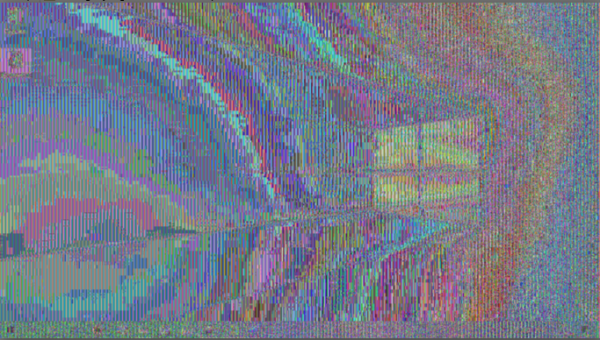
It is clear that this is a desktop.
And here is the result that was sent to the server and decrypted: Screen.tga.
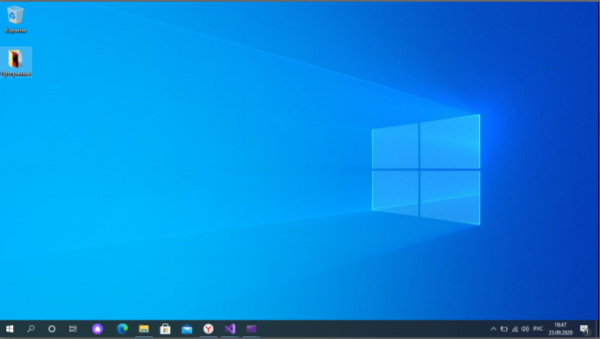
As you can see, a regular Feistel network is not suitable for encryption, but one can utilize CBC and CFB methods; it might be better encrypted, honestly, I haven't checked.
Thank you for your attention!
Source: habr.com
