

On May 22, 2020, an article was published in Nature Communications by scientists representing research and scientific institutions from Australia, China, and Canada, titled "Ultra-dense optical data transmission over standard fibre with a single chip source."
Naturally, such a title was not suited for a broad audience, so the news covered the 44.2 Tb/s figure achieved (some didn’t read thoroughly and headlines showed TB/s, but the correct unit is terabits/s). Let’s explore how this was accomplished and what the researchers really wrote about.
Let’s begin!
Table of Contents
I will try to explain the key points of the research, including terms, devices, and so on. Additionally, at the end of my publication, there will be a list of links where you can read more.
You shouldn’t fully trust my explanation. Like everyone except journalists, I can make mistakes. Read the actual scientific literature ().
01. Abstracts
Original abstracts of the publication (open access):
Micro-combs – optical frequency combs generated by integrated micro-cavity resonators – offer the full potential of their bulk counterparts, but in an integrated footprint. They have enabled breakthroughs in many fields including spectroscopy, microwave photonics, frequency synthesis, optical ranging, quantum sources, metrology, and ultrahigh capacity data transmission. Here, by using a powerful class of micro-comb called soliton crystals, we achieve ultra-high data transmission over 75 km of standard optical fibre using a single integrated chip source. We demonstrate a line rate of 44.2 Terabits s−1 using the telecommunications C-band at 1550 nm with a spectral efficiency of 10.4 bits s−1 Hz−1. Soliton crystals exhibit robust and stable generation and operation as well as a high intrinsic efficiency that, together with an extremely low soliton micro-comb spacing of 48.9 GHz, enable the use of a very high coherent data modulation format (64 QAM — quadrature amplitude modulated). This work demonstrates the capability of optical micro-combs to perform in demanding and practical optical communications networks.
Using an integrated optical source, it was possible to transmit information over standard optical fiber for distances exceeding 75 km. During this, a "speed" of 44.2 terabits/s (Tb/s) was achieved for the C-band (1,550 nm) with a spectral efficiency of 10.4 (b/s)/Hz. The distance between adjacent solitons was reduced to 48.9 GHz.
A 75 km test was conducted using optical fiber in the laboratory. Additionally, similar 'field' tests were carried out on a real optical line (76.6 km) in Melbourne, Australia.
What you need to know:
Micro-comb
In simple terms, it's an optical (read 'laser') source. Its spectrum consists of a series of discrete lines that are evenly spaced (hence called a comb). The pulse of such a source is also referred to as a comb. If you're interested, you can read an overview , which covers the major achievements in this field (page 81, yes, major achievements, open access). A brief account can be found on Wikipedia .
Optical soliton
This is a single optical pulse that can propagate through a nonlinear medium over long distances without changing its shape. General information can be found in the article on Wikipedia .
Soliton crystal
This is a temporally ordered ensemble of solitons that are 'positioned' periodically due to modulation of the field generating them. It's a crystal only in time.
Quadrature amplitude modulation (QAM)
By varying the phase and amplitude of the signal, the amount of transmitted information can be increased. The phase is shifted by  — a quarter circle, hence 'quadrature'. The number 64 indicates the number of different combinations in this modulation. You can read more about it on Wikipedia .
For now, this will be enough, and I will explain the rest of the terms or less obvious things along the way.
02. Experiment
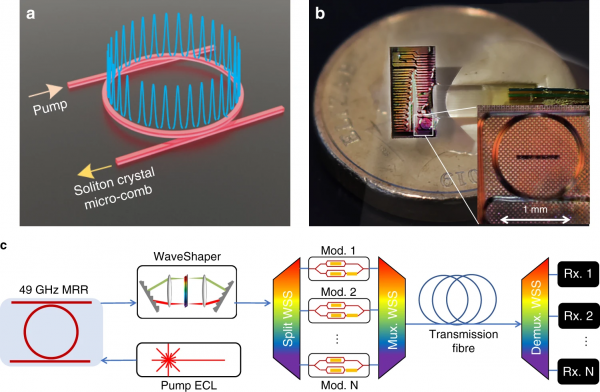
Fig. 1. Concept of the data transfer experiment using soliton crystals .
a. Illustration of the 'soliton crystal' state used in the experiment.
b. Photo of the used chip (5 x 9 mm, only about  the area is occupied by the device and waveguides) + a 2 AUD coin (20.5 mm) for scale. The inset shows the ring resonator. The distortion noticeable in the image is related to the glue fixing the fiber optic.
c. Scheme of the experiment. A continuously emitting (CW ) laser (1.8 W after amplification) pumps the ring resonator (48.9 GHz FSR ), generating a micro-comb when interacting with the soliton crystal. The comb aligns (referring to the alignment of amplitude at different frequencies) and is demultiplexed , allowing for further modulation. The signal is then repacked, transmitted through fiber optic using EDFA amplifiers (see below), and each channel is demultiplexed again (this is the antonym of signal packing).
At abbreviations:
- ECL — edge-coupled laser — is a laser connected to fiber optics;
- WSS — wavelength-selective switch — is a device that allows selective wavelength switching ;
- Rx — receiver;
- EDFA — Erbium Doped Fiber Amplifier — is a fiber optic amplifier doped with erbium ions .
When the laser emits (1,550 nm, continuous), the micro-resonator generates a soliton crystal with a spectral width of over 80 nm (with a period of about 0.4 nm). The micro-comb is generated by the automatic tuning of the laser to the required value.
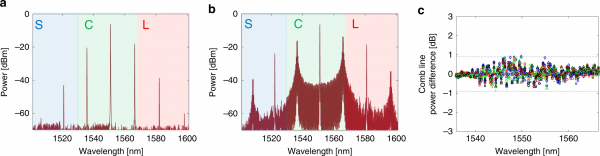
Figure 2. The generation of the soliton crystal. For generation, the laser is smoothly tuned from the long-wavelength edge of the resonance to a predetermined value .
a. The main comb. It is generated when the laser emission is in resonance with the ring.
b. The spectrum of the soliton crystal used in the experiment. This 'truncated' spectrum of the micro-comb corresponds to a single temporal defect introduced into the ring (referring to a vacancy instead of one of the comb lines). At the predetermined frequency, a soliton crystal with spectral features around the main comb lines is generated. This results in lines across the C-band of optical data transmission.
c. The difference in the intensity of the comb lines for 10 different generation parameters (symbols for each type in the Figure represent one of the 10 cases). Since the intensity lies within ± 0.9 dB of the initial spectrum, it can be considered that the generation of the required soliton crystal is reliable.
Soliton crystals were generated for 10 different wavelengths from 1,550.300 to 1,550.527 nm, and it was shown that the required result is achieved for all 10 variations.
From the entire micro-comb, 80 lines were selected within the C-band (a spectral window of 32 nm from 1,536 to 1,567 nm, 3.95 THz). These bands were spectrally aligned and then effectively doubled to 160 (which is equivalent to a comb of 24.5 GHz). Doubling is necessary to optimize spectral efficiency (spectral useful information).
A test band (6 channels) was added to the signal under study. The entire comb was modulated in 64 QAM format, resulting in a symbol rate of 23 gigabits. , allowing for the use of 94% of the available spectrum.
A total of 2 experiments were conducted to transmit information over 75 km. In both cases, single-mode fiber was used .
- Laboratory experiment.
- Field trials using a municipal network connecting the Melbourne campus of the Royal Melbourne Institute of Technology and Monash University's Clayton campus.
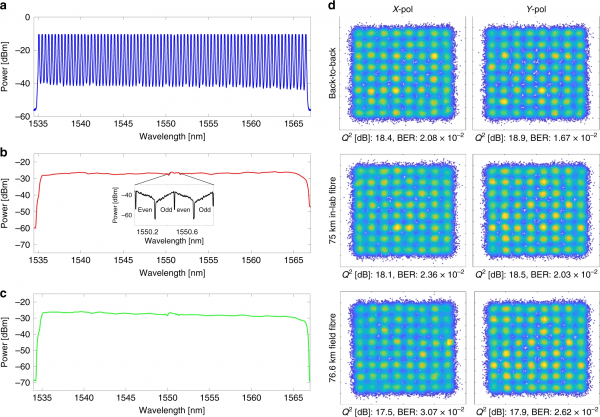
Fig. 3. Multichannel spectrums and soliton crystal signals .
a. The spectrum of the frequency comb after alignment, measured with a resolution of 12.5 GHz to show individual lines.
b. Laboratory results for 75 km of optical fiber. Resolution 50 GHz. The inset illustrates the test channel (resolution 150 MHz), showing even and odd sub-bands present for each line (resulting from the doubling previously described).
c. Field results for 76.6 km of optical fiber. Resolution 50 GHz.
d. Signal constellation for the line 193.4 THz (1550.1 nm) for two polarizations (X and Y). "Back-to-back" (B2B) corresponds to directly connected transmitter and receiver, "75 km in-lab fibre" refers to the laboratory test (b) and "76.6 km field fibre" to the field trial (c).
At abbreviations:
- BER — bit error rate — characterizes the signal quality ;
 (from the magnitude of the error vector ) — characterizes the quality of the signal.
 (from the magnitude of the error vector ) — characterizes the quality of the signal.
03. Results
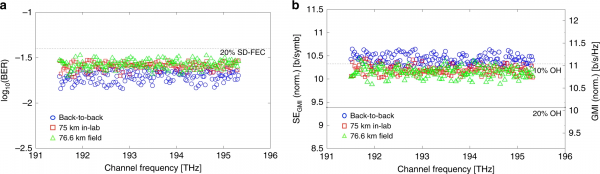
Fig. 4. Bit error rate (BER), spectral efficiency, and generalized mutual information (GMI) in the experiment .
a. BER for each comb line. The B2B configuration is marked in blue, the laboratory experiment in red, and the field experiment in green. The dashed line indicates 20% SD FEC based on LDPC codes. The FEC threshold is set at  . After transmission, it is considered that errors are absent in all channels.
b. GMI and spectral intensity for each comb line. GMI is calculated separately for each line after normalization, which accounts for the signal-to-noise ratio of the received message. The lines show 10% and 20% excess data (OH). Spectral efficiency (SE) is calculated from GMI and the ratio of symbol rate to the distance between combs. Since GMI assumes an ideal signal, it shows greater overall information capacity compared to BER. In the GMI (SE) sequence for B2B, values range from 11.3 b/symbol (10.6 b/symbol/Hz) to 10.9 b/symbol (10.3 b/symbol/Hz). For fiber optic transmission in laboratory conditions, values (for the channel) ranged from 11.0 b/symbol (10.4 b/symbol/Hz) to 10.7 b/symbol (10.1 b/symbol/Hz). Similar results were obtained in field tests.
At abbreviations:
- FEC — forward error correction ;
- SD FEC — soft decision FEC;
- LDPC — low-density parity-check code .
The clean bitrate obtained in experiments is estimated at 44.2 Tb/s. When converted to coded bitrate (adding excess information for data transmission), this value drops to 40.1 Tb/s (B2B configuration), 39.2 Tb/s (in the lab), and 39.0 Tb/s ("in the field"). This indicates spectral efficiencies of 10.4, 10.2, and 10.1 b/s/Hz, respectively.
This result is almost 50% superior to the results obtained using a single integrated device. . In this case, the spectral efficiency is 3.7 times higher.
04. Comparison with other results
Clean bitrate
Coded bitrate
Modulation
Spectral efficiency
Transfer
Source
30.1 Tb/s
28.0 Tb/s
16 QAM
2.8 b/s/Hz
75 km SMF in the lab
4.8 Tb/s
4.4 Tb/s
64 QAM
1.1 b/s/Hz
80 km SMF in the lab
25.6 Tb/s
22.0 Tb/s
16 QAM
3.2 b/s/Hz
9.6 km, 30-fiber optic
44.2 Tb/s
40.1 Tb/s
64 QAM
10.4 b/s/Hz
B2B (0 km)
This publication
44.2 Tb/s
39.2 Tb/s
64 QAM
10.2 b/s/Hz
75 km SMF in the lab
This publication
44.2 Tb/s
39.0 Tb/s
64 QAM
10.1 b/s/Hz
76.6 km SMF on an active municipal line
This publication
Table 1. Comparison of results with other publications.
05. Useful links
Scientific publications
l-1. (OpenAccess)
l-2. (OpenAccess)
l-3
l-4. (OpenAccess)
l-5. (OpenAccess)
May be useful (Wikipedia)
n-1.
n-2.
n-3. (QAM)
n-4. (CW)
n-5. (FSR)
n-6.
n-7. (WSS)
n-8. (DFA, EDFA)
n-9.
n-10.
n-11. (SMF)
n-12.
n-13. (BER)
n-14.
n-15. (MMI, GMI)
n-16. (FEC)
n-17. (LDPC)
I also recommend checking out links to other works in this field used in the publication. .
06. Conclusion
Achieving a data transmission speed of 44.2 Tb/s (even if in practice it's 39.0 Tb/s) is an impressive achievement of modern science.
And even though we probably won’t use it in everyday life anytime soon, the ability to transmit data at high speeds is one of the few areas of science that doesn't raise the usual questions from the general public like 'why are you doing this?' or 'how is this applicable in our lives?'.
I hope you found it interesting. Thank you for your attention!
P.S. If you found any typos or errors in the text, please let me know. You can do this by highlighting part of the text and pressing 'Ctrl / ⌘ + Enter', if you have Ctrl / ⌘, or through . If neither option is available, please report any errors in the comments. Thank you!
P.P.S. I would appreciate it if you could take another 60 seconds to answer 2 quick surveys below. Thank you!
Only registered users can participate in the survey. , please.
Are you interested in publications about achievements in science and/or technology?
97,5%Interested79
1,2%Not interested1
1,2%I don't want to click 'abstain', but I want to know the results1
81 users voted. 8 users abstained.
Would you like to see new publications of this type on Habr?
92,3%Yes, this is just for Habr72
1,3%No, Habr is not for this1
6,4%Doesn't matter5
78 users voted. 5 users abstained.
Source: habr.com
