

Other articles in the series:
- The History of Relays
- The History of Electronic Computers
- The History of the Transistor
- The History of the Internet
In we learned how an American scientist and educator traveled across Europe for the first time. While visiting London, he made a special trip to see a person he deeply respected, the mathematician . Alongside Henry was his friend, Alexander Bain, and his new acquaintance, also an experimenter in the field of telegraphy, . Babbage told his guests that he was soon going to demonstrate his calculating machine to a Member of Parliament, but he was even more pleased to share with them the idea of his new machine that "would significantly surpass the capabilities of the first one." Henry recorded the general details of this plan in his diary:
"This machine is divided into two parts, one of which Mr. B. calls the store, and the other the mill. The store is filled with wheels marked with digits. Periodically, levers draw them out and move them into the mill, where the necessary manipulations occur. Upon completion, this machine will be able to tabulate any formula of an algebraic nature."
A historian cannot help but feel a chill running down their spine from such random intersections in human lives. Here, two threads of the history of computing machines intersected, one approaching its conclusion while the other was just beginning.
Although Babbage's machine is often presented as the beginning of the history of modern universal computers, the connection between them is quite weak. His machine (which he never built) was the culmination of a dream about mechanical computation. This dream, first articulated by Leibniz, was inspired by the increasingly complex clockworks created by craftsmen since the late Middle Ages. However, no general-purpose computer was built purely on mechanics – this task is too complex.
The electromagnetic relay conceived by Henry and others can be easily integrated into computing circuits, the complexity of which seems unimaginable without it. However, it would take decades before this was realized, and such advancements could not have been anticipated by Henry and his contemporaries. It became the ancestor of countless transistors that made today’s digital world possible, deeply intertwined with our modern lives. Relays filled the insides of early programmable computing machines, which reigned briefly until they were replaced by their purely electronic counterparts.
Relays were invented independently several times in the 1830s. Its purposes were diverse (five inventors came up with at least three different applications) – as were the examples of its use. However, it is convenient to think of it as a dual-purpose device. It can be used as a switch that controls another electrical device (including, importantly, another relay) or as an amplifier that turns a weak signal into a strong one.
Switch
Joseph Henry combined deep knowledge of natural philosophy, mechanics, and an interest in the mechanical telegraph issue all in one person. In the 1830s, such a set of qualities was perhaps only found in Wheatstone. By 1831, he had built a circuit 2.5 kilometers long capable of ringing a bell, utilizing one of the most powerful magnets available. Perhaps if he had continued to work so actively on the telegraph, showing the same determination demonstrated by Morse, his name would have been inscribed in textbooks.
But Henry, a teacher at the Albany Academy and later at the College of New Jersey (now Princeton University), built and improved electrical devices for research, teaching, and scientific demonstrations. He was not interested in turning an educational tool into a messaging system.
Around 1835, he devised a particularly clever demonstration using two circuits. Remember that Henry discovered two dimensions of electricity – intensity and quantity (we call them voltage and current). He created circuits with intense batteries and magnets for transmitting electromagnetism over long distances, and circuits with quantitative batteries and magnets for generating high-power electromagnetic forces.
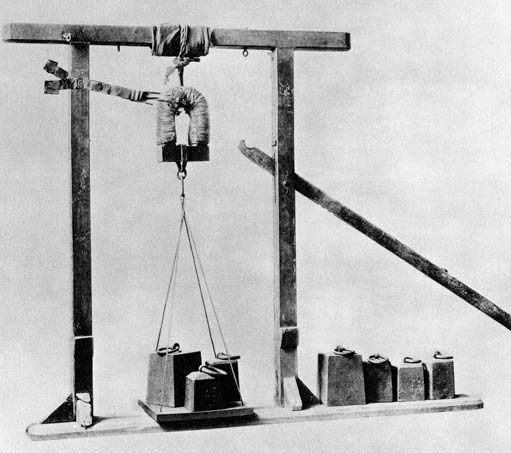
His new device combined both properties. The powerful quantitative electromagnet could lift loads weighing hundreds of kilograms. The intense magnet at the end of the long circuit was used to lift a small metal wire: the switch. Closing the intense circuit caused the magnet to lift the wire, which opened the switch and the quantitative circuit. The quantitative electromagnet then suddenly dropped its load with a deafening crash.
This relay – specifically the role played by the intense magnet and its wire – was necessary to demonstrate the conversion of electrical energy into mechanical energy, as well as how a small force can control a large one. A slight immersion of the wire in acid to close the circuit led to a minor movement of the small switch, which ultimately resulted in a disaster in the form of falling metal, sufficient to crush anyone foolish enough to stand underneath it. For Henry, the relay was a tool for demonstrating scientific principles. It was an electric lever.
Henry was likely the first to connect two circuits in this way – using the electromagnetism of one circuit to control the other. The second place, as far as we know, belongs to William Cook and Charles Wheatstone, although their goals were quite different.
In March 1836, shortly after attending a demonstration in Heidelberg of a telegraph that used a galvanic needle to transmit signals, Cook was inspired by a musical box. Cook believed that using needles to represent letters in a real telegraph would require several needles, and several circuits would be needed for them. Cook wanted the electromagnet to activate a mechanism that could be as complex as necessary to demonstrate the required letter.
He envisioned a machine resembling a musical box, with a barrel surrounded by numerous pins. On one side of the barrel, there should be a circular scale with letters. Such a box should be located at each end of the telegraph line. The wound spring should make the barrel rotate, but for most of the time, it would be fixed by a lock. When the telegraph key is pressed, the circuit closes, activating the electromagnets that release both locks, causing both machines to rotate. When the desired letter is displayed on the scale, the key is released, the locks engage, and the movement of the barrels stops. Cook, unknowingly, recreated Ronald's chronometric model of the telegraph, conceived two decades earlier, and the early experiments of the Shapp brothers with the telegraph (although they used sound, not electricity, for synchronizing the scales).
Cook realized that a similar mechanism could help solve the long-standing problem of the telegraph – notifying the receiving party of a new message. A second circuit could be used with another electromagnet that would activate a mechanical bell. Closing the circuit would pull in the lock, and the bell would ring.
In March 1837, Cook began collaborating with Whiting on the telegraph, and around this time, they considered the need for a second circuit. Rather than creating an independent circuit for the alert signal (and running kilometers of extra wire), wouldn't it be simpler to use the main circuit to control the signal?
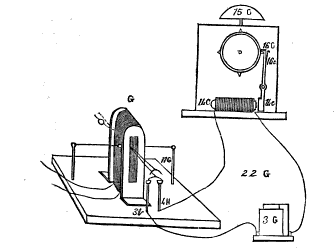
By that time, Cook and Whitson had returned to the needle design, and it was abundantly clear that a small piece of wire could be connected to the needle so that when its end was attracted by the electromagnet, its tail would complete a second circuit. This circuit would activate the signal. After a certain interval during which the message recipient could wake up, turn off the signal, and prepare a pencil and paper, the needle could already be used to transmit the message in standard mode.
For two years on two continents, twice, with two different goals, people realized that the electromagnet could be used as a switch to control another circuit. But a completely different way of interconnecting the two circuits could also be imagined.
Amplifier
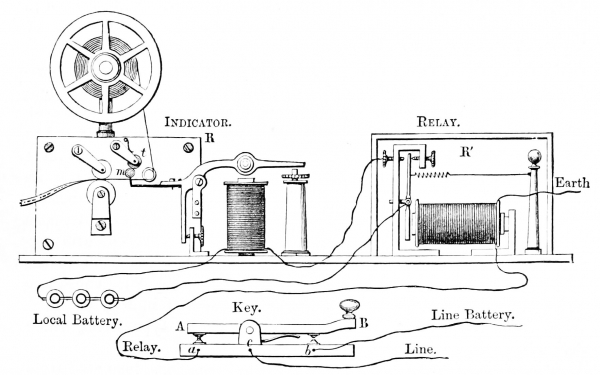
By the fall of 1837, Samuel Morse was confident that his idea for the electric telegraph could be made to work. Using a powerful battery and a Henry magnet, he transmitted messages over a distance of half a kilometer. However, to prove to Congress the possibility of sending messages via his telegraph across the continent, he needed much more. It was clear that regardless of the battery power, at some point the circuit would become too long to transmit a discernible signal to the other end. But Morse realized that, despite the significant drop in power over distance, the electromagnet could open and close another circuit powered by its own battery, which in turn could transmit the signal further. This process could be repeated indefinitely and cover distances of any length. Thus, these intermediate magnets were called "relays" – like postal stations for changing horses. They received an electric message from a weakening partner and carried it further with renewed strength.
It is impossible to determine whether this idea was inspired by Henry's work, but Morse was certainly the first to use a relay for this purpose. To him, a relay was not a switch, but an amplifier capable of turning a weak signal into a strong one.
On the other side of the Atlantic around the same time In London, a pharmacist came up with a similar idea. He likely became interested in the telegraph around 1835. By early 1837, he was regularly experimenting with a one-and-a-half-kilometer circuit in Regent's Park in northwest London.
Shortly after the meeting between Cook and Whiston in March 1837, Davy felt the competition and began to take the construction of a practical system more seriously. He noticed that the deflection of the galvanic needle significantly decreased as the length of the wire increased. As he wrote many years later:
Then I thought that even the slightest movement of the needle by the thickness of a hair would be enough to bring two metal surfaces in contact, closing the new circuit dependent on a local battery; and this could be repeated indefinitely.
Davy referred to this idea of converting a weak electrical signal into a strong one as an "electrical rejuvenator." However, he was unable to implement this or any other idea regarding the telegraph. He received the patent for the telegraph in 1838, independently of Cook and Whiston. But in 1839, he sailed to Australia, escaping a troubled marriage, leaving the field to his competitors. Their telegraph company acquired this patent a few years later.
Relay in the World
In the history of technology, we focus a lot on systems but often ignore their components. We chronicle the history of the telegraph, telephone, and electric light, basking their creators in the warm rays of our approval. But these systems could only emerge through the combination, recombination, and alteration of existing elements, which grew quietly in the shadows.
The relay is one such element. It underwent rapid evolution and diversification as telegraph networks began to expand actively in the 1840s and 1850s. Over the following century, it appeared in various electrical systems. The earliest modification involved using a rigid metal armature, as in a telegraph signal, to close the circuit. After the electromagnet was turned off, the armature would disconnect from the circuit with the help of a spring. This mechanism was more reliable and durable than pieces of wire or pins. Models that were normally closed were also developed, in addition to the original design, which was normally open.
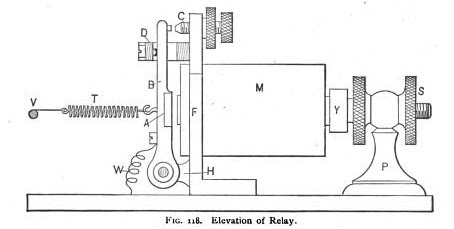
A typical relay from the late 19th century. The spring T keeps the armature B from touching the contact C. When the electromagnet M is activated, it overcomes the spring and closes the circuit between wire W and contact C.
In the early years of the telegraph, relays were rarely used as amplifiers or 'refreshers' since one circuit could be stretched up to 150 km. However, they were very useful for connecting weak long lines with local high-voltage lines, which could be used to power other machines, for example, the Morse recorder.
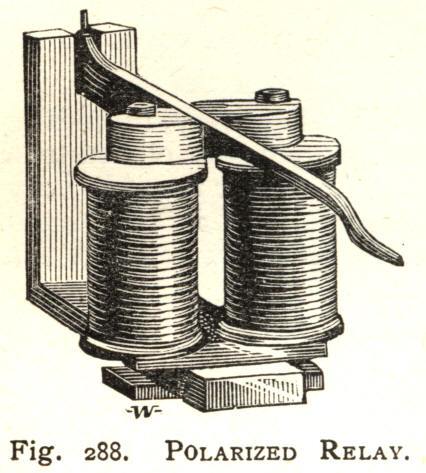
Dozens of patents in the U.S. from the latter half of the 19th century describe new types of relays and their new applications. A differential relay divided the coil so that the electromagnetic effect was neutralized in one direction and amplified in another, allowing for duplex telegraph communication: two signals traveling in opposite directions over a single wire. Thomas Edison used a polarized relay to create a quadruplex capable of sending 4 signals simultaneously over one wire: two in each direction. In a polarized relay, the armature itself was a permanent magnet that reacted to the direction of the current rather than its strength. With permanent magnets, it was possible to create relays with switching contacts that remained open or closed after switching.
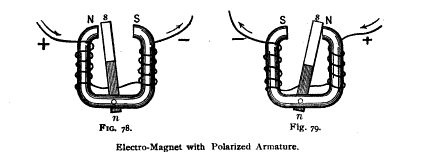
Polarized Relay
In addition to telegraphs, relays were also used in railway signaling systems. With the advent of power transmission networks, relays began to be used in these systems as well, especially as protective devices.
But even these extensive and complex networks did not require more from relays than they could provide. The telegraph and railway reached every town, but not every building. They had tens of thousands of endpoints, but not millions. Power transmission systems did not care where they ended—they simply supplied current to a local circuit, and every home and business could take as much as they needed.
Telephony was a completely different matter. Phones needed to create a connection from point to point, from any home or office to another, so they required control circuits of unprecedented scale. The human voice, transmitted as vibrations through wires, was a rich but weak signal. Therefore, long-distance telephone communications needed higher quality amplifiers. It turned out that switches could also function as such amplifiers. Now, telephone networks were evolving switch technology more than any other systems.
What to Read
• James B. Calvert, “The Electromagnetic Telegraph“
• Franklin Leonard Pope, “Modern Practice of the Electric Telegraph” (1891)
Source: habr.com
