

The world of analog devices has practically vanished, yet storage media still persist. Today I will share how I faced the necessity of digitizing and storing my home archive. I hope that my experience will help you choose the right devices for digitization and save some money by doing it yourself.
“— And what is this?
— Oh, this is a real gem, Comrade Major! Look at this: this is a transmitting antenna with a power supply, this is a camera, but it doesn't have a recording head, that's one, and there is no cassette either, that's two, and as for how it turns on, who knows, that's three.”
(Feature film 'Genius', 1991)
Would you like to open a 'time capsule' and hear the young voices of your parents? See what your grandfather looked like when he was young, or take a look at how people lived 50 years ago? By the way, many still have that opportunity. On attics, in drawers and cupboards, analog storage media still lie in wait for their moment. How feasible is it to read and convert them into digital format? This is the question that sparked my curiosity, prompting me to take action.
Video Recordings
It all started about 5 years ago when I saw an inexpensive USB gadget for digitizing analog sources on a well-known Chinese website called EasierCAP. Since I had a few VHS cassettes stored in my cupboard, I decided to buy this device and see what was actually on the tapes. As I don't have a TV at all, and my VCR was tossed out back in 2006, I needed to find a working device to actually play the VHS.
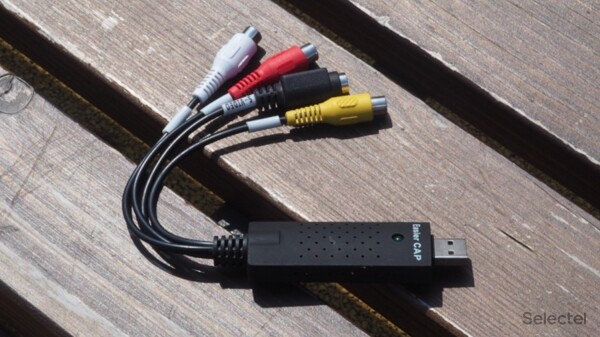
After visiting another well-known site with listings for various items, I found a VHS player LG Wl42W literally in the neighboring house and purchased it for the price of two cups of coffee. Along with the player, I got an RCA cable.
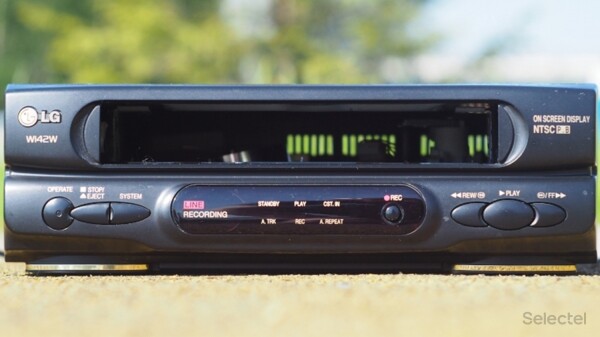
I connected all of this to my computer and started to work with the software that came with it. Everything was intuitive enough, so within two to three days all the VHS tapes were digitized and the video player was sold on the same site. The conclusion I reached was that the tapes were on average 20 years old, and most of them were suitable for digitization. Only one of the two dozen recordings turned out to be partially damaged and could not be fully processed.
I began to dig deeper into the storage and stumbled upon 9 Sony Video8 format tapes. Do you remember the show "Self-Made Director" that aired before the rise of YouTube and TikTok? Back then, portable analog camcorders were extremely popular.

The following formats were mainstream at that time:
- Betacam;
- VHS-Compact;
- Video8.
Each of these formats also had variations, so I had to carefully read about each one before trying to find the equipment that could play the tapes I found.
The main problem that significantly delayed this process was that there were very few used camcorders of this format available, and they were priced outrageously. After a couple of weeks of observing listings, I found one where a camcorder was priced just under 1000 rubles, and I bought it. Sony Handycam CCD-TR330E.
It turned out to be quite battered, with a cracked LCD screen, but when connected to the analog output of a USB stick, it worked reasonably well. There was no power supply included, nor were there any batteries. I resolved this by using a laboratory power supply and wires with crocodile clips. Surprisingly, the tape drive mechanism was in good condition, which allowed me to read all these tapes. The oldest Video8 tape I had was dated 1997. The result — 9 out of 9 tapes were processed without any issues. The camcorder suffered the same fate as the video player — after a couple of days, I sold it for the same purposes of digitization.
The first part of the digitization saga ended quite quickly. EasierCAP went into the box, where it had remained until recently. After two years, it was time to do a major renovation at a relative's apartment, which automatically meant one thing: the storage room needed to be completely cleared out. That’s when I discovered a huge amount of rare information carriers:
- several dozen audio cassettes;
- vinyl records;
- 3.5-inch floppy disks;
- reels of magnetic tape;
- old photographs and negatives.
The idea of preserving this treasure and transforming it into digital form came almost immediately. I still had many challenges ahead before achieving the desired result.
Photographs and negatives
This was the first thing I wanted to preserve. Many old photos and film taken with a Zenit-B. At that time, capturing beautiful frames required a lot of effort. Quality photo film was in short supply, but that wasn't even the main issue. The film had to be developed and printed, often at home.
Therefore, along with the films and photographs, I found a large number of chemical glassware, photo enlargers, a red lamp, framing templates, containers for reagents, and tons of various devices and consumables. Someday I will try to go through the entire cycle of obtaining photographs myself.
So, I needed to acquire a device capable of digitizing negatives and regular photos. After searching through listings, I found an excellent flatbed scanner HP ScanJet 4570c, which has a separate slide module for scanning film. It cost me only 500 rubles.
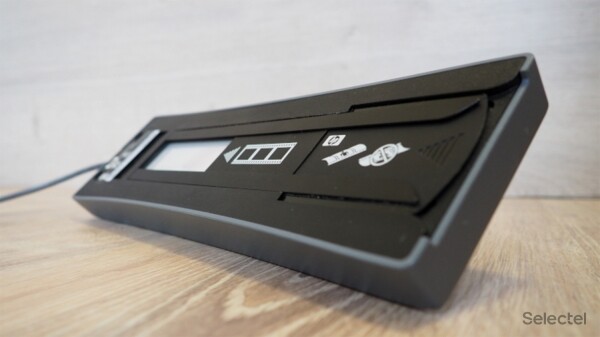
Digitization took a lot of time. For more than two weeks, I spent several hours each day performing the same operation of viewing and scanning. For convenience, I had to cut the film into pieces that fit into the slide module. The work was completed, and I am still using that scanner. I was extremely pleased with its performance.
3.5-inch floppy disks
Gone are the days when a floppy disk drive was an essential attribute of any computer case, laptop, and even musical synthesizers (the author still has a Yamaha PSR-740 with a floppy drive). Nowadays, floppy disks are a rarity, hardly used with the widespread availability of the internet and cheap Flash drives.
Of course, one could buy an ancient computer case with a floppy drive from a flea market, but I came across a USB drive. I purchased it for a nominal amount. I was curious to see if disks written between 1999 and 2004 would be readable.
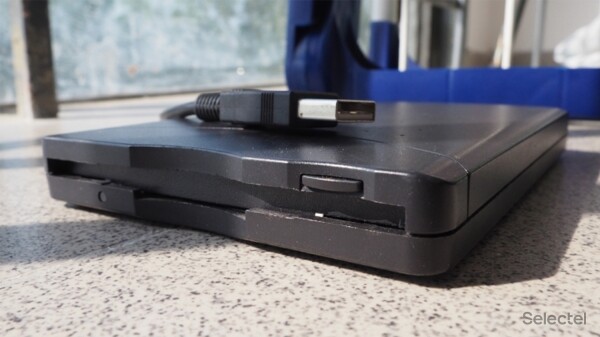
The result was, to put it mildly, disappointing. Less than half of the available disks were readable. The rest either returned errors during copying or were completely unreadable. The conclusion is simple: floppy disks don’t last long, so if you have any of these storage devices lying around, they probably hold no useful information anymore.
Audio cassettes
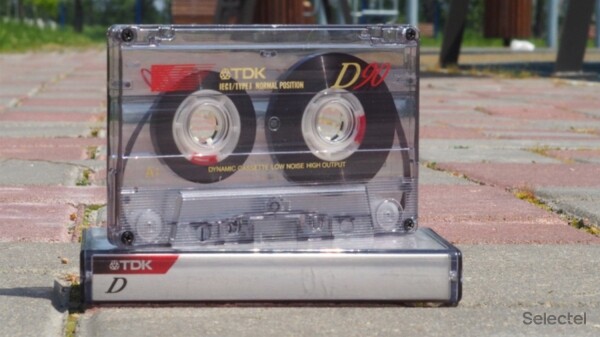
The history of audio cassettes (also known as compact cassettes) began in 1963, but they gained mass popularity starting in 1970 and held the lead for a full 20 years. They were succeeded by compact discs, marking the end of the magnetic audio medium era. However, many people still have audio cassettes with various music collecting dust in their attics. How can we play them in the 21st century?
I had to reach out to a friend, an avid audio equipment collector, and borrow the famous 'Cobra' (Panasonic RX-DT75) for a few days, so named for its quite original design. In reality, any audio player would suffice, but finding ones with live belts is quite difficult.
Reels with magnetic tape
I still remember myself as a child, playing with a Snježet-203 tape recorder. It came with a microphone and headphones, so I would record my voice at 9 speed, and play it back at 4 speed. Almost like in the famous movie 'Home Alone', where Kevin McCallister used a Tiger Electronics dictaphone from the line .

More than twenty years have passed since then, and the recordings lay in the storeroom, waiting to be brought to light. There, I also found the tape recorder, manufactured in 1979. This was perhaps the most interesting quest. While finding a vintage camcorder or floppy drive is not too difficult, restoring the functionality of a tape recorder over 40 years old is no small task. To start, I decided to open the case and thoroughly blow out the dust inside.
Visually, everything looked fine, except for the belts. Years in the storeroom had destroyed the unfortunate rubber bands, which just crumbled in my hands. There were three belts in total: one for the motor, an extra one for the take-up spool, and another for the counter. The easiest to replace was the third one (any rubber band for banknotes will do). However, I began searching for the first two on classified ads websites. Eventually, I bought a repair kit from a seller in Tambov (apparently, he specializes in vintage equipment repair). A week later, I received a letter with two new belts.
While the belts were on their way to me, I plugged the tape recorder into the power outlet to check if the motor was functioning. I cleaned and lubricated all the moving metal parts with machine oil, and treated the rubber parts and playback head with isopropyl alcohol. I also had to replace a couple of stretched springs. And here comes the moment of truth. The belts were installed, the spools were set up. Playback began.
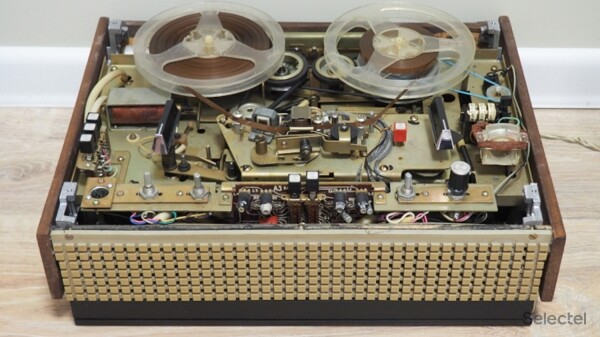
And immediately, the first disappointment — there was no sound. I checked the manual to verify the switch positions. Everything was correct. So, I had to disassemble and see where the sound was lost. The source of the problem was discovered quite quickly. One of the glass fuses looked normal visually, but when checked for continuity, it turned out to be blown. I replaced it with a similar one, and voilà, the sound was back.
I was utterly amazed. The tape was preserved almost perfectly, despite being untouched and unrewound in the storeroom. In my mind, I was already picturing that I would have to bake it, as described in I didn't solder the adapter, and for recording, I used a professional studio microphone. I eliminated background noise using the built-in features of a free audio editor. .
Vinyl records
Interestingly, this is perhaps the only type of rare information carriers for which equipment is still being produced. Vinyl has long been popular among DJs, meaning the necessary equipment is always available. Moreover, even inexpensive turntables have a digitizing function. Such a device would make an excellent gift for the older generation, allowing them to easily play their favorite record and listen to the music they are accustomed to.
I did it
So I digitized everything and started thinking — how should I store all these photos, negatives, video, and audio recordings now? I destroyed the original media to save space, but the digital copies need to be preserved reliably.
I should choose a format that I can read in about 20 years. A format for which I can find a reading device, that will be easy to store and read again if needed. Based on my experience, I wanted to use a modern streamer and record everything on magnetic tape, but streamers are prohibitively expensive and simply do not exist in the SOHO segment. It is unreasonable to keep a tape library at home, and placing it in a data center just for 'cold storage' is costly.
I opted for single-layer DVD discs. Yes, they are not very high-capacity, but they are still being produced, along with recording equipment for them. They are durable, easy to store, and also easy to read when needed. There was quite an informative post on Habr about the degradation of optical media. In the end, I acted as follows:
One copy is stored at home on a local QNAP-D2 NAS without any backup.
- The second copy is uploaded to
- Selectel Cloud Storage .
- The third copy is recorded on DVDs. Each disk is duplicated twice.
The recorded disks are stored at home, each in its own box, away from light, inside a vacuum-sealed plastic bag. I placed silica gel inside the bag to securely protect the contents from moisture. I hope this will allow them to be read without problems even after 10 years.
In conclusion
My experience has shown that it is not too late to digitize analog media. While there are still functioning devices for playback and it is possible to extract data. However, with each passing year, the chance that the media will become unusable increases, so don't delay.
Why all these complications with purchasing devices? Couldn't one simply go to a digitization workshop and get the result ready-made? The answer is simple — it’s very expensive. The cost of digitizing a video cassette can reach 25 rubles per minute, and you would have to pay for the entire cassette all at once. It’s impossible to know what is on it without watching it completely. So for one VHS video cassette with a capacity of 180 minutes, one would have to pay from 2880 to 4500 rubles.
According to my rough estimates, just for digitizing video cassettes, it would cost about 100,000 rubles. I'm not even mentioning audio and photographs. My approach has turned into an interesting hobby for several months and cost me only 5,000 to 7,000 rubles. The emotions exceeded all expectations and brought my family a lot of joy by allowing them to relive moments captured on tape.
Have you digitized your home archive yet? Maybe it’s time to do it?
Only registered users can participate in the survey. , please.
Have you digitized your home archive yet?
37,7%Yes, everything is digitized.
9,8%No, I’m just planning to hand it over for digitization.
31,2%No, I will digitize it myself.
21,3%I don't plan to digitize.
61 users voted. 9 users abstained.
What media do you store your home archive on?
80,0%Hard drives.
18,2%NAS.
34,6%Cloud storage.
49,1%CDs or DVDs.
1,8%LTO streamer tapes.
14,6%Flash drives.
55 users voted. 13 users abstained.
Source: habr.com
