

Last year in St. Petersburg dedicated to parallel and distributed systems. Laureates made presentations и (, и ), creators of compilers and programming languages (C++, Go, Java, Kotlin), developers of distributed databases (Cassandra, CosmosDB, Yandex Database), as well as creators and researchers of algorithms and data structures (CRDT, Paxos, wait-free data structures) . In general, at this point you can already take a vacation, minimize the IDE window, open a YouTube playlist with Hydra 2019 - and let the task scheduler wait a bit.
In general, there has never been such a conference, and now it will happen again. Again with reports in English, because there is no better language to talk about parallel and distributed computing. Again in the summer, July 10 and 11, because the speakers have time to research and teach, for example, at the universities of Cambridge, Rochester and St. Petersburg, and other times of the year are not for them.
However, this time Hydra will be held in Moscow, where most of the conference participants came from last year to listen to reports on distributed consensus and transactional memory. On the new Hydra there is a more intricate program, new speakers along with the heroes of the last year, as well as the already familiar feeling of delight distributed among the participants from parallel hardcore in three halls.

Let's immediately lay out a deck of cards on the table with the shirts of the Byzantine generals up - we want the program of the new Hydra to be more detailed and varied. Last time we scratched with a fingernail, now we will dig wider and deeper. Here are Hydra 2020 themes with a diff from last year:
  Parallel systems:
 * Algorithms & data structures
 * Memory models
 * Compilers, runtime
 * Memory reclamation
 * Testing & verification
 * Hardware issues
 * Non-volatile memory
 * Transactional memory
 * Scheduling algorithms & implementations
 * Heterogeneous computing: CPU, GPU, FPGA, etc.
 * Performance analysis, debugging, & optimization
Distributed systems:
* Distributed computing
* Distributed machine learning/deep learning
* State machine replication & consensus
* Fault tolerance & resilience
* Testing & verification
* Hardware issues
* Blockchain & Byzantine fault tolerance
* Distributed databases, NewSQL
* Distributed stream processing
* Scheduling algorithms & implementations
* Cluster management systems
* Security
* Performance analysis, debugging, & optimization
* Peer-to-peer, gossip protocols
* Internet of things
How to tell about all this in the program of one conference? It's certainly not easier than testing the linearizability of operations in a shiny new distributed store with but we will try.
Here's who's on the program:
 (Cindy Sridharan) is a distributed systems developer from San Francisco, author of a short book (take ) and popular , where only one article ""Able to get rid of a couple of days off, but leave happy. At Hydra 2020, Cindy will show you how , even though they store state.
 Michael Scott (Michael Scott) - researcher from , known to all Java developers as the creator of from the Java standard library. Of course, with the Dijkstra Prize for "» and own . Last year, Michael gave Hydra the best (according to you) report on and now talk about и available to parallel processes.
 (Heidi Howard) of , known for creating the distributed consensus algorithm , as well as work on the generalization of Flexible Paxos and . Last year, Heidi told how it works and how (one of the best reports), and now he will try to walk on thin ice between — and share your opinion about which algorithm is better.
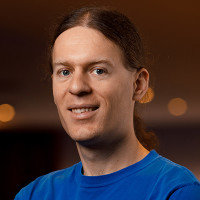 (Martin Kleppmann) is perhaps even the better known researcher at the University of Cambridge, and a former big data systems developer, who wrote an amazingly clear and therefore unique book on distributed systems "". Martin last year of their research CRDT, and what will tell now - we .
 (Nikita Koval) is a developer of coroutines in the Kotlin team, a lecturer in a course on multithreaded programming at ITMO and a member of the program committee of the Hydra conference (yes, the one about which this article is). Last year, Nikita talked about testing multi-threaded data structures on the JVM platform using , and on Hydra 2020 it about SegmentQueueSynchronizer - verified using for abstraction for programming synchronization primitives.
Follow our asynchronous announcements: there will be about three dozen reports at the conference, we will soon tell you about the rest. Also, of course, there will be discussion zones at the conference, where you need to test the speakers with questions in one or several streams until a general consensus is reached.
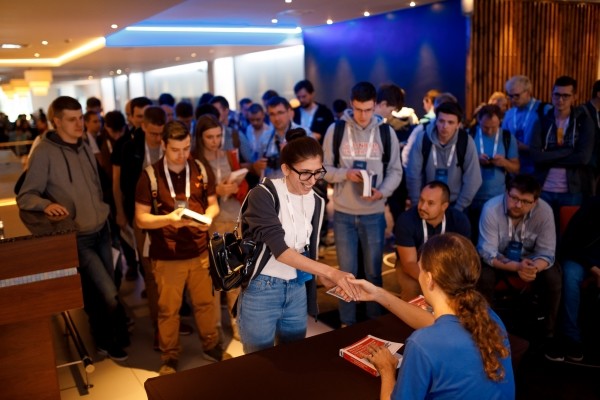
And if you're lucky, Martin Kleppmann will sign a book for you.
Yes, before the Hydra 2020 conference, namely on July 6-9, — the third summer school on the theory and practice of distributed computing. There you will find sensations that are difficult to get at the conference, so we will talk about the School in a separate post.
What now? First, follow the news on Habré and in social networks (, , ).
Secondly, if you have already felt an irresistible desire to attend the conference, study the site, there you can already .
Thirdly, do not miss the opportunity to chat with the Hydra 2020 conference program committee in the comments. Members of the PC will be happy to talk with you about the topics of the upcoming conference.
See you at Hydra!
Source: habr.com
