

Recently, an article was published on Habr , which stirred a lot of discussion. This note is a brief philosophical response to that article, which, I hope, will clarify matters from a rather unexpected perspective for many readers.
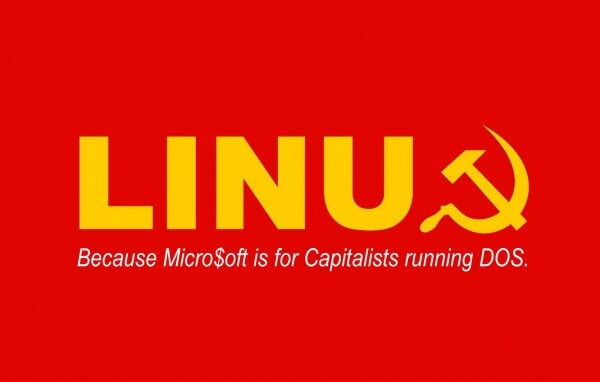
The author of the original article characterizes Linux systems as follows:
Linux is not a system, but a jumble of disparate hacks held together with duct tape
Why does this happen? Because
people generally don't care about applications. They are trying to achieve their goals... And in Linux, the ceiling of design is not achieving goals, but solving problems.… let's implement file transfer support; it's universal and will satisfy everyone. But to send a selfie, a person has to find software to capture from a webcam, retouch the photo in some graphic editor, and then send it through the seventeenth option in the "Tools" menu. WE HAVE UNIX WAY!
However, the consumption model can be viewed from different perspectives, and I suggest choosing one that also pertains to the production of the product being consumed. Then we will be able to see some aspects that are usually hidden from our sight and thus influence the process quietly.
That is, you can only consume a product without producing anything if the product is delivered by nature in a ready-made form and in any quantities required by the consumer. Otherwise, the consumer has to participate in some production to ultimately acquire the good being consumed.
At the same time, production can be individual, where the producer creates the whole finished product alone, or collective, up to broad social cooperation for the production of one product. Furthermore, the consumer can produce either the product they consume (in which case we will call such a consumer a "producer-consumer"), or some other product that will ultimately be exchanged for the very product the consumer needs for direct consumption through a public exchange system.
Thus, we have the following classification of consumers:
- A consumer who receives a product directly, without labor costs.
- A consumer who obtains a product in exchange for another product in which they participated in production (individually or as part of a group).
- A producer-consumer who receives exactly the product they participated in producing (individually or as part of a group).
We are only interested in collective production, because such a good as a fully functional operating system is impossible to create alone today (at least Windows, macOS, and Linux are developed by large teams).
What is all this about? The point is that it is mistaken to equate a Windows consumer with a Linux consumer, because the former belongs to type 2, while the latter belongs to type 3. Moreover, it is even more absurd to treat a Linux consumer the same way as a type 1 consumer.
A true, 'target' consumer of the Linux system is also a participant in its production. This is either a developer who needs a convenient, fully controllable, and fully configurable tool, or a company that uses the system in their production process of something else for those production needs. It becomes more advantageous for these consumers to participate in the production of this product themselves (including its configuration, as one of the stages of production, bringing the product to a state ready for consumption) than to purchase the necessary adjustments externally. Why is it more advantageous? Because the cost of production is usually lower than the price of the produced product, and often the completed informational product is sold at a price higher than the cost of its copy.
The latest situation needs further clarification. For certain agents of the economic system (for example, companies), it becomes more beneficial to cooperate with other agents and jointly produce a necessary product if the costs of individual participation in production are lower than the price offered by other individual private producers for the same product. This becomes possible only at a certain level of productive forces development; the means of production must essentially allow such organization, and they will operate under specific conditions of public ownership, because only under conditions of an open production process can one maximize cost savings.
Given this, how can one blame the Linux community for creating a set of universal tools, which still require further refinement (read: which demands consumer participation in production), rather than providing a convenient fully finished product for the consumer? On the contrary, attempting to cater to the market culture of pure consumption by offering a product completely ready for consumption, without involvement in its creation, refinement, and debugging, undermines the very productive foundation upon which both Linux and other free projects are built. To abandon the creation of universal components in favor of narrowly specialized ones for private purposes is to condemn your free project to stagnant existence or oblivion, since a component that addresses a common task in many cases will gather a community more quickly and extensively, simply because the need for it will be greater among a larger number of consumer-producers.
So what should we do?
We are being convinced that
Linux needs to be humanized. This means — to reinvent everything, starting with the bootloader. …[Otherwise] Linux will remain a pastime for people who didn't play enough with building blocks in childhood.
But what will we ultimately achieve with this "humanization"? We will create a system similar to Windows, geared towards consumers who do not participate in production, and yet it will not fit into the market capitalist model of production and exchange, making it economically unviable. Do we need that?
There is no doubt that usability is very important, but it should be kept in mind that in the case of Linux, the priority should not be the comfort of first or second type users, but the comfort of third type users who are directly or indirectly involved in its production. We need to create usable tools and implement appropriate policies to allow specialist users—potential contributors—to engage with the development community more swiftly and easily and contribute to the common cause. Advanced configuration and assembly tools are necessary so that users feel the real power that this approach can provide them, and they should not be afraid to use it to enhance their productivity. There is a struggle for these users too, and they are being categorized as number two, like those using macOS, for example.
And for those who are used to getting things for free… Easing their lives should not be an end in itself 🙂 Let them work, let them participate in debugging, let them post messages on forums and trackers—this information will save others time later, fostering participation rather than one-sided usage. Yes, Linux requires effort from the consumer. And that’s great! Let’s continue to develop this direction, so that more people from various professions get involved, not just programmers and system administrators. Because Linux can survive without passive consumers, but it cannot without participation in development.
Only registered users can participate in the survey. , please.
Would you like to receive all the goods you need for free if it means you must participate in their production alongside other consumers?
64,8%Yes619
23,1%No221
12,1%Ask later116
956 users voted. 162 users abstained.
Source: habr.com
