

Other articles in the series:
- The History of Relays
- The History of Electronic Computers
- The History of the Transistor
- The History of the Internet
In We witnessed how the first generation of digital computers was built on the basis of the first generation of automatic electric switches – electromagnetic relays. However, by the time these computers were created, another digital switch had been waiting in the wings for its debut. The relay was an electromagnetic device (using electricity to control a mechanical switch), while this new class of digital switches was electronic – based on new knowledge about the electron that emerged in the early 20th century. This science indicated that the carrier of electric force was not current, wave, or field – but a solid particle.
The device that gave rise to the era of electronics based on this new physics became known as the 'electron lamp' [in the US – vacuum tube]. Two people are involved in its creation: the Englishman and the American In fact, the origins of electronics are more complex, woven from many threads crossing Europe and the Atlantic, stretching back to early experiments with Leyden jars in the mid-18th century.
However, for the purposes of our discussion, it will be convenient to illuminate (pun intended!) this history, starting with Thomas Edison. In the 1880s, Edison made an interesting discovery while working on electric lighting – this discovery sets the stage for our narrative. From here, the further development of electron lamps took place, which was required for two technological systems: a new form of wireless message transmission and the continuously expanding telephone networks.
Prologue: Edison
Edison is often regarded as the inventor of the electric light bulb. This both honors him too much and too little. Too much because Edison was not the sole creator of the glowing lamp. Besides the multitude of inventors who preceded him, whose creations did not reach commercial application, we can mention Joseph Swan and Charles Stearns from Britain and American William Sawyer, who launched light bulbs simultaneously with Edison. [The honor of the invention also belongs to the Russian inventor . Lodygin was the first to think of extracting the air from a glass lamp bulb, and then suggested making the filament not from coal or charred fibers, but from heat-resistant tungsten / note.]. All lamps consisted of a sealed glass bulb, inside which was a resistive filament. When the lamp was turned on in the circuit, the heat generated by the resistance of the filament to the current caused it to glow. The air was evacuated from the bulb to prevent the filament from igniting. Electric light was already known in large cities in the form of , used for lighting large public spaces. All these inventors were looking for a way to reduce the amount of light taken from the burning arc into a bright particle small enough to be used in homes to replace gas lamps and to make the light source safer, cleaner, and brighter.
What Edison actually did – or, more precisely, what his industrial laboratory created – was not just the invention of a light source. They built an entire electrical system for lighting homes – generators, wires for transmitting current, transformers, etc. Of all this, the light bulb was just the most obvious and visible component. The presence of Edison's name in his companies producing electricity was not merely a bow to the great inventor, as in the case with Bell Telephone. Edison showed himself not only as an inventor, but also as a systems architect. His laboratory continued to work on improving various components of electric lighting even after their early success.
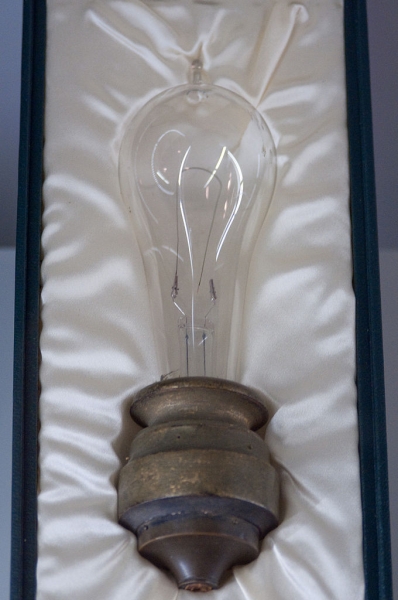
A specimen of early Edison bulbs
During research in 1883, Edison (or possibly one of his colleagues) decided to place a metal plate inside the glowing lamp along with the filament. The reasons for this action are unclear. It may have been an attempt to eliminate the darkening of the lamp—the interior of the glass bulb was gradually accumulating a mysterious dark substance. The engineer seemingly hoped that these black particles would be attracted to the electrified plate. To his surprise, he found that when the plate was connected to the positive end of the filament, the amount of current flowing through the filament was directly proportional to the intensity of its glow. No such effect was observed when the plate was connected to the negative end of the filament.
Edison concluded that this effect, later termed the Edison effect or , could be used to measure or even control the “electromotive force,” or voltage, in an electrical system. As was his habit, he filed a patent for this “electric indicator” and then returned to more important tasks.
Wireless
Fast forward 20 years to 1904. At this time, in England, John Ambrose Fleming was working for the Marconi Company on improving the radio wave receiver.
It is important to understand what radio was and what it was not at that time, both in terms of the instrument and practical use. Radio was not even called 'radio' back then; it was referred to as 'wireless.' The term 'radio' only became dominant in the 1910s. Specifically, it referred to wireless telegraphy—a system for transmitting signals in the form of dots and dashes from sender to receiver. Its primary use was communication between ships and port services, and in this regard, it was of interest to maritime authorities worldwide.
Some inventors of that time, in particular, , they experimented with the idea of the radio telephone – transmitting voice messages through the air in the form of a continuous wave. However, broadcasting in the modern sense only emerged 15 years later: the transmission of news, stories, music, and other programs for a wide audience. Prior to that, the omnidirectional nature of radio signals was viewed as a problem to be solved, rather than a feature to be utilized.
The radio equipment that existed at the time was well-suited for working with Morse code but poorly adapted for everything else. Transmitters created Hertzian waves by sending a spark through a break in the circuit. As a result, the signal was accompanied by a crackling static noise.
Receivers detected this signal using a coherer: metallic filings in a glass tube that aggregated under the influence of radio waves into a continuous mass, thus closing the circuit. Then, one had to tap the glass to break up the filings and prepare the receiver for the next signal – initially done manually, automatic devices soon became available for this purpose.
In 1905, crystalline detectors began to appear galena , it became possible to capture radio signals from thin air. The resulting receivers were inexpensive, compact, and accessible to everyone. They stimulated the growth of amateur radio, especially among young people. The sudden surge of activity on the airwaves led to issues as the radio spectrum was shared among all users. Innocent conversations among enthusiasts could inadvertently overlap with commercial fleet communications, and some pranksters even managed to issue false commands and send out distress signals. The government inevitably had to intervene. As Ambrose Fleming himself wrote, the emergence of crystal detectors
This immediately led to a surge of irresponsible radio telegraphy due to the antics of countless amateur electricians and students, which required strict intervention from national and international authorities to keep things within reasonable and safe limits.
From the unusual electrical properties of these crystals, a third generation of digital switches will emerge, following relays and lamps – switches that will dominate our world. But everything has its time. We’ve set the scene, now let’s turn our attention back to the actor who just stepped into the spotlight: Ambrose Fleming, England, 1904.
Valve
In 1904, Fleming was a professor of electrical engineering at University College London and a consultant for Marconi Company. Initially, the company hired him for expert assessment on building a power station, but he then took on the task of improving the receiver.
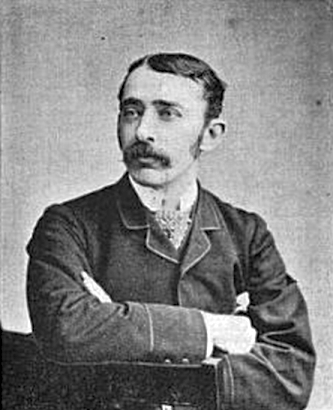
Fleming in 1890
Everyone knew that the coherer was a poor receiver in terms of sensitivity, and the magnetic detector developed at Marconi was not particularly better. To find a replacement, Fleming initially decided to build a sensitive circuit to detect Hertzian waves. Such a device, not even becoming a detector itself, would be useful in future research.
For this, he needed to devise a way to continuously measure the strength of the current generated by incoming waves, rather than using a discrete coherer (which only indicated states of on – where the filings clumped together, or off). However, the known devices for measuring current – galvanometers – required direct current to operate, meaning one-directional. The alternating current triggered by radio waves changed direction so quickly that no measurement could be made.
Fleming recalled that he had several interesting items gathering dust in his closet – Edison indicator lamps. In the 1880s, he served as a consultant for Edison’s Electric Light Company in London and worked on the issue of darkening lamps. At that time, he received several copies of the indicator, possibly from William Priest, the chief electrical engineer of the British Post Office, who had just returned from an electrical exhibition in Philadelphia. At that time, postal services outside the U.S. routinely controlled telegraph and telephone systems, making them centers of electrical engineering expertise.
Later, in the 1890s, Fleming himself studied Edison’s effect using the lamps he received from Priest. He demonstrated that the effect was that current flowed in one direction: negative electrical potential could flow from the hot filament to the cold electrode, but not the other way around. However, it was only in 1904, when he faced the task of detecting radio waves, that he realized this fact could be utilized practically. The Edison indicator would only allow directed impulses of alternating current to cross the gap between the filament and the plate, resulting in a constant unidirectional flow.
Fleming took one lamp, connected it in series with a galvanometer, and switched on a spark transmitter. Voilà – the mirror turned, and the beam of light shifted on the scale. It worked. He could accurately measure the incoming radio signal.
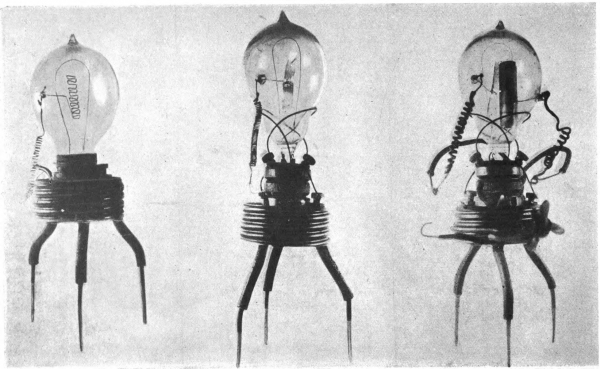
Fleming's valve prototypes. The anode is located in the middle of the filament loop (hot cathode).
Fleming named his invention a 'valve' because it allowed electricity to flow in only one direction. To put it in more general electrical engineering terms, it was a rectifier – a way to convert alternating current to direct current. It was later called a diode, as it contained two electrodes – a hot cathode (filament) emitting electricity, and a cold anode (plate) receiving it. Fleming introduced several improvements into the design, but essentially the device was not different from the indicator lamp made by Edison. Its transition to a new quality occurred due to a shift in mindset – a phenomenon we have seen many times before. The change took place in the world of ideas in Fleming's mind, not in the world of things outside of it.
The Fleming valve was useful by itself. It was the best field device for measuring radio signals, and a decent detector on its own. But it didn't shake the world. The explosive growth of electronics began only after Lee de Forest added a third electrode and turned the valve into a relay.
Listening
Lee de Forest had an unusual upbringing for a student from Yale. His father, Reverend Henry de Forest, was a veteran of the Civil War from New York and a pastor , and firmly believed that as a preacher, he should spread the divine light of knowledge and justice. Answering the call of duty, he accepted an invitation to become president of Talladega College in Alabama. The college was founded after the Civil War by the American Missionary Association, based in New York. It was meant to educate and mentor local Black inhabitants. There, Lee felt caught between a rock and a hard place – local Black individuals mocked him for his naivety and cowardice, while local white individuals derided him for being a .
Nevertheless, as a young man, de Forest developed a strong sense of self-confidence. He discovered an inclination towards mechanics and inventions – his scale model of a locomotive became a local wonder. Even as a teenager, while studying in Talladega, he decided to dedicate his life to inventions. Then, as a young man living in New Haven, the pastor's son shed his last religious beliefs. They gradually faded due to his exposure to Darwinism, and then they were blown away after the untimely death of his father. However, the feeling of having a purpose never left de Forest – he considered himself a genius and aspired to become the second Nikola Tesla, a rich, famous, and enigmatic wizard of the electrical age. His classmates at Yale considered him a smug windbag. He might be called the least popular person encountered in our history.
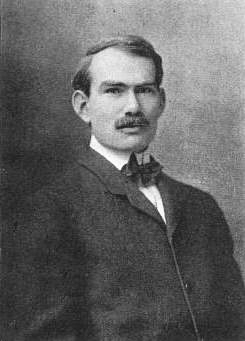
de Forest, c. 1900
After graduating from Yale University in 1899, de Forest chose to master the increasingly popular art of transmitting wireless signals as a path to wealth and fame. In the subsequent decades, he pursued this path with great determination and confidence, without any hesitation. It all began with the collaboration between de Forest and his partner Ed Smite in Chicago. Smite kept their venture afloat with regular payments, and together they developed their own radio wave detector made of two metal plates connected by a glue that de Forest referred to as "paste" [goo]. However, de Forest couldn't wait long for the rewards of his genius. He parted ways with Smite and teamed up with a dubious financier from New York named Abraham White [ironically changing his name from the one given at birth, Schwarz, to hide his shady dealings. White/White – (eng.) white, Schwarz/Schwarz – (ger.) black / transl. note.], launching the De Forest Wireless Telegraph Company.
The company’s operations were of secondary importance to both of our heroes. White exploited people's ignorance to line his pockets. He conned millions out of investors, all desperately trying to keep up with the expected radio boom. Meanwhile, de Forest, thanks to the influx of funds from these "suckers," focused on proving his genius by developing a new American system of wireless information transmission (as opposed to the European one developed by Marconi and others).
Unfortunately for the American system, de Forest's detector did not work particularly well. For a while, he addressed this issue by borrowing a patented design from Reginald Fessenden for a detector called the "liquid barretter" – two platinum wires immersed in a bath of sulfuric acid. Fessenden filed a lawsuit for patent infringement – a lawsuit he would clearly have won. De Forest could not rest until he had invented a new detector that belonged solely to him. In the fall of 1906, he announced the creation of such a detector. At two different meetings of the American Institute of Electrical Engineers, de Forest described his new wireless detector, which he named the "Audion." However, the true origin of this invention is in question.
For some time, de Forest's attempts to build a new detector revolved around passing current through a flame. , which he believed could function as an asymmetric conductor. The idea, apparently, was not successful. At one point in 1905, he learned about Fleming's valve. De Forest convinced himself that this valve and its device based on the burner were essentially the same – if you replace the hot filament with a flame and cover it with a glass bulb to contain the gas, you would get the same valve. He developed a series of patents recounting the history of inventions prior to Fleming's valve using gas flame-based detectors. He clearly wanted to claim priority for the invention, bypassing Fleming's patent, as the work with the Bunsen burner preceded Fleming’s work (which had started in 1900).
It's impossible to say whether this was self-deception or fraud, but as a result, de Forest received a patent in August 1906 for a "depleted glass vessel containing two separate electrodes, between which there exists a gaseous medium that becomes conductive when sufficiently heated and forms a sensitive element." The equipment and functioning of the device belonged to Fleming, while the explanation of how it works was attributed to de Forest. De Forest ultimately lost the patent dispute, although it took ten years.
Impatient readers may already be wondering why we are spending so much time on this man whose self-proclaimed genius consisted of passing off others' ideas as his own? The reason lies in the transformations that Audion underwent in the last few months of 1906.
By that time, de Forest was out of work. White and his partners avoided liability regarding the lawsuit from Fessenden by creating a new company, United Wireless, and lending it the assets of American De Forest for $1. De Forest was left with a $1000 severance and several worthless patents, including the patent for Audion. Accustomed to a lavish lifestyle, he faced serious financial difficulties and desperately tried to turn Audion into a great success.
To understand what happened next, it is important to know that de Forest believed he had invented the relay – in contrast to Fleming's rectifier. He created his Audion by connecting a battery to the cold plate of the valve and thought that the signal in the antenna circuit (connected to the hot wire) modulated a more powerful current in the battery circuit. He was mistaken: these were not two circuits; the battery simply shifted the signal from the antenna, rather than amplifying it.
But this error became critical as it led de Forest to experiment with a third electrode in the bulb, which was intended to further separate the two circuits of this "relay." Initially, he added a second cold electrode next to the first, but then, possibly influenced by the control mechanisms used by physicists to redirect beams in cathode-ray devices, he moved the electrode to a position between the wire and the primary plate. He concluded that this placement could interrupt the flow of electricity, and changed the shape of the third electrode from a plate to a wavy wire resembling a rasp—he called it the "grid."
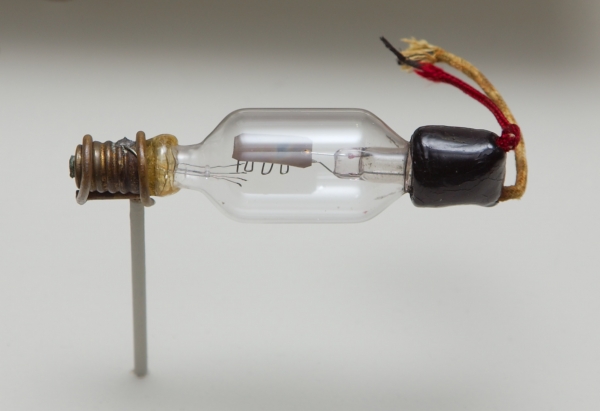
The Audion triode of 1908. The wire (broken) on the left is the cathode, the wavy wire is the grid, and the rounded metal plate is the anode. It still has threads like a regular light bulb.
And this was indeed a relay. A weak current (like that produced by a radio antenna) supplied to the grid could control a much stronger current between the wire and the plate, repelling charged particles trying to move between them. This detector worked much better than the valve, as it not only rectified but also amplified the radio signal. And, like the valve (and unlike the coherer), it could emit a continuous signal, making it possible to create not only radio telegraphy but also radio telephony (and later, the transmission of voice and music).
In practice, it did not work particularly well. De Forest's Audions were temperamental, burned out quickly, lacked consistent quality in production, and were ineffective as amplifiers. For a specific Audion to function properly, it required tuning the electrical parameters of the circuit.
Nevertheless, De Forest believed in his invention. To promote it, he organized a new company, De Forest Radio Telephone Company, but sales were insignificant. The biggest success was the sale of equipment to the fleet for intra-fleet telephony during the "". However, the fleet commander, without time to get De Forest's transmitters and receivers working and to train the crew to use them, ordered them packed away and left in storage. Moreover, De Forest's new company, run by a follower of Abraham White, was no more reputable than the previous one. In addition to his failures, he soon came under allegations of fraud.
In five years, Audion achieved nothing. Once again, the telephone would play a key role in the development of digital relay technology, this time saving a promising but unproven technology that was on the brink of being forgotten.
Once again, the telephone
The long-distance communication network was the central nervous system of AT&T. It connected numerous local companies and provided a key competitive advantage as Bell's patents expired. By joining the AT&T network, a new customer could theoretically call all other subscribers located thousands of kilometers away—though in reality, long-distance calls were rare. The network was also the material basis for the company's overarching ideology of 'One policy, one system, universal service.'
However, by the beginning of the second decade of the twentieth century, this network had reached its physical maximum. The further the telephone wires stretched, the weaker and noisier the signal that passed through them became, and in the end, speech became almost indistinguishable. Because of this, there were actually two AT&T networks in the U.S., separated by the continental divide.
For the eastern network, New York was the hub, while mechanical repeaters and – the limitation that defined how far the human voice could travel. But these technologies were not omnipotent. Coils altered the electrical properties of the telephone circuit, reducing the attenuation of voice frequencies – but they could only diminish it, not eliminate it. Mechanical repeaters (essentially a telephone speaker connected to a reinforcing microphone) added noise with each repetition. The 1911 line from New York to Denver pushed this limitation to its maximum length. There was no talk of extending a network across the entire continent. However, in 1909, John Carthy, the chief engineer at AT&T, publicly promised to do just that. He vowed to accomplish this within five years – by the start of in San Francisco in 1915.
The first to make such an undertaking possible with the help of a new telephone amplifier was not an American, but an heir of a wealthy Viennese family with an interest in science. As a young man, used his parents' resources to purchase a telephone manufacturing company and aimed to create an amplifier for telephone conversations. By 1906, he had developed a relay based on electron beam tubes, which were widely used in physical experiments at the time (later becoming the foundation for the dominant video screen technology of the 20th century). A weak incoming signal was controlled by an electromagnet, bending the beam to modulate a stronger current in the main circuit.
By 1910, von Lieben, along with colleagues Eugene Reiss and Sigmund Strauss, learned about the Audion invented by de Forest and replaced the magnet in the tube with a grid that controlled the cathode rays – this design was the most efficient and surpassed all developments made at the time in the USA. The German telephone network soon adopted von Lieben’s amplifier. In 1914, it enabled a tense phone call from the commander of the East Prussian army to the German headquarters located 1,000 kilometers away in Coblenz. This prompted the chief of staff to send Generals Hindenburg and Ludendorff eastward, to eternal glory and with dire consequences. Similar amplifiers later connected the German headquarters with field armies in the south and east all the way to Macedonia and Romania.
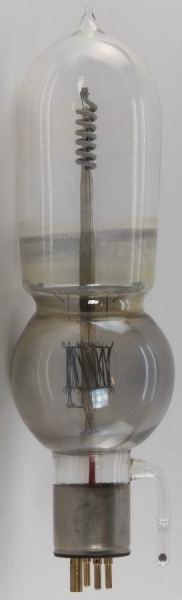
A copy of the improved cathode-ray relay by Liebmann. The cathode is at the bottom, the anode is the coil at the top, and the grid is a round metal foil in the middle.
However, linguistic and geographical barriers, as well as the war, meant that this design did not reach the USA, and soon it was outpaced by other events.
Meanwhile, De Forest left the struggling Radio Telephone Company in 1911 and fled to California. There he secured a position at the Federal Telegraph Company in Palo Alto, founded by a Stanford graduate, Nominally, De Forest was supposed to work on an amplifier that would increase the output volume of federal radio receivers. In reality, he, Herbert Van Etten (an experienced telephone engineer), and Charles Logwood (the receiver developer) were focused on creating a telephone amplifier together to compete for a prize from AT&T, rumored to be $1 million.
To achieve this, De Forest retrieved an Audion from storage, and by 1912 he and his colleagues had a device ready for demonstration at the telephone company. It consisted of several Audions connected in series to create multi-stage amplification, along with several auxiliary components. The device, in principle, worked – it could amplify the signal enough for you to hear a handkerchief drop or a pocket watch tick. But only at currents and voltages too low to be useful in telephony. When the current was increased, the Audions began to emit a blue glow, and the signal turned into noise. However, the telephony engineers were interested enough to hand the device over to their engineers to see what they could do with it. As it turned out, one of them, young physicist Harold Arnold, knew exactly how to fix the amplifier from the Federal Telegraph Company.
It was time to discuss how the valve and the Audion worked. The key understanding needed to explain their operation emerged at the Cavendish Laboratory in Cambridge – the intellectual center of new electronic physics. In 1899, J.J. Thomson demonstrated in experiments with cathode-ray tubes that a particle with mass, which later became known as the electron, carried current from the cathode to the anode. In the following years, Owen Richardson, Thomson's colleague, developed this hypothesis into a mathematical theory of thermionic emission.
Ambrose Fleming, an engineer who worked a short train ride from Cambridge, was familiar with this research. He understood that his valve functioned due to thermionic emission of electrons from a heated filament crossing the vacuum gap to the cold anode. However, the vacuum in the indicator lamp was not deep – it didn't need to be for a regular light bulb. It was sufficient to evacuate enough oxygen to prevent the filament from igniting. Fleming realized that for optimal valve performance, it needed to be evacuated as thoroughly as possible so that any remaining gas would not interfere with the flow of electrons.
De Forest did not understand this. As he came to the valve and Audion through experiments with the Bunsen burner, his belief was the opposite – that the hot ionized gas was the working medium of the device, and that complete removal would halt its operation. This is why the Audion performed so unstably and unsatisfactorily as a radio receiver, and why it emitted a blue light.
Arnold at AT&T found himself in the perfect position to correct De Forest's mistake. He was a physicist who studied under Robert Millikan at the University of Chicago, and he was specifically hired to apply his knowledge of new electronic physics to the task of building a coast-to-coast telephone network. He knew that the Audion lamp would work best in an almost perfect vacuum, was aware that the latest pumps could achieve such a vacuum, and understood that a new type of oxide-coated filament, along with an increased plate and grid, would also enhance the flow of electrons. In short, he transformed the Audion into an electronic lamp, a miracle worker of the electronic age.
AT&T had a powerful amplifier necessary for building the transcontinental line — they just didn't have the rights to use it. Company representatives were skeptical during negotiations with de Forest, but initiated a separate conversation through an outside attorney who managed to acquire the rights to use Audion as a telephone amplifier for $50,000 (around $1.25 million in 2017 dollars). The New York – San Francisco line opened just in time, but it was more of a triumph of technical virtuosity and corporate advertising than a means of communication. The cost of calls was so astronomical that almost no one could afford to use them.
The Electronic Era
The true electronic valve became the root of an entirely new tree of electronic components. Like relays, electronic valves continuously expanded their applicability as engineers found new ways to adjust their design for specific tasks. The rise of the ‘-ode’ tribe didn’t stop with diodes and triodes. It continued with , adding an additional grid that supported amplification as more elements were incorporated into the circuit. Next came , , and even . There were thyristors filled with mercury vapor, glowing with an ominous blue light. Miniature valves the size of a pinky finger or even an acorn. Valves with indirectly heated cathodes, where the hum from the AC source didn’t disrupt the signal. The book "Saga of the Vacuum Tube" [Saga of the Vacuum Tube], which describes the growth of the valve industry up to 1930, lists over 1,000 different models by their index — although many were illegal copies from untrustworthy brands: Altron, Perfectron, Supertron, Volttron, etc.
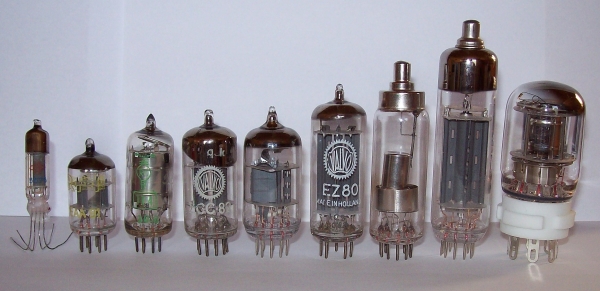
More important than the variety of forms was the variety of applications of the electronic tube. Regenerative circuits turned the triode into a transmitter that produced smooth and constant sine waves, devoid of noisy sparks, capable of perfectly transmitting sound. With a coherer and sparks, in 1901, Marconi could barely transmit a small segment of Morse code across a narrow part of the Atlantic. By 1915, with the electronic tube used as both transmitter and receiver, AT&T could transmit the human voice from Arlington, Virginia to Honolulu—a distance twice as great. By the 1920s, they combined long-distance telephony with high-quality audio broadcasting, creating the first radio networks. Thus, soon the entire nation could listen to the same voice on the radio, whether it was Roosevelt or Hitler.
Moreover, the ability to create transmitters tuned to precise and stable frequencies allowed telecommunications engineers to realize the long-held dream of frequency multiplexing, which had attracted Alexander Bell, Edison, and others forty years earlier. By 1923, AT&T had a ten-channel voice line from New York to Pittsburgh. The ability to transmit multiple voices over a single copper wire radically reduced the cost of long-distance calls, which had always been accessible only to the wealthiest individuals and businesses due to high expenses. Seeing what electronic tubes could achieve, AT&T sent their lawyers to buy additional rights from De Forest to secure the rights to use Audion in all available applications. In total, they paid him $390,000, which is equivalent to about $7.5 million today.
Why, despite their versatility, did electronic tubes not dominate the first generation of computers as they did in radio and other telecommunications equipment? It is clear that the triode could function as a digital switch just like a relay. So obvious that de Forest even claimed to have invented the relay before he had actually done so. Moreover, the triode was much more responsive than traditional electromechanical relays since there was no need to physically move an armature. A typical relay took several milliseconds to switch, while the change in current from cathode to anode due to the change in electrical potential on the grid was almost instantaneous.
However, tubes had a clear disadvantage over relays: their tendency, akin to their predecessors, light bulbs, to burn out. The lifespan of the original De Forest Audion was so short—around 100 hours—that it included a spare filament that needed to be connected after the first one burned out. This was extremely problematic, and even the best quality tubes offered no promise of operating for more than a few thousand hours. For computers with thousands of tubes and lengthy calculations that lasted for hours, this was a serious issue.
Relays, on the other hand, were, according to George Stibitz, "fantastically reliable." So much so that he claimed,
If a set of U-shaped relays had started operating in the year 1 AD and switched contacts once a second, it would still be operational today. The first failure of a contact could be expected no earlier than a thousand years later, around the year 3000.
Moreover, there was no experience with large electronic circuits comparable to the electromechanical circuits of telephone engineers. Radio receivers and other equipment might contain 5-10 tubes, but not hundreds of thousands. Nobody knew if it was feasible to get a computer working with 5,000 tubes. By choosing relays instead of tubes, computer developers made a safe and conservative choice.
In the next part, we will see how and why these doubts were overcome.
Source: habr.com
