

The Slurm-3 intensive on Kubernetes wrapped up on Sunday.
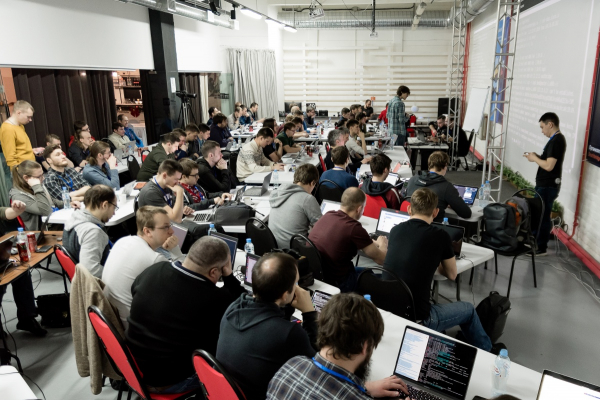
We set a personal record: 132 participants, 65 online and 67 in person.
At the first Slurm, there were 50 people, at the second, 87. We’re growing slowly but surely.
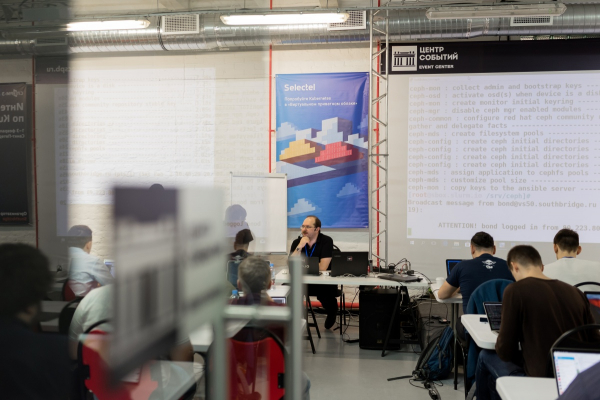
126 people created a cluster (the task of the first day), and 115 completed the practice until the end.
6 people completely ignored the practice. We'll assume they only wanted to attend the lectures.
The main issue this time was related to the broadcasting: sometimes the speaker's microphone would cut off, and other times the music was left on. It’s time to move from the haphazard method of ‘professionals will figure it out’ to structured protocols.
We encountered two more issues related to Git. First, participants found the task materials there and rushed to complete them ahead of schedule. As a result, when we reached the practice session, some already had everything broken. Next time, we’ll release materials as needed.
We also created files with commands because last time people copied commands from the PDF along with formatting symbols, and nothing worked for them. Upon discovering these files, some eagerly started copying them into the console, only to later complain that the practice turned into a copy-paste exercise. The practice was meant to focus on completing tasks; configurations and commands should be written manually—no one was forcing anyone to copy-paste.
46 people provided feedback. We’ll consider that a representative sample of the audience.
How did you find the intensity of Slurm?
33: just right.
10: too easy and slow, would have liked more material
3: too fast and difficult, would have liked less material.
We are reaching the declared audience just fine: those who are being introduced to Kubernetes.
For those who found the regular Slurm too simple, a MegaSlurm will take place in early June. We’re offering a discount of 15,000 to all basic Slurm participants; Slurm-3 will pay off in this way.
Has Kubernetes become clearer?
16: I already knew k8s, now I know it better.
13: I didn’t know k8s before, but now I’ve figured it out.
15: I still don’t understand k8s, but I see where to dig.
2: I didn’t learn anything new.
0: I didn’t understand anything about k8s.
The situation is even better than I expected. I thought at least half would respond, ‘I still don’t understand k8s, but I see where to dig,’ and there would be practically no one saying, ‘I didn’t know k8s before, but now I’ve figured it out.’
The interesting part begins now. 6 people did not solve the task they came to the Slurm for. Four participants had specific requirements, which we will consider while developing the MegaSlurm program. I will provide two reviews in full (with minimal editing):
Monotonous narration with a lot of filler
Unintelligible speech full of jargon
A huge amount of time was spent on trivial details (half an hour to change numbers in configurations? Intense, right?)
Irrelevance of presentations
Ceph is unnecessary
The approach feels clumsy throughout
This slurm is neither for beginners nor for experienced ones.
The slowness, speed, and extremely little information were frustrating:
- For some reason, the hosts insisted on details, on variables (unclearly explaining why they are needed).
- They quickly rushed through practice: 'here it is like this… hop-hop-hop and it works'.
- In theory, there are the fewest questions for Pavel, but for the other speakers: why is it so dreary and uninteresting and can you please finish faster? It’s still not understandable.
At some moments, you want to react like this: What??? What just happened??? Why all this?? >Why, without explaining, do you run ahead??? Some people are struggling, but the host just moves on… WAIT!!!
Eventually, you want to stand up and leave, but 25,000 rubles keep you seated.
I’m disappointed that these participants didn’t contact me on the first day. On the second Slurm, there was an unhappy person, he called me, requested a refund, and we immediately revoked his access and returned his money.
For the next Slurm, I will prepare refund rules so as not to trouble those for whom the Slurm didn’t work out.
But overall, two negative reviews out of 46 responses (and 132 participants) is close to ideal.
In conclusion. One participant from Slurm-1 recently told me that he is still reviewing the recordings and finding something new in them. So, the end of Slurm does not mean the end of learning.
Thank you to everyone who attended the Slurm!
Anton Skobin
Source: habr.com
