

In my 33 years, I've decided to pursue a master's degree in computer science. I graduated from my first university back in 2008, and it was not in the IT field; much has changed since then. Like any other student, particularly one with Slavic roots, I became curious about what I could gain for free (mainly regarding additional knowledge in my field). Given that my past and present are closely tied to the hosting industry, I primarily chose giants that provide cloud services.
In this small series, I will discuss the educational opportunities that three market leaders in cloud services offer to students, educators, and educational institutions (both universities and schools), as well as how some of them are utilized by our university. I will start with Google.
I'll disappoint you a bit right after the introduction. Residents of CIS countries are not very lucky. Some of the appealing features of Google for Education are not available there. So, I'll address those at the end, specifically for those studying in universities in Europe, North America, and some other countries. Some features are available in a limited form, however. So, let's get started.
G Suite for Education
Many of us love Gmail, Google Drive, and their counterparts. Some especially fortunate individuals even managed to grab free email accounts for their domains, now known as G Suite legacy free edition, which is gradually facing restrictions. For those unfamiliar, G Suite for Education is essentially all that, and even more.
Any school or university can obtain 10,000 licenses (and, accordingly, accounts) for email, Drive, Calendar, and other collaborative features offered by G Suite. The only limitation is that the educational institution must have state accreditation and a non-profit status.
Our university actively uses this service. No more going to the dean's office to find out which class is next. Everything is synchronized through the calendar, and you can check it on your smartphone. This also includes the exam schedule. Important notifications and announcements are sent to everyone via email, including notices about various interesting seminars, job vacancies for students, summer schools, and more. For each logical unit (group, course, faculty, university), a mailing list has been created, and employees with the corresponding rights can send information there. It was clearly stated in the introductory lecture for students that checking the university email is very important, almost mandatory.
In addition, some professors actively upload lecture materials to Google Drive and even create individual folders there for submitting homework. Others, however, find Moodle, which is not related to Google, perfectly adequate. You can read more about creating an account here Google Colab
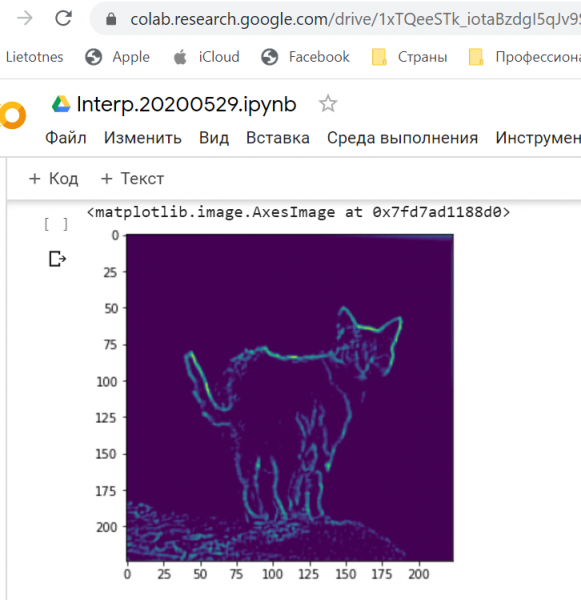
is a great tool for fans of Jupyter Notebook. It's available to any Google user. It is very convenient for both individual and collaborative work when studying anything in the field of machine learning and data science. It allows you to train models on both CPU and GPU. However, it is also quite suitable for basic Python learning. We actively used this tool in 'Methods of Interpretation and Classification.'
You can start collaboration here .
Google Classroom
is an excellent LMS (learning management system) provided for free as one of the main products under the G Suite for Education, G Suite for Nonprofit packages, as well as for owners of personal accounts. It is also offered as an additional service for regular G Suite accounts. The cross-permission system between different account types is somewhat
confusing and non-trivial To avoid getting into complexities, the simplest option is for all participants in the processes—teachers and students—to use accounts of the same type (either educational or personal).
The system allows for the creation of classes, publishing of text and video materials, Google Meet sessions (free for educational accounts), assignments, grading, communication among users, etc. It is a very useful tool for those who are forced to learn remotely but do not have specialists on staff to set up and configure another LMS. Step into the classroom. .
Learning Materials
Google has prepared several different opportunities to learn how to work with their cloud services:
- Collection is available for free. Students from fortunate countries are also provided the opportunity to complete practical assignments (usually a paid service) for free and receive certificates for 13 courses from Google. However, Coursera offers for its courses (i.e., they simply make them available for free if you can convince them that you really need it but have no funds, but you’re doing your best). are completely free until 31.07.2020.
- Another collection —
- discuss the possibilities and interesting cases created based on Google Cloud.
- — a collection of articles and exercises that reveal various topics related to working with Google Cloud. Available for free to all Google users.
- — a collection of guides on various aspects of working with Google products. The pathways from the previous point are organized selections of labs from here.
Google for Education
A certain selection of opportunities for learning about Google services is available only for a limited number of countries. Roughly speaking, EU/EEA countries, the USA, Canada, Australia, New Zealand. I study in Latvia, so I was able to take advantage of these opportunities. If you also study in one of the mentioned countries, enjoy.
- 200 credits for completing interactive labs on Qwiklabs.
- Free access to paid versions of 13 courses from Coursera (as mentioned above).
- $50 credits for Google Cloud (at the time of writing, this is temporarily unavailable; however, you can still receive test $300, offered by default when activating a trial subscription).
- 50% discount on G Suite certification.
- 50% discount on the Associate Cloud Engineer exam (the program must be registered by a faculty representative).
- 5000 Qwiklabs credits to share with students.
- $300 Google Cloud credits for conducting courses and various events.
- $5000 Google Cloud credits for carrying out research programs (per program).
- Career readiness program — free educational materials and a discount on Associate Cloud Engineer certification for students and teachers.
- PhD candidates can receive $1000 Google Cloud credits for their research.
Official information states that Google is working on expanding its geography, but it is suggested that it won't happen anytime soon.
In conclusion
I hope this has been helpful. Share this information with fellow students, teachers, and deans. If you know any other educational offerings from Google, please write in the comments. Follow us to stay updated on various educational opportunities.
We also want to offer all students a 50% discount on the first year of using our and , as well as . To do this, you need to , place an order and, without paying for it, submit a ticket to the sales department, providing a photo of yourself with your student ID. A sales department employee will adjust the order price according to the promotion terms.
And that's it, there won't be other advertisements.
Source: habr.com
